
For enthusiasts of tiny particle building block sets—whether LEGO, Nanoblocks, or other micro-scale construction toys—the joy lies not just in building but in preserving the experience. These small, intricate pieces offer endless creative potential, but their size makes organization a persistent challenge. Without a thoughtful storage strategy, hours can be lost searching for a single piece, and frustration often outweighs fun. The key is to design a system that balances accessibility, protection, and spatial efficiency. With smart planning and a few clever tools, even the most compact living space can house an expansive collection without chaos.
Understanding the Storage Challenge
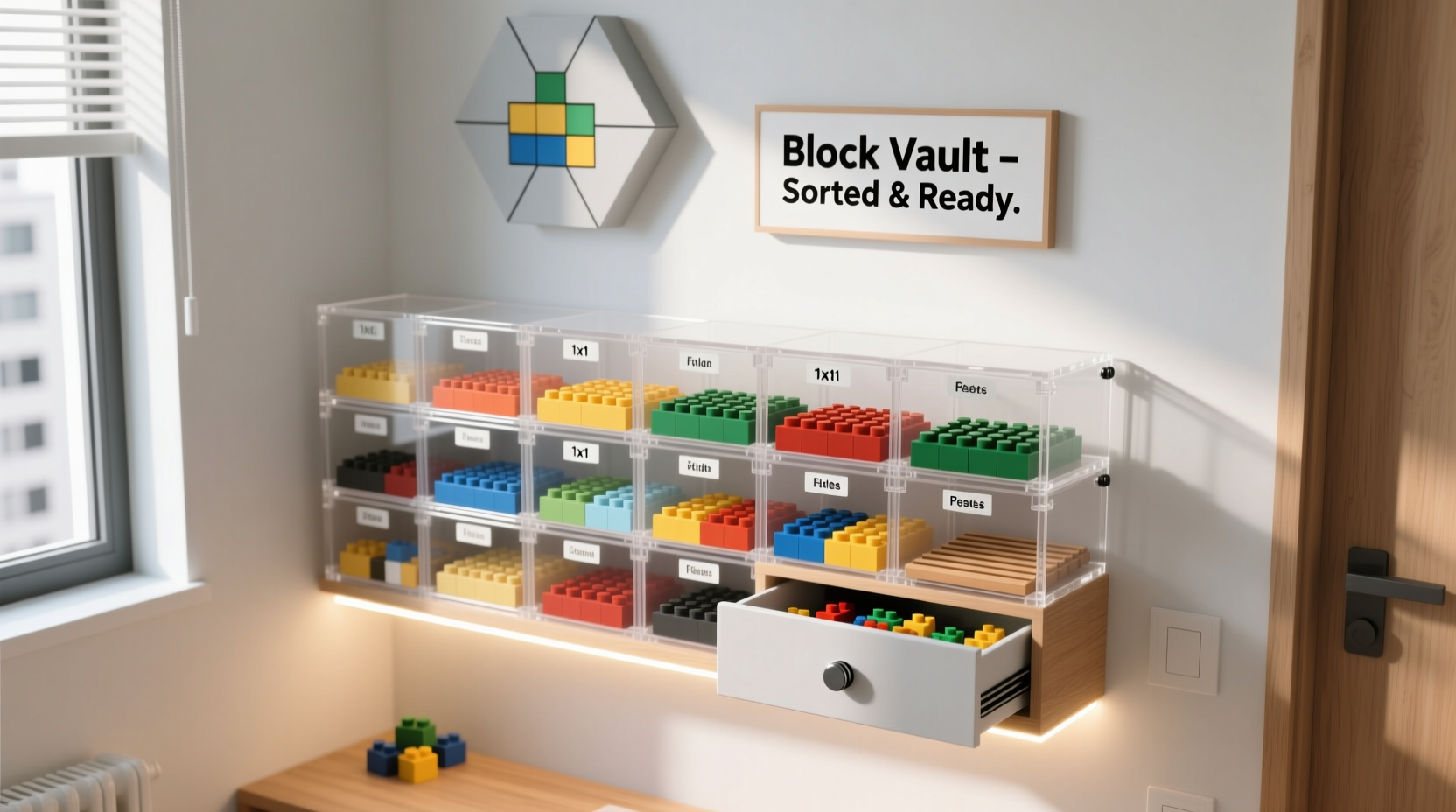
Tiny building blocks are inherently difficult to manage. Their uniform shapes and minuscule sizes mean they easily scatter, mix, and become lost. Unlike larger toys, they don’t stack neatly on shelves or fit into standard bins. Dust, moisture, and accidental spills pose real threats to both the integrity of the pieces and the cleanliness of your workspace. Moreover, many collectors build over extended periods, requiring long-term preservation of partially completed projects and spare parts.
The ideal storage solution must address several needs: visibility (to identify pieces quickly), compartmentalization (to separate types or colors), durability (to withstand frequent handling), and scalability (to grow with your collection). It should also integrate seamlessly into home environments, especially in urban dwellings where floor space is limited.
Smart Sorting Systems
Effective storage begins with sorting. A well-sorted collection reduces search time and enhances creativity by making components instantly available. Start by emptying all containers and categorizing pieces into broad groups: structural elements (bricks, beams), surface pieces (tiles, slopes), mechanical parts (gears, axles), and decorative items (minifigures, stickers).
Once grouped, further divide by size and color. Use clear, modular containers with adjustable dividers to create custom compartments. Small craft organizers with removable trays work exceptionally well. Label each section using waterproof tags or printed labels to maintain consistency over time.
“Organization isn’t about perfection—it’s about reducing friction between idea and execution.” — Daniel Reyes, Toy Design Educator and STEM Workshop Leader
Step-by-Step: Building Your Sorting Workflow
- Empty all loose pieces into a large sorting tray or shallow bin.
- Remove damaged or non-compatible pieces.
- Create primary categories based on shape and function.
- Subdivide categories by color and size.
- Transfer sorted pieces into labeled containers with secure lids.
- Store frequently used categories within easy reach; archive rare or seasonal items separately.
Space-Saving Storage Options
In small homes or shared spaces, vertical and multi-functional storage is essential. Wall-mounted systems maximize unused wall area while keeping pieces visible and accessible. Pegboards with custom hooks and bins allow full customization and can be rearranged as your collection evolves.
Drawer units under desks or beds provide hidden yet reachable storage. Look for units with slim-profile pull-out trays designed for office supplies or jewelry—they’re perfect for small parts. Magnetic strips mounted inside cabinet doors can hold metal tins filled with the tiniest components like pins or connectors.
| Solution | Best For | Pros | Cons |
|---|---|---|---|
| Pegboard + Bins | Active builders with changing needs | Customizable, visible, expandable | Requires wall space and installation |
| Stackable Transparent Boxes | Limited floor space, multiple users | Dust-resistant, portable, scalable | Can tip if overfilled |
| Desktop Organizer Trays | Frequent builders, small workspaces | Immediate access, ergonomic layout | Limited capacity |
| Vacuum-Sealed Bags | Long-term archiving, seasonal sets | Space-efficient, moisture-proof | Not for daily use; hard to access mid-project |
Real-Life Example: The Apartment Builder’s System
Maria, a freelance designer living in a 500-square-foot studio in Brooklyn, collects Nanoblock models as a meditative hobby. With no dedicated craft room, she transformed a narrow closet into a dual-purpose storage and building station. She installed two pegboards on the interior doors, holding labeled plastic bins for common parts. Below, she placed a rolling cart with three tiers: one for ongoing builds, one for sorted spares, and one for instruction manuals in sheet protectors.
A fold-down table attached to the wall serves as her workspace—when closed, it disappears completely. She uses magnetic sheets inside drawer lids to store metallic connectors and keeps dust away with zip-top bags during inactive weeks. This system allows her to enjoy complex builds without cluttering her living space.
Preserving Long-Term Collection Value
Some building block sets appreciate in value, especially limited editions or retired themes. Proper storage isn’t just about convenience—it’s an investment in preservation. Exposure to sunlight can cause yellowing; humidity leads to warping or mold. Store pieces away from windows and avoid basements or attics unless climate-controlled.
Original packaging should be kept intact if collectibility matters. Use acid-free tissue paper and rigid boxes to prevent crushing. For opened sets, consider archival-quality polypropylene containers, which resist static and chemical degradation better than standard plastics.
- Keep sets away from direct heat sources like radiators.
- Use silica gel packs in sealed containers to absorb moisture.
- Rotate stored boxes occasionally to prevent pressure marks.
- Avoid stacking heavy items on top of storage bins.
Checklist: Optimal Storage Habits
- ✅ Sort pieces immediately after disassembly
- ✅ Use only transparent, lidded containers
- ✅ Label every compartment clearly
- ✅ Store in a cool, dry, dark location
- ✅ Clean hands before handling light-colored pieces
- ✅ Audit inventory every six months
- ✅ Keep a “miscellaneous” catch-all bin for unidentified parts
Frequently Asked Questions
How do I prevent tiny pieces from getting lost during builds?
Work over a large, shallow tray or a fabric mat with raised edges. Some builders use deep baking pans or repurposed printer trays to contain spills. Consider using a magnifying lamp with a built-in tray for precision work.
Can I use kitchen spice jars for storage?
Yes—glass spice jars with tight-sealing lids are excellent for rare or specialty pieces. Their transparency and uniform size make them ideal for display and access. Just ensure they’re cleaned thoroughly before use.
What’s the best way to store partially built models?
Place them in oversized plastic containers with soft padding at the bottom. Cover loosely with a lint-free cloth to block dust. If possible, elevate the model on a platform to avoid pressure on protruding elements.
Conclusion: Build Smarter, Not Harder
Great builds begin long before the first brick is placed. They start with intention—intention in how you organize, protect, and access your materials. Creative and practical storage solutions transform the building experience from chaotic to seamless, turning limited space into a powerhouse of possibility. Whether you're crafting miniature sculptures or assembling nostalgic sets, a well-designed system gives you back time, reduces stress, and amplifies joy.




 浙公网安备
33010002000092号
浙公网安备
33010002000092号 浙B2-20120091-4
Comments
No comments yet. Why don't you start the discussion?