
For many, the idea of earning extra income from home has shifted from a luxury to a necessity. While common suggestions like freelancing or selling unused items online are valid starting points, they often don’t scale or sustain long-term growth. The real opportunity lies in thinking beyond the obvious—leveraging underused skills, overlooked digital assets, and emerging online economies. These strategies aren’t about quick cash grabs; they’re about building sustainable, scalable income streams with minimal overhead.
Monetize Your Knowledge Through Digital Products
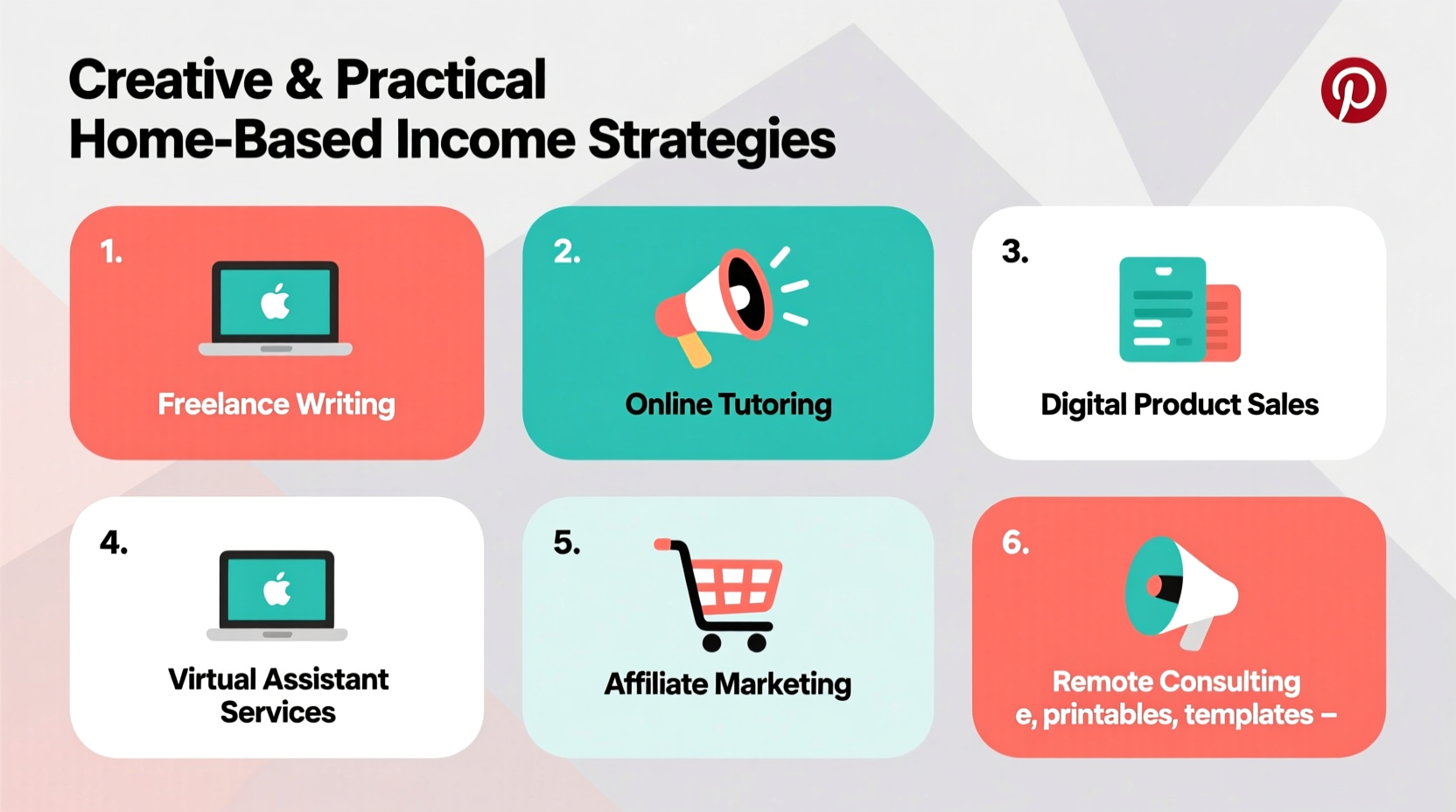
One of the most scalable ways to earn from home is by creating digital products that solve specific problems. Unlike time-for-money gigs, digital products—such as templates, guides, or mini-courses—can be sold repeatedly without additional effort after the initial creation.
Consider this: a freelance writer who charges $50 per article trades one hour for one fee. But if that same person creates a $29 \"Resume Writing Template Pack\" and sells it to 100 people, they earn $2,900 with no incremental time cost. Platforms like Gumroad, Teachable, or even Etsy allow creators to launch these products with little technical skill.
Real Example: From Side Project to Full Income Stream
Sarah, a project manager in Austin, noticed her team struggled with meeting agendas. She designed a simple Google Docs template with time blocks and action item tracking. After sharing it in a Slack community, five people asked to buy it. She listed it on Gumroad for $12. Within six months, she had sold over 800 copies—earning more than $9,000 passively. Encouraged, she expanded into a bundle of workplace productivity tools, now generating consistent monthly revenue.
Leverage Underutilized Assets: Rent What You Own
Most households own equipment or tools that sit idle for weeks—cameras, power tools, musical instruments, even parking spaces. Instead of letting them gather dust, rent them out through niche marketplaces.
| Asset | Platform | Average Weekly Earnings |
|---|---|---|
| Digital Camera + Lens | ShareGrid, Fat Llama | $75–$150 |
| Drill, Pressure Washer | Peerby, Fat Llama | $30–$60 |
| Electric Guitar | InstrumentRentals.com | $25–$40 |
| Driveway / Garage Space | SpotHero, Neighbor | $50–$200 |
This strategy works best in urban areas where access trumps ownership. A spare bedroom can become a podcast studio rental; a quiet home office can be listed as a Zoom-friendly workspace on Peerspace.
“Underutilized assets represent hidden capital. The average American owns over $5,000 worth of tools and gear used less than once a year.” — David Blank, Founder of Fat Llama
Create Micro-Services for Niche Audiences
Instead of competing in saturated markets like general virtual assistance, focus on hyper-specific services that command higher rates due to low competition and high need.
Examples include:
- LinkedIn profile optimization for mid-career engineers
- Google My Business setup for local bakeries
- Email newsletter formatting for indie authors
- Canva template customization for coaches
Niche positioning allows you to charge premium rates—often $75–$150 per session—because you speak directly to a pain point others overlook. Use platforms like LinkedIn, Reddit communities, or Facebook groups to find clients rather than bidding against hundreds on Upwork.
Step-by-Step: Launching a Micro-Service in 30 Days
- Week 1: Identify a recurring problem in your network or industry (e.g., “My friends always mess up their resume layouts”)
- Week 2: Package a 60-minute service that solves it (e.g., “Resume Design Audit + Layout Fix”)
- Week 3: Offer it free to 3–5 people in exchange for testimonials
- Week 4: Set a price, create a simple Calendly link, and promote in two relevant online communities
Flip Digital Opportunities: Domain Parking & App Arbitrage
While physical flipping (buying thrift store items to resell) gets attention, digital arbitrage is quieter but often more profitable. Two underrated options: domain parking and micro-app flipping.
Domain Parking: Buy expired domains with existing traffic and display pay-per-click ads. Tools like ParkingCrew or Bodis monetize the traffic automatically. A domain getting 5,000 monthly visits could earn $100–$300/month with zero maintenance.
Micro-App Flipping: Purchase small SaaS tools or browser extensions on marketplaces like MicroAcquire or Flippa. Optimize them—fix bugs, add one key feature—and resell within 6–12 months at 2x–5x the price.
“The barrier to entry in digital flipping is low, but the ceiling is high. One well-chosen domain can outearn a full-time job.” — Lena Torres, Digital Asset Investor
Host Virtual Experiences or Themed Workshops
Post-pandemic, demand for meaningful virtual engagement hasn’t faded—it’s evolved. People are willing to pay for unique, interactive experiences that go beyond generic webinars.
Think: “Virtual Mixology Class: Craft Cocktails of Latin America,” “Poetry & Pastry Night,” or “Analog Productivity: Unplug & Plan Your Quarter.” These aren’t lectures—they’re participatory events priced between $15–$50 per attendee.
Platforms like Zoom, Eventbrite, and EvenUp support ticketing and hosting. Promote through niche newsletters, Substacks, or interest-based Discord servers.
Checklist: Launch Your First Virtual Experience
- Choose a theme that combines your passion with audience appeal
- Define the experience length (60–90 minutes ideal)
- Create a prep kit (e.g., ingredient list, downloadable guide)
- Set up an Eventbrite page with clear value proposition
- Promote to three targeted communities (no spam—offer value first)
- Collect feedback and iterate for the next session
FAQ
Do I need special skills to start these strategies?
No advanced skills are required. Most rely on organization, communication, and basic digital literacy. Tools like Canva, Gumroad, or Calendly are designed for non-technical users. The key is starting small and learning through doing.
How much time do these strategies take weekly?
Initial setup may take 5–10 hours. After launch, passive income methods (digital products, rentals, domain parking) require less than 2 hours per week. Active models like micro-services or workshops range from 3–8 hours depending on client volume.
Are these legal and safe to do from home?
Yes, provided you follow platform rules and report income appropriately. Use contracts for high-value services, avoid copyrighted material in digital products, and check local regulations for rentals or short-term activities.
Conclusion
The future of supplemental income isn’t found in gig apps or repetitive tasks—it’s in creativity, specificity, and leveraging what you already have. Whether it’s turning forgotten gear into rental revenue, packaging your expertise into digital tools, or designing unforgettable virtual moments, the opportunities are real and accessible. None of these require a second mortgage or a business degree. They require initiative, clarity, and the willingness to try something slightly different.




 浙公网安备
33010002000092号
浙公网安备
33010002000092号 浙B2-20120091-4
Comments
No comments yet. Why don't you start the discussion?