
Naming clothes might sound like an odd concept at first. After all, we don’t typically assign names to t-shirts or jeans the way we do to pets or cars. But in a world where digital wardrobes, capsule collections, and personal branding are gaining traction, giving thoughtful names to your garments can be surprisingly powerful. Whether you're a fashion designer, a wardrobe organizer, or someone building a curated closet, effective naming improves clarity, enhances recall, and adds personality to your style system.
A well-named garment does more than label—it tells a story, triggers memory, and supports functionality. From inventory management to emotional connection, the right name can transform how you interact with your clothing.
Why Naming Clothes Matters More Than You Think
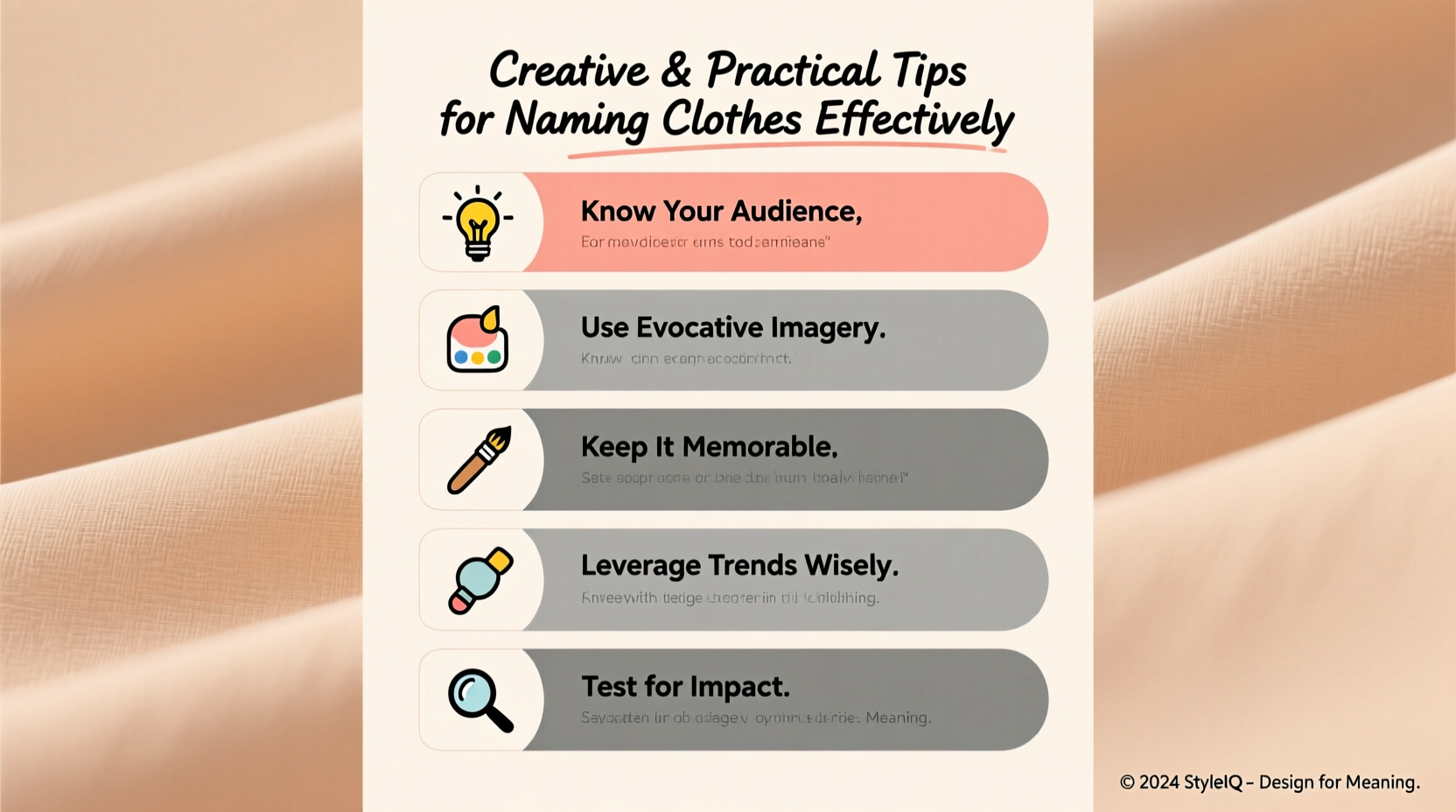
At its core, naming is about categorization and meaning. When applied to clothing, it bridges the gap between utility and identity. Designers use names to evoke mood (\"Midnight Wanderer Dress\"), while minimalist wardrobers use codes (\"Cotton Tee #3\") for efficiency. Both approaches serve purpose—but blending creativity with practicality yields the best results.
Consider this: if you refer to a jacket as “the one I wore to Paris,” you’re already naming it by association. Structuring that instinct into a consistent system unlocks benefits across several areas:
- Organization: Easier retrieval in physical or digital closets.
- Branding: For designers, a strong name increases memorability.
- Personal Connection: Names make items feel unique, reducing impulse disposal.
- Styling Efficiency: Named outfits or pieces simplify coordination.
How to Balance Creativity and Functionality
The most effective clothing names strike a balance between imagination and usability. A poetic name like “Storm Whisper Blazer” sounds evocative but means nothing if you can’t find it later. Conversely, “Black Jacket 001” is clear but forgettable.
The solution? Use a hybrid approach: combine a descriptive base with a creative modifier.
“Good naming in fashion isn’t about being clever—it’s about being clear *and* memorable.” — Lena Torres, Fashion Archivist & Wardrobe Consultant
For example:
Jacket_Black_Wool_Thunder
Breaks down as: [Type]_[Color]_[Material]_[Creative Name]
This format allows filtering by category (e.g., all \"Jackets\") while preserving emotional resonance through the final tag.
A Step-by-Step Guide to Naming Any Garment
- Identify the garment type: Is it a dress, shirt, coat, etc.? Be specific (e.g., “Trench Coat” vs. “Coat”).
- Note key attributes: Color, fabric, season, fit (e.g., oversized, slim).
- Add context: Where was it made? When was it worn? Any sentimental value?
- Create a short creative tag: One word or phrase that captures its essence (e.g., “Nomad,” “Sunset,” “Monday Boost”).
- Combine into a structured name: Use underscores or hyphens for readability.
Practical Naming Systems for Different Needs
Not everyone needs the same naming strategy. Your system should align with your goals—whether that’s organization, resale, design, or storytelling.
| Use Case | Best Naming Approach | Example |
|---|---|---|
| Minimalist Wardrobe | Type_Color_Material_Sequence | Tee_Black_Cotton_04 |
| Fashion Designer Line | CollectionName_ItemNumber_PoeticTag | UrbanEscape_Skirt03_Echo |
| Digital Closet App | Season_Type_StyleName | Spring_Dress_Breeze |
| Sentimental Keepsakes | Event_Location_Year | Wedding_Portland_2022 |
| Rental Inventory | ID_Category_Color_Size | R-2087-Dress-Red-M |
Each system prioritizes different information. The key is consistency—once you choose a format, stick to it across similar items.
Real Example: How a Stylist Transformed Her Client’s Closet
Maria, a personal stylist in Toronto, worked with a client overwhelmed by a cluttered wardrobe. Despite having high-quality pieces, she struggled to mix and match or recall what she owned.
Maria implemented a naming convention using sticky labels (for temporary tagging) and a spreadsheet. Each top was named using:
[Category]_[Neckline]_[Sleeve]_[Color]_[Mood]
Examples included:
• Top_VNeck_Long_Black_Chic
• Blouse_Round_Short_White_Fresh
Within two weeks, the client reported faster outfit decisions and fewer duplicate purchases. “I finally *see* my wardrobe,” she said. “It’s like meeting old friends I’d forgotten.”
Checklist: Build Your Own Clothing Naming System
- ✅ Define your primary goal (organization, branding, memory, resale)
- ✅ Choose 3–5 naming components that matter most to you
- ✅ Decide on a separator (underscore, hyphen, space)
- ✅ Test the system on 5–10 items
- ✅ Document the logic so you can scale it
- ✅ Apply names consistently—digitally or via tags
- ✅ Review and refine after one month of use
Common Naming Mistakes to Avoid
Even with good intentions, poor naming habits can undermine your efforts. Watch out for these pitfalls:
- Inconsistency: Mixing formats (e.g., “Blue Shirt” vs. “Shirt_Blue_01”) confuses search and memory.
- Overcomplication: Too many descriptors slow down recognition.
- Vagueness: Names like “Nice Top” provide no useful information.
- Emotional bias: Calling something “Ugly Green Dress” may discourage future wear—even if it looks great.
- Ignoring scalability: A cute nickname works for one item but fails when applied to fifty.
Instead, aim for neutral, repeatable structures that allow room for personality without sacrificing clarity.
FAQ
Can I use emojis in clothing names?
Only if your system supports them reliably. Emojis may not display correctly across devices or apps, and they can interfere with sorting. If used, keep them secondary—e.g., as tags, not primary identifiers.
Should I rename clothes after altering them?
Yes. If a significant change occurs—like dyeing, tailoring, or embellishment—update the name to reflect it. For example: Dress_Black_Crepe_Upcycled signals transformation and adds value.
What if I have multiple items of the same type and color?
Use a sequence number or distinguishing feature. Instead of “Black Pants,” try “Pants_Black_Wool_Slim_01” and “Pants_Black_Cotton_Relaxed_02.” This prevents confusion and honors subtle differences.
Conclusion
Naming clothes is more than a quirky habit—it’s a tool for intentionality. Whether you're streamlining a personal wardrobe or launching a fashion line, the way you label your garments shapes how you see, use, and value them. A well-named piece becomes more than fabric; it becomes part of a narrative.
Start today. Pick one drawer, one category, or one favorite item. Give it a name that’s both useful and meaningful. Then expand from there. Over time, you’ll build a wardrobe that doesn’t just hold clothes—but tells your story.




 浙公网安备
33010002000092号
浙公网安备
33010002000092号 浙B2-20120091-4
Comments
No comments yet. Why don't you start the discussion?