
A pencil bag is more than just a container for pens and pencils—it’s a portable command center for creativity, productivity, and personal expression. Whether you're a student, artist, teacher, or office professional, how you use and organize your pencil bag can significantly impact your daily efficiency and mindset. Most people underutilize this small but powerful tool, stuffing it haphazardly and forgetting about it until something goes missing. With thoughtful organization and a few clever strategies, your pencil bag can become a streamlined extension of your workflow.
Maximize Space with Smart Compartmentalization
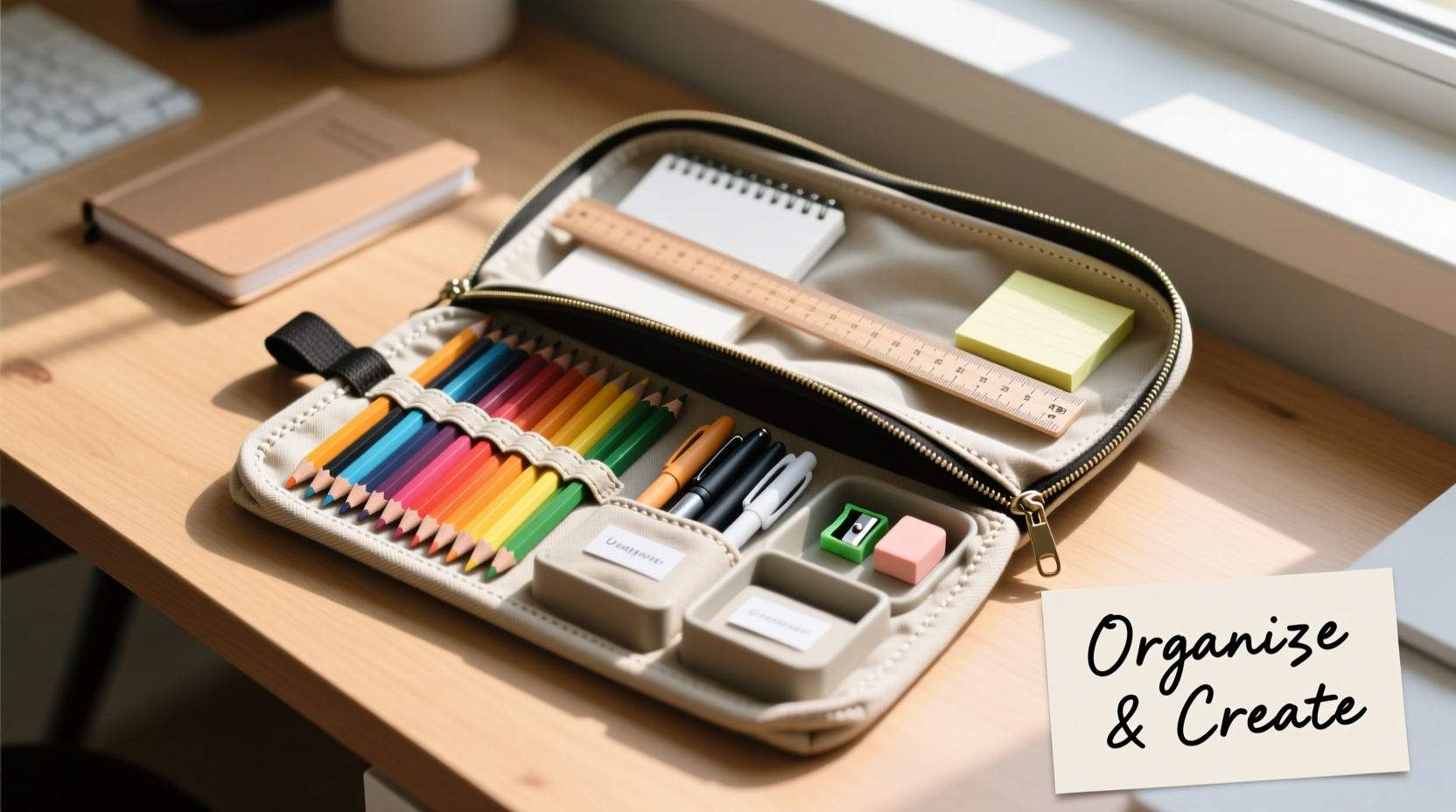
One of the most common mistakes is treating all compartments equally. Many pencil bags come with multiple sections—zippered pockets, mesh sleeves, elastic loops—but they’re often used incorrectly. To optimize space, assign zones based on function and frequency of use.
- Main compartment: Reserve for frequently used items like pens, highlighters, and mechanical pencils.
- Front zip pocket: Ideal for small essentials such as erasers, paper clips, or USB drives.
- Mesh sleeve: Perfect for flat items like sticky notes, rulers, or index cards.
- Elastic loops: Secure longer tools like scissors, glue sticks, or colored pencils.
Color-Code and Label for Instant Access
Visual organization reduces decision fatigue. Assigning colors to categories makes finding what you need almost automatic. For example, blue could mean writing tools, green for correction supplies, and red for creative instruments like markers or paintbrushes.
If your bag has transparent pockets, consider adding tiny adhesive labels or washi tape strips to differentiate sections. For users who rely on tactile cues, textured stickers (bumpy, smooth, striped) can help identify contents without opening the bag.
“Color-coding isn’t just for classrooms—it’s a cognitive shortcut that reduces search time by up to 40%.” — Dr. Lena Torres, Organizational Psychologist
Step-by-Step Guide: Reorganizing Your Pencil Bag Weekly
Just like cleaning your desk, your pencil bag needs regular maintenance. A cluttered bag leads to lost items and frustration. Follow this simple weekly routine to keep everything in order.
- Empty completely: Remove every item and place them on a clean surface.
- Sort by category: Group into piles—writing, drawing, correcting, measuring, tech, miscellaneous.
- Purge unused items: Discard dried-out markers, broken leads, or forgotten rubber bands.
- Clean the interior: Wipe down fabric or plastic with a dry microfiber cloth; use a cotton swab for crevices.
- Reinsert strategically: Place high-use items at the top or front; tuck backups deeper inside.
- Test accessibility: Open and close the bag several times to ensure nothing snags or blocks the zipper.
Mini Case Study: How a High School Artist Transformed Her Workflow
Sophia, a 10th-grade art student, struggled with losing fine liners and mixing up her brush pens during class. She carried a large, unstructured pouch that spilled contents whenever opened. After adopting a tiered organization system—using silicone bands to group similar tools and labeling each section with symbols—her efficiency improved dramatically.
She assigned one side of her bag to sketching tools (pencil, eraser, sharpener), another to inking (fine liners by line weight), and the back pocket to watercolor brushes and pigment sticks. Within two weeks, she reported spending 30% less time searching for materials and more time creating. Her teacher even adopted the method for the entire art department.
Do’s and Don’ts: Pencil Bag Organization Table
| Do | Don't |
|---|---|
| Use small silicone bands to bundle pencils by type or color | Jam in too many items just because there's space |
| Store spare refills or batteries in a labeled coin-sized pouch | Keep expired or dried-up markers “just in case” |
| Include a mini notepad or sticky flags for quick notes | Place food, gum, or liquids inside (risk of leaks and pests) |
| Rotate seasonal tools (e.g., holiday-themed pens) in and out | Ignore worn zippers or torn lining—repair early |
| Customize with patches or embroidery for personal motivation | Use sharp tools like X-Acto knives without protective sheaths |
Expand Beyond Stationery: Multi-Purpose Uses
Your pencil bag doesn’t have to be limited to pens and pencils. With intentional design, it can double as a travel kit, emergency supply pack, or hobby organizer.
- For travelers: Store earbuds, passport-sized notebook, hotel key, and lip balm.
- For parents: Keep bandaids, mini hand sanitizer, hair ties, and teething rings accessible.
- For creatives: Convert into a portable sketch kit with watercolor pans, blending stumps, and a tiny spray bottle.
- For tech users: Hold SD cards, stylus, cable adapters, and screen cleaner wipes.
The versatility lies in modularity. Swap inserts weekly depending on your schedule—school, work, gym, or weekend outings.
Checklist: Optimize Your Pencil Bag in 10 Minutes
Follow this quick checklist anytime you feel your bag slipping into chaos:
- ☐ Empty all contents onto a flat surface
- ☐ Discard anything broken, dried, or unnecessary
- ☐ Wipe down interior with a dry cloth
- ☐ Group tools by function (writing, coloring, measuring, etc.)
- ☐ Use bands or mini cases to contain small parts
- ☐ Place most-used items where they’re easiest to reach
- ☐ Verify zippers and seams are intact
- ☐ Add a personal touch (label, charm, or motivational quote sticker)
- ☐ Close and test access speed and ease
- ☐ Schedule next review date (recommended: weekly)
Frequently Asked Questions
How do I prevent my pencil bag from getting smelly?
Odors usually come from trapped moisture or leftover food residue. Avoid storing snacks or damp items. Occasionally air out the bag overnight, and place a small piece of activated charcoal or baking soda in a breathable pouch inside to absorb odors naturally.
Can I wash my pencil bag?
It depends on the material. Fabric bags can often be hand-washed with mild soap and air-dried. Leather or faux leather should only be wiped with a damp cloth. Always check manufacturer instructions. Never machine-wash unless explicitly stated.
What’s the ideal number of items to keep in a pencil bag?
There’s no fixed number, but a good rule is the “5-second rule”: if you can’t find what you need within five seconds, it’s too full. Aim for 8–12 essential items, plus 2–3 situational tools. Less clutter means clearer focus.
Final Thoughts: Turn Routine Into Ritual
Organizing your pencil bag isn’t just about tidiness—it’s an act of self-respect and intentionality. When your tools are arranged with care, you signal to yourself that your work matters. The small ritual of maintaining your stationery fosters discipline, clarity, and readiness. Over time, these micro-habits compound into greater productivity and creative confidence.




 浙公网安备
33010002000092号
浙公网安备
33010002000092号 浙B2-20120091-4
Comments
No comments yet. Why don't you start the discussion?