
Car keys are among the most frequently used personal items, yet they’re often tossed into pockets, bags, or bowls without much thought. Over time, this leads to clutter, misplacement, and frustration—especially when you're rushing out the door. A well-organized key ring isn’t just about neatness; it’s a tool for efficiency, security, and peace of mind. With a few creative tweaks and intentional habits, you can transform your key ring from a jangling mess into a streamlined system tailored to your lifestyle.
Why Key Ring Organization Matters
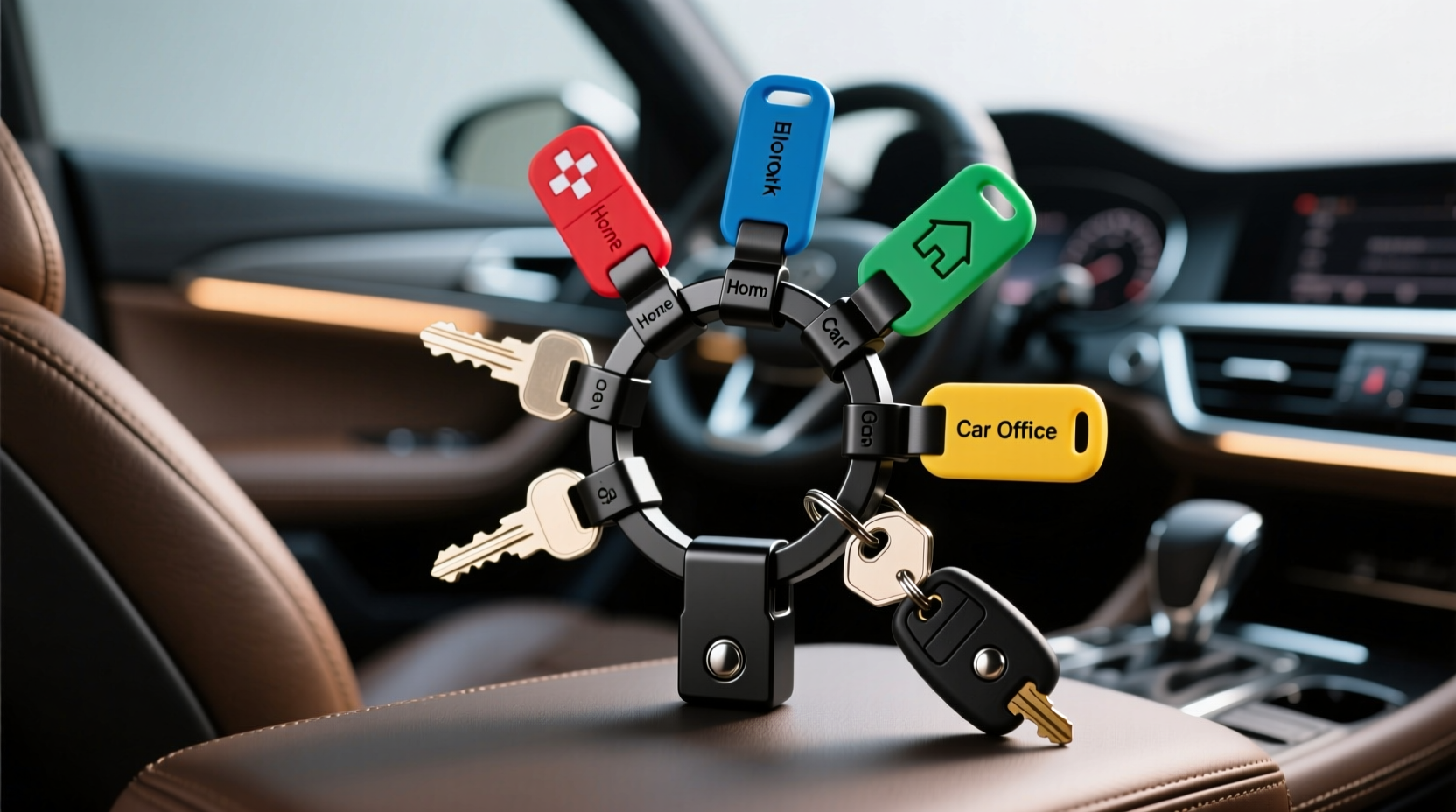
A disorganized key ring does more than annoy—it slows you down. Multiple keys on a single ring make it difficult to identify the right one quickly, especially in low light. It also increases wear on both keys and locks due to unnecessary friction. More importantly, cluttered keychains are more likely to be misplaced or dropped, leading to costly replacements or security risks.
Organizing your keys with purpose enhances functionality. Whether you drive multiple vehicles, manage rental properties, or simply want to simplify your daily routine, a thoughtful key ring setup saves time and reduces stress.
“Most people underestimate how much small efficiencies compound over time. Organizing something as simple as your keys can save hours annually.” — David Lin, Productivity Consultant
Smart Strategies for Key Ring Organization
The foundation of an organized key ring is intentionality. Every key should have a reason to be there. Start by auditing your current set: remove duplicates, outdated keys, or those tied to places you no longer access. Then, apply these proven methods to keep things tidy and functional.
1. Use Color-Coded Key Tags
Assigning colors to specific keys makes identification instant. For example:
- Red for your primary vehicle
- Blue for home or garage
- Green for work or secondary car
- Yellow for spare or emergency keys
Small plastic or metal tags fit over key bowls and come in various shapes and hues. This method is especially helpful for families sharing vehicles or professionals managing multiple access points.
2. Segregate Keys by Function with Split Rings
Instead of stacking all keys on one large ring, use smaller split rings to group them by category. For instance:
- Vehicle Group: Car, motorcycle, bike lock
- Home Group: Front door, garage, mailbox
- Work Group: Office, storage unit, equipment locker
Connect these groups to a central organizer like a carabiner or quick-link. This modular approach lets you detach only what you need for the day, reducing bulk and noise.
3. Incorporate a Key Cover or Sleeve
Silicone or leather key covers not only protect key blades from damage but also muffle noise and prevent scratches to phones or glasses in your pocket. Some models allow you to embed labels or icons for easy recognition. Look for ones with cutouts for key fobs or USB drives if you carry tech tools.
Step-by-Step Guide: Building Your Ideal Key Ring
Follow this sequence to create a personalized, efficient key system:
- Gather all your keys from drawers, bags, and old keychains.
- Test each key—discard or store duplicates and unused ones.
- Categorize remaining keys (e.g., vehicle, home, office).
- Select a base ring: Choose between a rotating keyring, retractable reel, or compact key holder.
- Add color-coded tags or engraved labels for clarity.
- Attach grouped keys via mini split rings or modular connectors.
- Include only essentials on your daily carry; store backups securely at home.
- Test usability—can you find the right key in under five seconds?
Comparison: Key Organization Methods
| Method | Pros | Cons | Best For |
|---|---|---|---|
| Traditional Key Ring | Inexpensive, widely available | Bulky, noisy, hard to navigate | Minimal key sets |
| Modular System (Split Rings) | Customizable, quiet, scalable | Takes effort to set up | Families, multi-property owners |
| Retractable Reel | Keeps keys accessible, reduces loss risk | Can tangle, less discreet | Delivery drivers, service technicians |
| Slim Key Holder (Metal/Plastic) | Compact, stylish, protects keys | Limited capacity, higher cost | Urban commuters, minimalists |
| Smart Tracker-Enabled Ring | GPS/find-my-device support | Battery-dependent, requires app | Frequent travelers, forgetful users |
Real-Life Example: How Sarah Reduced Morning Chaos
Sarah, a school administrator and mother of two, used to waste precious minutes every morning searching for her minivan key amid a tangle of six others. Her keychain was heavy, noisy, and inefficient. After reading about modular organization, she restructured her keys using colored tags and mini split rings.
She separated her keys into three clusters: family vehicles, house/garage, and school access. She attached them to a titanium carabiner that clipped neatly to her belt loop. The change cut her morning prep time by nearly four minutes per day—and eliminated the stress of dropping keys during rushed exits.
“It sounds minor,” she said, “but not fumbling with keys while holding coffee and a backpack? That’s life-changing.”
Checklist: Optimize Your Key Ring Today
- ✅ Audit all keys—remove unused or redundant ones
- ✅ Label or color-code each key for fast identification
- ✅ Group keys by function using small split rings
- ✅ Choose a durable, quiet base connector (carabiner, quick-link, etc.)
- ✅ Add a protective cover or sleeve if desired
- ✅ Store backup keys securely at home (fireproof safe or trusted location)
- ✅ Test your new setup for speed and comfort
Frequently Asked Questions
How do I prevent my keys from scratching my phone or wallet?
Use a silicone key cover or store keys in a separate pocket. Alternatively, switch to a flat key holder that encloses blades completely. Avoid keeping keys loose in the same compartment as electronics or leather goods.
Are smart key trackers worth it?
If you frequently misplace keys, yes. Devices like Tile, Chipolo, or Apple AirTag attach to your key ring and connect to your smartphone. They provide proximity alerts and last months on a single battery. While not a replacement for organization, they add a safety net.
Can I organize keys without removing them from the ring?
Absolutely. Use sliding dividers, rubber spacers, or labeled washers between keys to create visual and tactile separation. Some systems even offer adjustable sliders that snap onto standard key rings to designate sections.
Final Thoughts: Small Change, Big Impact
Organizing your car keys with a key ring might seem trivial, but its ripple effects are real. Faster exits, reduced anxiety, and fewer lost keys translate into smoother days and long-term savings. The best systems balance creativity with practicality—custom enough to suit your life, simple enough to maintain.
Start today. Clear your keys, rethink their roles, and build a system that works for you. Whether you choose color tags, modular rings, or a sleek modern holder, the goal is the same: effortless access and total control.




 浙公网安备
33010002000092号
浙公网安备
33010002000092号 浙B2-20120091-4
Comments
No comments yet. Why don't you start the discussion?