
In an age where minimalism and sustainability are gaining momentum, finding new uses for everyday household items is both economical and environmentally responsible. One of the most overlooked objects in this pursuit is the humble tissue box. After the last Kleenex has been used, many people toss the cardboard container without a second thought. But with a little creativity, a tissue box can transform into a functional, stylish, and surprisingly durable organizer. From desk accessories to craft supplies, these lightweight containers offer a blank canvas for smart storage—no tools or advanced skills required.
Why Repurpose Tissue Boxes?
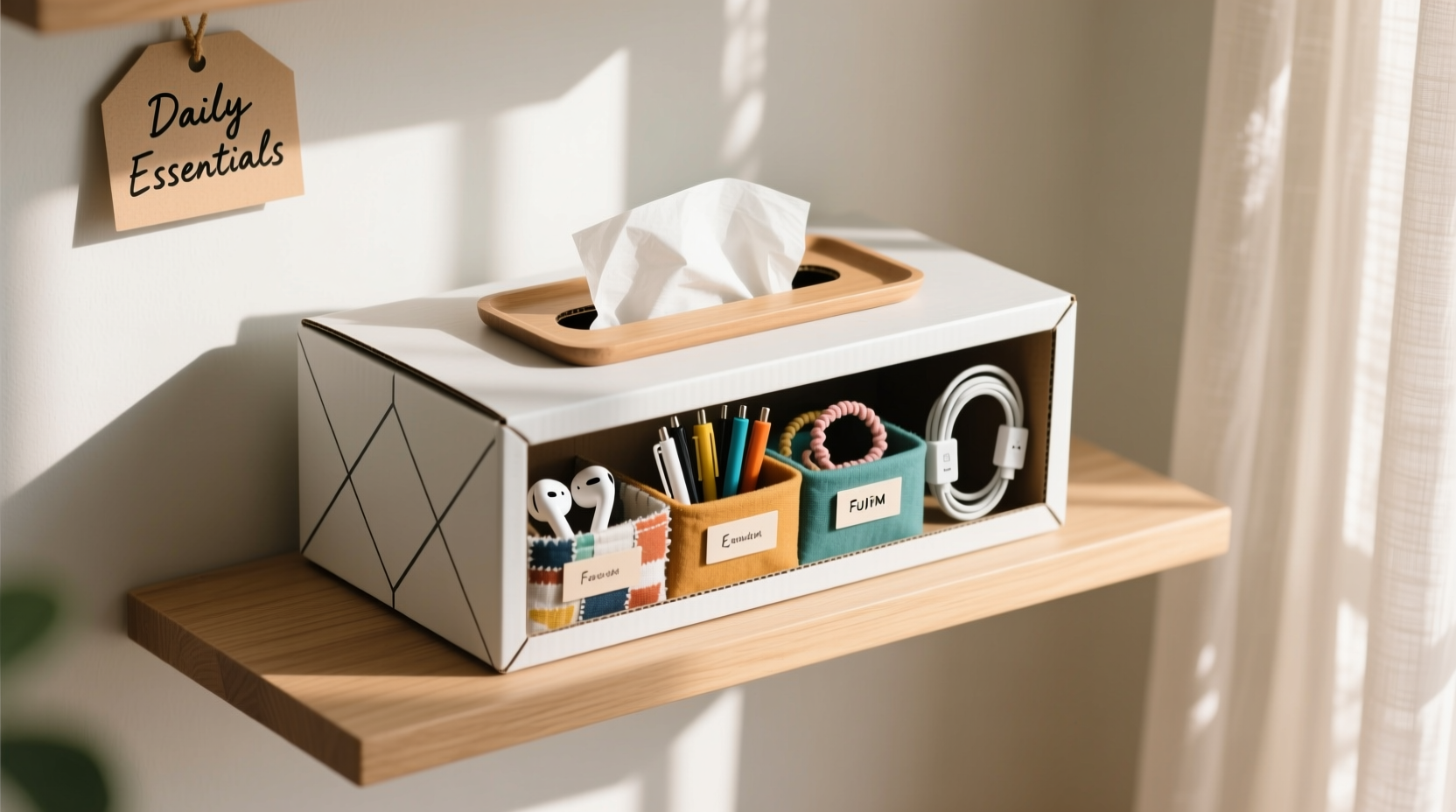
Tissue boxes are made from sturdy corrugated cardboard, often coated with a thin layer of wax or plastic that adds durability. Their rectangular shape, open top, and consistent dimensions make them ideal for stacking, labeling, and customization. Unlike plastic bins or commercial organizers, they’re biodegradable, lightweight, and free—making them perfect for temporary or experimental organization systems.
Repurposing tissue boxes also reduces waste. According to the Environmental Protection Agency, paper products account for over 25% of landfill waste. By reusing packaging materials like tissue boxes, households can significantly cut down on single-use cardboard consumption.
1. Desk & Office Organizers
A cluttered workspace hampers productivity. Instead of buying expensive desktop trays, turn a tissue box into a custom organizer tailored to your daily needs.
Cut the front or sides to create compartments for pens, sticky notes, paper clips, and USB drives. Cover the exterior with decorative paper, fabric, or paint to match your office aesthetic. For added stability, glue two tissue boxes together side-by-side to create a wider base.
This DIY solution is especially useful for students or remote workers who need quick access to frequently used items but lack space for large organizers.
“Simple interventions like using repurposed containers can reduce visual clutter by up to 40%, improving focus and task efficiency.” — Dr. Lena Torres, Environmental Psychologist
2. Craft Supply Storage System
Arts and crafts enthusiasts know how quickly supplies like ribbons, buttons, beads, and washi tapes can become disorganized. A single tissue box can be divided into sections using cardboard strips or old file dividers to separate small materials.
For example, slice vertical slits along the long sides of the box and insert stiff cardboard partitions to form individual cubbies. Label each section clearly with masking tape and a marker. Stack multiple decorated boxes on a shelf to create a modular craft station.
This method is ideal for parents helping children manage their art kits. It teaches organizational habits while reducing mess during creative time.
3. Cord & Charger Management
Chargers, headphones, and cables tend to tangle and disappear into furniture crevices. A tissue box solves this by acting as a vertical cord caddy.
Place the box behind your nightstand or desk. Feed cords through the opening and wrap each one around a clothespin or binder clip attached to the inside edge. This keeps them separated, visible, and dust-free.
You can also punch small holes in the back panel to route excess length through to the wall outlet, keeping only the necessary length accessible. Use labels to identify which cord belongs to which device—especially helpful when managing multiple tablets, phones, or gaming controllers.
Step-by-Step Guide: Make a Cord Organizer
- Collect all charging cables and sort by device.
- Clean the tissue box and remove any leftover paper inserts.
- Punch a small hole near the bottom of the back panel using scissors or a hole punch.
- Thread each cable through the hole, plug it into the outlet, then coil the excess inside the box.
- Clip each cord end to the rim with labeled clips for easy identification.
- Place the box against the wall or under a desk for neat visibility.
4. Kids’ Room Toy & Book Bins
Children’s toys and picture books often end up scattered across floors. Lightweight tissue boxes are perfect for low-height shelving units designed for little hands.
Cover boxes with colorful contact paper or let kids decorate them with stickers, markers, or glued-on fabric. Assign each bin a category: stuffed animals, action figures, crayons, or bedtime stories. Arrange them on a low shelf or in a cubby unit.
To increase durability, reinforce corners with duct tape or glue on cardboard flaps as bases. These bins are easy to move, washable (with a damp cloth on sealed surfaces), and safe for young children to handle independently.
5. Kitchen & Pantry Mini-Storage Units
While not suitable for wet or greasy items, tissue boxes excel at organizing dry kitchen essentials. Line the interior with foil or wax paper to create a moisture-resistant surface, then use them to hold tea bags, spice packets, snack wraps, or reusable produce bags.
Stand the boxes upright in a cabinet and label the front for quick access. They’re particularly effective in deep pantries where items get pushed to the back and forgotten. The open top allows for easy visibility and retrieval.
| Use Case | Modification Needed | Best For |
|---|---|---|
| Desk organizer | Cut front panel, decorate | Pens, notepads, sticky notes |
| Craft storage | Add internal dividers | Buttons, threads, beads |
| Cord manager | Punch rear hole, add clips | Chargers, earphones, cables |
| Kitchen sorter | Liner + label | Tea bags, seasoning pouches |
| Toys/books bin | Reinforce base, decorate | Small toys, picture books |
Mini Case Study: Sarah’s Home Office Transformation
Sarah, a freelance graphic designer from Portland, struggled with a chaotic workspace. Her desk was buried under tangled cords, loose pens, and stacks of unsorted papers. After reading about upcycling ideas online, she collected six empty tissue boxes over two weeks.
She transformed them into a coordinated system: two became pen holders with cut-out fronts, three were stacked vertically for file sorting (labeled “Invoices,” “Contracts,” and “Ideas”), and one served as a cord hub behind her monitor. Using scrapbook paper from an old project, she wrapped each box for a cohesive look.
Within a week, Sarah reported a noticeable improvement in focus and workflow. “I’m not tripping over headphone wires anymore, and I actually see what I need instead of digging through drawers,” she said. “It cost nothing and took less than an hour.”
Checklist: Turn a Tissue Box Into a Storage Solution
- ☐ Clean out any remaining tissues and flatten seams
- ☐ Decide on the intended use (office, craft, kitchen, etc.)
- ☐ Measure contents to ensure fit (e.g., pens, cables)
- ☐ Modify structure if needed (cut openings, add dividers)
- ☐ Reinforce weak edges with tape or glue
- ☐ Decorate or cover for aesthetics and protection
- ☐ Label clearly for easy identification
- ☐ Place in designated area and test usability
Frequently Asked Questions
Can I wash a repurposed tissue box?
No, standard tissue boxes are not waterproof. However, you can line the interior with plastic, foil, or laminated paper to protect against spills or light moisture. Wipe clean with a damp cloth, but avoid soaking.
How do I make the box sturdier?
Glue a second layer of cardboard to the base or reinforce corners with packing tape. For heavy items, consider mounting the box inside a larger container or attaching it to a wooden board for support.
Are tissue boxes safe for food storage?
Only for dry, packaged foods like tea bags or pre-wrapped snacks. Never use them for raw ingredients, liquids, or uncovered edibles due to potential contamination and lack of food-grade certification.
Final Thoughts: Small Changes, Big Impact
Repurposing a tissue box may seem like a minor act, but it reflects a broader mindset shift toward mindful consumption and intelligent design. These simple containers prove that functionality doesn’t require expense or complexity. With a few cuts, some tape, and a touch of imagination, ordinary waste becomes extraordinary utility.
Start today: save your next empty tissue box and ask yourself, “What could this hold?” Whether it’s organizing your child’s crayons or decluttering your tech drawer, the possibilities are limited only by creativity—not budget.




 浙公网安备
33010002000092号
浙公网安备
33010002000092号 浙B2-20120091-4
Comments
No comments yet. Why don't you start the discussion?