
Wine is often the centerpiece of celebration, relaxation, or intimate dinners. But what happens when you're ready to pour a glass and realize there’s no corkscrew in sight? Or worse—the cork has crumbled, leaving fragments inside the neck of the bottle? While these situations can be frustrating, they’re not dead ends. With a bit of ingenuity and everyday household tools, it’s entirely possible to open a wine bottle safely and effectively—even without a traditional opener.
The key lies in understanding pressure, leverage, and controlled force. Whether you’re dealing with a broken cork, a missing tool, or an unexpected guest arriving with a favorite vintage, knowing alternative techniques ensures you won’t miss a beat. Below are tested, practical methods that prioritize both safety and wine preservation.
Why Traditional Openers Fail—and What to Do Next
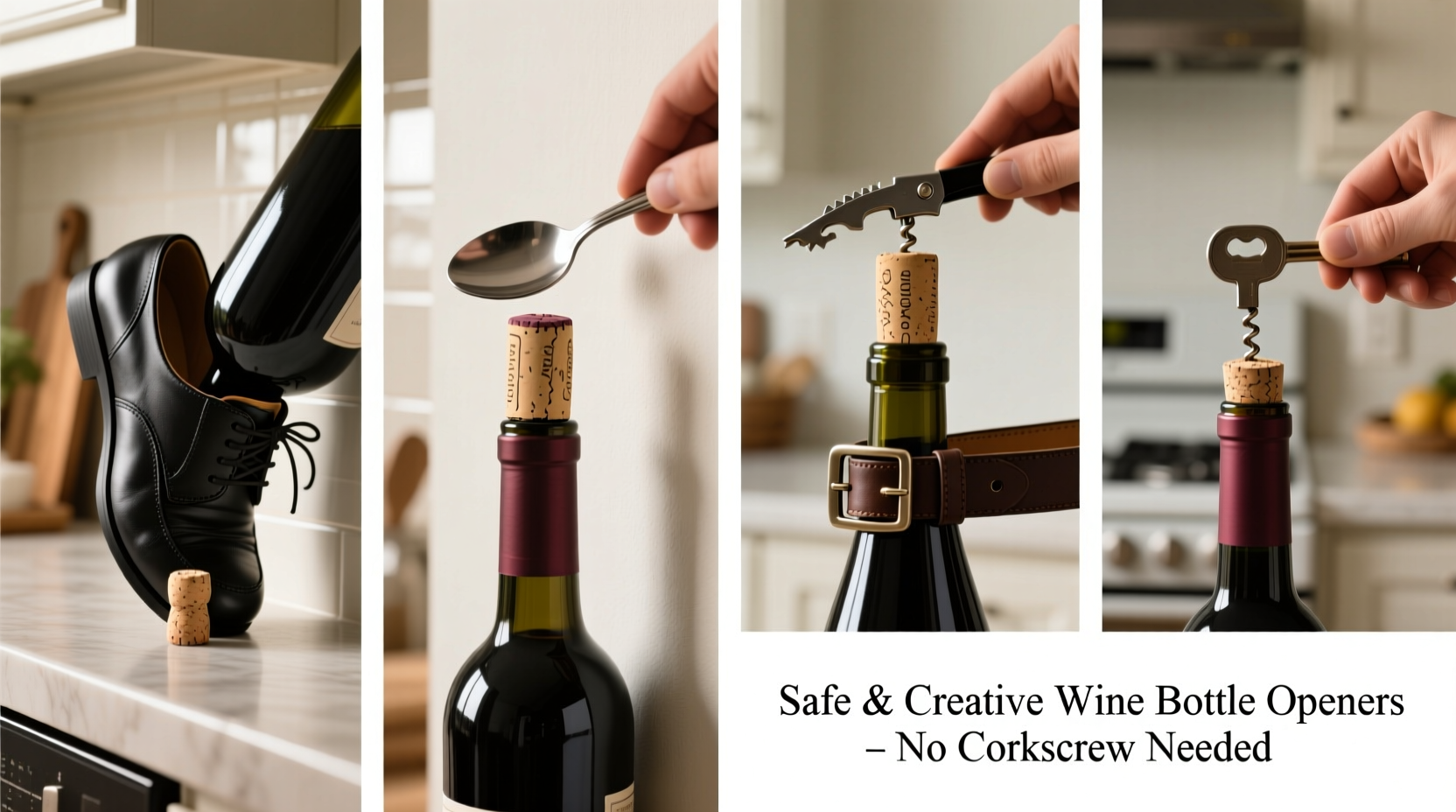
Corkscrews break. Corks disintegrate. Sometimes, bottles come sealed with synthetic stoppers that resist standard extraction. In outdoor settings like picnics or camping trips, carrying a corkscrew may simply not be feasible. When these moments arise, improvisation becomes essential.
It's important to note: the goal isn't just to get the cork out—it's to do so without contaminating the wine, breaking glass, or injuring yourself. Many online hacks promote risky actions like hammering through the cork or using knives improperly. These can lead to shattered glass or splinters in your drink. The following methods avoid such dangers while delivering reliable results.
Method 1: The Screw and Hammer Technique (For Broken or Sunken Corks)
If the cork has partially fallen into the bottle but remains accessible, this method offers precision and control.
- Firmly insert a long screw (at least 2 inches) into the center of the exposed cork.
- Leave about half an inch of the screw’s head protruding.
- Place the edge of a hammer across the screw head and gently pull upward, using the lip of the bottle as a pivot point.
- Slowly extract the cork with steady pressure.
This technique works best when at least 1/4 inch of cork remains above the bottle neck. It mimics the function of a two-pronged waiter’s friend, offering mechanical advantage without requiring specialized tools.
Method 2: The Towel and Shoe Hack (For Intact Bottles)
A surprisingly effective method for removing a cork from a sealed bottle uses nothing more than a shoe and a thick towel.
- Wrap the base of the wine bottle in a sturdy cloth or kitchen towel.
- Insert the bottle upside down into a shoe with a firm heel (e.g., dress shoes or boots).
- Hold the neck securely and repeatedly strike the heel of the shoe against a solid wall or tree trunk.
- After 10–20 impacts, the cork will gradually emerge.
- Once enough is exposed, pull it out by hand or with pliers.
The physics here rely on inertia: the liquid inside resists sudden motion, pushing against the cork with each impact. Over time, this forces the cork upward. This method preserves the wine’s integrity and avoids introducing foreign particles.
“While unconventional, the shoe method is one of the safest field improvisations I’ve seen. Just don’t overdo it—too much force risks breaking the bottle.” — Rafael Mendez, Sommelier & Beverage Consultant
Method 3: Using a Knob or Door Handle (Leverage-Based Extraction)
If you have access to a fixed door handle or cabinet knob, you can use leverage to draw out a stubborn cork.
- Position the bottle at a 45-degree angle.
- Slide the top edge of the cork under the curve of a metal door knob.
- Grip the bottle firmly and slowly push downward, using the knob as a fulcrum.
- Repeat until the cork emerges far enough to grasp.
This approach requires patience and a stable knob. It’s especially useful in hotel rooms or kitchens where tools are limited but fixtures are plentiful.
Safety First: What Not to Do
While creativity is encouraged, some viral “hacks” pose real risks. The table below outlines common dangerous practices and safer alternatives.
| Dangerous Method | Risk Involved | Safer Alternative |
|---|---|---|
| Using a knife to pry the cork | Slippage can cause serious hand injury | Use the screw-and-hammer method instead |
| Hitting the bottle directly on concrete | Bottle may shatter, causing glass contamination | Use the towel-and-shoe method with controlled impact |
| Burning the cork with fire | Heat can crack glass; smoke taints wine | Avoid entirely—no benefit outweighs the risk |
| Pushing the cork all the way in | Cork debris floats in wine, affecting taste and texture | Only acceptable if followed by fine straining before serving |
Mini Case Study: The Dinner Party Rescue
During a summer gathering in Napa Valley, host Clara invited six guests for a vineyard-style dinner. As she reached for the dessert wine, she discovered the cork had crumbled during storage. No corkscrew was available, and the nearest store was 20 minutes away.
Recalling a technique from a wine workshop, she used a stainless steel screw from her toolbox and a claw hammer. She carefully inserted the screw into the remaining cork fragment and leveraged the hammer’s edge against the bottle lip. Within 90 seconds, the cork was removed cleanly. The Moscato was served without delay, and guests praised both the wine and Clara’s composure.
This real-world example underscores how preparedness—not perfection—makes the difference. A single reliable method can turn panic into poise.
Step-by-Step Checklist for Emergency Bottle Opening
When time is short and tools are scarce, follow this checklist to stay organized and safe:
- ✅ Assess the cork: Is it intact, sunken, or broken?
- ✅ Choose the right method based on cork condition and available tools.
- ✅ Protect your hands with gloves or a towel when applying force.
- ✅ Work over a sink or tray to catch spills or debris.
- ✅ Inspect the wine after opening—remove any cork fragments with a fine mesh strainer.
- ✅ Serve immediately if the wine appears undisturbed; otherwise, decant carefully.
FAQ
Can I push the cork into the bottle safely?
You can, but only as a last resort. If the cork is clean and free of mold, pushing it in with the handle of a wooden spoon may work. However, always strain the wine through cheesecloth or a coffee filter before serving to remove particles.
Will these methods affect the taste of the wine?
When executed properly, none of the recommended techniques alter the wine’s flavor. Avoid methods involving heat, metal contamination, or excessive shaking, which can accelerate oxidation or introduce off-notes.
Is it safe to use a screwdriver instead of a screw?
No. Flat-head screwdrivers lack the threading needed to grip the cork and may slip, causing injury. Always use a proper screw for the screw-and-hammer method.
Final Thoughts and Call to Action
Opening a wine bottle without a corkscrew doesn’t require magic—just knowledge, calm execution, and respect for safety. Whether you’re in a rustic cabin, hosting a spontaneous dinner, or facing a broken cork, the solutions above empower you to respond confidently.
These skills aren’t just about convenience; they reflect resourcefulness and care for the experience of sharing wine. Mastering even one of these methods ensures you’ll never let a missing tool dull a moment meant for celebration.




 浙公网安备
33010002000092号
浙公网安备
33010002000092号 浙B2-20120091-4
Comments
No comments yet. Why don't you start the discussion?