
In an era where sustainability meets convenience, many vaping enthusiasts are rethinking single-use devices like the Puff Bar. Designed as disposable vapes, these sleek, pre-filled pods offer simplicity—but at an environmental cost. With over 3 million Puff Bars sold annually in the U.S. alone, their contribution to electronic waste is growing. While manufacturers advise against reuse, many users seek responsible ways to extend the life of their device or repurpose its components safely. This guide explores realistic, ethical, and safe methods to creatively reuse a Puff Bar—without risking health or damaging equipment.
Understanding the Puff Bar: Design and Limitations
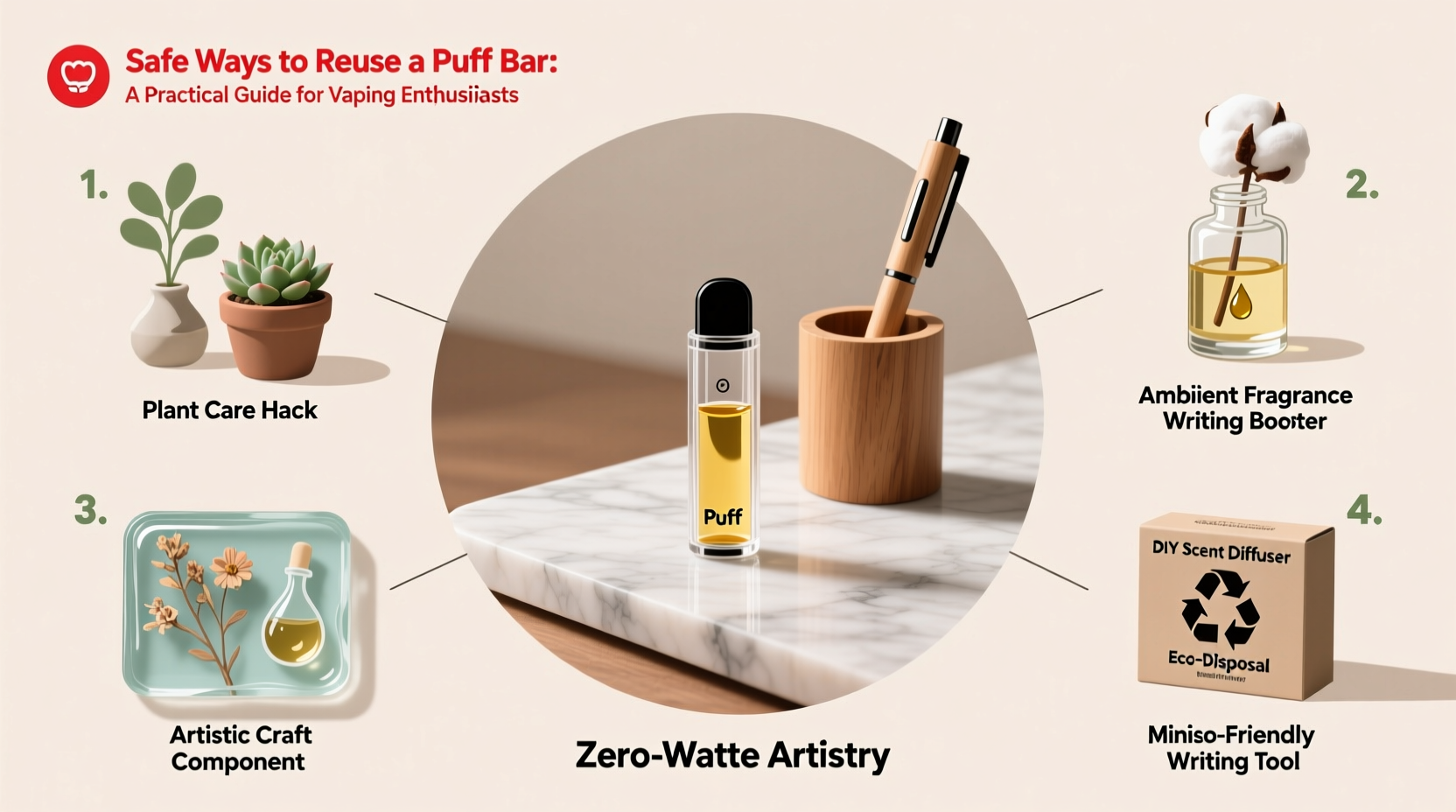
The Puff Bar is engineered as a closed-system, single-use vaping device. It contains a built-in battery, a pre-filled e-liquid pod (typically 2ml), and a coil assembly—all sealed within a plastic shell. Once the e-liquid is depleted or the battery fails, the entire unit is meant to be discarded. Unlike refillable vape pens, there’s no official support for refilling or replacing parts.
Despite this design, some users attempt to refill or modify their Puff Bars. However, doing so can pose risks such as leakage, inconsistent vapor production, overheating, or even battery failure. The key to safe reuse lies not in altering the internal mechanics but in finding alternative applications that respect the device’s original limitations.
“Attempting to recharge or refill a disposable vape bypasses critical safety mechanisms. The safest approach is creative repurposing after proper discharge.” — Dr. Alan Reyes, Electrical Safety Consultant at Consumer Tech Labs
Safe Methods to Reuse a Puff Bar: Practical Approaches
Reusing a Puff Bar doesn’t mean forcing it to vape beyond its lifespan. Instead, consider secondary uses that honor both safety and sustainability. Below are five legitimate, low-risk strategies.
1. Use as a Learning Tool for Vape Mechanics
Disassembling a used Puff Bar can serve as an educational experience. After ensuring the device is fully discharged (no remaining charge), carefully open the casing to examine how the coil, wick, and airflow system work together. This hands-on exploration helps beginners understand basic vape engineering without risking injury from live components.
2. Repurpose Components for DIY Projects
Once emptied and cleaned, certain non-electronic parts of a Puff Bar can be reused in craft or tech projects. The plastic housing, mouthpiece, and airflow tube may be suitable for small-scale prototyping, art installations, or model building. Ensure all residue is removed using isopropyl alcohol and allow parts to dry completely.
3. Convert into a Portable Storage Capsule
The compact, airtight design of a Puff Bar makes it ideal for storing tiny items. After thorough cleaning and drying, the shell can hold:
- Emergency tobacco pinch
- Small herbs or spices for camping
- Tiny hardware (e.g., watch batteries, screws)
- Mini survival kit contents (fish hooks, matches)
This application transforms waste into utility while avoiding electrical tampering.
4. Donate for Recycling Programs
While not “reuse” in the traditional sense, responsibly recycling Puff Bar components supports circular economy efforts. Some electronics recyclers accept lithium-ion batteries and plastics from disposable vapes. Organizations like Call2Recycle partner with retailers to collect vape waste. By directing used devices to proper channels, users contribute to material recovery without attempting unsafe modifications.
5. Use as a Visual Indicator for Vaping Reduction Goals
Collecting used Puff Bars in a clear container can serve as a behavioral feedback tool. Watching the pile grow encourages mindfulness about consumption habits. Some users set monthly limits and display their used units as a commitment tracker—turning waste into a motivational display.
What Not to Do: Common Misconceptions and Dangers
Despite online tutorials promoting refill hacks, several practices should be strictly avoided due to health and safety risks.
| Action | Risk Level | Why It’s Dangerous |
|---|---|---|
| Refilling with e-liquid | High | Can cause leakage, poor wicking, and chemical exposure from incompatible liquids. |
| Recharging via USB cable | Very High | May lead to battery swelling, overheating, or fire due to lack of charging circuitry. |
| Prying open near the battery | Extreme | Lithium-ion cells can ignite if punctured or short-circuited. |
| Using damaged or wet units | High | Increases risk of electrical fault or inhaling degraded materials. |
Step-by-Step Guide to Safe Disposal and Reuse Preparation
If you plan to repurpose any part of a Puff Bar, follow this timeline to ensure safety:
- Deplete the Device: Use until vapor output diminishes significantly and the light no longer activates.
- Wait 24 Hours: Allow residual charge to dissipate. Do not store near heat sources.
- Inspect for Damage: Check for cracks, leaks, or swelling. Discard immediately if present.
- Clean Externally: Wipe with a cloth dampened with isopropyl alcohol. Avoid submerging.
- Determine Purpose: Decide whether to recycle, disassemble for education, or repurpose non-electric parts.
- Dispose Responsibly: If not reusing, take to an e-waste facility. Never throw in regular trash.
Real-World Example: From Waste to Workshop Inspiration
Jamal, a high school STEM teacher in Portland, collects used Puff Bars from volunteer donors (after full depletion). In his electronics lab, students examine the internal layout to learn about circuit design, battery integration, and product lifecycle analysis. One student group even designed a 3D-printed adapter to turn cleaned casings into keychain organizers. No modifications were made to active components, ensuring compliance with safety standards. The project won a local sustainability award and sparked a school-wide e-waste drive.
Frequently Asked Questions
Can I refill my Puff Bar with my favorite e-liquid?
No. Refilling is not only ineffective due to the absence of a refill port but also hazardous. The wick system isn’t designed for manual saturation, leading to flooding, dry hits, or exposure to unvaporized chemicals. Manufacturers do not endorse this practice.
Is it safe to open a Puff Bar after it dies?
Only if done carefully and after waiting 24+ hours post-last-use. Focus on non-battery areas. Never cut, drill, or heat the device. If unsure, opt for professional recycling instead.
Where can I recycle my used Puff Bar?
Check with local e-waste centers, vape shops, or programs like Call2Recycle.org. Some retailers offer drop-off bins. Lithium batteries must be handled separately from general waste.
Final Checklist: Responsible Puff Bar End-of-Life Plan
- ✅ Confirm the device is fully drained (no vapor or light)
- ✅ Wait at least one day before handling internally
- ✅ Clean exterior with alcohol wipe
- ✅ Avoid modifying battery or charging circuits
- ✅ Choose between educational use, component repurposing, or certified recycling
- ❌ Never attempt to recharge or refill
Conclusion: Innovate Responsibly
While the Puff Bar isn’t built for reuse, creativity and responsibility can coexist. By shifting focus from forced functionality to thoughtful repurposing, vapers can reduce waste and deepen their understanding of the technology they use. Whether turning a shell into a mini-container or using it to teach others about electronics, the goal is progress—not just prolongation. Every mindful decision at the end of a device’s life moves us closer to a more sustainable vaping culture.




 浙公网安备
33010002000092号
浙公网安备
33010002000092号 浙B2-20120091-4
Comments
No comments yet. Why don't you start the discussion?