
Car keys are more than just tools—they’re personal. Many people use keychains to express their personality, and cat lovers often choose feline-themed charms. But while a cute cat keychain brings joy, it must be attached securely to avoid loss, damage, or interference with vehicle operation. The challenge lies in balancing charm with practicality. A poorly attached accessory can snag on clothing, get caught in seatbelt mechanisms, or even interfere with the ignition. This guide explores thoughtful, durable, and stylish methods to keep your cat keychain safely connected—so you can enjoy its whimsy without worry.
Why Secure Attachment Matters
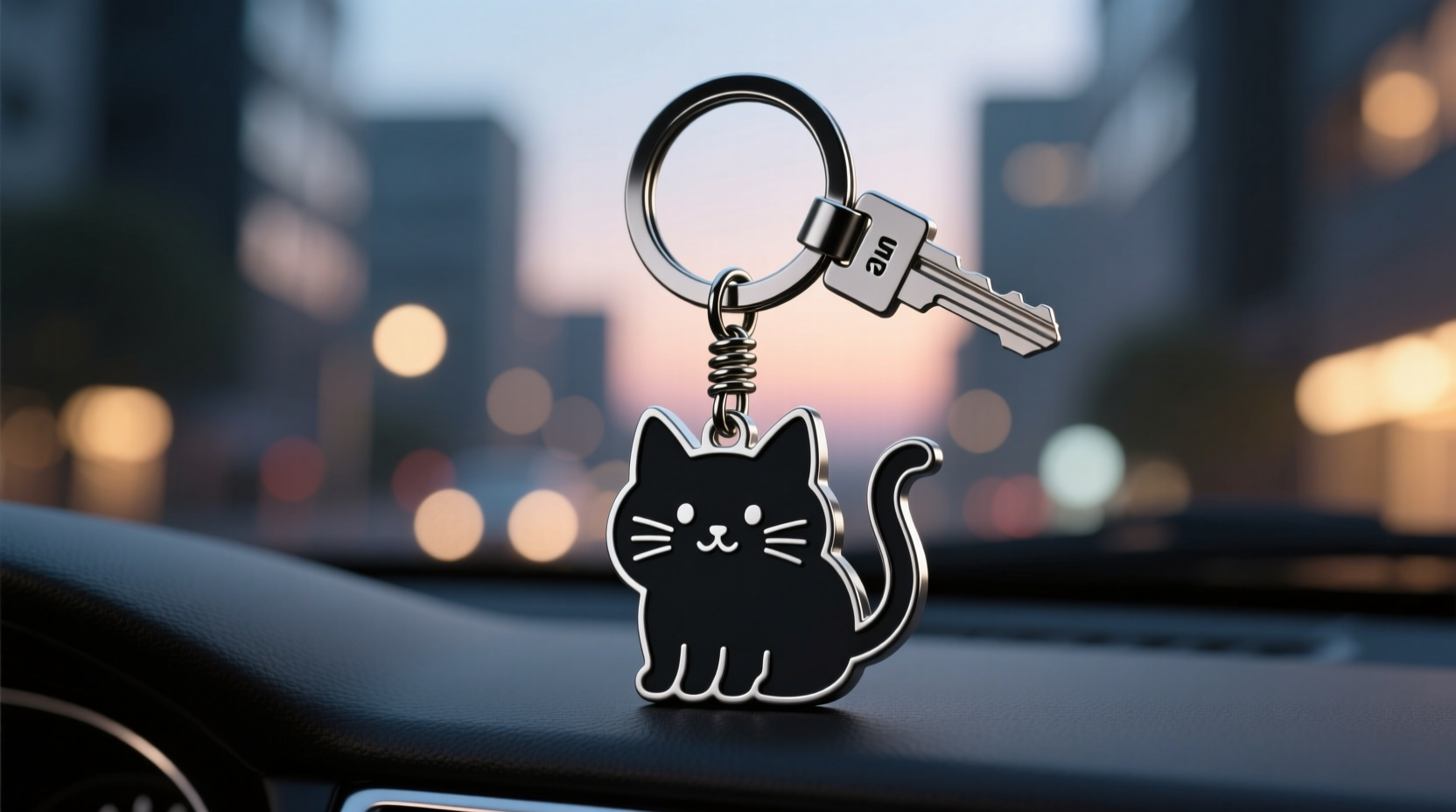
A dangling keychain might seem harmless, but loose attachments pose real risks. In rare cases, excess weight or movement from bulky keychains has been linked to ignition switch issues, particularly in older vehicles where mechanical tolerances are tighter. Additionally, a detached keychain can be lost easily, especially if it holds sentimental value. Beyond function, security affects aesthetics—nothing looks sloppier than a bent split ring or a frayed leather strap.
The goal is to integrate your cat keychain so it enhances your keyring rather than complicates it. This means choosing attachment methods that are both physically strong and visually harmonious.
Best Materials for Secure Keychain Attachment
Not all connectors are created equal. The material and design of the link between your cat charm and keyring determine durability, resistance to wear, and ease of use. Here’s a breakdown of common options:
| Material | Pros | Cons | Best For |
|---|---|---|---|
| Stainless Steel Split Ring | Durable, rust-resistant, widely compatible | Can be difficult to open without tools | Long-term daily use |
| Solid Metal Lobster Clasp | Easy to connect/disconnect, strong hold | Potential spring fatigue over time | Rotating or removable displays |
| Leather Loop with Snap | Stylish, soft texture, vintage appeal | Wears faster in humid conditions | Fashion-forward setups |
| Ball Chain (like dog tags) | Lightweight, flexible, modern look | Prone to kinking; weaker under strain | Minimalist designs |
| Titanium Quick Link | Extremely strong, lightweight, corrosion-proof | Higher cost, less decorative | Outdoor or high-mobility use |
“Many customers don’t realize how much stress everyday jostling puts on small metal components. A well-constructed connection point is as important as the charm itself.” — Marcus Lin, Key Accessory Designer at Urban Tether Co.
Creative Yet Secure Attachment Methods
Security doesn’t mean sacrificing creativity. With clever techniques, you can showcase your cat keychain proudly while ensuring it stays put through daily use.
1. Dual-Ring Layering System
Use two concentric rings: one for keys only, another dedicated to accessories. Connect them via a small but sturdy connector like a lobster clasp or titanium quick link. This isolates movement and reduces strain on the main keyring.
2. Rotating Display Bead
Slide your cat charm onto a rotating barrel bead mounted on a ball chain. Attach this assembly to the keyring using a micro-carabiner. The charm spins freely without tangling, adding visual interest while minimizing snag risk.
3. Embedded Silicone Sleeve
If your cat keychain has a flat back or comes in resin form, embed it partially into a custom silicone sleeve that fits snugly around your key fob. This method secures it flush against the device, eliminating dangling parts entirely—a favorite among Tesla owners.
4. Magnetic Coupling with Safety Tether
Attach a tiny neodymium magnet to the back of the cat charm and pair it with a steel plate on the keyring. Add a thin, nearly invisible nylon safety cord (1–2 inches long) as a backup tether. If the magnet detaches, the cord keeps the charm from flying off.
Step-by-Step: Installing a Cat Keychain Using the Hybrid Lock Method
This method combines strength and elegance, ideal for valuable or handmade cat charms. It uses layered security features to prevent accidental detachment.
- Gather Supplies: Stainless steel split ring (8mm), lobster clasp (12mm), jump ring (6mm), cat keychain with loop, pliers.
- Open the Jump Ring: Use two pairs of pliers to twist the ring open sideways—never pull apart, which weakens the metal.
- Attach Charm to Jump Ring: Slide the cat charm’s loop onto the jump ring, then close securely.
- Connect to Lobster Clasp: Open the jump ring again and link it to the lobster clasp’s base ring.
- Secure Clasp to Split Ring: Clip the lobster clasp onto the main keyring split ring.
- Test Movement: Gently tug and rotate the charm to ensure no wobble or looseness.
This layered approach allows easy removal for cleaning or swapping charms while maintaining industrial-grade reliability.
Real-Life Example: Sarah’s Commuter Solution
Sarah, a graphic designer and devoted cat owner, wanted to carry a photo-engraved cat pendant—her late pet Miso—on her daily commute. She initially used a simple split ring, but after losing it during a rainy dash to her car, she redesigned her setup.
She now uses a hybrid system: a laser-cut acrylic cat charm set into a slim aluminum frame, attached via a titanium micro-carabiner to a secondary ring isolated from her ignition key. The charm rotates smoothly and never interferes with starting her car. “It feels like Miso’s still riding shotgun,” she says. “But this time, I made sure physics agrees with sentiment.”
Checklist: Secure Cat Keychain Installation
- ✅ Choose a lightweight charm (under 1.5 oz recommended)
- ✅ Inspect all metal components for cracks or corrosion
- ✅ Use proper tools (jewelry pliers) when opening rings
- ✅ Avoid direct attachment to electronic key fobs unless designed for it
- ✅ Test pull strength before regular use
- ✅ Limit total keyring weight to reduce ignition wear
- ✅ Reassess attachment every 3–6 months for signs of fatigue
Frequently Asked Questions
Can a keychain damage my car’s ignition?
Yes, especially in older models or vehicles with side-mounted ignitions. Excess weight or swinging motion can wear internal components over time. Keeping non-essential items on a separate ring minimizes this risk.
Is it safe to glue a cat charm directly onto my key fob?
Generally not recommended. Adhesives can degrade due to temperature changes and oils from hands. They may also void warranties or trap moisture, leading to electronic failure. Mechanical fasteners are safer and more reversible.
What’s the most secure way to carry a sentimental charm?
A dual-layer system—such as a lobster clasp backed by a safety tether—is ideal. It offers both immediate security and redundancy in case one component fails.
Final Thoughts
Attaching a cat keychain to your car key ring shouldn’t be a trade-off between emotion and efficiency. With the right materials, technique, and attention to detail, you can honor what matters most—your love for cats—without compromising safety or function. Whether you opt for a minimalist ball chain or an engineered quick-release mount, prioritize durability and smart design.




 浙公网安备
33010002000092号
浙公网安备
33010002000092号 浙B2-20120091-4
Comments
No comments yet. Why don't you start the discussion?