
Phone chains have surged in popularity—not just as fashion accessories but as practical tools to prevent drops and theft. Whether you're attending a concert, navigating a crowded street, or simply elevating your everyday look, a well-attached chain strap adds both flair and function. But how do you securely fasten a chain to a phone case that wasn’t designed for one? The challenge lies in balancing durability with aesthetics. This guide explores tested, innovative methods to attach a chain strap creatively and safely—without compromising your device’s integrity.
Why Use a Chain Strap on Your Phone?
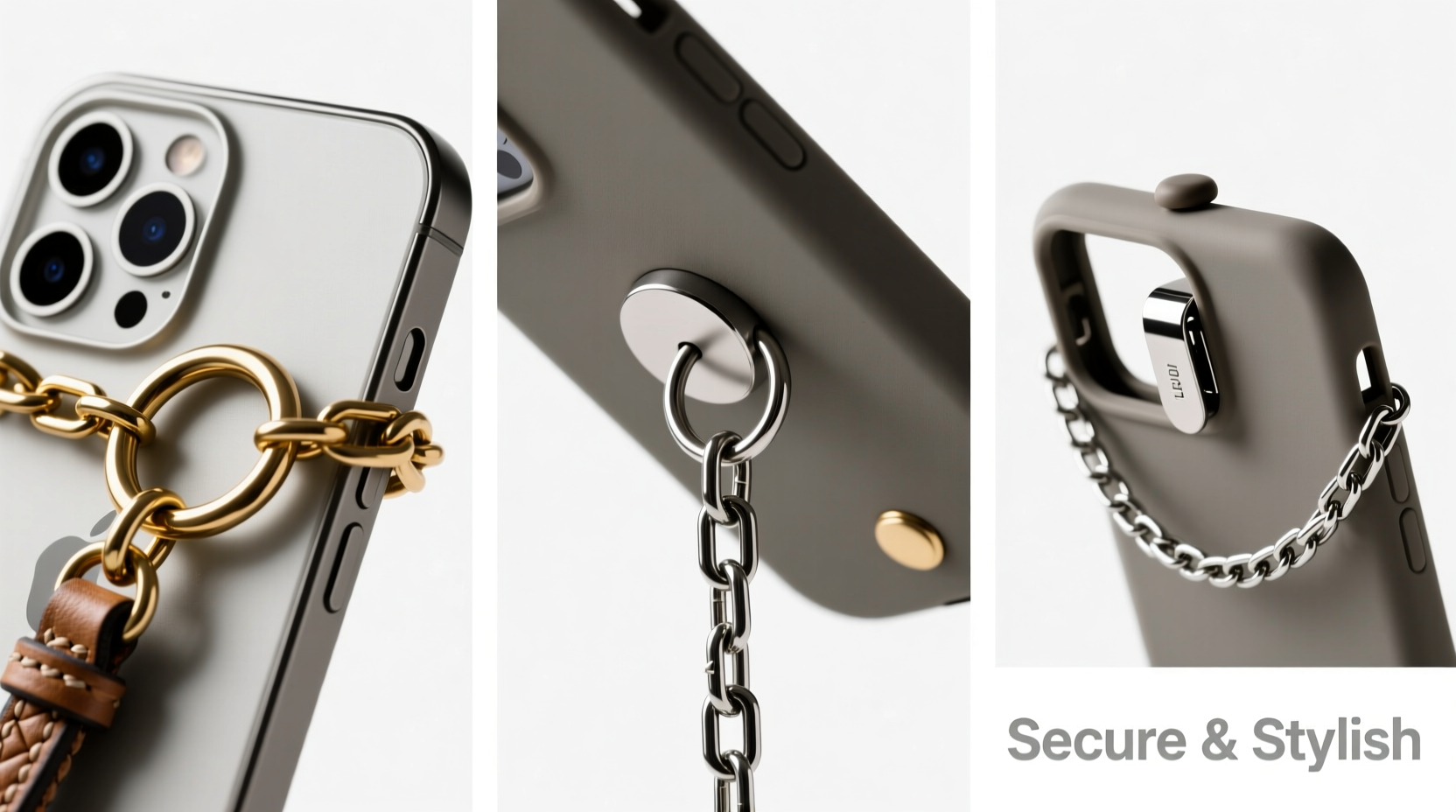
A chain strap does more than drape stylishly across your shoulder or wrist. It serves as a physical tether, reducing the risk of accidental drops, especially in high-movement environments. For travelers, festival-goers, or urban commuters, it can be a deterrent against snatch-and-grab theft. Beyond utility, chain straps offer customization—mixing metals, lengths, and styles to match outfits or moods.
However, many modern phone cases lack built-in loops or anchor points. Attaching a chain improperly can lead to damage, weak connections, or even loss of the device. The key is using attachment methods that are both secure and reversible, preserving your case and phone.
Choosing the Right Chain and Case Compatibility
Not all chains are suited for daily phone use. A heavy metal chain may strain an insecure connection, while a flimsy one might break under stress. Opt for lightweight, durable chains made from stainless steel or aluminum alloy. Look for lobster clasps or spring rings at the ends—they provide reliable closure and are easier to connect to adapters.
Your phone case material also influences compatibility. Rigid polycarbonate or TPU cases hold attachments better than soft silicone. If your case has a kickstand, textured back, or raised edges, these features can be leveraged for mechanical grip. For smooth cases, adhesive or magnetic solutions become more viable.
“Durability starts with compatibility. Match your chain weight to your attachment method—overloading a small loop invites failure.” — Jordan Lin, Product Design Consultant
5 Secure & Creative Attachment Methods
Below are five proven techniques, ranging from no-modification options to semi-permanent upgrades. Each balances security, ease of installation, and visual appeal.
1. Ring Light Holder Adapter (No-Modification)
Repurpose a universal ring light mount—a circular clamp with a standard 1/4\"-20 screw thread. Slide it over your phone case, tighten it snugly around the frame, and attach a small carabiner or jump ring to the threaded base. Connect your chain to this ring. The clamp grips most cases without scratching and allows quick removal.
2. Magnetic Snap System (Semi-Permanent)
Embed two tiny neodymium disc magnets into a slim wallet-style case or use adhesive-backed versions. Attach one magnet inside the case’s back panel and another on the exterior. Then, fix a metal plate with a loop to the outer magnet. Your chain connects via a clasp to this loop. Modern magnetic systems support up to 10 lbs of pull force—more than enough for a phone.
This method works best with folio or rugged cases where internal modification is feasible. Avoid placing magnets near credit cards or medical devices.
3. Lanyard Loop Mod with Epoxy Anchor (DIY Upgrade)
For users comfortable with minor modifications, drill a small 2–3mm hole in the corner of a hard-shell case. Thread a nylon cord loop through and secure both ends with industrial epoxy resin. Once cured, tie the ends together behind the case to form a knot that won’t pull through. Attach a metal split ring to the loop, then connect your chain.
This creates a dedicated anchor point stronger than any adhesive solution. Ensure the hole is away from internal components—ideally in a non-sensitive corner.
4. Adhesive Metal D-Ring Tabs (Removable)
Use industrial-strength adhesive D-rings designed for keys or gear. These small metal loops come with 3M VHB tape backing. Clean the case surface with alcohol, press the tab firmly for 30 seconds, and wait 24 hours before loading. Attach your chain directly or via a carabiner.
Ideal for flat-back cases, this method leaves minimal residue if removed carefully with heat and gentle scraping.
5. PopSocket Hybrid Mount (Convertible Style)
Many PopSockets collapse into a flat disc with a threaded base. Replace the standard top with a custom adapter that includes a swivel snap hook. Some third-party models even integrate a lanyard loop. Attach your chain to the hook, and enjoy the dual benefit of grip and tethering.
Note: Avoid over-tightening replacement tops, as plastic threads can strip.
Comparison Table: Attachment Methods at a Glance
| Method | Installation | Security Level | Reversible? | Best For |
|---|---|---|---|---|
| Ring Light Holder | No tools | Medium-High | Yes | Smooth or thick cases |
| Magnetic Snap | Adhesive or embedded | High | Limited | Folio or modifiable cases |
| Epoxy Loop Mod | Drilling + curing | Very High | No | Durable shell cases |
| Adhesive D-Ring | Peel and stick | Medium | Yes (with residue) | Flat-back phones |
| PopSocket Hybrid | Screw-on | Medium | Yes | Style-focused users |
Real-World Example: Festival Safety Upgrade
Sophia, a frequent concert attendee in Austin, lost her phone twice in crowd-heavy venues before switching to a chain setup. Her original case had no attachment points. She used Method #4—adhesive D-ring tabs—on her matte-finish iPhone case. After applying the tab near the top center, she connected a braided stainless steel chain with a lobster clasp. During her next music festival, the chain kept her phone secured during dancing and movement. When someone accidentally bumped into her, the phone swung harmlessly on the chain instead of falling to the ground. “It paid for itself in peace of mind,” she said.
Step-by-Step Guide: Installing an Epoxy Loop (Advanced DIY)
- Select a hard-shell case made of polycarbonate or rigid plastic.
- Choose a low-risk corner—away from buttons, ports, and camera cutouts.
- Drill a 2.5mm hole through the outer layer using a precision bit.
- Cut a 6-inch length of braided nylon cord or Kevlar thread.
- Thread the cord through the hole from inside to outside.
- Tie a stopper knot (e.g., double fisherman’s) on the inside end.
- Apply epoxy resin over the knot and surrounding area for reinforcement.
- Wait 24 hours for full cure before attaching hardware.
- Add a split ring to the external loop and connect your chain.
Frequently Asked Questions
Can a chain scratch my phone or case?
Possibly, if the chain rubs continuously. Prevent this by using coated chains (rubberized or painted), keeping the chain short enough to avoid dragging, or adding a fabric sleeve between the chain and case.
Will magnets affect my phone’s performance?
Modern smartphones are largely immune to small magnets. However, strong magnets may interfere with compass calibration or wireless charging alignment. Avoid placing magnets directly over the center back if you use MagSafe or similar tech.
Are adhesive attachments safe long-term?
Industrial adhesives like 3M VHB are rated for years of outdoor use. However, extreme heat, moisture, or oily residues can degrade their hold. Inspect monthly for lifting edges.
Checklist: Before You Attach a Chain
- ✅ Confirm your phone case material and thickness
- ✅ Choose a lightweight, durable chain with a secure clasp
- ✅ Decide between temporary or permanent attachment
- ✅ Select the appropriate method based on your case type
- ✅ Test the connection strength before daily use
- ✅ Inspect weekly for wear, loosening, or damage
Final Thoughts
Attaching a chain strap to your phone case doesn’t require sacrificing safety for style. With thoughtful selection and proper technique, you can achieve a secure, personalized look that moves with your lifestyle. Whether you opt for a tool-free clamp or invest in a custom-modified case, the goal remains the same: confidence in your device’s security. As trends evolve, so should our approach to functional design. Don’t just follow the style—engineer it to last.




 浙公网安备
33010002000092号
浙公网安备
33010002000092号 浙B2-20120091-4
Comments
No comments yet. Why don't you start the discussion?