
Furniture doesn’t have to be expensive or mass-produced to make a statement. A well-crafted DIY coffee table with built-in storage can transform your living room into a more organized, inviting, and personalized space. Whether you're short on square footage or simply love handmade decor, combining style and function in a coffee table is both practical and rewarding. This guide walks you through five unique designs, essential tools, material considerations, and expert-backed techniques to help you build a piece that reflects your taste and meets your needs.
Why Build a DIY Coffee Table with Storage?
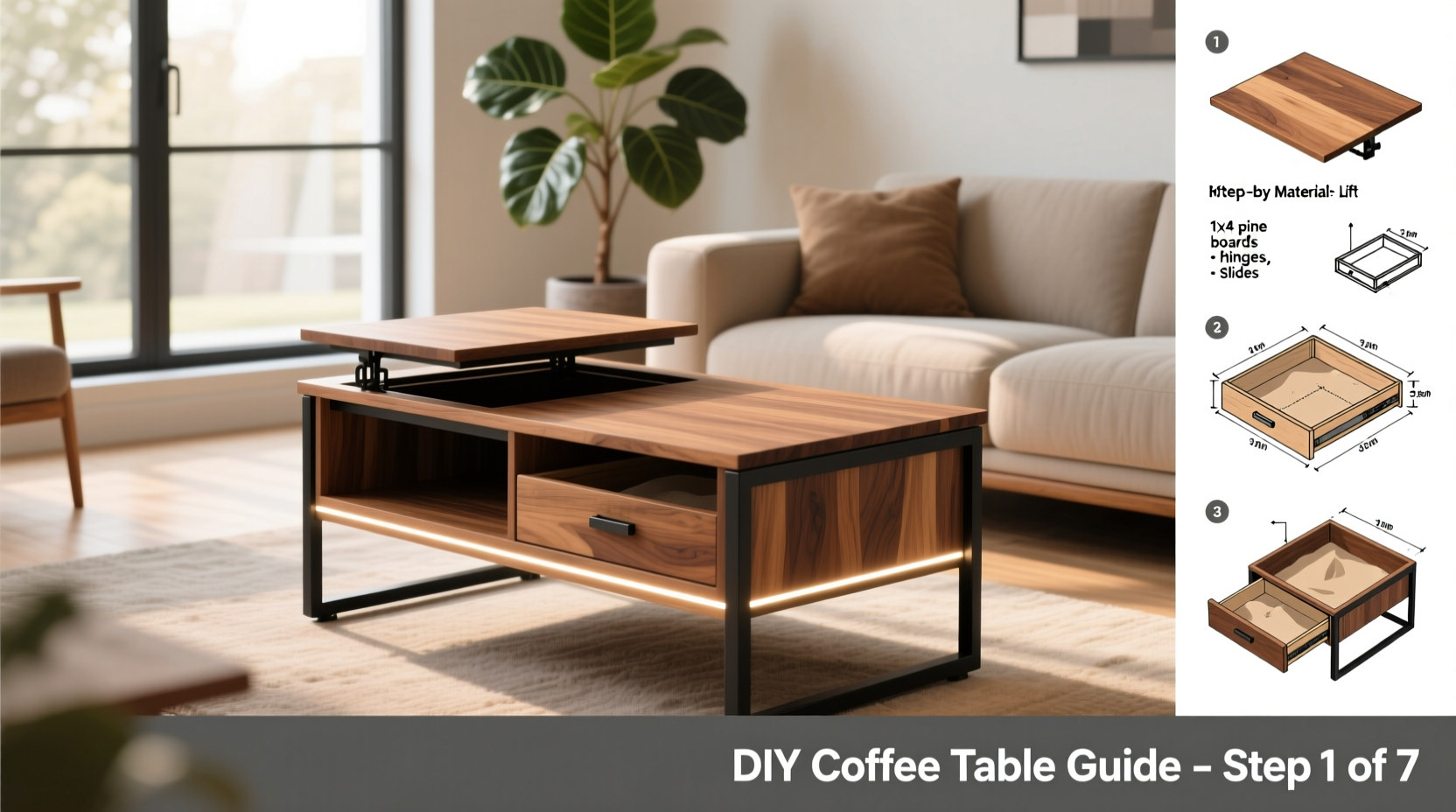
In compact apartments or busy family homes, multifunctional furniture isn’t just convenient—it’s essential. A coffee table with storage eliminates clutter by housing remotes, books, board games, blankets, and even pet toys. Beyond utility, a custom-built table allows you to choose materials, dimensions, and finishes that align perfectly with your interior aesthetic. Unlike store-bought options, which often sacrifice design for affordability or vice versa, a DIY approach gives you full control over quality and creativity.
“Handmade furniture carries a sense of identity. When you build it yourself, every scratch and joint tells a story.” — Jordan Lee, Interior Designer & Craft Educator
Design Ideas: 5 Creative DIY Coffee Tables with Storage
Before picking up a saw, consider which style suits your space and skill level. Here are five distinctive concepts ranging from rustic to modern:
- Industrial Crate Stack: Repurpose wooden shipping crates into a tiered coffee table. Open compartments offer easy access to items while maintaining an urban loft feel.
- Lift-Top Trunk Table: Convert an antique trunk or build a box-style frame with a hinged lid. Ideal for hiding bulky items and doubling as extra seating.
- Mid-Century Modern with Drawers: Clean lines, tapered legs, and two slim drawers create timeless appeal. Perfect for minimalist or Scandinavian interiors.
- Hollow Ottoman Style: Use plywood to construct a cushion-topped cube with internal storage. Great for soft-edged safety in homes with children.
- Reclaimed Wood Slab with Hidden Shelf: Feature a live-edge slab supported by metal hairpin legs, with a lower recessed shelf for baskets or magazines.
Essential Tools and Materials Checklist
No matter which design you choose, certain tools and supplies are non-negotiable. Gather these before starting:
- Circular saw or jigsaw
- Drill/driver with assorted bits
- Orbital sander or sandpaper (80–220 grit)
- Tape measure and combination square
- Clamps (at least 4)
- Wood glue and finishing nails/screws
- Safety goggles and dust mask
For materials, common choices include:
| Material | Best For | Average Cost (per sheet) | Workability |
|---|---|---|---|
| Plywood (¾”) | Drawers, box frames, shelves | $35–$60 | Easy – holds screws well |
| Reclaimed Wood | Tabletops with character | $0–$50 (often salvaged) | Moderate – may require de-nailing |
| MDF Board | Paint-grade surfaces | $25–$45 | Easy to cut, but heavy and not moisture-resistant |
| Hardwood (e.g., oak, maple) | Durable tops and legs | $80–$150 | Challenging – requires sharp tools |
Step-by-Step Guide: Building a Mid-Century Modern Coffee Table with Drawers
This project balances elegance and functionality. Estimated build time: 12–16 hours over two weekends.
- Plan Dimensions: Standard height is 16–18 inches. Choose a top size of 36\" x 20\". Include space for two 12\" wide drawers beneath.
- Cut the Tabletop: Use a pre-sanded hardwood panel or glue boards edge-to-edge. Sand smooth up to 220 grit.
- Build the Frame: Construct a rectangular apron from 2\"x4\" pine or poplar. Attach to legs using pocket holes or mortise-and-tenon joints.
- Add Drawer Supports: Install front and rear rails between the legs at drawer height. Ensure they’re level and parallel.
- Construct Drawers: Cut sides, fronts, backs, and bottoms from ½” plywood. Assemble using wood glue and brad nails. Mount ball-bearing slides for smooth operation.
- Attach Legs: Use 6\" tapered wooden legs secured with corner braces or threaded inserts.
- Sand Entire Piece: Start with 80-grit, progress to 120, then finish with 220. Wipe away dust with a tack cloth.
- Finish Application: Apply water-based polyurethane (3 coats) for durability, or use natural oil like tung or danish oil for warmth.
Real Example: Sarah’s Crate Coffee Table Makeover
Sarah, a graphic designer in Portland, lived in a 700-square-foot apartment where floor space was precious. She found three vintage wooden crates at a flea market—two identical large ones and one smaller. Instead of stacking them conventionally, she arranged the large crates side-by-side as the base, then centered the small crate on top upside-down to form the tabletop. After reinforcing joints with L-brackets and staining all pieces in walnut tone, she added casters for mobility. The result? A conversation-starting centerpiece with open cubbies for art books and knitting supplies—all for under $40.
Common Mistakes and How to Avoid Them
Even experienced builders encounter pitfalls. Learn from these frequent errors:
- Ignoring Leveling: An uneven table wobbles and wears faster. Always check with a spirit level during assembly.
- Overlooking Weight Distribution: Heavy items stored off-center can cause tipping. Distribute weight evenly, especially in lift-top designs.
- Skipping Sanding: Rough edges compromise both safety and finish quality. Take time to sand thoroughly.
- Poor Finish Choice: High-gloss finishes show fingerprints; raw wood stains easily. Match the finish to your lifestyle.
Expert Tips for Long-Term Durability
To ensure your coffee table stands the test of time, follow these professional recommendations:
- Use wood conditioner before staining porous woods like pine to avoid blotchiness.
- Reinforce drawer fronts with rabbet joints instead of butt joints for better strength.
- Consider soft-close hinges or drawer slides if noise is a concern.
- Apply a fresh coat of protective finish annually, especially in high-use areas.
FAQ
Can I build a storage coffee table without power tools?
Yes, though it will take longer. Hand saws, chisels, and a manual drill can complete most tasks. Focus on simpler designs like crate stacks or basic boxes with lift lids.
How much weight can a DIY coffee table support?
A well-constructed table using ¾” plywood or solid wood should safely hold 100–150 lbs. Avoid placing heavy electronics or standing on glass-topped versions unless specifically engineered for load.
Is reclaimed wood safe for indoor furniture?
Generally yes, but inspect for pests, mold, or embedded metal. Clean thoroughly, sand deeply, and seal completely to ensure safety and longevity.
Conclusion: Build Smarter, Live Better
A coffee table shouldn’t just sit in the center of your living room—it should serve it. By investing time in a DIY project with thoughtful storage solutions, you gain more than a piece of furniture. You create a functional work of art tailored to your life. Whether you repurpose old materials or craft something entirely new, each decision—from joinery to finish—adds value beyond price tags. These tables aren’t just about holding coasters; they reflect intention, craftsmanship, and personal style.




 浙公网安备
33010002000092号
浙公网安备
33010002000092号 浙B2-20120091-4
Comments
No comments yet. Why don't you start the discussion?