
An hourglass is more than just a timekeeping device—it’s a symbol of patience, focus, and the quiet passage of moments. While modern clocks dominate our lives, there’s something deeply satisfying about watching sand fall grain by grain through glass. The best part? You don’t need specialty tools or expensive supplies to make one. With a recycled bottle and a few common materials, you can create a functional, decorative hourglass that reflects your personal style.
This guide walks you through every step of building a custom hourglass at home. Whether you're crafting for a science project, classroom demonstration, or as a handmade gift, this DIY approach blends creativity with practical engineering. From selecting the right bottle to calibrating timing accuracy, you’ll learn how to build an hourglass that works—and looks—exactly how you want it to.
Why Build Your Own Hourglass?
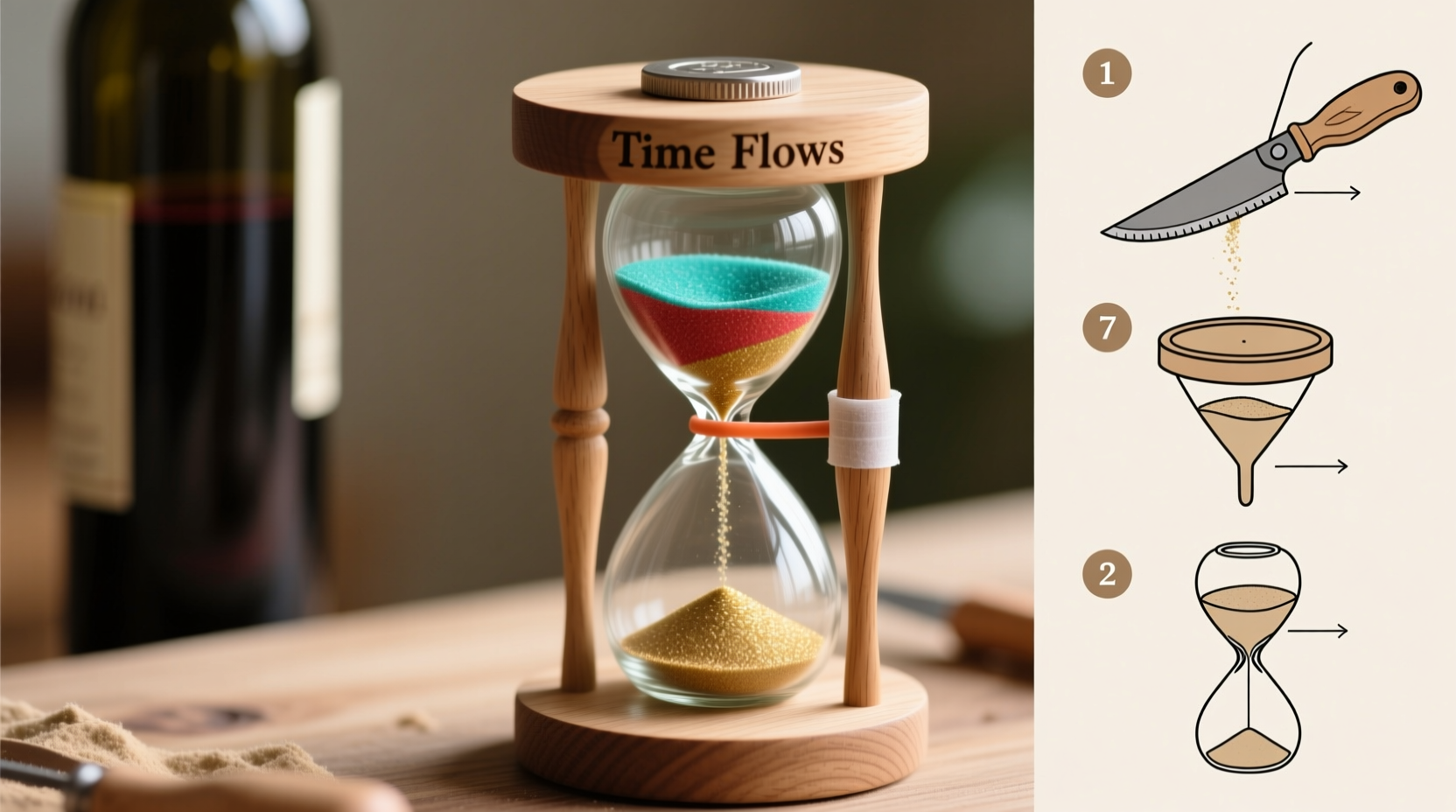
Creating a homemade hourglass offers more than just a fun afternoon project. It introduces foundational concepts in physics, such as gravity, flow rate, and volume displacement. For educators, it's a hands-on tool for teaching time measurement and fluid dynamics. For artists and crafters, it becomes a kinetic sculpture—something that moves, changes, and captures attention.
Additionally, repurposing plastic or glass bottles reduces waste and encourages sustainable design. Unlike mass-produced timers, a handmade hourglass allows full customization: choose colored sand, personalize the container, or adjust the duration based on your needs—whether it’s 30 seconds for a game or 10 minutes for meditation.
“Time isn’t just measured in numbers; sometimes, watching it flow gives us a deeper sense of presence.” — Dr. Lena Torres, Educational Designer & STEM Advocate
Materials and Tools You’ll Need
The beauty of this project lies in its simplicity. Most items can be found around the house or purchased inexpensively. Here’s what you should gather before starting:
- A clear plastic or glass bottle (two-liter soda bottle works well)
- Fine sand (play sand, aquarium sand, or fine craft sand)
- Funnel or rolled paper cone
- Drill, nail, or heated needle (for making holes)
- Strong tape (electrical or duct tape)
- Hot glue gun and glue sticks
- Timer or stopwatch
- Optional: food coloring, glitter, small beads, or colored rice for visual effect
Step-by-Step Construction Guide
Follow these steps carefully to assemble a working hourglass from a single bottle. Precision in hole size and sand quantity will determine how accurately your timer performs.
- Clean and dry the bottle thoroughly. Remove labels and residue. A clean surface ensures visibility and proper adhesion when gluing.
- Cut the bottle horizontally across the middle. Use sharp scissors or a utility knife. Aim for two equal halves. Sand any rough edges.
- Prepare the connector cap. Take the bottle cap and drill a small hole (2–3 mm) through the center. This controls the sand flow. If using a metal nail, heat it over a flame and push it through the cap slowly.
- Attach the cap to the top half. Place the top half (with neck and cap) upside down on a flat surface. Apply hot glue around the rim of the neck and press it into the inside of the bottom half’s opening. This creates a sealed chamber where both halves connect at their wide ends.
- Test the seal. Once the glue has cooled, turn the assembly over and gently blow into one end. No air should escape—if it does, reinforce with more glue.
- Add sand to the top chamber. Use a funnel to pour sand into the upper section. Fill about ¾ full to allow space for movement. For variety, layer different colors or mix in a pinch of glitter.
- Seal the second opening. After filling, apply hot glue around the rim of the bottom half and attach the remaining bottle half (the base), sealing it completely.
- Invert and test timing. Flip the hourglass and use a stopwatch to measure how long it takes for all the sand to transfer. Adjust by changing hole size or sand amount if needed.
Calibrating Your Timer
Accuracy depends on three factors: hole diameter, sand coarseness, and total volume. Finer sand flows faster but may clog. Larger grains move slower and more predictably. Start with a 2mm hole and adjust from there.
| Hole Size (mm) | Sand Type | Approximate Flow Time (per 100g) | Best For |
|---|---|---|---|
| 1.5 | Fine | 45 seconds | Kitchen timers, games |
| 2.0 | Medium | 2 minutes | Study breaks, mindfulness |
| 3.0 | Coarse | 5 minutes | Classroom activities |
Design Ideas and Creative Variations
Your hourglass doesn’t have to be plain. With minor modifications, you can transform it into a statement piece.
- Double-chamber with dual colors: Use blue and yellow sand to represent day and night.
- Mini travel version: Use small water bottles or baby food jars for portable timers.
- Decorative labeling: Paint time markers (e.g., “Breathe,” “Focus,” “Pause”) around the neck.
- Educational model: Label each side with phases like “Past” and “Future” for philosophy or psychology lessons.
For a dramatic effect, tint the sand with a few drops of food coloring mixed with rubbing alcohol. Spread the damp sand on a tray and let it dry completely before use. This prevents clumping while adding vibrant hues.
Real Example: Classroom Focus Timer
In Ms. Rivera’s fourth-grade classroom, students struggled with staying on task during independent work. She built a large hourglass using a two-liter bottle filled with red and white layered sand. Set for five minutes, it became their “focus clock.” When it was flipped, students knew it was time to settle down. Within weeks, transitions improved significantly. Parents reported similar success when replicating the design at home for homework routines.
Common Challenges and How to Solve Them
Even simple projects encounter hiccups. Here are frequent issues and reliable fixes:
- Sand gets stuck: The hole may be too small or the sand too fine. Try enlarging the hole slightly or switching to coarser material like seed beads.
- Leaks at the seal: Ensure hot glue fully encircles the connection point. Let it cure for at least 30 minutes before testing.
- Inconsistent timing: Humidity can cause sand to clump. Store your hourglass in a dry place or include silica gel packets inside during assembly.
- Bottle wobbles: Attach a cardboard or wooden base to the bottom for stability.
Dos and Don’ts Summary
| Do | Don’t |
|---|---|
| Use consistent, dry sand | Use wet or oily sand |
| Test flow multiple times | Assume first attempt is perfect |
| Work in a well-ventilated area when gluing | Glue near open flames |
| Label your timer with its duration | Forget to record calibration details |
FAQ
Can I use water instead of sand?
Water can be used, but it flows too quickly unless thickened. Some people use oil or syrup for slower movement, but these tend to leave residue and degrade seals over time. Sand remains the most practical and visually clear option.
How do I make a 10-minute hourglass?
Start with a larger bottle (three-liter) and increase sand volume. Begin testing with a 2.5mm hole and medium-grain sand. Record how long 50 grams take to flow, then scale up proportionally. Expect several trial runs before achieving precision.
Is this safe for young children?
Yes, if properly sealed. Always supervise younger kids during use. Avoid small beads if choking hazards are a concern. Plastic bottles are safer than glass for child-friendly versions.
Final Thoughts and Encouragement
Building an hourglass from a bottle is more than a craft—it’s a lesson in patience, observation, and resourcefulness. Each grain of sand that passes through reminds us that time is tangible, measurable, and worth honoring. Whether you’re helping a child grasp the concept of minutes, seeking a mindful ritual, or simply enjoying the joy of making something useful with your hands, this project delivers lasting value.
You now have the knowledge, tools, and inspiration to create your own unique timepiece. Experiment with designs, refine your timing, and share your creations with others. Who knows? Your DIY hourglass might become a family heirloom or spark someone else’s curiosity about the quiet science of time.




 浙公网安备
33010002000092号
浙公网安备
33010002000092号 浙B2-20120091-4
Comments
No comments yet. Why don't you start the discussion?