
Creating your own keychain pendant is more than just a craft—it’s a way to carry a piece of your story with you every day. Whether it’s a gift for someone special or a small token of self-expression, a handmade keychain adds personality to the everyday. With minimal tools and a touch of imagination, you can design something truly one-of-a-kind. This guide walks you through the entire process, from choosing materials to adding finishing touches that make your creation stand out.
Why Make Your Own Keychain Pendant?
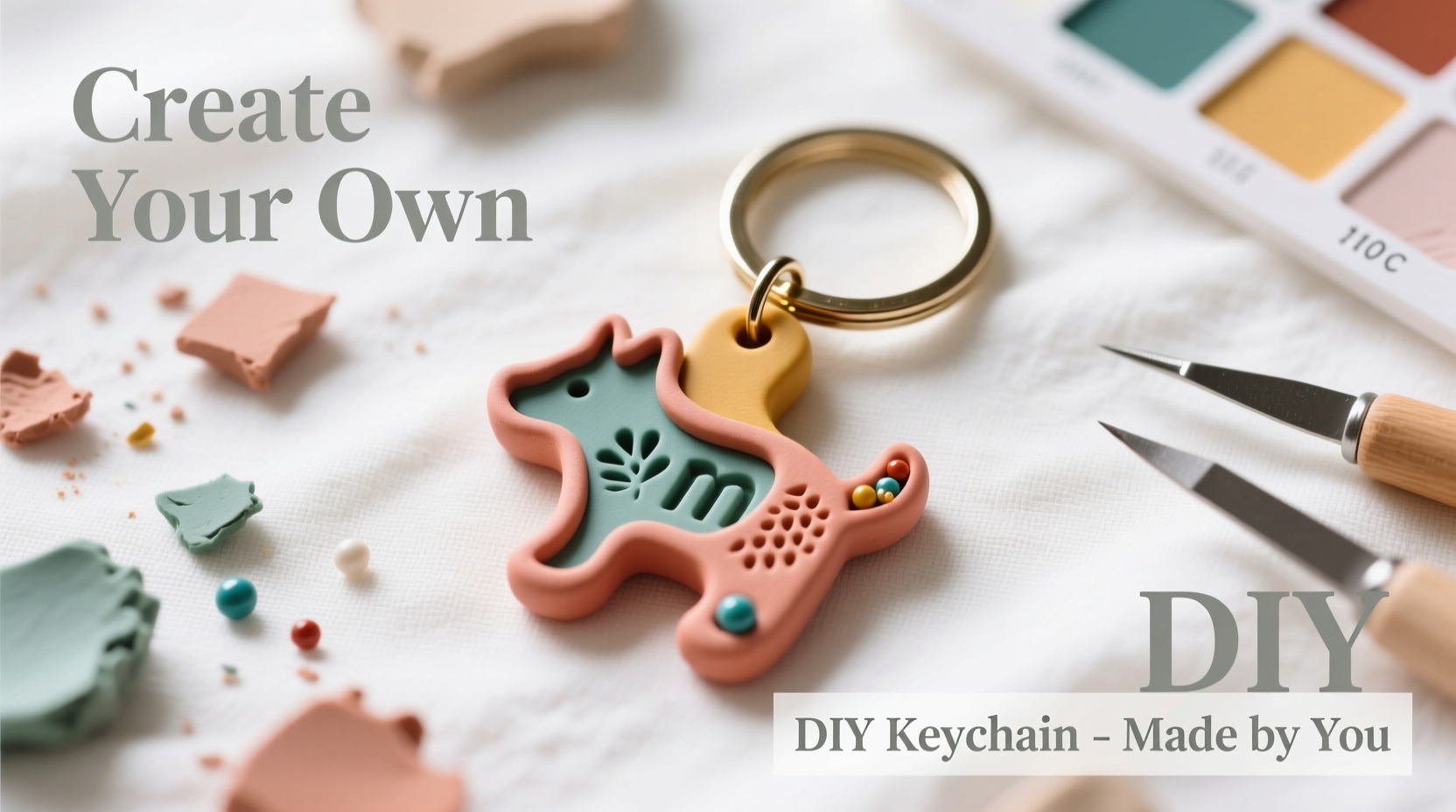
Store-bought accessories often lack uniqueness. Mass-produced items rarely reflect individual tastes or memories. A handmade keychain allows you to embed meaning—using initials, symbols, colors, or embedded objects that resonate with your life or someone else’s. It's also an accessible entry point into crafting, requiring little investment but offering high emotional return.
According to artisan educator Maya Tran, “Handmade objects foster deeper connections because they carry intention. When someone uses a keychain you made, they’re reminded not just of the item, but of the care behind it.”
“Handmade objects foster deeper connections because they carry intention.” — Maya Tran, Artisan Educator
Materials and Tools You’ll Need
The beauty of this project lies in its flexibility. You can adapt the materials based on what’s available and your desired aesthetic. Below is a breakdown of common supplies categorized by material type.
| Material Type | Examples | Best For |
|---|---|---|
| Polymer Clay | Sculpey, Fimo, Cernit | Detailed shapes, custom textures, baked durability |
| Resin | Epoxy resin, silicone molds, pigments | Clear glossy finish, embedding photos or small items |
| Wood | Balsa, basswood, pre-cut blanks | Natural look, laser engraving compatibility |
| Metal (Beginner-Friendly) | Finding blanks, aluminum stamping kits | Stamped names, dates, or short messages |
| Recycled Materials | Old jewelry, bottle caps, fabric scraps | Eco-friendly designs with sentimental value |
In addition to your base material, gather these essential tools:
- Rolling pin or acrylic roller (for clay)
- Blade or precision knife
- Hole punch or thin drill bit (for attaching chain)
- Sandpaper (fine grit, 220+)
- Glue (E6000 or epoxy for strong hold)
- Keyring or split ring (stainless steel or brass)
- Protective gloves and workspace covering
Step-by-Step Creation Process
Follow this structured timeline to turn raw materials into a polished, personal accessory. The steps below use polymer clay as the primary medium, but principles apply across most materials.
- Design Your Concept (10–15 min)
Sketch your idea on paper. Will it feature text? A symbol? An embedded object like dried flowers or glitter? Decide size (typically 1.5–2 inches wide) and shape (circle, heart, geometric). - Prepare the Base (10 min)
Condition the clay and roll it to about 1/8-inch thickness using a rolling pin. Use a cookie cutter or template to cut your shape cleanly. Smooth edges with fingers or a sculpting tool. - Add Personalization (15–20 min)
Use alphabet stamps, freehand carving, or texture rollers to imprint names, dates, or patterns. For layered effects, press small decorative elements (beads, foil, lace) into the surface. - Punch the Hole (Before Baking)
Insert a thin skewer or needle near the top edge at a slight angle to allow room for the keyring. Rotate gently to ensure a clean hole. - Bake According to Instructions (25–30 min)
Place on parchment-lined tray. Bake at manufacturer-recommended temperature (usually 265°F–275°F). Cooling time is crucial—let sit 10–15 minutes before handling. - Finishing Touches (15 min)
Sand rough edges lightly. Apply a gloss varnish for shine or matte sealant for subtlety. Let dry completely. - Attach Hardware (5 min)
Thread a jump ring through the hole, then connect your keyring. Ensure closure is secure.
Real-Life Example: A Graduation Gift That Stood Out
Sophie, a college senior, wanted to give her four closest friends something meaningful at graduation. Instead of generic photo frames or mugs, she created mini pendants using their initials in cursive stamped into pastel-colored clay, each topped with a tiny painted mortarboard. She embedded a speck of real sand from their campus courtyard inside one of them using resin over the baked clay surface. Her friends were moved—not only by the effort, but by the thoughtfulness. One later said, “I use my keys every day, and every time I see it, I remember that chapter of my life.”
Do’s and Don’ts of DIY Keychains
Avoid common pitfalls by following this simple checklist. Even small mistakes can compromise durability or appearance.
| Do’s | Don’ts |
|---|---|
| Test-fit your keyring before final sealing | Leave sharp edges unfiled |
| Seal porous materials (clay, wood) against moisture | Bake clay unevenly or overheat |
| Use UV resin if embedding paper or photos | Forget to check local safety guidelines when using chemicals |
| Label and organize colored clays to avoid mixing | Apply glue without allowing drying time between layers |
FAQ: Common Questions About DIY Keychain Making
Can I wash my handmade keychain?
Avoid submerging it in water, especially if it contains paper, fabric, or unsealed wood. Wipe clean with a damp cloth instead. Fully sealed resin or glazed ceramic pieces tolerate light moisture better.
How long does a homemade pendant last?
With proper sealing and care, polymer clay and resin pendants can last years—even decades. Avoid dropping on hard surfaces or prolonged sun exposure, which may cause fading or brittleness.
What if I don’t have artistic skills?
No drawing ability required. Use pre-made stamps, stencils, or printable transfer paper to trace designs. Simple shapes with bold letters or dots make stylish, modern pendants even for beginners.
Your Turn to Create Something Meaningful
Making a personalized keychain isn’t about perfection—it’s about presence. It’s the quiet joy of seeing your initials pressed into warm clay, or watching resin capture a fragment of a ticket stub from a concert you’ll never forget. These small tokens become heirlooms in their own right, worn down by daily use yet treasured all the more for it.
You don’t need a studio or expensive gear. Start with what’s in your drawer: an old charm, some air-dry clay, or even a flattened bottle cap. Combine it with intention, and you’ve already made art. So pick a memory, choose a color, and begin shaping something uniquely yours.




 浙公网安备
33010002000092号
浙公网安备
33010002000092号 浙B2-20120091-4
Comments
No comments yet. Why don't you start the discussion?