
Transforming ordinary materials into an eye-catching 3D wall clock is more than just a craft project—it’s a statement of creativity and precision. Whether you're a student exploring design principles, a hobbyist looking for a weekend challenge, or someone wanting to personalize their space, building a 3D clock offers both function and artistry. With cardboard, wood scraps, glue, and a basic clock mechanism, you can create a timepiece that stands out in any room. This guide walks through the process with clarity, offering practical advice, structural insights, and expert-backed techniques to ensure your project is not only beautiful but durable.
Why Build a 3D Clock?
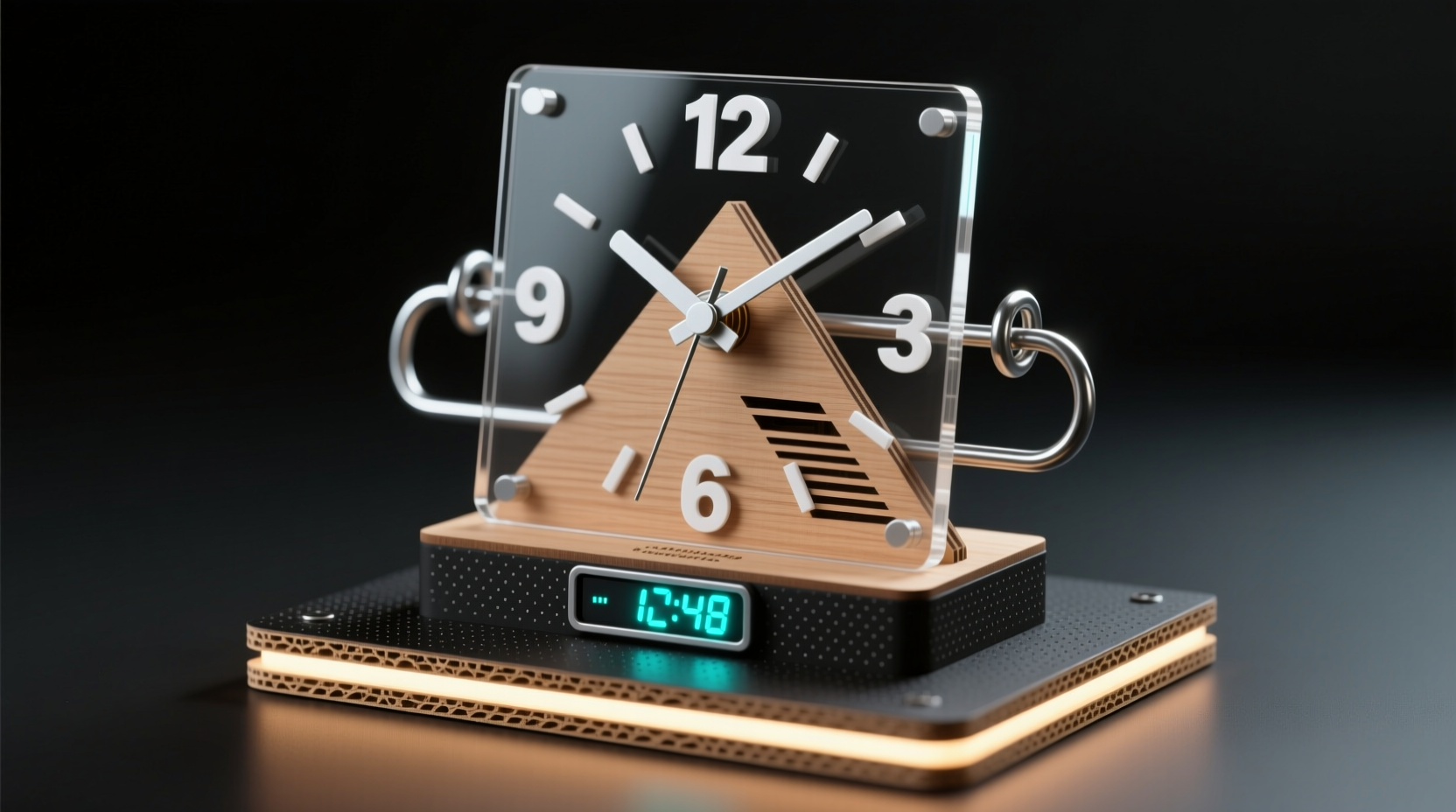
A three-dimensional clock adds depth and movement to flat walls, creating visual interest that standard clocks can’t match. Unlike mass-produced decor, a handmade 3D clock reflects personal style and craftsmanship. It also serves as an excellent introduction to spatial design, layering, and kinetic elements in art. Educators use such projects to teach symmetry, measurement, and mechanical integration. For home decorators, it’s a conversation starter—a fusion of utility and sculpture.
“Design isn’t just about aesthetics; it’s about solving problems creatively. A 3D clock teaches balance between form, function, and material limits.” — Lena Torres, Industrial Design Instructor at Boston Art & Tech Institute
Materials You’ll Need
The beauty of this project lies in its accessibility. Most materials can be sourced from around the house or purchased inexpensively at craft stores. The key is selecting sturdy components that maintain shape over time.
| Material | Purpose | Recommended Type |
|---|---|---|
| Cardboard / Foam Board / Balsa Wood | Main structure layers | Corrugated cardboard (double-wall), 3mm foam board |
| Clock Mechanism Kit | Timekeeping movement | Quartz, AA battery-powered, with 6–8 inch hands |
| Hot Glue Gun & Glue Sticks | Assembly | High-temp for wood, low-temp for foam |
| Acrylic Paints & Brushes | Finishing & decoration | Water-based, quick-drying |
| Ruler, Compass, Craft Knife | Measuring & cutting | Metal ruler, self-healing mat recommended |
| Sandpaper (120–220 grit) | Smoothing edges | Fine-grit for clean finishes |
Step-by-Step Construction Guide
Building a 3D clock involves planning, layering, and mechanical integration. Follow this sequence to ensure accuracy and stability.
- Design Your Layout: Sketch a circular or geometric face on paper. Divide it into 12 segments for hour markers. Decide on depth—most effective 3D clocks use 3 to 5 stacked layers, each 0.5 to 1 inch apart.
- Cut the Base Layer: Trace your design onto the chosen material and cut it precisely using a craft knife. This will hold the clock mechanism.
- Create Raised Layers: Cut identical shapes for upper layers, optionally reducing diameter slightly to create a tiered effect. Use spacers (small cardboard cylinders) between layers for consistent depth.
- Install the Clock Mechanism: Drill a 3/8-inch hole in the center of the base. Insert the clock shaft, secure with washer and nut. Ensure hands have clearance across all layers.
- Assemble the Structure: Glue each layer atop the previous using spacers at 3, 6, 9, and 12 o’clock positions. Allow 20 minutes drying time per layer.
- Add Numbering or Markers: Print or hand-paint numerals. For drama, extend numbers outward using folded cardstock.
- Paint and Seal: Apply 2–3 coats of acrylic paint, letting each dry fully. Finish with matte or gloss varnish to protect against dust and handling.
Enhancing Visual Depth
To maximize the 3D effect, consider asymmetrical layering. For example, elevate only the 12, 3, 6, and 9 positions with taller supports, creating focal points. Alternatively, angle certain layers slightly using wedge-shaped supports. Backlighting with LED strips behind the final layer can cast dramatic shadows—ideal for modern interiors.
Real-World Example: Classroom Timepiece Project
At Maplewood Middle School, eighth-grade students built 3D clocks as part of a STEM-art integration unit. Using recycled pizza boxes and donated clock kits, they designed layered clocks themed around nature—tree rings, ocean waves, solar systems. One student, Maya Chen, created a sunburst design with radiating wooden slats, each representing an hour. Her clock not only kept accurate time but won a local maker fair award. Teachers noted improved understanding of angles, rotational symmetry, and patience in iterative design. The project demonstrated that simplicity of materials doesn’t limit creative potential.
Common Pitfalls and How to Avoid Them
- Warping Materials: Cardboard can bend with humidity. Seal all surfaces with primer or varnish to stabilize.
- Hand Obstruction: If upper layers are too close to the hands, they’ll catch during rotation. Maintain at least 1/2 inch clearance.
- Weak Joints: Over-reliance on glue without structural support leads to sagging. Use internal dowels or corner braces for large designs.
- Inaccurate Centering: A misaligned mechanism ruins symmetry. Always mark the center with a compass and double-check before drilling.
“Precision in placement matters more than complexity of design. A perfectly centered, simple clock feels more professional than a lopsided elaborate one.” — Daniel Ruiz, Woodcraft Artist and Workshop Leader
Customization Ideas for Unique Results
Once the basic structure works, personalize your clock to reflect your taste or environment:
- Themed Layers: Create a city skyline where each layer represents a different elevation of buildings.
- Moving Elements: Attach small paper planes or birds to rotate with the minute hand.
- Natural Materials: Use sliced cork, driftwood, or pressed leaves for organic texture.
- Glow-in-the-Dark Details: Paint hour markers with phosphorescent pigment for nighttime visibility.
Checklist: Before Hanging Your Clock
- Confirm all glue joints are fully cured (wait 24 hours for maximum strength).
- Test the mechanism: Set the time and observe 5 full rotations of the minute hand.
- Check balance: Hold the clock upright—if it tilts, add counterweight to the back.
- Verify visibility: View from 6 feet away to ensure numerals and hands are legible.
- Secure hanging hardware: Use a D-ring or sawtooth hanger rated for 2x the clock’s weight.
Frequently Asked Questions
Can I use a digital clock instead?
Yes, but it changes the project significantly. Digital displays require flat mounting surfaces and power access. The analog mechanism is preferred for its mechanical elegance and ease of integration into layered designs.
How long does this project take?
Beginners should allow 6–8 hours over two days: 3–4 hours for cutting and assembly, 2–3 hours for painting and drying, plus testing. Experienced makers can complete it in a single afternoon.
Is this safe for kids?
With supervision, yes. Replace sharp craft knives with safety scissors for younger builders. Use battery-operated tools and non-toxic glue. Focus on pre-cut templates to reduce risk.
Final Thoughts: Turn Time Into Art
A 3D clock is more than a way to tell time—it’s a testament to thoughtful making. By combining accessible materials with deliberate design, you create something functional and expressive. The process sharpens spatial reasoning, patience, and attention to detail. Whether displayed in a living room, classroom, or studio, your clock becomes a symbol of innovation born from simplicity.




 浙公网安备
33010002000092号
浙公网安备
33010002000092号 浙B2-20120091-4
Comments
No comments yet. Why don't you start the discussion?