
Handmade rope keychains are more than just functional accessories—they’re small works of art that carry personality, intention, and craftsmanship. With minimal supplies and a bit of creativity, anyone can create unique, durable keychains that reflect personal style or make thoughtful gifts. Whether you're new to crafting or looking to refine your technique, this guide explores accessible methods, inspiring designs, and practical tips to elevate your rope keychain projects.
Why Rope Keychains Are Worth Making by Hand
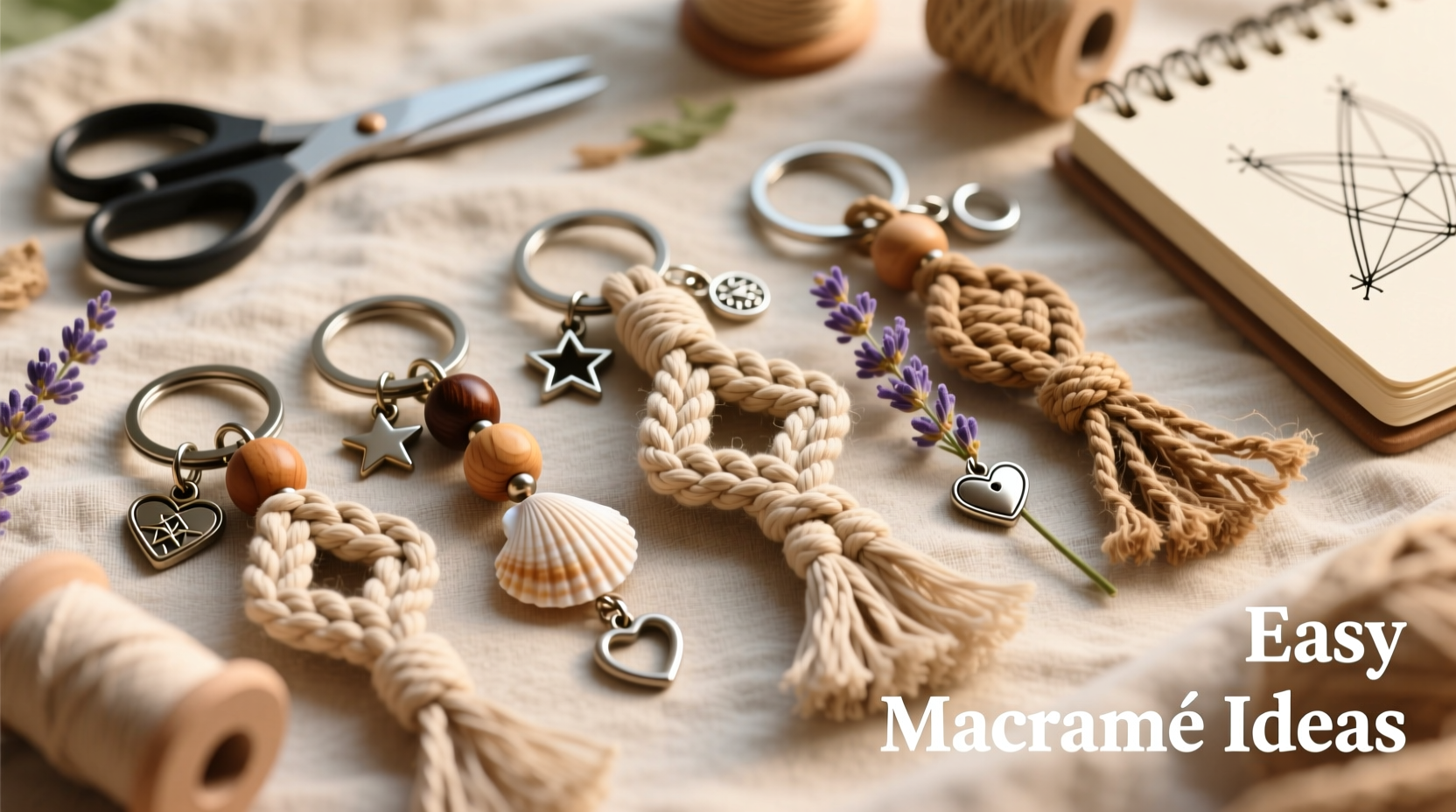
Rope keychains stand out for their durability, texture, and versatility. Unlike mass-produced metal or plastic versions, handmade ones offer customization in color, pattern, and structure. Natural fibers like cotton, hemp, or paracord provide a tactile quality that improves with use. Beyond aesthetics, the act of making them fosters mindfulness and skill development. Many artisans find braiding and knotting to be meditative, turning idle moments into productive creativity.
“Simple knots, when repeated with care, become expressions of patience and precision.” — Lena Torres, Textile Artist & Craft Educator
Beyond personal satisfaction, handmade rope keychains have real-world utility. They prevent keys from scratching phones or wallets, add visual identity to a keyring, and serve as promotional giveaways or wedding favors when branded subtly. Their compact size makes them ideal starter projects for learning fiber arts.
Essential Materials and Tools
One of the greatest advantages of rope keychain making is accessibility. Most required items can be found at craft stores, hardware shops, or even repurposed from household items.
| Material/Tool | Purpose | Recommended Type |
|---|---|---|
| Rope or Cord | Main body of keychain | Cotton cord (3–5mm), paracord, or embroidery floss |
| Keyring or Split Ring | Attachment point | Stainless steel or brass (16–20mm) |
| Scissors | Cutting cord cleanly | Sharp fabric scissors |
| Lighter or Fray Check | Sealing cut ends | Butane lighter for synthetic cords |
| Clamp or Tape | Securing work while tying | Small binder clip or masking tape |
Step-by-Step Guide: Creating a Braided Rope Keychain
A three-strand braid is one of the simplest yet most elegant techniques. It requires no prior experience and produces a polished result.
- Cut three equal lengths of cord (about 30 inches each) depending on desired finished length.
- Align the strands and tie a secure overhand knot at one end. Attach this knot to a fixed surface using a clip or tape.
- Begin braiding: Cross the right strand over the middle, then the left strand over the new middle. Repeat until 1 inch remains.
- Tie another overhand knot at the end to secure the braid.
- Trim excess and lightly melt the ends if using synthetic material.
- Attach to keyring by threading the starting knot through the ring before tightening.
For added flair, incorporate beads by threading them onto one strand before beginning the braid. Stop occasionally to slide the bead down and continue braiding around it.
Creative Design Ideas to Try
Once comfortable with basic braiding, experiment with variations that transform a simple keychain into a statement piece.
- Color Blocking: Use contrasting colors in each strand for a bold striped effect.
- Twisted Spiral: Twist two strands tightly, then let them coil around each other for a corkscrew look.
- Fishtail Braid: Divide the cord into two sections and alternate pulling small segments from each side across to the opposite group.
- Knotwork Patterns: Incorporate decorative knots like the diamond (square) knot or crown knot for textured accents.
- Mini Macramé: Use small-scale macramé stitches such as half-hitch or double half-hitch to create geometric patterns near the top or base.
Consider thematic designs: nautical styles with navy and white ropes, bohemian versions with earthy tones and wooden beads, or minimalist monochrome chains for everyday wear.
Real Example: A Gift That Gained Attention
Sophia, a college student in Portland, began making rope keychains during exam season as stress-relief projects. She gifted them to her study group—each in their favorite colors, with tiny engraved tags bearing initials. One friend posted a photo online, praising both the functionality and emotional value. Within weeks, Sophia received requests from classmates and local boutiques. What started as a quiet hobby turned into a micro-business selling personalized keychains at campus markets.
Her success stemmed not from complexity, but consistency in quality and thoughtful touches—like including care instructions on recycled cards. This illustrates how simple handmade items can resonate deeply when made with attention and heart.
Checklist: Launch Your First Keychain Project
Before starting, ensure you have everything ready. Follow this checklist for a smooth process:
- Choose your cord type and color scheme
- Gather tools: scissors, lighter, keyrings, clips
- Cut three strands of equal length (adjust based on preferred size)
- Secure one end to a stable surface
- Braid evenly, maintaining consistent tension
- Finish with a knot and sealed ends
- Attach to keyring and inspect for durability
- Photograph your creation for inspiration or sharing
Frequently Asked Questions
What kind of rope is best for beginners?
Cotton cord between 3mm and 5mm thickness is ideal. It’s soft, easy to handle, doesn’t fray excessively, and accepts dye well for custom colors. Paracord is sturdier but firmer to manipulate.
How do I make my keychain last longer?
Avoid prolonged exposure to moisture, especially for natural fibers. Regularly inspect knots for looseness and re-tighten if needed. Store in a dry place away from direct sunlight to prevent fading.
Can I wash a rope keychain?
Spot clean with mild soap and water. Avoid soaking, as this may weaken fibers or cause shrinkage. Air dry completely before reuse.
Expert Insight: The Value of Imperfection
“In handmade crafts, slight irregularities aren’t flaws—they’re proof of human touch. A perfectly uniform machine-made item lacks soul. Embrace the rhythm of your hands.” — Rafael Kim, Fiber Arts Instructor at Pacific Craft Guild
This mindset encourages makers to focus on progress, not perfection. Each keychain becomes a record of practice, evolving skills, and personal expression.
Conclusion: Start Tying, Keep Creating
Creating handmade rope keychains blends simplicity with lasting impact. With just a few feet of cord and a few minutes of focus, you can produce something useful, beautiful, and meaningful. These small creations build confidence, inspire gifting, and open doors to broader textile arts. Whether you stick to classic braids or explore intricate knotting, every twist and turn adds to your creative journey.




 浙公网安备
33010002000092号
浙公网安备
33010002000092号 浙B2-20120091-4
Comments
No comments yet. Why don't you start the discussion?