
In an age dominated by digital tools, the quiet elegance of a vintage notebook offers a refreshing contrast—especially in business planning. Far from being outdated, these tactile companions can sharpen focus, inspire creativity, and ground your strategic thinking in intentionality. When used deliberately, a vintage notebook becomes more than a relic; it transforms into a powerful instrument for clarity, reflection, and innovation. This article explores how to integrate such a tool meaningfully into your modern business workflow.
Why a Vintage Notebook Belongs in Modern Business Planning
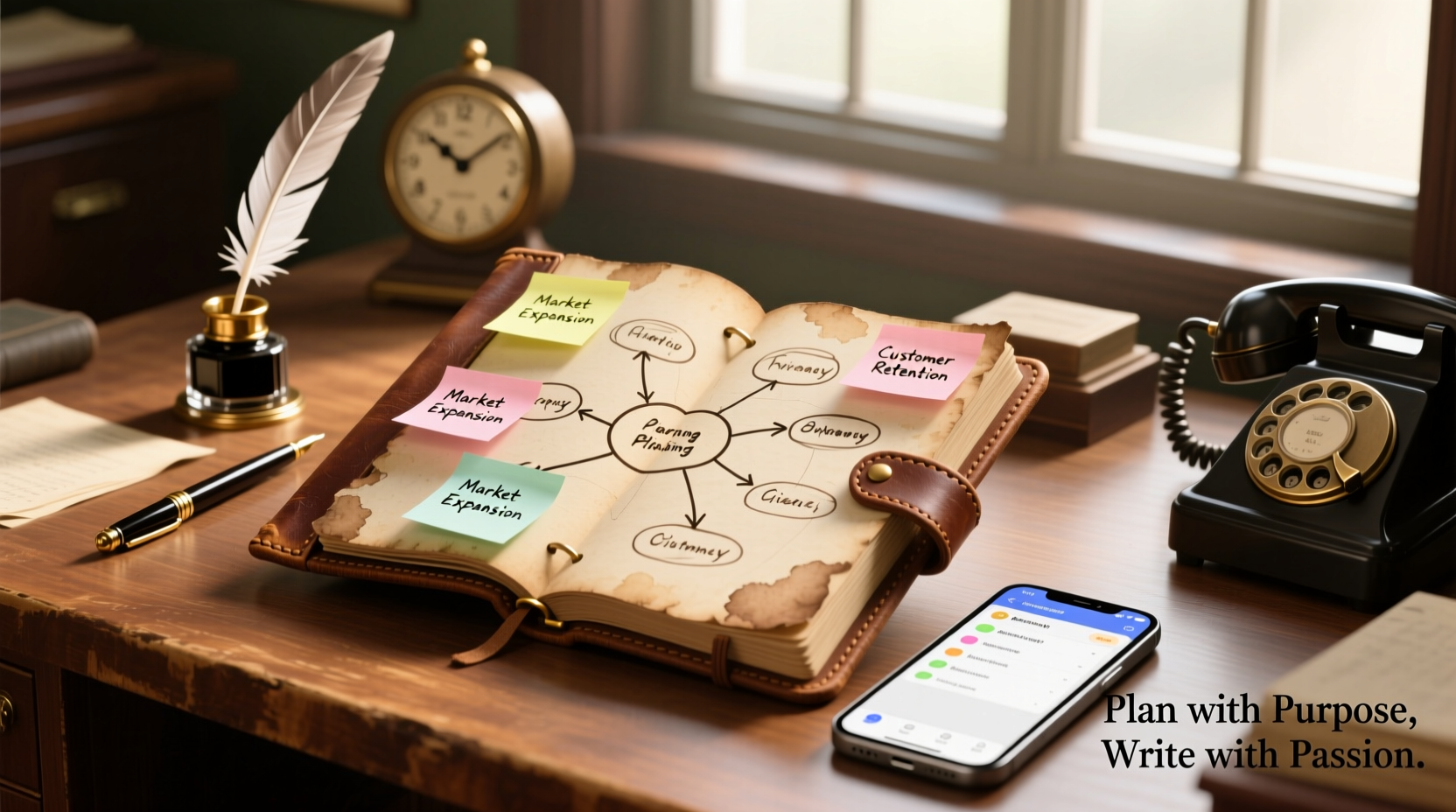
Digital platforms offer speed and scalability, but they often come with distractions, notifications, and cognitive overload. A vintage notebook—a bound volume with character, perhaps leather-bound, slightly weathered, or filled with faint ruled lines—invites slower, deeper thinking. The physical act of writing by hand activates different neural pathways than typing, enhancing memory retention and conceptual understanding.
Business strategist Dr. Lila Monroe notes:
“Handwriting engages the brain’s motor cortex and limbic system, creating stronger emotional and cognitive associations with ideas. In planning, this means better idea synthesis and decision-making.” — Dr. Lila Monroe, Cognitive Productivity Researcher
Using a vintage notebook isn’t about nostalgia—it’s about leveraging deliberate analog methods to counterbalance digital noise and reclaim mental space for strategic thought.
Step-by-Step: Integrating Your Vintage Notebook into Daily Workflow
Adopting a vintage notebook doesn’t mean abandoning digital tools. Instead, use it as a complementary layer in your planning ecosystem. Follow this five-step integration process:
- Select the right notebook: Choose one with enough pages, durable binding, and a size that fits your carry habits (A5 or pocket-sized work well).
- Define its purpose: Decide whether it will serve for brainstorming, daily planning, meeting notes, or long-term vision mapping.
- Create a weekly ritual: Dedicate 20 minutes every Monday morning to review goals and set intentions in the notebook.
- Use consistent symbols: Develop a personal shorthand—arrows for priorities, stars for breakthroughs, question marks for unresolved items.
- Digitize selectively: At month-end, transfer key insights to your digital CRM or project management tool, preserving the original for reflection.
Creative Strategies for Maximum Impact
A vintage notebook excels when used creatively. Here are four unconventional yet effective applications:
1. Reverse Brainstorming Sessions
Instead of asking “How can we grow revenue?” write down “How could we lose all our customers?” Use the notebook to explore worst-case scenarios in vivid detail. This inversion technique reveals hidden risks and sparks innovative solutions.
2. Timeline Mapping with Hand-Drawn Milestones
Sketch a horizontal timeline across two open pages. Mark projected milestones with colored pencils or ink. The visual and kinesthetic engagement deepens commitment to deadlines and reveals gaps in logic or resources.
3. “Idea Cemetery” for Failed Concepts
Reserve the last 10 pages as an “idea graveyard.” When a strategy fails, record it here with a brief post-mortem. Revisiting this section quarterly often reveals patterns—and sometimes, resurrectable ideas under new conditions.
4. Silent Morning Planning Ritual
Before checking email or messages, spend 15 minutes writing in your notebook. Answer: What must go well today? What’s the one decision that matters? This primes focused execution.
Checklist: Optimizing Your Vintage Notebook System
- ☑ Assign a dedicated role (e.g., strategic journal, meeting log, innovation sketchpad)
- ☑ Date every entry for easy tracking
- ☑ Use margin space for quick annotations or arrows linking related ideas
- ☑ Keep it accessible—store it where you plan most (desk, bag, bedside)
- ☑ Review monthly to identify recurring themes or progress
- ☑ Pair with a quality pen that glides smoothly on the paper
Real Example: How a Startup Founder Used a 1940s Ledger for Pivotal Clarity
Jamal Reed, founder of TerraCycle Insights, inherited a 1947 accounting ledger from his grandfather. Initially decorative, he began using it during a period of strategic stagnation. “I was stuck in spreadsheets,” he recalls. “But writing longhand in that old book forced me to simplify.”
Over six weeks, Jamal documented customer pain points, sketched service models, and recorded unfiltered reflections after investor meetings. One margin note—\"What if we charge less but deliver weekly insights?\"—led to a subscription pivot that doubled retention. He later scanned key pages and embedded them in his pitch deck. “Investors loved the authenticity,” he says. “It showed depth behind the data.”
Do’s and Don’ts: Common Pitfalls and Best Practices
| Do’s | Don’ts |
|---|---|
| Do use consistent formatting (headers, bullet styles) for readability | Don’t try to fill every page—leave space for future annotations |
| Do protect fragile covers with archival tape or a fabric sleeve | Don’t store in humid environments or direct sunlight |
| Do date entries and use a light pencil for temporary placeholders | Don’t erase heavily—cross out mistakes instead to preserve thought evolution |
| Do reference it before digital meetings to align thoughts | Don’t over-digitize—preserve the analog integrity |
Frequently Asked Questions
Can I still be productive using only a vintage notebook?
While possible, it’s not recommended for operational tasks like invoicing or scheduling. Use the notebook for high-level thinking, ideation, and reflection, then sync critical outputs to digital tools for execution and collaboration.
What if my handwriting is messy or slow?
Embrace imperfection. The goal isn’t calligraphy—it’s cognitive engagement. Over time, your writing will become more efficient. Consider practicing “rapid longhand” techniques: abbreviate common words, use symbols, and focus on key phrases rather than full sentences.
How do I preserve the notebook long-term?
Store it flat in a dry, temperature-stable environment. Place acid-free paper between pages if using ink prone to bleed. For legacy value, scan important pages annually and back them up securely.
Conclusion: Reclaim Intentionality in Your Planning Process
A vintage notebook is more than paper and thread—it’s a sanctuary for strategic thought in a world of constant interruption. By integrating it into your business planning workflow with purpose, you cultivate mindfulness, deepen insight, and build a tangible archive of your entrepreneurial journey. The cracks in the leather, the slight warping of pages, the fading ink—they’re not flaws. They’re evidence of engagement, iteration, and growth.




 浙公网安备
33010002000092号
浙公网安备
33010002000092号 浙B2-20120091-4
Comments
No comments yet. Why don't you start the discussion?