
Most online income guides stop at freelancing, blogging, or affiliate marketing. While these can work, they’re crowded and often fail to deliver long-term results without constant effort. To build lasting income online, you need strategies that scale, compound value, and create leverage. The real opportunity lies not in doing more of the same, but in rethinking how digital assets generate revenue over time. These are not quick fixes—they’re systems designed for sustainability, ownership, and scalability.
Leverage Digital Products with Built-in Scalability
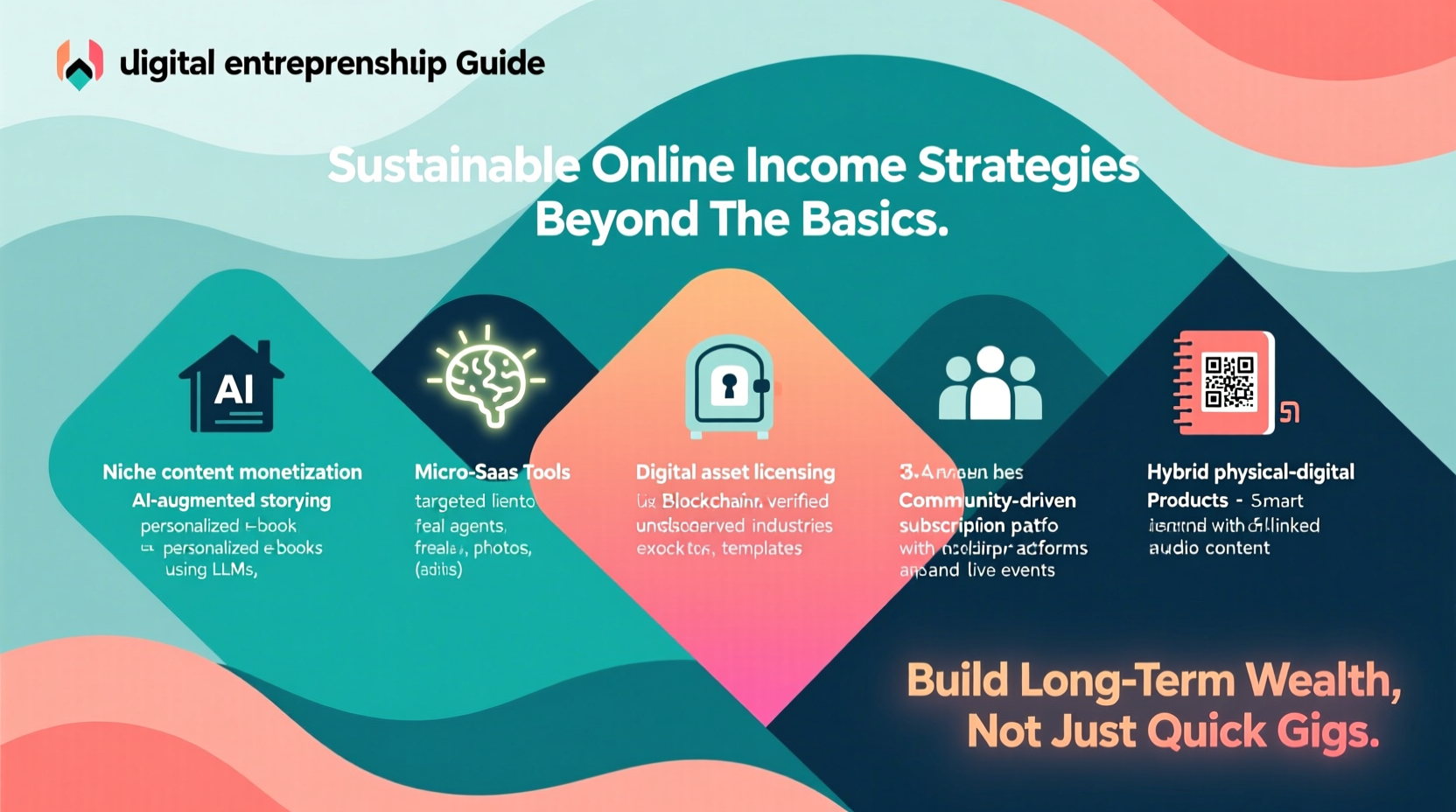
Digital products remain one of the most powerful tools for passive income because they can be sold repeatedly without increasing production costs. But most creators stop at eBooks or basic courses. To stand out, focus on high-value, niche-specific digital offerings that solve urgent problems.
Consider interactive tools: templates, Notion dashboards, Figma kits, or AI-powered spreadsheets. These aren’t just consumed—they’re used daily, increasing perceived value. A well-designed Notion system for solopreneurs managing clients, projects, and finances can sell for $49–$99 and require zero maintenance after launch.
Platforms like Gumroad, SendOwl, and Lemon Squeezy now allow creators to set up full storefronts in minutes. Pair your product with a lead magnet (e.g., a free checklist) to grow an email list, then use automated sequences to convert subscribers into buyers.
Create Micro-SaaS Solutions for Niche Markets
Software-as-a-Service (SaaS) isn’t just for tech startups. “Micro-SaaS” refers to small, focused software tools solving specific problems for narrow audiences. Unlike broad platforms, micro-SaaS products are easier to build, market, and maintain.
For example, a tool that helps yoga instructors automate class scheduling and client billing using Stripe and Calendly APIs can charge $15/month. With 300 users, that’s $4,500/month in recurring revenue—with minimal overhead.
The key is identifying underserved niches where professionals rely on manual workflows. Survey communities on Reddit, Facebook groups, or Indie Hackers to find pain points. Then, use no-code tools like Bubble, Softr, or Glide to prototype quickly.
“Solving a tiny problem exceptionally well beats solving a big problem poorly.” — Pieter Levels, founder of Nomad List and Mobile Moose
Micro-SaaS Development Checklist
- Identify a niche with recurring workflow challenges
- Validate demand via surveys or pre-sales
- Build an MVP using no-code or lightweight code
- Launch publicly with a waitlist or beta access
- Iterate based on user feedback
- Add premium features for tiered pricing
Monetize Knowledge Through Community Ownership
Communities are the new subscriptions. Instead of selling one-off courses, forward-thinking creators are building paid communities where members access ongoing mentorship, networking, and exclusive resources.
Unlike forums or free groups, paid communities thrive on exclusivity and engagement. Platforms like Circle, Kajabi, and Mighty Networks let you host discussions, drip content, and run live events—all within a branded space.
A thriving community can charge $20–$100/month and retain members for years if it delivers consistent value. For instance, a community for indie game developers could offer monthly Q&As with industry veterans, asset libraries, and collaborative game jams.
| Model | Revenue Potential | Effort Level | Scalability |
|---|---|---|---|
| One-time course | $5k–$20k (one-time) | High initial, low ongoing | Low |
| Monthly membership | $1k–$10k+/mo (recurring) | Moderate ongoing | High |
| Paid community | $3k–$50k+/mo (with growth) | Moderate + engagement | Very High |
The magic happens when members start contributing content, answering questions, and referring peers. This reduces admin load and increases retention.
License Creative Assets for Passive Royalties
If you have design, writing, or audio skills, licensing your work can generate income for years. Unlike direct sales, licensing gives others permission to use your creations in exchange for fees or royalties.
Examples include:
- Selling stock illustrations on Creative Market or Adobe Stock
- Licensing music or sound effects via Pond5 or AudioJungle
- Creating font families or icon packs for designers
- Writing royalty-earning e-book content for publishers
A single vector illustration can earn $0.50–$5 per download and sell hundreds of times. Over time, a portfolio of 100+ assets compounds into a steady stream. Some creators earn $2,000–$5,000/month from legacy content alone.
Step-by-Step: Building a Licensing Portfolio in 90 Days
- Week 1–2: Choose a niche (e.g., minimalist icons, wedding invitations, ambient music loops)
- Week 3–6: Create 20–30 high-quality assets optimized for search (use relevant keywords)
- Week 7: Upload to 2–3 major platforms (e.g., Creative Fabrica, Shutterstock, Envato)
- Week 8–10: Optimize titles, tags, and thumbnails for discoverability
- Week 11–12: Release one “hero” piece (e.g., a themed bundle) to boost visibility
- Ongoing: Add 2–5 new items monthly and repurpose top performers
Real Example: From Side Project to Full-Time Income
Jamie, a former graphic designer from Portland, started creating Procreate brush sets as a hobby. She uploaded her first pack to Creative Market in 2020. After optimizing her listings and bundling seasonal themes (e.g., autumn foliage brushes), sales grew slowly but steadily.
By 2023, she had 47 products live across three platforms. Her best-selling watercolor pack earns $1,200/month in passive royalties. Combined with newer digital planners and textures, her total monthly income exceeds $4,800—with less than five hours of maintenance per month.
She reinvests profits into hiring a VA for customer support and expanding into Canva templates, further diversifying her revenue streams.
FAQ
Do I need technical skills to start a micro-SaaS?
No. Many successful micro-SaaS tools are built with no-code platforms like Bubble, Webflow, or Zapier integrations. You only need problem-solving ability and a clear understanding of your audience’s workflow.
How much can I realistically earn from digital product licensing?
Earnings vary widely, but creators with 50+ optimized assets often reach $1,000–$3,000/month within 18–24 months. Top earners with strong SEO and branding exceed $10,000/month.
Is a paid community right for introverted creators?
Yes. You don’t need to be highly social. Automate onboarding, use async video updates, and empower members to lead discussions. Many successful communities operate with minimal daily input from the founder.
Conclusion
Lasting online income doesn’t come from grinding more gigs—it comes from building assets that appreciate over time. Whether it’s a niche SaaS tool, a self-running digital product store, or a thriving community, the goal is to shift from trading time for money to owning systems that generate value independently.
Start small. Pick one strategy that aligns with your skills and audience. Build it deliberately. Optimize for retention, not just acquisition. Over time, these creative models compound into sustainable freedom.




 浙公网安备
33010002000092号
浙公网安备
33010002000092号 浙B2-20120091-4
Comments
No comments yet. Why don't you start the discussion?