
Tie dye has evolved from a 1960s counterculture symbol into a vibrant, modern craft embraced by fashion designers, DIY enthusiasts, and artists alike. Today’s tie dye isn’t limited to basic spirals; it includes intricate folds, resist methods, and experimental techniques that produce gallery-worthy results. Whether you're crafting personalized gifts or building a capsule wardrobe of statement tees, understanding the full spectrum of tie dye techniques unlocks endless creative potential. This guide dives deep into innovative patterns, practical execution tips, and advanced methods to help you design truly one-of-a-kind garments.
Understanding Fabric and Dye Chemistry
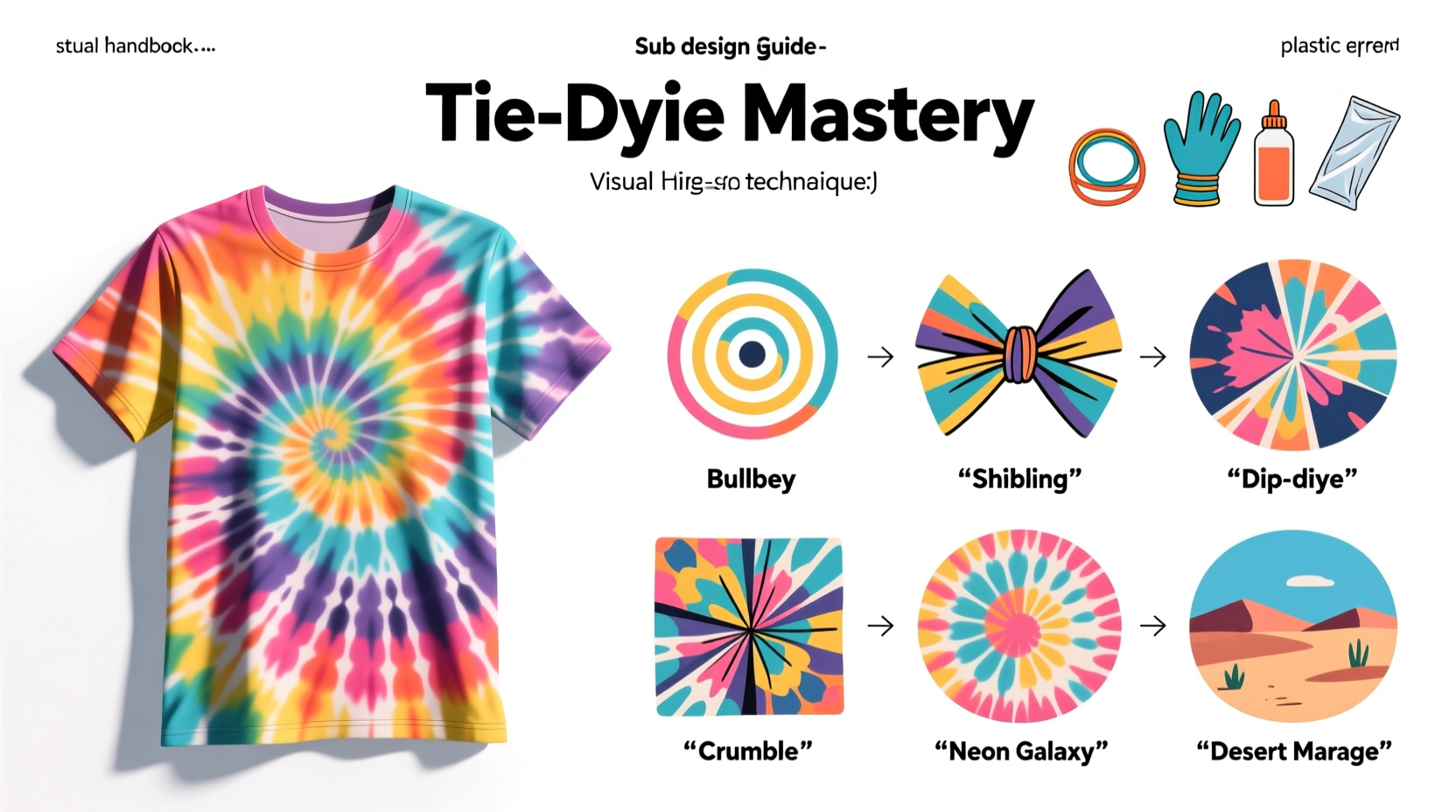
The foundation of any successful tie dye project lies in fabric choice and dye type. Natural fibers like cotton, rayon, bamboo, and hemp absorb fiber-reactive dyes most effectively. These dyes form a chemical bond with cellulose in the fabric, resulting in bright, wash-fast colors. Synthetic blends (especially polyester) resist dye absorption, leading to faded or uneven results.
Fiber-reactive dyes, such as Procion MX, require soda ash as a fixative. Soda ash raises the pH of the fabric, activating the dye so it bonds permanently. Pre-soaking shirts in a soda ash solution (1 cup per gallon of water) for 15–20 minutes before dyeing ensures even color saturation. After dye application, the fabric must cure for 6–24 hours in a sealed plastic bag or wrap to allow the reaction to complete.
Essential Tools and Setup
Before diving into patterns, gather the right supplies:
- Fitted 100% cotton t-shirts (pre-washed)
- Fiber-reactive dyes in assorted colors
- Soda ash
- Rubber bands or nylon string
- Squeeze bottles or spray bottles
- Plastic gloves and apron
- Plastic bags or wrap for curing
- Measuring spoons and mixing cups
Work on a protected surface—cardboard slipped inside the shirt prevents bleed-through. Mix dyes according to package instructions, typically using lukewarm water for optimal solubility. Label bottles clearly to avoid color confusion during application.
Classic Patterns with a Creative Twist
While traditional tie dye motifs remain popular, subtle modifications can transform them into fresh, modern designs.
Spiral Evolution
The classic spiral starts with pinching the center of the shirt and twisting outward. Instead of using one color per quadrant, try gradient layering: apply light yellow at the center, transition to orange, then red at the edges. For added depth, drop small splashes of purple between sections to create contrast.
Accordian Folds with Resist Techniques
Fold the shirt vertically or horizontally like an accordion. Wrap rubber bands every inch, then use a squeeze bottle to apply alternating colors between bands. For a sharp, graphic effect, place wax paper between folds or use a glue resist (fabric glue applied in lines or shapes before dyeing). Once cured and rinsed, the glue areas remain undyed, revealing crisp negative-space patterns.
Crinkle and Ice Dye Fusion
For organic, marbled textures, crumple the shirt randomly and secure loosely with string. Spray with dye or sprinkle dry dye powder over the fabric, then place ice cubes on top. As the ice melts, it slowly dissolves the dye, allowing it to travel through the folds in unpredictable ways. This method produces soft gradients and feathered edges impossible to replicate with liquid dye alone.
“Some of the most compelling tie dye work comes from embracing unpredictability. Let the dye move, trust the process, and you’ll often end up with something more interesting than planned.” — Lila Chen, Textile Artist & Instructor
Advanced Tie Dye Techniques for Unique Results
To elevate your projects beyond standard crafts, experiment with these professional-level methods.
Shibori-Inspired Binding
Adapt Japanese shibori techniques using clamps, wooden blocks, or stitching. Fold the shirt into precise geometric shapes, clamp with C-clips, or sew tight running stitches and pull to gather. These mechanical resists block dye penetration, creating sophisticated linear or circular motifs. Remove bindings after curing for dramatic reveal effects.
Reverse Tie Dye
Start with a black or dark-colored 100% cotton shirt. Apply bleach in squeeze bottles or spray form over folded or tied sections. The bleach removes pigment instead of adding it, revealing lighter tones beneath. Neutralize with hydrogen peroxide after 8–15 minutes, then rinse thoroughly. Optionally overdye with new colors for a two-stage transformation.
Stencil and Screen Overdyeing
After completing a base tie dye pattern, let it dry completely. Place stencils (cut from freezer paper or vinyl) on the surface and spray or brush on a secondary color. This technique allows for thematic designs—like flamingos over sunset swirls or geometric grids layered over organic bursts.
Pattern Comparison Table: Techniques at a Glance
| Technique | Difficulty | Time Required | Best For | Unique Feature |
|---|---|---|---|---|
| Spiral with Gradient | Beginner | 2–3 hours | First-time creators | Smooth color transitions |
| Ice Dyeing | Intermediate | 6–8 hours (incl. curing) | Artistic, fluid designs | Meltwater diffusion effect |
| Shibori Clamping | Advanced | 4–6 hours | Precise, repeatable patterns | Crisp white line definition |
| Reverse Bleach Dye | Intermediate | 3–5 hours | Urban or edgy styles | Subtractive color process |
| Stencil Overdye | Beginner+ | 3–4 hours | Themed or personalized shirts | Layered visual complexity |
Step-by-Step Guide: Creating an Ice Dye T-Shirt
- Pre-wash the shirt to remove sizing and dry completely.
- Soak in soda ash solution for 15 minutes, then wring out excess.
- Crumple or fold the shirt loosely and place in a colander or rack over a tray.
- Sprinkle dry dye powder evenly across the fabric surface.
- Add ice cubes on top of the fabric until fully covered.
- Wait 4–6 hours for ice to melt and dye to activate.
- Remove melted ice and rinse under cold water until clear.
- Wash in warm water with mild detergent, then air dry.
Mini Case Study: Festival Collection Launch
Jamie Rivera, a small-batch apparel maker, used ice dyeing to launch a limited-run festival collection. By combining crumpled folds with bold primary dyes and letting each piece cure overnight, Jamie achieved no two identical shirts. The unpredictability became a selling point—each buyer received a “one-of-one” wearable artwork. At her first pop-up market, all 30 shirts sold out within three hours. Attendees appreciated both the sustainability (low water use) and the artistic authenticity.
Checklist: Before You Start Your Next Tie Dye Project
- ☐ Choose 100% natural fiber garments
- ☐ Pre-wash and dry all shirts
- ☐ Prepare soda ash soak solution
- ☐ Mix dyes and label bottles
- ☐ Lay out workspace with plastic covering
- ☐ Wear gloves and protective clothing
- ☐ Plan folding or binding technique in advance
- ☐ Set aside 24 hours for curing time
Frequently Asked Questions
Can I use food coloring or acrylic paint for tie dye?
No. Food coloring lacks bonding agents and will wash out quickly. Acrylic paint sits on the fabric surface, making it stiff and non-breathable. Only fiber-reactive dyes provide lasting, flexible color on cotton.
Why did my colors turn out dull?
Dull results usually stem from expired dye, insufficient soda ash, or inadequate curing time. Always use fresh dye, measure soda ash accurately, and allow at least 8 hours of curing in a warm environment (70°F+).
How do I store leftover mixed dye?
Mixed dye can be refrigerated for up to 72 hours. Beyond that, the reactive components degrade. Dry powder should be stored in airtight containers away from moisture and heat.
Bring Your Vision to Life
Tie dye is no longer just a summer camp activity—it’s a legitimate textile art form capable of producing museum-quality pieces. With the right materials, techniques, and a spirit of experimentation, anyone can create stunning, wearable art. From subtle tonal variations to explosive multi-color compositions, the only limit is imagination. Don’t wait for inspiration to strike. Gather your supplies, pick a technique from this guide, and start dyeing today. Every shirt tells a story—make yours unforgettable.




 浙公网安备
33010002000092号
浙公网安备
33010002000092号 浙B2-20120091-4
Comments
No comments yet. Why don't you start the discussion?