
Selecting rings together is more than a ritual—it’s a quiet declaration of connection, shared values, and personal style. While traditional wedding or engagement sets follow established norms, many modern couples are embracing the idea of complementary rings: two distinct bands that harmonize in design, material, or meaning, yet honor individuality. These rings don’t have to match perfectly; instead, they echo one another in subtle ways, telling a story only you two know. The process of choosing them can be deeply intimate, offering a chance to reflect on what your relationship truly represents.
Understanding Complementary Rings: Beyond Matching Sets
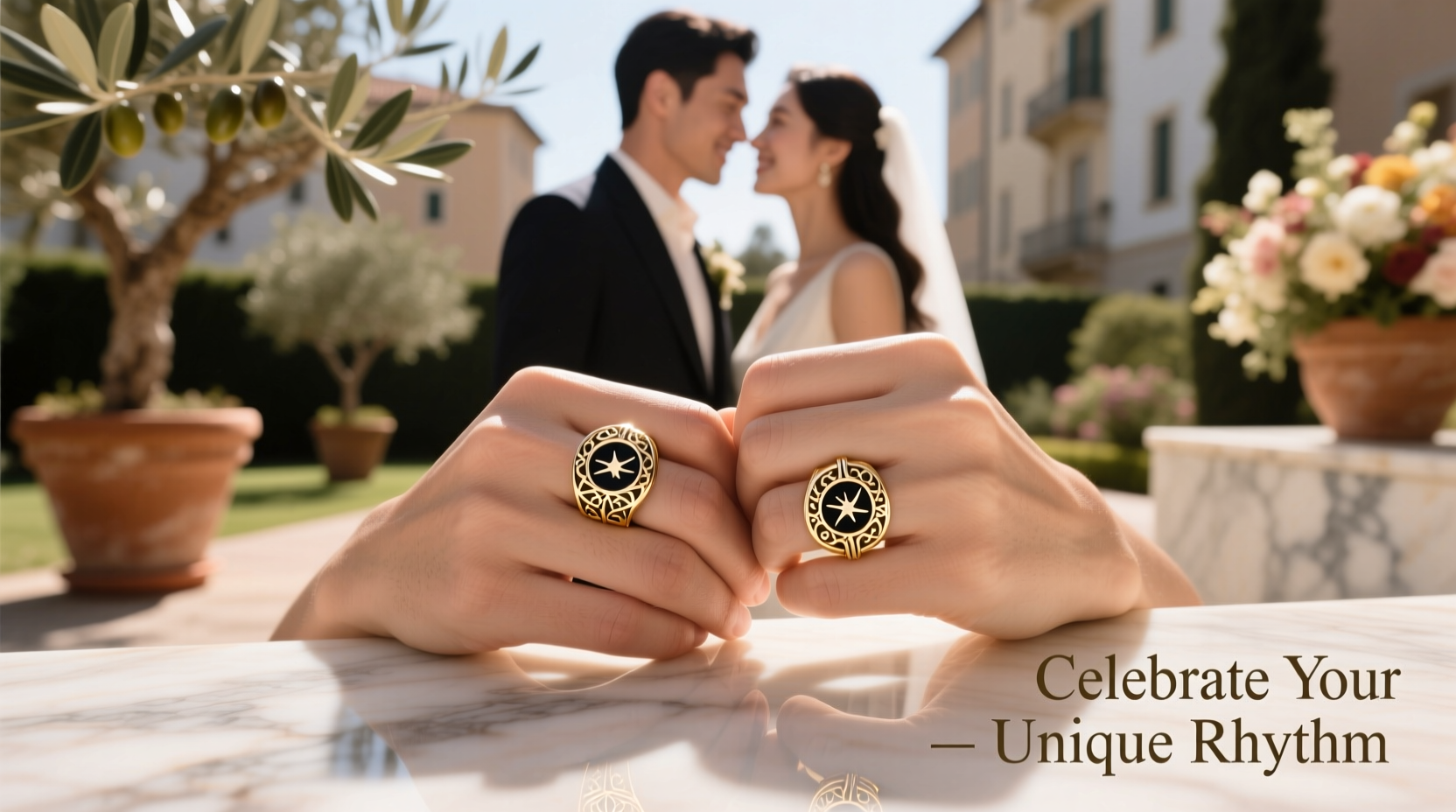
Complementary rings differ from identical pairs or classic solitaires. Rather than uniformity, they emphasize balance—like two notes forming a chord. One partner might choose a sleek platinum band with a single diamond accent, while the other opts for a textured rose gold ring with engraved coordinates of where you first met. Though different in appearance, these rings connect through shared elements: metal tone, gemstone color, symbolic engraving, or design motif.
This approach allows each person to express their personality while still creating a visual and emotional link. It’s especially popular among couples who value authenticity over tradition, including non-binary partners, long-term companions, or those recommitting after years together.
Why Choose Complementary Over Identical?
Uniform rings can feel restrictive, especially when tastes diverge. Complementary designs offer flexibility without sacrificing unity. They acknowledge that love isn’t about becoming one person, but about two individuals choosing to walk side by side. This mindset resonates with contemporary views on relationships—interdependent, respectful, and expressive.
Incorporate Shared Symbols and Personal Meaning
The most memorable rings carry more than aesthetic appeal—they hold stories. Consider integrating symbols that reflect your journey: a mountain range if you bonded over hiking, interlocking waves for a couple who met by the sea, or a tiny compass to represent guidance and adventure.
Engraving remains one of the most powerful tools. Instead of names or dates, think deeper: a lyric from “your song,” the latitude of your favorite city, or a word in a language you both studied together. Some couples use Morse code or celestial coordinates marking the night sky on their first date.
“Jewelry that tells a story becomes heirloom-worthy. When couples invest symbolic meaning into their rings, it transforms them from accessories into artifacts of love.” — Lena Torres, Jewelry Designer & Relationship Symbolism Consultant
Step-by-Step Guide to Infusing Meaning Into Your Rings
- Reflect Together: Set aside time to discuss key moments in your relationship—first meeting, challenges overcome, dreams ahead.
- Identify Recurring Themes: Is travel central to your bond? Do you share a passion for music, astronomy, or literature?
- Translate Themes into Design Elements: A book lover might prefer a ring with page-like textures; a musician could opt for a fretboard-inspired pattern.
- Work With a Custom Jeweler: Share your narrative. Many artisans specialize in translating abstract ideas into wearable art.
- Review Prototypes Thoughtfully: Ensure the final pieces resonate emotionally, not just visually.
Material Harmony: Balancing Metals and Textures
Choosing metals thoughtfully enhances complementarity. You don’t need to wear the same metal, but consider how they interact. For example:
- A brushed titanium band pairs beautifully with a hammered palladium ring—both matte, strong, and modern.
- Yellow gold next to rose gold creates a warm gradient effect, symbolizing blended lives.
- One polished white gold ring beside a black ceramic band offers contrast with cohesion through shape and width.
Texture also plays a role. If one ring is smooth, the other might feature braiding, milgrain edging, or fluting. The key is ensuring tactile elements speak to the same design language—even if they’re not twins.
| Metal Pairing | Vibe Created | Ideal For |
|---|---|---|
| White Gold + Platinum | Clean, timeless elegance | Minimalist couples who value durability |
| Rose Gold + Copper | Warm, artistic, earthy | Bohemian or nature-loving pairs |
| Titanium + Ceramic | Modern, edgy, resilient | Active lifestyles or non-traditional unions |
| Yellow Gold + Silver | Vintage-meets-contemporary | Couples blending cultural traditions |
Design Synchronicity: Patterns, Gemstones, and Asymmetry
Visual harmony doesn’t require duplication. Instead, aim for rhythm. One ring might feature three small sapphires spaced evenly; the other could have a continuous sapphire-blue enamel stripe. Both reference blue, but interpret it differently.
Asymmetry can be powerful. Imagine one partner wearing a ring with an off-center stone, while the other’s band has a gap where a stone would go—when hands clasp, the stones align. Or consider puzzle-style rings: two halves of a heart, infinity symbol, or yin-yang that only complete when brought together.
Real Example: Maya and Jordan’s Puzzle Bands
Maya and Jordan, a couple from Portland, chose titanium rings with laser-cut patterns. Each band had half of a Douglas fir silhouette—their state tree. Alone, the rings looked abstract. But when held side by side, the full tree emerged. “It reminds us that we’re stronger together,” Jordan said. “And it sparks conversations—we’ve even explained our story to strangers at coffee shops.”
Checklist: Choosing Your Complementary Rings
Use this practical checklist to guide your selection process:
- ☐ Discuss your relationship values and shared experiences
- ☐ Identify 2–3 recurring themes (e.g., travel, music, resilience)
- ☐ Decide on preferred metals and whether you want them to match or contrast
- ☐ Explore custom engraving ideas beyond names and dates
- ☐ Visit jewelers who offer bespoke or semi-custom services
- ☐ Bring inspiration photos or sketches to consultations
- ☐ Try on sample rings to assess comfort and daily wearability
- ☐ Confirm resizing policies and warranty coverage
- ☐ Plan a reveal moment—presenting the rings to each other can be part of the ritual
Frequently Asked Questions
Can complementary rings work for engagement and wedding sets?
Absolutely. Many couples now choose a complementary engagement ring pairing—such as one solitaire and one vintage-inspired halo—followed by matching or contrasting wedding bands. The key is continuity in theme or craftsmanship.
What if our styles are completely different?
Difference isn’t a barrier—it’s an opportunity. Find a unifying thread: birthstones, a shared hobby, or a meaningful number (like 7, representing seven years together). Let that anchor your designs, even if aesthetics vary.
Are custom rings significantly more expensive?
Not always. Many independent jewelers offer custom work at prices comparable to high-end retail. You may pay slightly more for unique materials or handcrafting, but you gain originality and emotional value that lasts generations.
Final Thoughts: Rings as Living Stories
Your relationship isn’t static, and neither should your symbols be. Complementary rings grow in meaning over time—not because they change, but because your life fills them with memory. Every scratch, every time you notice how your bands align when holding hands, becomes part of the narrative.
The most beautiful rings aren’t the shiniest or most expensive. They’re the ones that make you pause and smile, remembering why you chose that curve, that stone, that word etched inside. In choosing complementary rings, you’re not just selecting jewelry—you’re crafting a quiet language of love, visible only to those who know where to look.




 浙公网安备
33010002000092号
浙公网安备
33010002000092号 浙B2-20120091-4
Comments
No comments yet. Why don't you start the discussion?