
In a world where fast fashion floods the market, standing out requires more than just following trends. It demands intentionality—curated choices that reflect individuality and taste. Among the most expressive yet often underutilized accessories are niche design bracelets: handcrafted, limited-run, or culturally inspired pieces that transcend mass production. These aren’t just adornments; they’re wearable narratives. When used thoughtfully, they can transform even the simplest outfit into a statement of identity. The key lies not in accumulating, but in curating—and styling—with purpose.
Why Niche Design Bracelets Matter
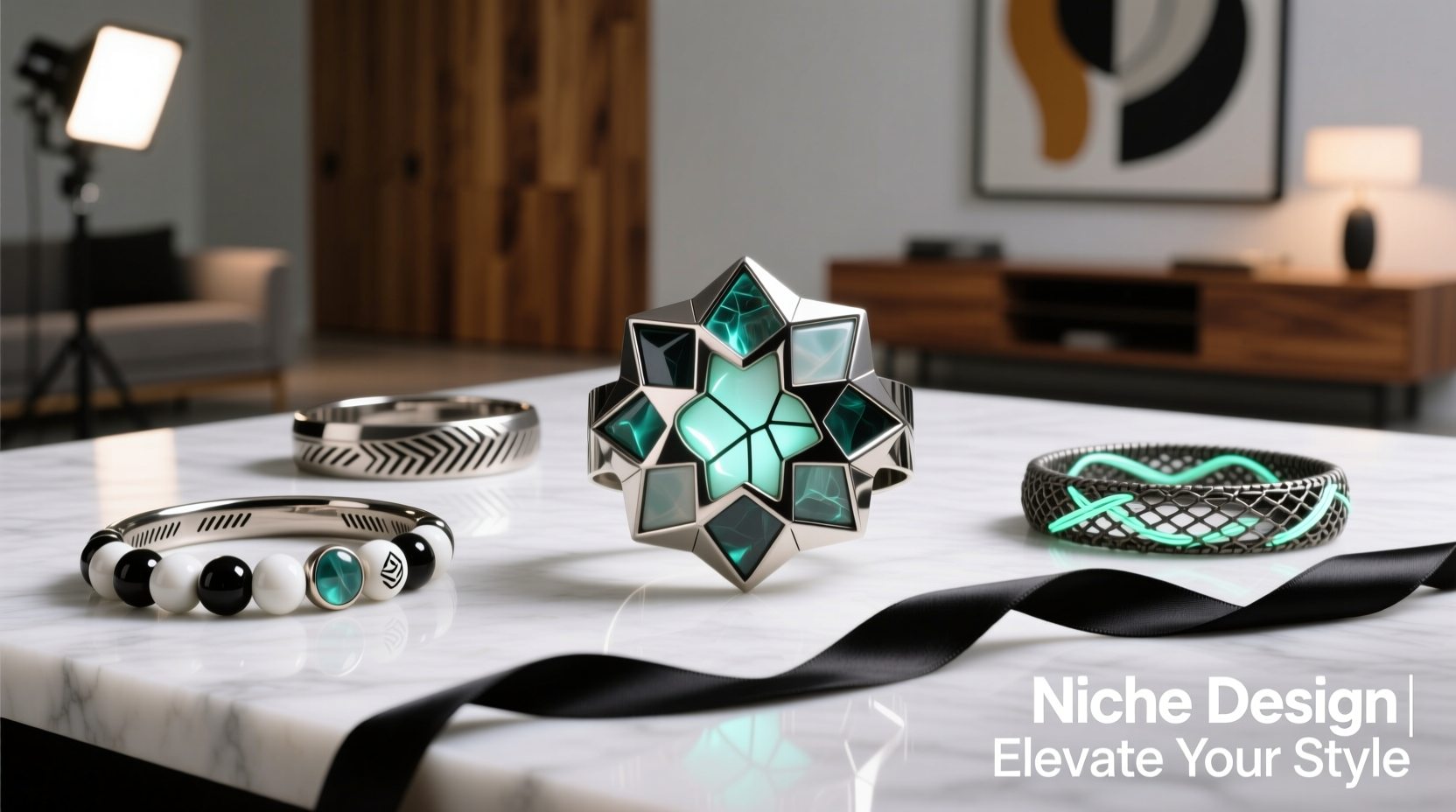
Niche design bracelets emerge from small studios, artisan collectives, or cultural traditions, often made with sustainable materials and ethical practices. Unlike mainstream jewelry, they carry stories—of origin, craftsmanship, and symbolism. A bracelet carved from Tagua nut by an Ecuadorian artisan, one woven with ancestral Andean patterns, or a minimalist titanium piece from a Scandinavian designer—all offer depth beyond aesthetics.
According to stylist and accessory curator Lila Moretti, “The power of niche jewelry is in its scarcity and soul. You’re not wearing something everyone else has. You’re wearing meaning.” This emotional resonance translates into confidence, making the wearer feel more connected to their appearance.
“The right bracelet doesn’t complete an outfit—it completes a mood.” — Lila Moretti, Fashion Accessory Curator
Strategic Layering for Maximum Impact
One of the most effective ways to showcase niche bracelets is through intentional layering. But unlike haphazard stacking, strategic layering considers texture, proportion, and narrative cohesion.
Begin with a base: a slim leather wrap or a thin chain. Add contrast with a bolder centerpiece—a beaded tribal cuff or a geometric sculptural band. Finish with a delicate charm bracelet that introduces movement. The goal is balance: no single piece overwhelms, but together they create rhythm.
For formal settings, opt for asymmetry. Wear three bracelets on one wrist and none on the other. For casual wear, try symmetry—matching textures on both wrists with one standout piece breaking the pattern.
Layering Principles at a Glance
| Principle | Do | Avoid |
|---|---|---|
| Texture Mixing | Pair smooth metal with braided fiber or wood | Combining too many rough surfaces |
| Proportion Balance | Alternate wide and narrow bands | Stacking multiple thick cuffs |
| Narrative Flow | Group pieces from the same cultural origin | Mixing sacred symbols without context |
| Movement | Add one kinetic piece (e.g., sliding beads) | Overloading with jangling elements |
Using Bracelets to Define Personal Style Archetypes
Your choice of niche bracelets can reinforce or redefine your personal style. Instead of treating them as afterthoughts, use them as anchors for broader fashion themes.
- The Minimalist: Choose a single, sculptural piece in blackened silver or ceramic. Let it stand alone against bare skin or a neutral sleeve.
- The Bohemian: Combine earth-toned woven cords, turquoise stones, and hammered copper. Focus on organic shapes and natural dyes.
- The Avant-Garde: Select experimental designs—magnetic joints, modular components, or bio-resin with embedded flora.
- The Heritage Enthusiast: Wear bracelets rooted in cultural tradition, like Maasai beadwork or Balinese silver filigree, always with research and respect.
Case in point: Sofia R., a graphic designer in Lisbon, shifted her wardrobe from corporate-neutral to art-forward by introducing a series of Portuguese cork and azulejo-inspired resin bracelets. “They became my signature,” she says. “Clients started associating me with creativity. I didn’t change my skills—I changed how I presented myself.”
“Accessories are the punctuation of personal style. A semicolon, a dash, an exclamation point—they shape how people read you.” — Amir Chen, Image Consultant
Integrating Bracelets Into Non-Traditional Styling Techniques
Think beyond the wrist. Niche design bracelets offer versatility when reimagined in unconventional contexts.
- As a Necklace Base: Link two identical bracelets with a short chain or leather cord to create a choker or collarbone-length necklace.
- On Belts or Bags: Use detachable magnetic or clip-on bracelets as bag charms or belt accents. A brass Berber symbol clipped to a tote adds intrigue.
- Footwear Embellishment: Wrap a flexible chain bracelet around a sandal strap for beach-to-dinner polish.
- Within Hairstyles: Secure a low bun with a rigid bangle instead of a hairpin—especially effective with open-cage or spiral designs.
Mini Case Study: From Office Drab to Artful Presence
Jared M., a financial analyst in Chicago, wore only a watch and wedding band for years. After visiting a local craft fair, he purchased a small oxidized steel bracelet engraved with a Fibonacci spiral. He began wearing it with his dress shirts, rolled just above the cuff. Colleagues noticed. Within weeks, he was invited to lead client presentations—roles previously given to more “visually dynamic” team members. His manager later admitted, “You seemed more engaged, more thoughtful. I don’t know if it was the bracelet or what it represented, but it changed how we saw you.” Jared now rotates three niche pieces—one mathematical, one botanical, one abstract—each aligned with the meeting’s theme.
Building a Conscious Collection: A Step-by-Step Guide
Curating a meaningful collection of niche bracelets takes time and awareness. Follow this timeline to build with intention.
- Month 1: Audit Your Current Accessories
Remove all bracelets. Assess which ones you reach for instinctively. Note materials, colors, and emotions they evoke. - Month 2: Define Your Aesthetic Pillars
Identify 3 core values (e.g., sustainability, heritage, innovation). Let these guide your search. - Month 3: Source Thoughtfully
Purchase one piece from a verified artisan platform (e.g., Ten Thousand Villages, NOVICA, or a local maker’s studio). - Month 4: Experiment with Pairings
Test combinations with different outfits. Photograph your favorites for reference. - Ongoing: Rotate Seasonally
Like a capsule wardrobe, rotate bracelets by season or mood. Store others in fabric-lined boxes to prevent tarnish.
Checklist: Building a Respectful, Stylish Collection
- ☐ Research the cultural significance of symbolic designs
- ☐ Verify artisan credentials and ethical sourcing
- ☐ Prioritize quality over quantity—start with one standout piece
- ☐ Keep care instructions handy (e.g., avoid water for leather or wood)
- ☐ Document your favorite pairings for quick daily decisions
Frequently Asked Questions
Can I wear niche bracelets every day?
Yes, but consider material durability. Stone, titanium, and stainless steel withstand daily wear. Delicate fibers, untreated wood, or resin should be rotated to preserve integrity. Always remove before swimming or heavy activity.
How do I know if a design is culturally appropriate?
Ask: Is the symbol sacred? Who made it? Are profits returning to the community? If a design originates from Indigenous or marginalized cultures (e.g., Navajo patterns, Hindu mantras), buy directly from creators within that culture. Avoid mass-produced imitations.
What if I have sensitive skin?
Opt for hypoallergenic materials like niobium, medical-grade silicone, or vegetable-tanned leather. Avoid nickel-based alloys. Request material disclosures from sellers—reputable artisans will provide them.
Conclusion: Make Your Mark, One Wrist at a Time
Style isn’t about having the most expensive clothes or the trendiest labels. It’s about coherence, courage, and curation. Niche design bracelets offer a quiet yet potent way to express who you are—or who you’re becoming. They invite conversation. They honor craftsmanship. They turn routine gestures—a handshake, a wave, a sleeve pushed up—into moments of recognition.
You don’t need a closet full of them. You need just one that resonates. Then another that contrasts. Then a third that surprises. Build slowly. Wear boldly. Let your wrists tell stories worth listening to.




 浙公网安备
33010002000092号
浙公网安备
33010002000092号 浙B2-20120091-4
Comments
No comments yet. Why don't you start the discussion?