
Not all dogs are enthusiastic about plush squeakers or rubber balls. Some pups simply don’t respond to traditional toys, and that’s perfectly normal. A lack of interest in toys doesn’t mean your dog is disengaged, bored, or difficult—it just means their idea of fun looks different. For these dogs, engagement comes not from chasing, fetching, or chewing, but from interaction, mental stimulation, and shared experiences with their humans. The good news? There are countless creative, fulfilling ways to bond with a toy-averse dog without relying on manufactured playthings.
Understanding why some dogs avoid toys can help tailor your approach. It might be sensory sensitivity, past negative experiences, breed-specific instincts, or simply individual preference. Regardless of the reason, shifting focus from objects to interaction opens up a world of enriching activities that build confidence, reduce anxiety, and deepen your relationship.
Why Some Dogs Don’t Like Toys
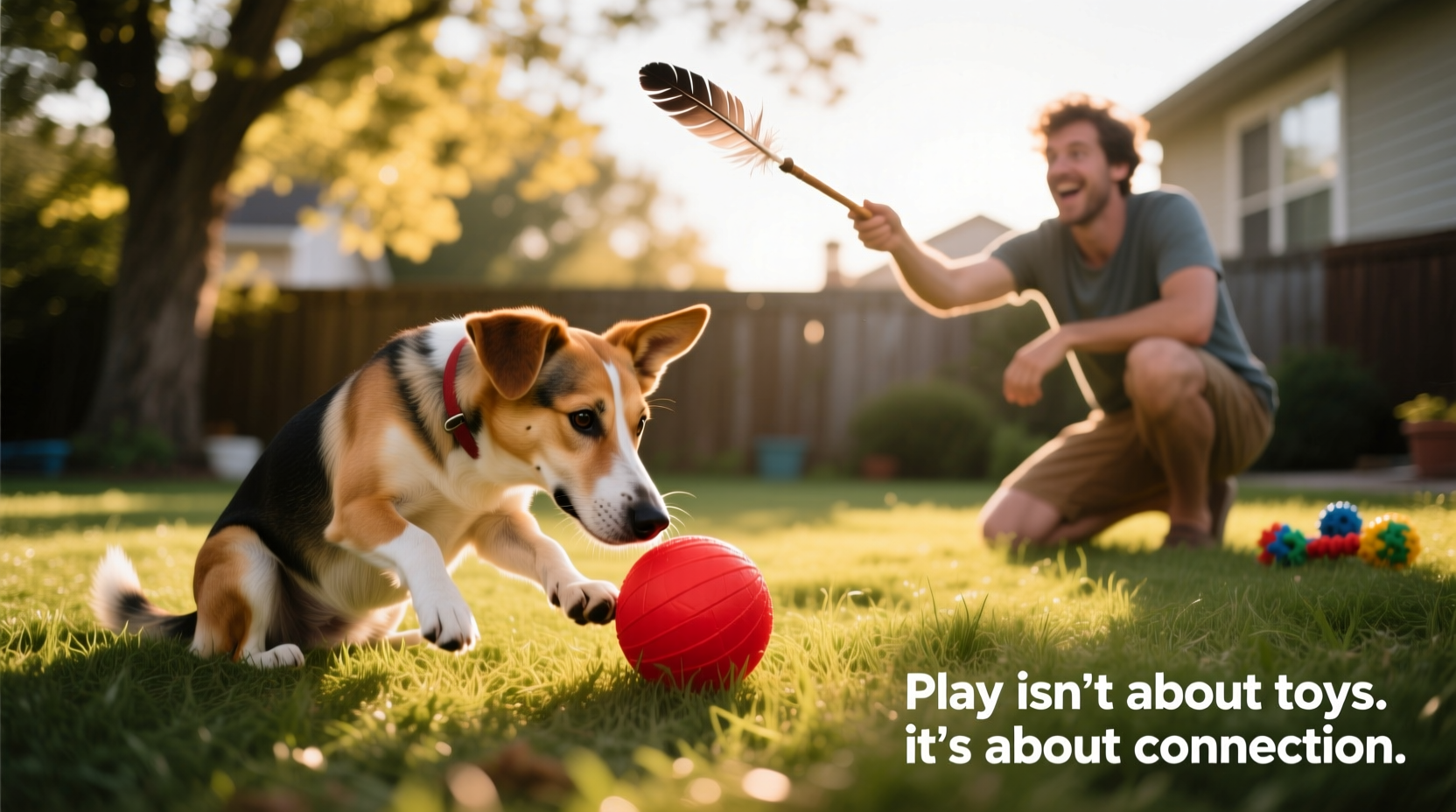
Dogs are individuals, and their preferences vary as much as human hobbies do. While many dogs instinctively chase, retrieve, or chew, others show little interest in these behaviors. Some breeds, like herding or guarding types, may be more inclined toward tasks involving control, movement, or proximity rather than object manipulation.
Sensory issues also play a role. Certain textures, sounds (like squeakers), or smells can be unpleasant or even overwhelming. A dog who flinches at a crinkly toy or ignores a ball rolling by isn’t being stubborn—they may simply not find it motivating or could even find it aversive.
“Engagement isn’t about what you offer, but how meaningful it is to the dog. For many, connection with their person is far more rewarding than any toy.” — Dr. Sarah Thornton, Certified Applied Animal Behaviorist
Interactive Games That Don’t Require Toys
The key to engaging a toy-averse dog lies in shifting from object-based play to relationship-based interaction. These games rely on communication, movement, and mutual enjoyment.
- Hide-and-Seek: Start indoors. Have someone hold your dog while you hide in another room. Call their name excitedly when they’re released. Reward with praise or treats when they find you. Gradually increase difficulty by hiding behind doors or in less obvious spots.
- Treat Trails: Use kibble or small treats to create a winding path on the floor or grass. Let your dog follow the scent to a hidden reward. This taps into natural foraging instincts and provides mental exercise.
- “Find It” Challenge: Say “Find it!” and toss a treat nearby—not too far. As your dog gets better, scatter multiple treats in a room or yard and encourage them to search. You can later transition this to finding people or specific objects.
- Chase Me (The Human Runs): Some dogs love chasing their people. Run a few steps away, call their name, and encourage pursuit. Stop and reward with affection or a treat. This flips the script—instead of the dog retrieving an object, they’re “catching” you.
Training as Play: Turning Commands into Fun
For dogs who thrive on structure and attention, training isn’t a chore—it’s a game. When taught with enthusiasm and rewards, commands become interactive challenges that build focus and confidence.
Use high-value treats, verbal praise, or physical affection as reinforcement. Turn basic cues like “sit,” “down,” or “spin” into mini-games by chaining them together or adding variety in locations and distractions.
- Start with one command your dog knows well.
- Add a new cue or trick (e.g., “touch” your hand with their nose).
- Practice in different rooms or outdoor spaces.
- Introduce slight delays or distractions to keep it challenging.
- End with a jackpot reward—a handful of treats or an extra-long ear scratch.
Advanced options include shaping behaviors like “go to mat,” “weave through legs,” or “close the door.” These aren’t just impressive tricks—they provide mental stimulation and reinforce your dog’s problem-solving abilities.
Real-Life Example: Max, the Toy-Indifferent Border Collie
Max, a four-year-old Border Collie, showed no interest in toys despite his high-energy breed’s reputation for fetch obsession. His owner, Jen, felt frustrated, thinking she was failing to meet his needs. After consulting a behavior coach, she shifted focus from toys to tasks.
They started with simple backyard scent games using hidden treats and gradually introduced agility-style movements—jumping over logs, weaving between cones, and navigating low tunnels made from cardboard boxes. Max lit up during these sessions. He wasn’t driven by objects, but by direction, challenge, and partnership.
Within weeks, Jen noticed reduced pacing and barking at home. Max was mentally tired after just 20 minutes of structured play. “He doesn’t need a ball,” Jen said. “He needs a job—and I’m happy to give him one.”
Outdoor Adventures and Environmental Enrichment
Nature is the ultimate playground. For dogs uninterested in toys, real-world exploration offers endless stimulation. The goal isn’t distance or speed, but sensory engagement.
| Activity | Benefits | Tips |
|---|---|---|
| New walking routes | Exposure to novel scents and sights | Let your dog lead occasionally; allow sniffing time |
| Hiking on varied terrain | Physical challenge and mental focus | Bring water and check paw safety on rocky paths |
| Beach visits | Texture variation, digging opportunities | Rinse paws afterward; avoid hot sand |
| Urban exploration | Stimulating sounds and movement | Keep leash secure; respect personal space |
Even a walk around the block can become an adventure. Encourage your dog to investigate tree bases, fire hydrants, or cracks in the sidewalk. Sniffing isn’t dawdling—it’s how dogs gather information and relax their nervous systems.
Checklist: Daily Engagement Plan for Toy-Averse Dogs
Use this checklist to ensure your dog receives balanced enrichment every day:
- ✅ 10–15 minutes of interactive training (new or reviewed cues)
- ✅ One scent game (indoor treat trail or outdoor “find it”)
- ✅ A novel walk with at least 5 minutes of free sniffing
- ✅ One physical game (chase, hide-and-seek, or agility moves)
- ✅ Quiet bonding time (gentle petting, massage, or co-sitting)
Frequently Asked Questions
Can a dog learn to like toys if they’ve never shown interest?
Possibly, but not always. Some dogs develop interest with the right toy—such as a soft fabric tug or a treat-dispensing puzzle. However, forcing toy interaction can backfire. Focus instead on what already motivates your dog. If toys never click, that’s okay. Engagement matters more than equipment.
My dog seems bored. How do I know if these activities are enough?
Signs of sufficient enrichment include calm resting after activity, eagerness to participate, and reduced destructive behaviors. If your dog still seems restless, increase mental challenges—try longer scent games or introduce a new trick. Quality trumps quantity.
Are food-based games as effective as physical play?
Absolutely. Mental exercise is often more tiring than physical exertion. A 10-minute puzzle game can tire a dog more than a 30-minute walk. Combine both for optimal balance.
Creative Alternatives to Traditional Play
Think beyond fetch and tug-of-war. Here are unconventional yet effective ideas:
- Obstacle courses: Use household items—chairs, brooms, pillows—to create jumps, tunnels, and weaves. Guide your dog through with voice cues and rewards.
- Car rides: For many dogs, riding in the car is thrilling. Take scenic drives with stops for walks or sniffing breaks.
- Water play: On hot days, let your dog splash in a shallow kiddie pool or walk through sprinklers. Even dogs who don’t swim enjoy wet grass and puddles.
- Companionship walks: Invite another calm dog along. Social interaction can be deeply engaging, even without direct play.
Conclusion: Redefine Play on Your Dog’s Terms
Engaging a dog who doesn’t like toys isn’t a limitation—it’s an invitation to get creative. When we stop measuring canine happiness by toy obsession, we open the door to deeper connection, personalized enrichment, and joyful interaction. Whether it’s a game of hide-and-seek, a scent trail in the backyard, or a quiet moment of focused training, every shared experience strengthens your bond.
Your dog doesn’t need a stuffed squirrel to have fun. They need your attention, your creativity, and your willingness to see the world from their perspective. Start small, observe what lights them up, and build from there. The most meaningful play isn’t about what your dog plays with—it’s about playing together.




 浙公网安备
33010002000092号
浙公网安备
33010002000092号 浙B2-20120091-4
Comments
No comments yet. Why don't you start the discussion?