
Tassels are no longer reserved for bohemian fashion or ceremonial cords—they’ve found a vibrant new life in accessory design, especially in the world of handmade keychains. Lightweight, expressive, and endlessly customizable, tassels add movement, color, and personality to otherwise functional items. Whether you're crafting for personal use, selling at markets, or designing limited editions for clients, integrating tassels creatively can transform a simple keyring into a wearable art piece. This guide explores inventive techniques, material pairings, and design philosophies that elevate tassel-based keychains from crafty novelties to statement accessories.
Selecting the Right Tassel Materials
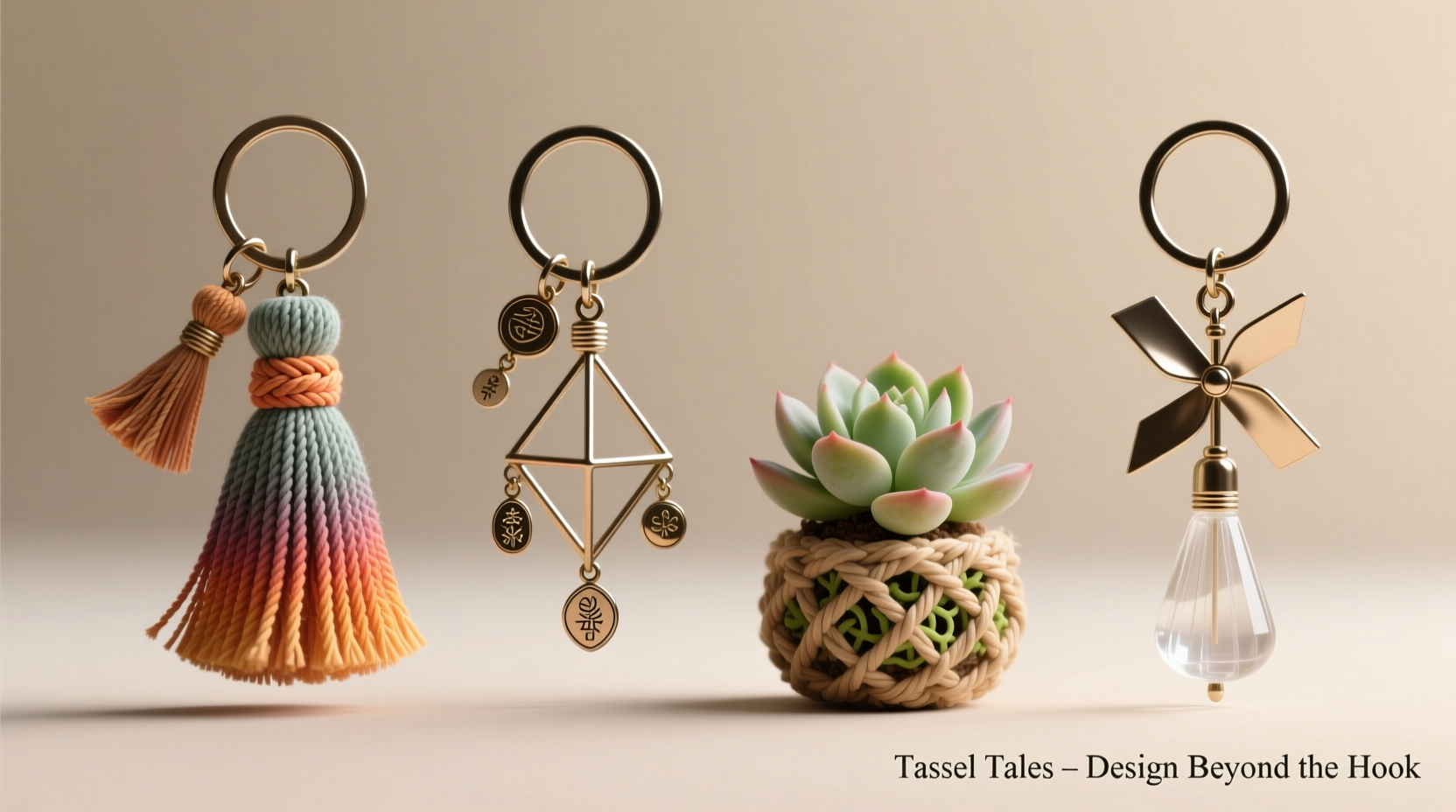
The foundation of any standout tassel keychain lies in material choice. Not all tassels behave the same way—some drape softly, others stand stiffly, and each brings its own aesthetic weight. Common materials include:
- Cotton yarn: Soft, lightweight, ideal for colorful, casual designs.
- Silk cord: Lustrous and smooth, perfect for elegant or minimalist styles.
- Leather strips: Durable and edgy, great for rugged or gender-neutral pieces.
- Metallic thread: Adds shimmer and sophistication, best used as an accent.
- Ribbon or satin: Offers structure and sheen; excellent for formal or gift-oriented keychains.
Consider not only appearance but also durability. A keychain is handled daily, jostled in pockets, and exposed to moisture and friction. Cotton tassels may fray over time unless sealed at the base, while leather holds up better under stress but requires conditioning.
Design Techniques That Stand Out
Going beyond attaching a single tassel opens up possibilities for layered, dynamic compositions. Consider these five innovative approaches:
- Layered Tassels: Combine two or three mini tassels of varying lengths on one connector. Use gradient colors (e.g., navy to sky blue) or contrasting textures (silk over cotton).
- Encased Tassels: Wrap the tassel’s head in a metal or resin cap that doubles as a charm. This protects the knot while adding a polished finish.
- Interwoven Elements: Braid thin leather strips through the tassel strands before attaching it to the ring, creating a hybrid fringe-braid effect.
- Asymmetrical Pairing: Attach a bold tassel to one side of a symmetrical metal keyring, balancing it visually with a small geometric charm on the opposite end.
- Detachable Tassels: Use snap buttons or lobster clasps to allow users to swap tassels seasonally or by outfit.
These methods encourage user engagement and customization—key drivers in today’s personalized accessory market.
Real Example: The “Seasonal Switch” Collection
Jess Lin, a Portland-based artisan who sells her work at local boutiques and online, launched a line called “SwitchKeys.” Each keychain features a magnetic attachment point where customers can clip on different tassels: forest green wool for fall, pastel cotton for spring, metallic silver for holidays. “People love changing their tassels like they change phone cases,” Jess explains. “It keeps the product fresh without needing to buy a whole new chain.” Her sales increased by 40% after introducing this modular concept.
“Tassels aren’t just decoration—they’re an interface between function and self-expression.” — Mara Santos, Textile Designer & Craft Educator
Combining Tassels with Other Materials
One of the most compelling aspects of tassel keychains is their compatibility with mixed media. When paired thoughtfully, tassels enhance rather than overwhelm other components.
| Material Pairing | Visual Effect | Best For |
|---|---|---|
| Tassel + Beaded Chain | Boho-luxe, rhythmic texture | Festival wear, gift sets |
| Tassel + Engraved Metal Tag | Modern contrast: soft meets sharp | Personalized gifts, corporate swag |
| Tassel + Resin Pendant | Dreamy depth, encapsulated detail | Artisan collections, memorial tokens |
| Tassel + Wood Bead | Earthy, organic warmth | Eco-conscious brands, yoga studios |
| Tassel + Silicone Grip | Functional flair, anti-slip utility | Car keys, gym bags, parent organizers |
For instance, embedding dried flowers in a clear resin bead above a cotton tassel creates a nature-inspired narrative. Alternatively, pairing a black leather tassel with a brushed steel initial charm results in a sleek, modern look suitable for professional gifting.
Step-by-Step: Crafting a Multi-Layer Tassel Keychain
Follow this detailed process to create a sophisticated triple-tassel design that balances visual interest with structural integrity.
- Gather Supplies: Three pre-made mini tassels (different colors), a 25mm split ring, two jump rings, pliers, clear adhesive sealant, and optional spacer beads.
- Prepare Tassels: Trim ends evenly. Apply a drop of fabric glue to the knot base of each and let dry for 10 minutes.
- Attach Central Tassel: Open a jump ring using pliers, slide through the loop at the top of the longest tassel, then link it directly to the split ring. Close securely.
- Add Side Tassels: Thread spacer beads onto two smaller jump rings. Attach each beaded jump ring to a shorter tassel, then connect them to either side of the central tassel on the main ring.
- Balance Design: Ensure the longest tassel hangs center and slightly below the others for visual hierarchy.
- Final Touch: Optional—add a tiny engraved tag or charm opposite the tassels to counterbalance weight and add branding.
Do’s and Don’ts of Tassel Keychain Design
| Do | Don't |
|---|---|
| Match tassel length to intended use (shorter for pocket carry, longer for visibility) | Use overly long tassels that snag on fabrics or bag zippers |
| Test weight distribution so keys don’t flip upside down | Attach heavy tassels to flimsy rings that can’t support strain |
| Offer customization options (color, initials, theme) | Overcrowd the ring with too many elements that reduce functionality |
| Seal natural fibers against moisture | Expose silk or cotton tassels to prolonged humidity without protection |
Frequently Asked Questions
Can I wash a tassel keychain?
Spot clean only. Submerging can weaken adhesives and cause dye bleeding. Use a damp cloth with mild soap, then air dry flat away from direct heat.
How do I stop my tassel from twisting?
Twisting often occurs from constant motion. To minimize it, use a double-knotted core when making the tassel, or choose flat ribbon-style tassels that resist rotation.
Are tassel keychains durable enough for daily use?
Yes, if constructed with quality materials and secure hardware. Reinforce attachment points, avoid delicate fibers like raw silk in high-friction environments, and educate buyers on care via packaging inserts.
Checklist: Building Your First Signature Tassel Keychain
- ☐ Choose a primary tassel material based on durability and style
- ☐ Select complementary accents (beads, tags, chains)
- ☐ Test multiple tassel lengths for balance and usability
- ☐ Seal all knots and connection points
- ☐ Add branding (engraving, tag, or packaging)
- ☐ Conduct a 7-day wear test to assess real-world performance
Conclusion
Tassels offer more than decorative flair—they invite storytelling, seasonal expression, and tactile delight in everyday objects. By reimagining how tassels interact with form, function, and material, designers and crafters can create keychains that transcend utility and become extensions of identity. Whether you're launching a product line or making thoughtful gifts, the fusion of tradition and innovation in tassel design holds immense potential.




 浙公网安备
33010002000092号
浙公网安备
33010002000092号 浙B2-20120091-4
Comments
No comments yet. Why don't you start the discussion?