
Cats are often seen as solitary creatures, but they thrive on interaction—just not always in the ways we expect. While commercial toys have their place, some of the most meaningful moments with your feline companion don’t require a feather wand or a crinkly ball. In fact, some of the deepest bonds form during quiet, improvised, and instinct-driven interactions that cost nothing and demand only your attention.
Engaging your cat without traditional toys isn’t about replacing them—it’s about expanding how you connect. These methods tap into natural feline behaviors like hunting, grooming, scent marking, and social learning. By understanding your cat’s instincts and responding with intention, you can create enriching experiences that deepen trust and reduce stress—for both of you.
Why Play Without Toys Matters
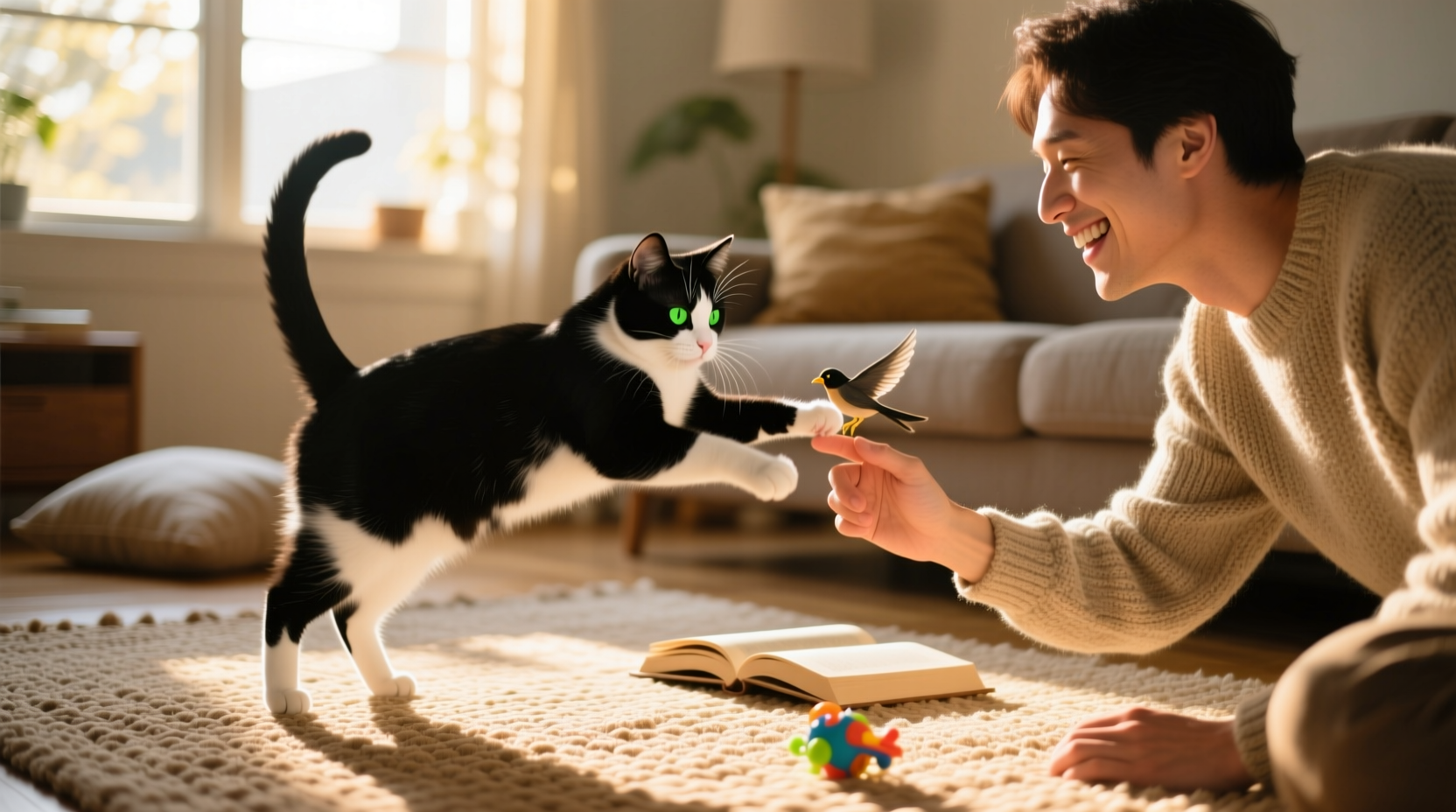
Toys are useful tools, but over-reliance on them can lead to predictable routines that lose novelty. Cats are predators by nature, and their interest wanes when stimulation becomes mechanical. Real engagement comes from unpredictability, sensory variety, and social context—all of which are available without spending a cent.
Playing without toys also encourages mindfulness. You’re not distracted by gadgets or props; instead, you’re fully present, observing your cat’s body language, vocalizations, and choices. This attentiveness builds emotional intelligence in pet owners and makes cats feel seen and understood.
“Cats don’t need elaborate setups to bond—they need consistency, safety, and interactive presence. The best ‘toy’ is often just you.” — Dr. Lena Reyes, Feline Behavior Specialist
Interactive Movement Games Using Your Body
Your hands, feet, and even breathing can become sources of playful intrigue when used thoughtfully. The key is mimicking prey-like motion: sudden stops, zigzags, and pauses that trigger your cat’s chase instinct.
- Foot Tag: Lie on the floor and wiggle your toes under a blanket. When your cat pounces, gently “escape” by pulling your foot back slowly, then re-emerge elsewhere.
- Finger Flicks: Gently move your fingers along the carpet like a scurrying insect. Let your cat stalk and bat at them—but stop if claws extend too sharply.
- Shadow Chase: Use a flashlight or lamp to cast moving shadows on walls. Move the light erratically, simulating bird flight or rodent movement.
Create a Bonding Routine Through Grooming and Touch
Grooming is more than hygiene—it’s a social act among cats. Allogrooming (mutual licking) strengthens group bonds in feral colonies. While you can’t lick your cat, replicating this behavior through touch fosters closeness.
Use a soft-bristled brush or even your fingertips to mimic licking motions along the head, neck, and shoulders—areas cats groom each other. Pair this with soft vocalizations or purring sounds you make yourself. Over time, your cat may begin to lean into these sessions, signaling trust.
Some cats enjoy gentle “bunting” exchanges—where you slowly rub your forehead against theirs (if they initiate first). This mimics scent-sharing, a sign of familial recognition in cats.
| Touch Type | Bonding Benefit | Caution |
|---|---|---|
| Brushing along jawline | Stimulates facial scent glands; promotes calm | Avoid ears if sensitive |
| Slow blinks while gazing | Signals non-threat; builds emotional safety | Don’t force eye contact |
| Chin scratches with knuckles | Mimics mutual grooming; reinforces trust | Stop if tail flicks or ears flatten |
Environmental Enrichment: Turn Your Home Into a Playground
You don’t need store-bought tunnels or towers. Everyday household elements can become dynamic play zones when rearranged creatively.
- Paper Bag Maze: Place several open paper bags on the floor in a scattered pattern. Let your cat explore, hide, and leap between them. Crinkle one occasionally to spark curiosity.
- Stairway Ambush: Sit on the stairs and roll a balled-up sock down a step or two. Let your cat chase it, then change direction unpredictably.
- Window Theater: Sit beside a window with bird activity. Narrate what you see in a soft voice (“Look, a little sparrow!”). Your cat will associate your presence with exciting stimuli.
- Laundry Pile Peekaboo: Hide behind a pile of clean laundry and peek out slowly. When your cat notices, freeze—then retreat. Repeat until they approach.
Mini Case Study: Building Trust with an Anxious Rescue Cat
Sophie adopted Milo, a shy three-year-old domestic shorthair rescued from a shelter. He avoided toys and hid during active hours. Instead of forcing interaction, Sophie began sitting silently near his hiding spot each evening, reading aloud in a calm tone. After two weeks, Milo emerged to sniff her book. She responded by slowly blinking and offering her hand.
Next, she introduced “breath play”—lying still and exaggerating her breathing so Milo could hear and feel the rhythm. He began pawing gently at her moving abdomen. Within a month, Milo initiated play by tapping her foot under the blanket. No toys were used, yet their bond became deeply secure.
Communication-Based Play: Talking, Singing, and Mimicry
Cats respond to vocal tone more than words. Experiment with chirps, trills, and high-pitched baby talk—sounds that resemble kitten calls or bird noises. Many cats will turn, approach, or even “talk back” with meows.
You can also mimic your cat’s vocalizations. Record a short clip of their meow (with your phone), then play it back softly later. Some cats investigate, thinking another cat is nearby. Respond with your own trill when they look at you—this begins a call-and-response game.
“Vocal mirroring activates social circuits in cats. It tells them, ‘I’m listening, and I’m part of your group.’” — Dr. Arjun Patel, Animal Communication Researcher
Checklist: Daily Bonding Without Toys
- ✅ Spend 5 minutes doing slow blinks and gentle touches
- ✅ Initiate one movement-based game (foot tag, finger flicks, etc.)
- ✅ Rearrange one household object to create novelty (move a chair, add a box)
- ✅ Talk or sing to your cat using high-pitched, rhythmic tones
- ✅ End the day with a grooming session or quiet co-sitting
FAQ
Can I really bond with my cat without any physical toys?
Absolutely. Toys are tools, not requirements. Bonding happens through consistent, attentive interaction—something no toy can replace. Many cats prefer human-directed play over solo toy chasing.
How long should these play sessions last?
Follow your cat’s cues. Most engagement windows last 3–7 minutes. Short, frequent interactions (2–3 times daily) are more effective than one long session.
What if my cat doesn’t seem interested?
Respect their pace. Try passive bonding first—sitting nearby, slow blinking, or narrating your actions. Interest often grows over days or weeks, especially in shy or older cats.
Conclusion: Presence Over Presents
The most powerful thing you can offer your cat isn’t a new toy or treat—it’s your full attention. When you engage creatively without props, you meet your cat on their terms: instinctive, sensory, and emotionally intelligent. These moments build a language of trust that lasts far beyond any play session.




 浙公网安备
33010002000092号
浙公网安备
33010002000092号 浙B2-20120091-4
Comments
No comments yet. Why don't you start the discussion?