
Car keys are among the most frequently handled items in daily life. Whether you're starting your morning commute or grabbing groceries after work, that familiar jingle of keys is a constant companion. For many, adding a whimsical capybara keychain brings personality and joy to an otherwise mundane object. But charm shouldn’t come at the expense of security. A poorly attached keychain can dangle loosely, get caught on clothing, or even detach entirely—especially with frequent use. The challenge lies in balancing cuteness with functionality. Fortunately, there are several innovative, reliable methods to keep your capybara keychain firmly in place while enhancing usability.
Why Secure Attachment Matters
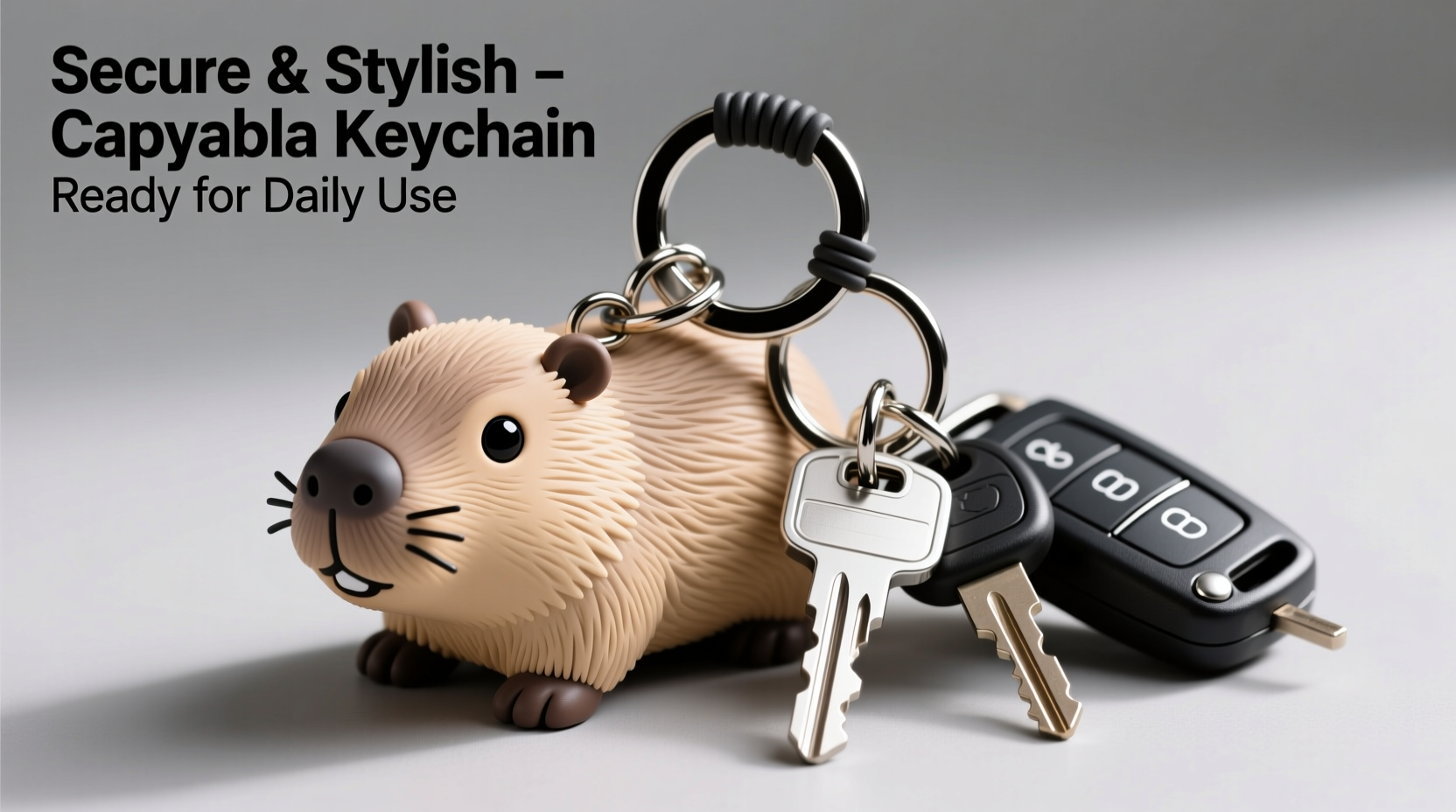
A decorative keychain may seem like a small detail, but its attachment method impacts both practicality and longevity. Loose attachments lead to noise, snagging, and loss. In vehicles, excessive movement can interfere with ignition switches or cause distraction. Additionally, cheap split rings or flimsy jump rings often fail under stress, especially when combined with heavier accessories. A secure setup prevents these issues, ensuring your capybara stays put through rain, vibration, and daily wear.
“Many people overlook the engineering behind everyday carry items. A well-secured keychain isn’t just about aesthetics—it’s about minimizing friction in routine tasks.” — Jordan Lee, Industrial Designer & EDC Specialist
Creative & Secure Attachment Methods
Beyond the standard split ring, numerous alternatives offer improved durability and design flexibility. Each method balances ease of access, weight distribution, and visual appeal. Below are five proven techniques used by enthusiasts and designers alike.
1. Double-Layered Ball-Chain with Key Mod Clip
Ball chains are commonly associated with necklaces, but their strength and flexibility make them ideal for key organization. By using a double-layered ball chain (two strands braided together), you significantly increase tensile strength. Attach one end to your keyring via a micro-carabiner and the other to a low-profile key mod clip mounted on your main key fob. This allows the capybara to hang freely without direct strain on the keyring.
2. Paracord Lanyard with Stopper Knot
Parachute cord (paracord) is renowned for its strength-to-weight ratio. Braiding a short lanyard from paracord not only secures your capybara but also adds tactical flair. Thread one end through the keyring and tie a stopper knot; attach the capybara to the loop formed at the opposite end. The benefit? If the keychain snags, the lanyard absorbs tension instead of pulling directly on the keyring.
For added customization, incorporate a cobra weave section near the top. This dense braid resists fraying and gives a polished finish.
3. Magnetic Coupling System
Modern magnetic closures, similar to those in premium wallets or tech accessories, can be adapted for keychains. Use a pair of rare-earth magnets—one embedded in a silicone sleeve around your key fob, the other attached to the capybara’s connector. When snapped together, they hold firmly but separate safely under strong pull force, reducing risk of damage.
This system excels in minimalist setups where quick detachment is useful, such as switching between vehicles or storing keys discreetly.
4. Rotating Swivel Clasp Mount
Swivel clasps prevent tangling by allowing independent rotation between components. Attach a brass swivel lobster clasp between your primary keyring and the capybara. This reduces torque buildup caused by constant motion, which typically loosens standard connectors over time.
Best suited for larger capybaras or multi-accessory configurations, this method maintains orientation and minimizes wear on both keys and keychain hardware.
5. Silicone Sleeve Integration
Slide a custom-fit silicone sleeve over your key fob before attaching any hardware. These sleeves often include built-in loops or anchor points specifically designed for keychains. Because the capybara connects to the sleeve rather than the metal ring, vibrations and impacts are dampened, extending the lifespan of all components.
Available in various colors and textures, silicone sleeves also protect against scratches and provide better grip.
Comparison Table: Attachment Methods at a Glance
| Method | Security Level | Noise Reduction | Customization | Best For |
|---|---|---|---|---|
| Double Ball Chain | High | Moderate | High | Heavy keychains, frequent drivers |
| Paracord Lanyard | Very High | High | Very High | Outdoor use, rugged environments |
| Magnetic Coupling | Moderate-High | High | Moderate | Minimalist users, quick swaps |
| Swivel Clasp | High | Moderate | Moderate | Multi-accessory setups |
| Silicone Sleeve | Moderate | High | Low-Moderate | Protecting smart keys, quiet operation |
Step-by-Step: Installing a Paracord Lanyard with Capybara Keychain
Follow this sequence to create a durable, tangle-free connection:
- Cut a 12-inch length of 4-strand paracord.
- Thread one end through the hole in your keyring and pull 2 inches through.
- Tie a barrel knot (or double overhand knot) to secure the short end against the ring.
- Braid a 4-inch cobra stitch down the length of the cord.
- At the end, thread the capybara’s metal loop onto the remaining cord.
- Tie another stopper knot below the loop to prevent slippage.
- Trim excess cord and melt the ends lightly with a lighter to prevent fraying.
The result is a functional, personalized keychain that withstands daily abuse while showcasing your capybara proudly.
Mini Case Study: Commuter Safety Upgrade
Maya, a software engineer in Seattle, loved her resin capybara keychain but found it constantly catching on her coat zipper during winter commutes. After losing it twice in three months, she switched to a paracord lanyard with a swivel clasp. She reports that the new setup eliminated snagging, reduced noise in her pocket, and survived a drop test from her desk unscathed. “It feels more intentional,” she said. “Like my keys finally match how much I care about little joys in my day.”
Checklist: Ensuring Long-Term Security
- ✅ Inspect attachment points monthly for wear or deformation
- ✅ Avoid mixing heavy accessories unless using reinforced connectors
- ✅ Clean metal components quarterly to prevent corrosion
- ✅ Test magnetic strength every few weeks if using magnetic mounts
- ✅ Replace paracord or fabric elements if fraying appears
- ✅ Keep spare connectors (carabiners, split rings) in your glove compartment
Frequently Asked Questions
Can I use glue to secure my capybara keychain?
While adhesives like epoxy can reinforce weak joints, they should never be the sole attachment method. Vibration and temperature changes weaken bonds over time. Always combine glue with mechanical fasteners like clips or knots for reliability.
Will a magnetic attachment affect my key fob’s signal?
No—rare-earth magnets used in secure closures do not interfere with RFID or Bluetooth signals emitted by modern key fobs. However, avoid placing magnets directly over the circuitry inside the fob casing.
How do I clean my capybara keychain without damaging the attachment?
Remove the keychain from your keys first. Use a soft brush and mild soapy water for plastic or resin figures. Dry thoroughly before reattaching. For metal connectors, wipe with a vinegar-dampened cloth to remove oxidation, then rinse and dry.
Final Thoughts: Joy Meets Functionality
Your car keys don’t have to be boring. A capybara keychain represents more than just a trend—it’s a small act of self-expression in an often-routine world. But true satisfaction comes when that expression lasts. By choosing a thoughtful, resilient attachment method, you preserve both the integrity of your keys and the charm of your accessory. Whether you opt for rugged paracord, sleek magnets, or rotating clasps, the goal remains the same: seamless integration of personality into practicality.




 浙公网安备
33010002000092号
浙公网安备
33010002000092号 浙B2-20120091-4
Comments
No comments yet. Why don't you start the discussion?