
In an era where every millimeter of pocket space counts, reducing clutter without sacrificing functionality is a win. Phone charms are often seen as purely decorative—adorable add-ons that personalize your device. But with a bit of ingenuity, these small accessories can serve a surprisingly practical purpose: acting as an instant, portable phone stand. Whether you're watching videos, taking selfies, or video calling, repurposing your charm into a support system is not only clever but also sustainable. This guide explores inventive methods to transform your existing phone charm into a functional stand, backed by real-life applications and expert insights.
Why Turn a Phone Charm Into a Stand?
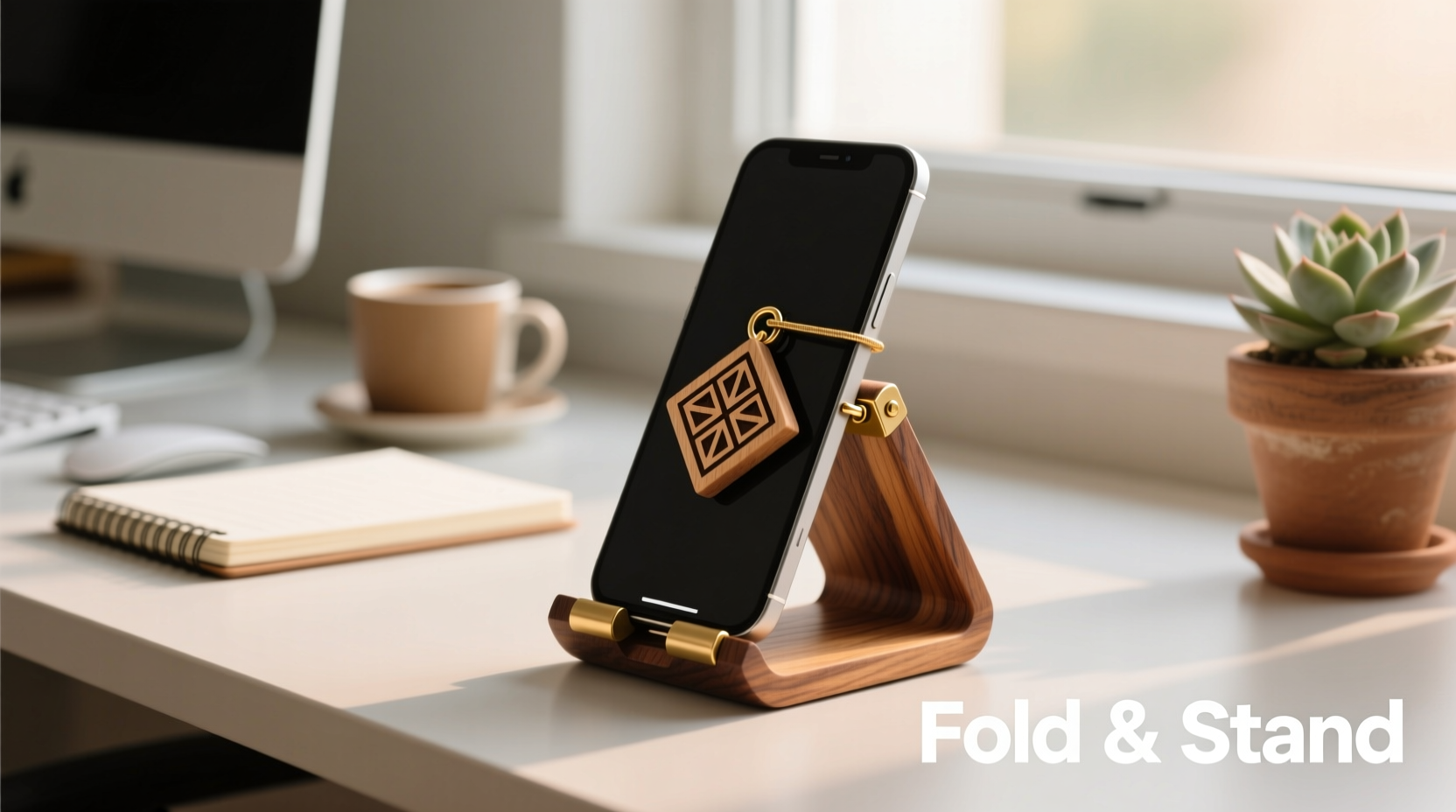
Most phone stands are separate accessories—bulky, easy to lose, and often forgotten at home. A charm, however, stays attached to your phone at all times. Leveraging it as a stand eliminates the need to carry additional gear while promoting resourcefulness. It’s a minimalist solution aligned with zero-waste principles and smart design thinking.
Designers like Yuki Tanaka, who specializes in compact urban gadgets, emphasize integrated functionality:
“The future of mobile accessories lies in multipurpose design. When decoration doubles as utility, we reduce waste and enhance user experience.” — Yuki Tanaka, Industrial Designer
This philosophy applies perfectly to reimagining phone charms—not just as fashion statements, but as engineered micro-tools.
Understanding Phone Charm Types and Their Potential
Not all charms work equally well as stands. The key is identifying structural features that lend themselves to stability. Below is a breakdown of common charm types and their suitability:
| Charm Type | Stand Potential | Best For |
|---|---|---|
| Looped metal charm (e.g., heart, star) | High | Side-leaning support on flat surfaces |
| Beaded tassel with weight | Medium | Adding downward force for grip |
| Resin charm with flat base | High | Stable upright positioning |
| Chain-only attachment | Low | Limited use without modification |
| Magnetic charm (compatible models) | Very High | Attaching to metal surfaces as indirect stands |
The most effective charms have either weight, rigidity, or a flat surface area. Flexibility alone won’t suffice—structure is essential for balance.
Step-by-Step: How to Use Your Phone Charm as a Functional Stand
Transforming your charm into a stand doesn’t require tools or modifications. Follow this sequence to achieve reliable support:
- Assess your charm’s shape and weight distribution. Hold your phone vertically and gently tilt it backward. Does the charm naturally catch the surface? If yes, proceed.
- Find a smooth, level surface. Tables, desks, or even tray tables on flights work best. Avoid carpets or uneven textures.
- Position the phone at a slight backward angle. Rest the bottom edge of the phone on the surface while allowing the charm to extend behind it.
- Let the charm act as a kickstand. If it has a loop or protrusion, let it dig slightly into the surface to prevent slipping.
- Adjust viewing angle. Slide the phone forward or back until the screen is comfortably visible—usually between 45° and 60°.
- Test stability. Gently tap the screen or simulate typing to ensure no wobbling occurs.
For heavier phones (especially Pro models), pairing the charm with a silicone case adds grip and prevents sliding. In some cases, looping the charm’s chain around the phone’s ring holder (if present) can create a triangular base for improved balance.
Real-Life Example: Commuter’s Hands-Free Hack
Sophie, a digital marketer in Tokyo, uses her cat-shaped resin charm daily during train rides. “I watch industry webinars on my 30-minute commute,” she explains. “Instead of holding my phone the whole time, I prop it up using the flat base of my charm. It sits perfectly against the seatback tray. I don’t need to pack a stand, and I can take notes hands-free.” Her method saves space and reduces fatigue—proof that small design choices yield big usability gains.
Creative Modifications to Enhance Functionality
If your current charm lacks ideal structure, minor enhancements can unlock stand capabilities:
- Add a removable adhesive pad to the back of a flat charm. Use a reusable gel sticker so it doesn’t damage surfaces or leave residue.
- Combine with a magnetic mount. Attach a slim metal plate to the charm’s loop, then place it against a fridge, filing cabinet, or car vent clip for vertical viewing.
- Create tension with a lanyard loop. If your charm connects via a detachable ring, thread a short paracord loop through it and anchor the ends under the phone to form a temporary tripod base.
- Use dual charms for balance. Position one on each side of the phone (via case loops) to distribute weight evenly when leaning backward.
Checklist: Is Your Charm Stand-Ready?
Before relying on your charm in critical moments, verify its readiness with this checklist:
- ✅ Has a rigid or weighted component (not just fabric or string)
- ✅ Can make contact with a surface behind the phone
- ✅ Doesn’t interfere with charging or button access
- ✅ Maintains phone stability when touched lightly
- ✅ Works with your current case (if used)
- ✅ Survives repeated setup/teardown without wear
Passing four or more criteria means your charm is likely suitable for regular stand use.
Common Pitfalls and How to Avoid Them
While innovative, this hack isn’t foolproof. Awareness of limitations prevents frustration:
| Issue | Solution |
|---|---|
| Phone slides forward | Place on a textured mat or use a rubber-ended charm |
| Charm detaches under pressure | Reinforce attachment point; avoid excessive force |
| Poor viewing angle | Prop phone on a folded napkin or card beneath the base |
| Only works on hard surfaces | Pair with a thin acrylic board for soft surfaces like beds or couches |
Remember: this method excels in controlled environments—desks, kitchens, or transit trays—not rugged outdoor terrain.
Frequently Asked Questions
Can any phone charm work as a stand?
No. Lightweight, floppy, or purely decorative charms (like fabric tassels) lack the structure to support a phone. Look for charms with flat bases, loops, or noticeable weight to maximize effectiveness.
Will using my charm as a stand damage it?
Occasional use should not cause harm, especially if the charm is securely attached. However, frequent stress on weak links (e.g., thin jump rings) may lead to breakage over time. Inspect connections monthly for signs of wear.
Do these methods work with large phones or tablets?
They’re optimized for smartphones under 7 inches. Larger devices may require supplemental support, such as resting the charm against a wall or combining it with a secondary object like a cup or book.
Final Thoughts: Rethinking Small Accessories for Big Utility
The charm on your phone might seem trivial, but in the right context, it becomes a tool of efficiency. By embracing adaptive thinking, users turn passive decorations into active solutions—saving space, reducing dependency on single-use gadgets, and adding a touch of personal flair to everyday tasks. As urban living demands smarter use of objects, hacks like this exemplify how minimalism and creativity intersect.
Next time you reach for a bulky stand, pause and test what’s already on your phone. You might find that the perfect support system was there all along.




 浙公网安备
33010002000092号
浙公网安备
33010002000092号 浙B2-20120091-4
Comments
No comments yet. Why don't you start the discussion?