
A coat is more than just outerwear—it’s a statement. While many people invest in high-end designs or seasonal trends, one of the most effective and affordable ways to refresh a coat lies in an often-overlooked detail: buttons. Replacing or embellishing buttons with decorative ones can completely alter the look, feel, and personality of a garment. Whether you're revamping a vintage find, customizing a thrift-store gem, or simply tired of your winter wool coat looking the same year after year, decorative buttons offer a world of creative potential.
Buttons have long played a functional role, but their aesthetic value is equally powerful. From antique brass toggles to whimsical ceramic shapes, each button tells a story. When thoughtfully chosen and arranged, they become focal points that elevate even the simplest coat into a wearable piece of art. This guide explores practical, stylish, and imaginative ways to use decorative buttons to breathe new life into your outerwear.
Why Decorative Buttons Matter
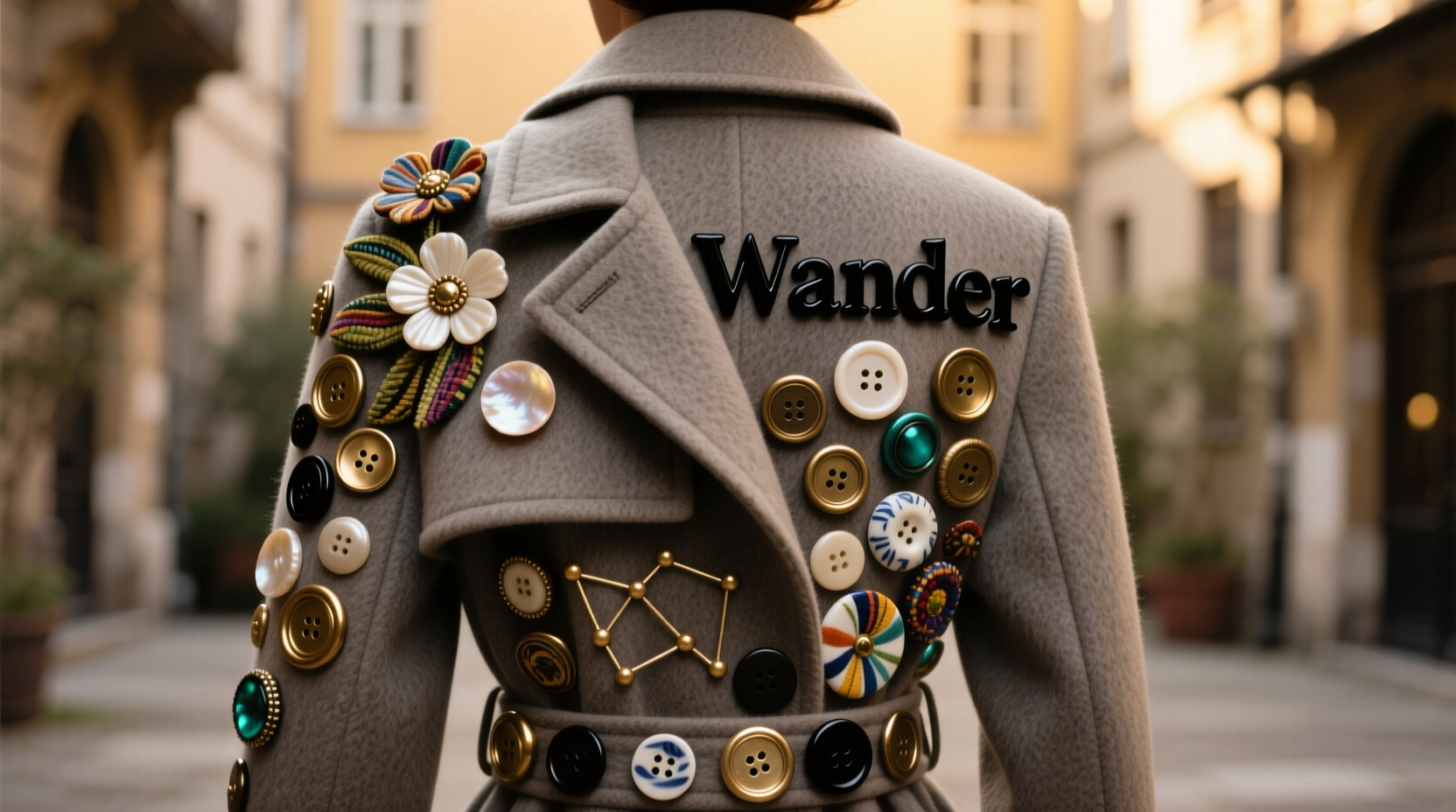
Buttons are among the smallest details on a coat, yet they carry significant visual weight. They sit at eye level when someone faces you, frame the neckline, and often form a vertical line that draws attention upward. A well-chosen button can harmonize with your personal style, reflect cultural influences, or serve as a conversation starter.
Fashion historian Dr. Lila Monroe notes:
“Buttons have been used for centuries not just as fasteners, but as symbols of status, craftsmanship, and identity. In modern fashion, reclaiming that tradition through customization allows wearers to assert individuality in a mass-produced world.” — Dr. Lila Monroe, Textile Historian
This symbolic power makes them ideal candidates for personalization. Unlike prints or embroidery, which require specialized tools or skills, swapping or adding buttons is accessible to nearly anyone with a needle and thread.
Step-by-Step Guide: How to Replace or Add Buttons
Transforming your coat begins with preparation and precision. Follow this timeline to ensure a professional-looking result.
- Assess your coat’s structure: Determine whether it uses functional buttons (for closure) or decorative ones (for style). Functional buttons require secure attachment and proper alignment.
- Choose your new buttons: Select size, material, and color that complement the fabric and overall design. For structured coats, avoid overly heavy buttons that may distort the lapel.
- Remove old buttons: Use a seam ripper or small scissors to carefully cut threads without damaging the fabric.
- Mark placement: Use tailor’s chalk or pins to mark where new buttons will go. Ensure symmetry by measuring from the center front edge.
- Sew buttons securely: Double-thread a hand needle and knot the end. Pass through the fabric and button four times for durability. On thick coats, use a shank or create a thread shank for flexibility.
- Reinforce if needed: Back buttons with a small piece of interfacing or fabric scrap to prevent pulling.
Creative Button Applications Beyond Replacement
While replacing standard buttons is the most common approach, there are bolder, more expressive techniques to explore.
1. Accent Clusters at Cuffs or Hem
Add small clusters of miniature buttons along sleeve cuffs or the lower hemline. Use mismatched vintage buttons in similar tones for a curated, eclectic effect. This works especially well on trench coats or duffle coats with ample surface area.
2. Asymmetrical Fastening Design
Break away from traditional symmetry. Install functional buttons only on one side of the coat, allowing the other side to drape open. Top with a bold brooch or button cluster for visual anchoring.
3. Convert a Button-Down to a Toggle Closure
Replace conventional buttons with decorative toggles or large loop closures made from leather, wood, or resin. This adds texture and modernizes classic silhouettes like pea coats or car coats.
4. Embellish Lapels with Miniature Buttons
Stitch tiny buttons along the edge of a lapel to mimic piping or embroidery. Choose metallics for evening wear or colorful ceramics for playful daytime looks.
5. Create a Statement Button Band
On a coat with no front closure (like a cape or kimono-style wrap), sew a vertical column of dramatic buttons down one side as purely decorative flair. Mix sizes and finishes for dynamic contrast.
Material & Style Pairing Guide
The right button enhances the coat’s fabric and silhouette. The following table matches common coat types with ideal button styles.
| Coat Type | Recommended Button Material | Design Tip |
|---|---|---|
| Wool Trench Coat | Brass, Horn, or Enamel | Stick to military-inspired finishes for authenticity. |
| Denim Jacket-Coat Hybrid | Antique Metal or Recycled Materials | Mix button sizes for a rugged, DIY aesthetic. |
| Velvet Evening Coat | Crystal, Glass, or Gilded Metal | Use uniform, elegant buttons to enhance luxury. |
| Cotton Poplin Raincoat | Ceramic, Plastic, or Brightly Colored Acrylic | Add fun patterns or novelty shapes for whimsy. |
Real-Life Example: Reviving a Heirloom Coat
Maria, a graphic designer in Portland, inherited her grandmother’s 1950s camel-hair coat. Though structurally sound, the original plastic buttons had yellowed and felt outdated. She sourced a set of vintage bakelite buttons in amber swirls from a local craft fair. After replacing all six front buttons and adding two smaller matching ones to each cuff, the coat transformed. “It went from ‘old lady relic’ to ‘vintage chic,’” she said. “Now I get compliments every time I wear it.” Her project cost under $20 and took less than two hours.
Do’s and Don’ts of Button Customization
- Do match button weight to fabric thickness.
- Do consider seasonality—matte finishes suit fall/winter; glossy or bright buttons shine in spring/summer.
- Do mix textures (e.g., matte metal with translucent resin) for depth.
- Don’t overcrowd the coat—let buttons be accents, not clutter.
- Don’t use fragile materials (like thin glass) on high-stress areas.
- Don’t neglect functionality—ensure closure buttons align properly.
FAQ
Can I use glue instead of sewing?
No. Fabric glue may hold temporarily, but buttons endure tension and movement. Sewing ensures durability, especially on outerwear exposed to wind and motion.
Where can I find unique decorative buttons?
Vintage shops, estate sales, online marketplaces like Etsy, and even dismantling old garments are excellent sources. Craft stores often carry themed or seasonal selections.
Will changing buttons affect my coat’s resale or heirloom value?
If the coat is a rare designer or antique piece, consult a textile conservator first. Otherwise, personalization generally increases emotional and stylistic value, even if it reduces collector appeal.
Checklist: Your Button Transformation Project
- ☐ Identify coat type and button function
- ☐ Source 6–10 decorative buttons (extra for backups)
- ☐ Gather tools: needle, strong thread, scissors, pins, measuring tape
- ☐ Remove old buttons carefully
- ☐ Mark new placements accurately
- ☐ Sew buttons with reinforced stitching
- ☐ Evaluate balance and wear test
Conclusion
Decorative buttons are more than fasteners—they’re opportunities. With minimal effort and cost, you can redefine a coat’s character, express your creativity, and extend the life of a wardrobe staple. Whether you opt for subtle elegance or bold eccentricity, each button you attach becomes a signature of your personal style.




 浙公网安备
33010002000092号
浙公网安备
33010002000092号 浙B2-20120091-4
Comments
No comments yet. Why don't you start the discussion?