
Choosing the right cutting mat for your Cricut machine isn’t just about preference—it directly affects cut quality, material integrity, and project success. Among the most common questions from crafters is: When do I actually need the Light Grip mat instead of the Standard Grip? While both are essential tools in a maker’s arsenal, understanding their distinct purposes prevents frustration, wasted materials, and subpar results.
The difference between Light Grip and Standard Grip mats isn't just strength—it's about compatibility with delicate materials and long-term usability. Misusing either can lead to torn vinyl, warped paper, or failed transfers. Let’s break down exactly when and why the lighter hold matters.
Understanding Mat Grip Levels and How They Work
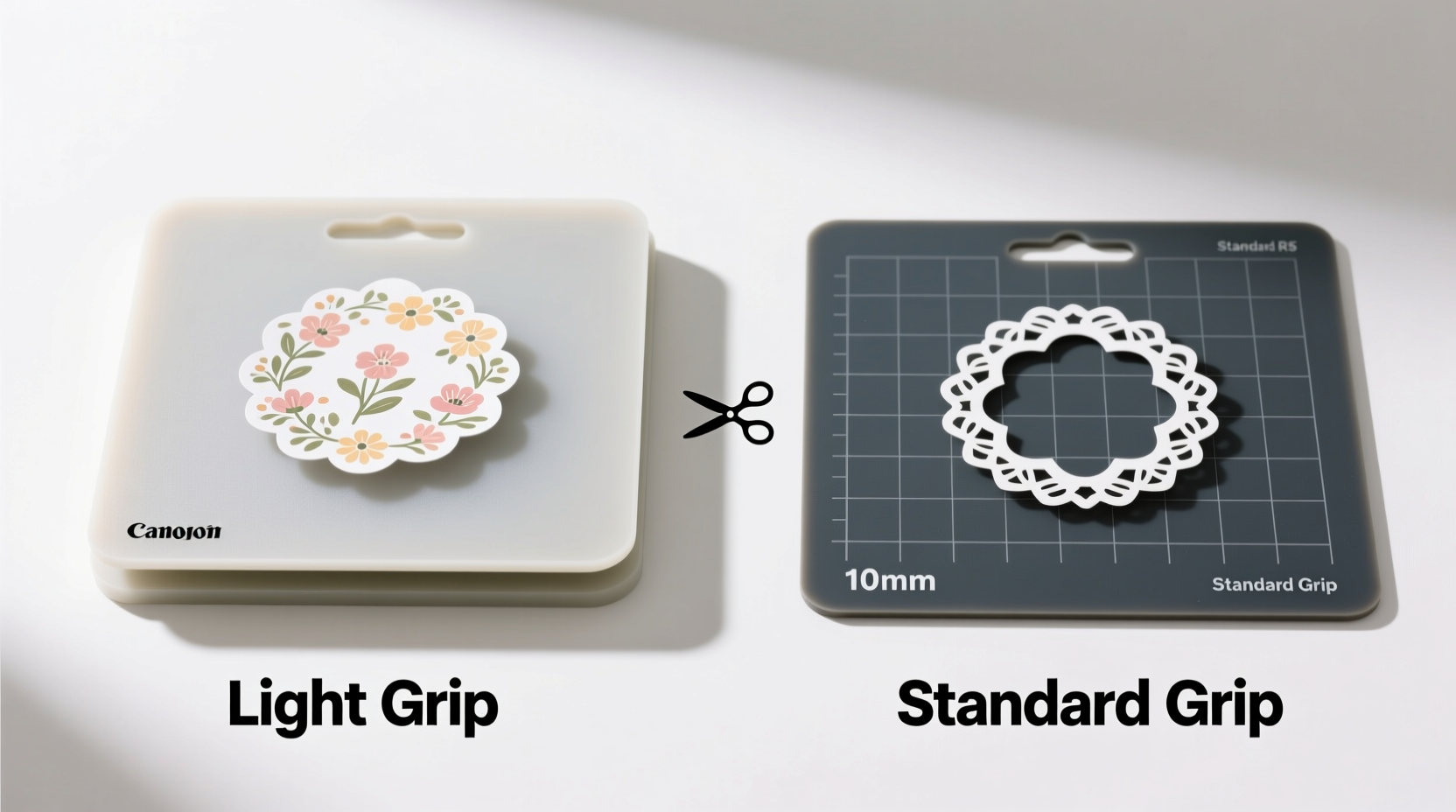
Cricut cutting mats use adhesive surfaces to secure materials during cutting. The strength of that adhesive determines how firmly the material is held in place. This grip level impacts both precision and material safety.
The Standard Grip mat features a medium-strength adhesive designed for most everyday materials—cardstock, iron-on, and standard vinyl. It provides enough hold to prevent shifting without damaging sturdier substrates.
In contrast, the Light Grip mat uses a gentler adhesive formulated specifically for thin, fragile, or easily damaged materials. It holds just enough to allow clean cuts but releases without tearing or stretching delicate sheets.
“Using the wrong mat can ruin a $20 specialty material in seconds. The Light Grip isn’t optional for vellum or crepe paper—it’s essential.” — Dana Reyes, Professional Craft Educator and Cricut Certified Instructor
Materials That Require Light Grip: A Practical Guide
Not all materials benefit from strong adhesion. Some are so thin or fragile that aggressive tack will distort or destroy them during loading or unloading. Here’s when the Light Grip mat becomes non-negotiable:
- Vellum and tracing paper: These translucent papers tear easily under tension. The Light Grip holds them flat without pulling fibers apart.
- Crepe paper and tissue paper: Used in floral projects or decorative layering, these materials stretch and rip if over-adhered.
- Foil-embossed cardstock: Delicate surface coatings can peel off when removed from a Standard Grip mat.
- Washi tape sheets: Often used as transfer mediums or layered designs, these require minimal adhesion to preserve backing integrity.
- Heat transfer vinyl (HTV) on carrier sheets: Some HTV comes pre-mounted on low-tack carriers; using a strong mat can shift the design.
- Very thin sticker paper: Especially below 70 lb weight, where edge lifting or curling occurs on Standard Grip.
Comparison Table: Light Grip vs Standard Grip Mat Use Cases
| Material Type | Recommended Mat | Why? |
|---|---|---|
| Cardstock (80–110 lb) | Standard Grip | Holds firm without damage; widely compatible |
| Permanent Vinyl | Standard Grip | Requires stability during deep cuts |
| Iron-On (everyday) | Standard Grip | Stays flat during mirror-image cutting |
| Vellum / Parchment | Light Grip | Prevents tearing and fiber lifting |
| Tissue Paper Crafts | Light Grip | Avoids stretching and distortion |
| Foil-Accented Paper | Light Grip | Protects metallic surface from peeling |
Mini Case Study: The Wedding Invitation Disaster That Led to a Mat Upgrade
Sarah, a DIY bride planning her own wedding stationery, spent hours designing elegant vellum overlays for her invitations. She used her trusted Standard Grip mat to cut them, assuming any mat would work for paper.
During unloading, the vellum tore along the intricate lace pattern edges. On the second attempt, she noticed the material was stretching before even starting the cut. Frustrated and running out of time, she consulted a crafting forum and learned about the Light Grip mat.
She ordered one overnight and re-ran the job. This time, the vellum stayed perfectly flat during cutting and peeled off cleanly. All 150 overlays were completed without a single tear. “I didn’t realize a $15 mat could save me $80 in replacement materials,” she later wrote in a review. “The Light Grip wasn’t a luxury—it was the only thing that worked.”
Step-by-Step: How to Choose the Right Mat for Your Project
- Identify your material type: Is it thick cardstock or something ultra-thin like tissue paper?
- Check manufacturer recommendations: Cricut’s material guide often specifies which mat to use.
- Assess fragility: Does the material bend, stretch, or tear easily by hand?
- Test with scraps first: Run a small piece through your machine and inspect for warping or residue.
- Load gently: Even on Light Grip, avoid pressing too hard when smoothing material onto the mat.
- Peel slowly at a low angle: Lift delicate materials parallel to the mat surface to minimize stress.
Common Myths About Light Grip Mats Debunked
Some crafters assume the Light Grip mat is just a “beginner” version or only for occasional use. These misconceptions lead to poor results.
- Myth: “Light Grip doesn’t hold well enough for precise cuts.”
Truth: It holds precisely enough—excess grip can cause drag and inaccuracies on thin materials. - Myth: “I can use Standard Grip for everything if I’m careful.”
Truth: Carefulness won’t stop adhesive from pulling apart delicate fibers during removal. - Myth: “Light Grip mats wear out faster.”
Truth: With proper care, they last just as long—especially since they’re used with less abrasive materials.
FAQ: Your Top Questions Answered
Can I use the Light Grip mat for regular cardstock?
Yes, but it’s not ideal. While it can handle light cardstock, repeated use with thicker materials reduces its lifespan and effectiveness for delicate projects. Reserve it for appropriate materials to maximize utility.
How do I know when my Light Grip mat needs replacing?
If materials no longer stay flat during cutting, or if you have to press down hard to get adhesion, the mat has lost its tack. Unlike Standard Grip, Light Grip mats don’t usually become “too sticky”—they lose grip over time.
Is there a third option between Light and Standard Grip?
Cricut offers a StrongGrip mat for heavy chipboard and magnet sheets, but no intermediate option exists. For mid-weight sensitive materials, test both mats with a scrap before committing.
Conclusion: Match the Mat to the Material, Every Time
The choice between Cricut Light Grip and Standard Grip mat isn’t arbitrary—it’s a critical decision that protects your materials and ensures professional results. The Light Grip mat isn’t a secondary option; it’s a specialized tool for delicate jobs where precision and preservation go hand in hand.
By understanding the mechanical and material reasons behind grip levels, you eliminate guesswork and reduce waste. Whether you're creating wedding decor, layered greeting cards, or intricate paper art, using the right mat makes the difference between a flawless finish and a ruined sheet.




 浙公网安备
33010002000092号
浙公网安备
33010002000092号 浙B2-20120091-4
Comments
No comments yet. Why don't you start the discussion?