
Fashion thrives on texture, drape, and the subtle interplay between craftsmanship and climate. Among handmade garments, crochet tops and knitted vests stand out for their artisanal charm and individuality. Yet when it comes to building a wardrobe that transitions seamlessly across seasons, one question arises: which piece offers greater styling flexibility throughout the year? While both are rooted in fiber artistry, their structure, weight, and design purpose lead to different sartorial outcomes. Understanding these differences isn’t just about aesthetics—it’s about maximizing wearability, comfort, and practicality in real-life dressing.
The Anatomy of Crochet Tops and Knitted Vests
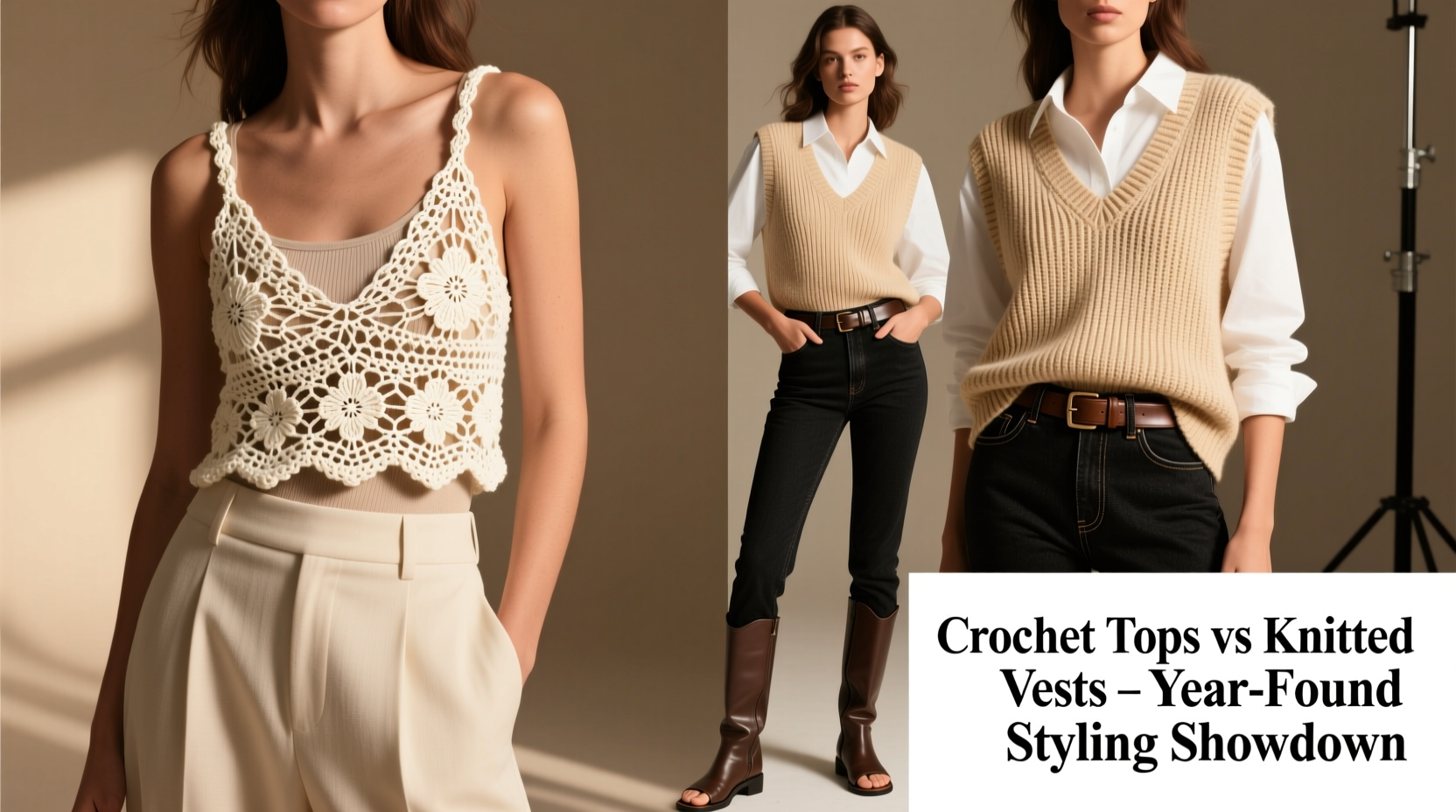
Crochet tops are typically constructed using a hook and single yarn strand, creating open, lacy patterns with visible gaps between stitches. This technique allows for breathability and movement, making them ideal for warm weather or as lightweight layers. Common styles include boho crop tops, off-the-shoulder tunics, and sleeveless shells, often made from cotton, bamboo, or acrylic blends.
In contrast, knitted vests are usually created with two needles and a continuous loop method, resulting in tighter, denser fabric with less airflow. These vests often feature ribbing, cables, or Fair Isle patterns and are designed to add warmth without restricting arm movement. Wool, alpaca, and merino blends dominate this category, emphasizing insulation and durability.
The fundamental distinction lies in stitch density and construction logic. Crochet tends to be more porous and structured due to its raised loops, while knitting produces a softer, stretchier fabric that conforms closely to the body. These properties directly influence how each garment behaves in different climates and outfit combinations.
Styling Flexibility Across Seasons
When evaluating year-round usability, consider three key factors: temperature regulation, layering compatibility, and transitional adaptability.
Spring: As temperatures rise, crochet tops shine. Their airy weave allows skin to breathe, and the visual lightness complements floral prints and pastel palettes. Pair a loose crochet tank over a camisole with high-waisted linen pants for brunch outings or weekend markets. Knitted vests can still work here, especially in lighter wool-silk blends, layered over long-sleeve tees or button-downs during cooler mornings.
Summer: Crochet dominates. A sleeveless crochet top in natural cotton feels cool against the skin and pairs effortlessly with denim shorts, swimwear cover-ups, or flowy skirts. The openwork design prevents overheating while adding textural interest. Most traditional knitted vests, however, become too warm unless crafted from ultra-thin, breathable fibers like Tencel or fine-gauge merino. Even then, they’re better suited as evening pieces when sunsets bring a chill.
Fall: This is where knitted vests gain ground. As days shorten and air cools, the insulating properties of wool and similar fibers make vests practical additions. Layer them over collared shirts or lightweight sweaters for a preppy or rustic aesthetic. Crochet tops can still appear in fall wardrobes—but primarily as under-layers beneath jackets or paired with turtlenecks to balance ventilation and warmth.
Winter: Knitted vests excel. Worn over thermal shirts or chunky turtlenecks, they provide core insulation without bulk. In urban environments where indoor heating alternates with cold commutes, vests offer modular warmth. Crochet tops struggle here unless heavily lined or worn purely for decorative effect under coats—a rare use case.
Layering Potential Compared
Layering defines modern adaptable dressing. A garment’s ability to integrate into multiple configurations determines its wardrobe longevity.
Crochet tops, due to their semi-transparent nature and textured surface, function best as outer layers over smooth, solid-colored bases. Try a cropped crochet shell over a silk cami with wide-leg trousers—this works in early autumn but fails when wind penetrates the open weave. They don’t compress well under jackets, and their volume can clash with heavier outerwear.
Knitted vests, by contrast, are inherently transitional. Designed to sit between shirt and coat, they bridge formality and function. A tailored cable-knit vest over a dress shirt and tie elevates office wear; the same piece with a hoodie underneath creates a casual weekend look. Their flat back and snug fit allow easy slipping into blazers or trench coats without distorting silhouette.
Vests also support reverse layering—worn under overcoats or parkas—with minimal bulk. Crochet lacks this utility. Its irregular surface catches on linings, and its rigidity resists compression. Moreover, crochet edges may fray when rubbed against rough fabrics over time.
“Vests are the ultimate chameleons—they adapt to both formal and relaxed contexts through simple pairing shifts.” — Lena Patel, Sustainable Style Consultant
Material Impact on Wearability
Yarn selection dramatically affects seasonal range. Not all crochet or knit garments behave the same way simply because of technique.
- Cotton crochet: Breathable, washable, ideal for hot months. Loses shape if stretched wet.
- Acrylic crochet: Affordable and colorfast, but prone to pilling and static cling. Less breathable than natural fibers.
- Wool knits: Naturally moisture-wicking and temperature-regulating. Can itch if low-grade; requires hand washing.
- Mohair/Alpaca blends: Luxurious warmth with halo effect. Excellent for winter vests but unsuitable for humid summers.
- Tencel or bamboo knits: Soft, drapey, eco-friendly. Work in mild winters and breezy evenings.
For true year-round performance, prioritize natural, climate-responsive fibers. A lightweight merino vest can handle 50–70°F (10–21°C) ranges effectively, while a tightly crocheted cotton top might extend from 60–85°F (15–29°C). Neither covers the full annual spectrum alone, but the vest edges ahead in versatility due to superior mid-season coverage.
Style Versatility and Occasion Suitability
Styling ease isn’t just about weather—it’s about context. Where and how often can you realistically wear each piece?
| Occasion | Crochet Top | Knitted Vest |
|---|---|---|
| Casual Day Out | Excellent – pairs with sandals and jeans | Very Good – works with sneakers and chinos |
| Office / Smart Casual | Limited – only if structured and opaque | Strong – especially in neutral tones with collared shirts |
| Evening / Dinner | Good – lace details add elegance | Excellent – adds polish without heaviness |
| Travel / Layering Needs | Poor – difficult to pack, snags easily | Very Good – folds compactly, resists wrinkles |
| Cold Weather Functionality | Weak – minimal insulation | Strong – retains body heat efficiently |
Crochet excels in expressive, leisure-oriented settings. It evokes vacation vibes, beach towns, and free-spirited fashion. However, its informality limits professional integration. Knitted vests, particularly minimalist designs in charcoal, navy, or oatmeal, transition smoothly from café meetings to evening events. Their clean lines and functional cut align with contemporary minimalism and capsule wardrobing principles.
Real-Life Example: Two Women, One Wardrobe Challenge
Sophie, a graphic designer in Portland, OR, committed to wearing only handmade garments for six months. She owned a beige open-weave crochet crop top and a dark green ribbed knitted vest. Over spring and early summer, she wore the crochet top weekly—paired with high-waisted jeans and layered over slips. But come October, she found herself reaching for the vest almost daily. “I could throw it on over anything,” she said. “It worked with my favorite flannel shirt, even under my peacoat on rainy days. The crochet piece felt out of place once temps dropped below 60.”
By December, the crochet top hadn’t been worn in two months. The vest, meanwhile, appeared in 18 different outfits across work, errands, and social events. Sophie concluded: “The crochet is beautiful, but the vest is useful.”
Actionable Guide: Maximizing Year-Round Use
To get the most out of either garment—or both—follow this strategic approach:
- Assess your climate zone. If you live in a region with distinct seasons, prioritize a mid-weight knitted vest. In perpetually warm areas, invest in quality crochet tops instead.
- Choose neutral base colors. Beige, grey, black, navy, or cream increase pairing options. Save bold hues for accent pieces.
- Optimize layering foundations. For vests: have fitted long-sleeve tees and button-downs ready. For crochet: keep sleek camisoles and bandeaus on hand.
- Invest in care habits. Hand-wash delicate pieces in cold water with gentle detergent. Lay flat to dry to prevent stretching.
- Rotate seasonally but store thoughtfully. Use breathable cotton bags for storage; avoid plastic bins that trap moisture.
Checklist: Choosing Your Year-Round Staple
- ✅ Does it layer easily over common wardrobe items?
- ✅ Can it be dressed up or down?
- ✅ Is the material appropriate for at least three seasons?
- ✅ Does it resist wrinkling and maintain shape after washing?
- ✅ Is it comfortable across varying indoor/outdoor temperatures?
- ✅ Does it complement at least five existing pieces in your closet?
Frequently Asked Questions
Can I wear a crochet top in winter?
Only as part of a layered ensemble. Try wearing it over a thermal turtleneck and under a tailored coat. However, expect limited warmth and increased vulnerability to snagging. It's more decorative than functional in cold weather.
Are knitted vests outdated?
No—modern silhouettes have revived the style. Look for vests with clean lines, sustainable materials, and updated fits (slightly cropped or elongated hems). Paired with contemporary cuts like wide-leg trousers or midi skirts, they feel current and intentional.
Which is easier to care for?
Generally, knitted vests made from machine-washable wool blends require less maintenance than delicate crochet pieces, which often need hand-washing and careful reshaping. Always check the care label, but assume crochet demands higher upkeep due to structural fragility.
Final Verdict: Which Is Easier to Style Year-Round?
The data points clearly: knitted vests hold superior year-round styling potential. Their inherent design supports layering, adapts to diverse occasions, and performs reliably across temperature shifts. While crochet tops offer undeniable charm and summer appeal, their niche application limits frequency of wear. A well-chosen knitted vest becomes a foundational layer—not a seasonal accent.
This doesn’t mean abandoning crochet. Instead, view it as a complementary player in a balanced wardrobe. Own both if possible, but anchor your versatile core around the knitted vest. Prioritize quality over quantity: one excellently made, timeless vest will outperform three trendy crochet tops in long-term utility.
“The best clothes aren’t just beautiful—they disappear into your life, worn without thought.” — Rafael Mendez, Capsule Wardrobe Advocate
Take Action Today
Review your current rotation. How many times did you reach for a crochet top versus a vest last month? Audit your upcoming season plans. If you're missing a reliable mid-layer, consider investing in a well-constructed knitted vest in a neutral tone. If you already own one, experiment with new pairings—try it over a dress, under a leather jacket, or with unexpected footwear like loafers or boots. Fashion evolves through use, not just acquisition.




 浙公网安备
33010002000092号
浙公网安备
33010002000092号 浙B2-20120091-4
Comments
No comments yet. Why don't you start the discussion?