
For many watch enthusiasts, the strap is more than just a functional component—it's a statement. The moment you swap out a factory band for something bolder or more refined, your timepiece transforms. Among the most debated upgrades is the switch from standard aftermarket straps to genuine crocodile leather. But with prices that can soar into hundreds of dollars, is the investment truly justified? This article breaks down the real differences in quality, longevity, aesthetics, and value between crocodile and typical aftermarket watch straps.
The Allure of Crocodile Leather
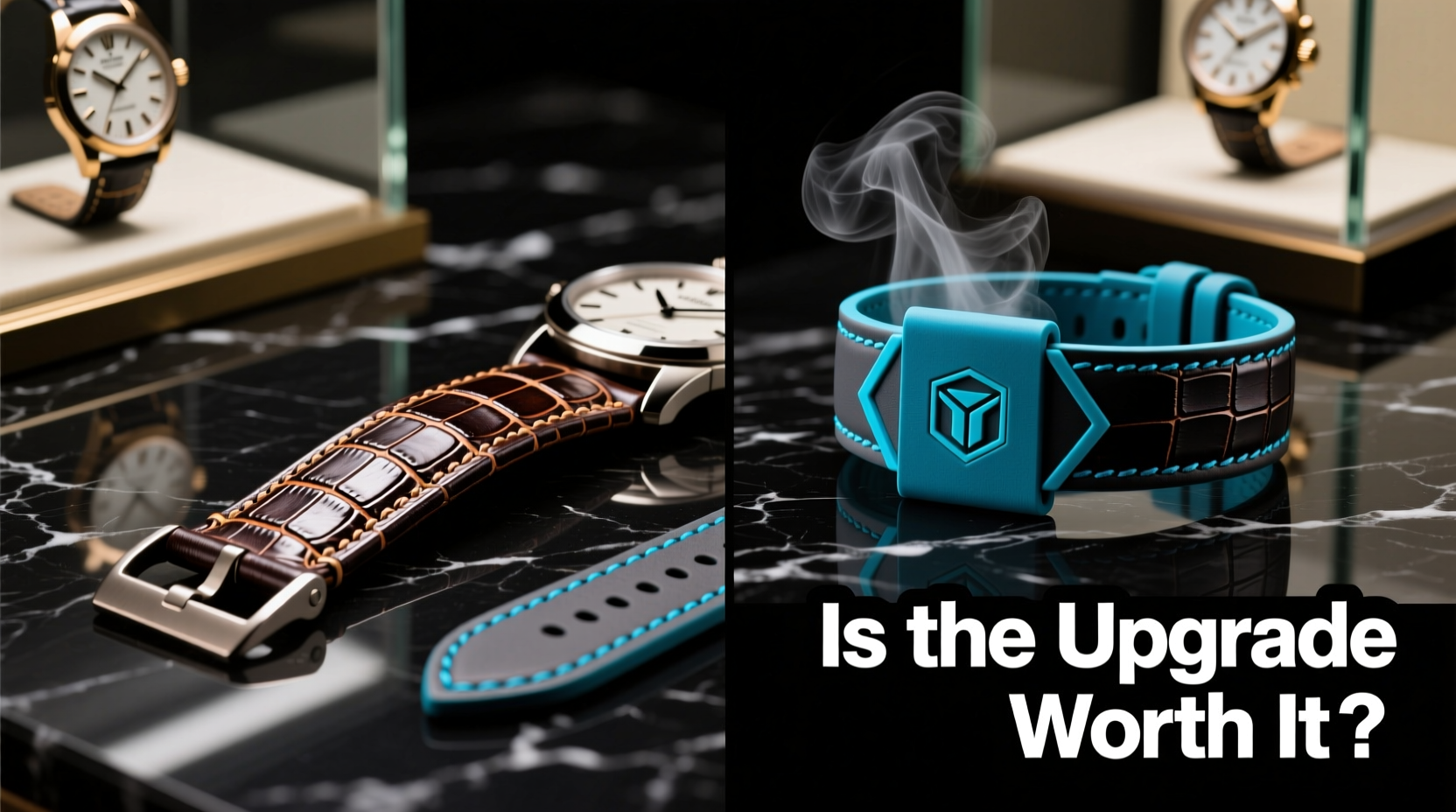
Crocodile leather has long been associated with luxury and exclusivity. Its distinctive scale pattern, natural luster, and supple hand feel make it a favorite among high-end fashion houses and watchmakers alike. Brands like Rolex, Audemars Piguet, and Patek Philippe often offer crocodile straps as premium options on their dress watches, reinforcing its status symbol.
What sets crocodile apart isn’t just appearance—it’s the structure. The skin features a unique tessellated scale formation that resists cracking over time when properly cared for. Unlike calfskin or synthetic alternatives, crocodile leather develops a rich patina that enhances its character rather than degrading its look.
“Crocodile leather offers a rare combination of visual drama and structural integrity. It ages beautifully if maintained correctly.” — Daniel Reeves, Horology Materials Consultant
Aftermarket Straps: A World of Options
Aftermarket watch straps encompass a broad range of materials—calfskin, nylon, rubber, stainless steel, and even exotic leathers like ostrich or lizard. They are typically more affordable than OEM or luxury leather straps and provide versatility in color, texture, and function.
Many aftermarket brands now specialize in high-quality craftsmanship. Companies such as Crown & Buckle, Brawny, and Hadley Roma produce straps that rival original equipment in fit and finish. However, while these offer excellent value, they rarely match the depth of material refinement found in true crocodile leather.
The key advantage of aftermarket straps lies in accessibility and experimentation. You can rotate styles easily without committing to one expensive band. For casual wear or tool watches, this flexibility makes perfect sense.
Material Comparison: Crocodile vs Common Aftermarket Alternatives
| Feature | Crocodile Leather | Calfskin (Premium Aftermarket) | Synthetic/NATO |
|---|---|---|---|
| Durability | High (with care); resistant to creasing | Moderate; prone to edge wear over time | Very high; abrasion-resistant |
| Comfort | Excellent; molds to wrist after break-in | Good; soft but may stiffen | Fair; can be bulky or rough |
| Aesthetic Appeal | Exceptional; luxurious grain and sheen | Classic; subtle texture | Functional; sporty or utilitarian |
| Water Resistance | Poor; sensitive to moisture | Limited; absorbs water | Excellent; quick-drying |
| Lifespan (with care) | 3–7 years | 1–3 years | 2–5 years |
| Average Price Range | $250–$600+ | $50–$150 | $20–$80 |
When the Upgrade Makes Sense
Upgrading to a crocodile strap isn’t always about luxury—it’s about context. Consider these scenarios where the investment pays off:
- Dress Watches: Paired with a slim, elegant timepiece like a Jaeger LeCoultre or Cartier Tank, a crocodile strap completes the aesthetic. The refined texture elevates the entire ensemble.
- Formal Occasions: Weddings, galas, or business meetings demand sophistication. A well-fitted crocodile band signals attention to detail.
- Long-Term Ownership: If you plan to keep a watch for years, a durable, beautiful strap enhances daily enjoyment and resale appeal.
Conversely, using crocodile on a dive watch or in humid climates undermines its strengths. Moisture, sweat, and frequent removal accelerate deterioration. In such cases, a high-quality silicone or nylon strap remains the smarter choice.
Mini Case Study: The Office Executive’s Upgrade
Mark, a financial advisor in Chicago, owned a vintage Omega Seamaster and a modern IWC Portugieser. He wore the Omega daily with a NATO strap—durable and practical. But for client presentations, he switched to his IWC on a black alligator strap he’d purchased for $380.
“I didn’t think a strap could change how I felt about wearing a watch,” Mark said. “But putting on that IWC with the crocodile band made me stand taller. Clients noticed. One even asked where I got the watch—when it was actually the strap that stood out.”
Over two years, he wore the crocodile strap about once a week. With regular conditioning and dry storage, it shows only light creasing at the bends—still presentable and far from worn out. For him, the cost amortized to less than $4 per wear—an easy justification.
How to Care for Your Crocodile Strap
Proper maintenance is essential to protect your investment. Unlike synthetic bands, crocodile leather requires deliberate care to prevent drying, cracking, or staining.
- Rotate Usage: Never wear the same crocodile strap every day. Allow at least 48 hours of rest between wears for moisture evaporation.
- Condition Monthly: Use a pH-balanced leather conditioner designed for exotics. Apply sparingly with a microfiber cloth, focusing on high-stress areas near the lugs and buckle.
- Avoid Water and Sweat: Remove the watch before washing hands or exercising. Even minimal exposure can cause internal delamination over time.
- Store Properly: Keep the strap in a breathable fabric pouch away from direct sunlight and heat sources. Do not store in plastic.
- Clean Spills Immediately: Blot (don’t rub) any liquid contact with a dry cloth. Let air dry naturally before conditioning.
Checklist: Is a Crocodile Strap Right for You?
- ☑ Do you own a dress or luxury watch that deserves a premium look?
- ☑ Will you wear it primarily in climate-controlled environments?
- ☑ Are you willing to rotate straps and maintain the leather monthly?
- ☑ Is budget under $600 acceptable for a single strap upgrade?
- ☑ Do you value long-term aesthetics over maximum durability?
If you answered yes to most, the upgrade is likely worth it. If not, consider premium calf or lined alligator-embossed straps as a middle ground.
Frequently Asked Questions
Is crocodile leather ethical and legal?
Yes, when sourced responsibly. Most reputable suppliers use crocodile farms regulated under CITES (Convention on International Trade in Endangered Species). Look for certification labels or purchase from transparent brands that disclose their sourcing.
Can I get a crocodile strap in non-traditional colors?
Absolutely. While black and brown dominate formal settings, manufacturers offer burgundy, navy, forest green, and even electric blue. These add personality without sacrificing elegance—ideal for modern dress watches.
Are aftermarket crocodile straps as good as OEM ones?
Some are. High-end aftermarket makers like Jean Rousseau or Armand Nicolet use the same tanneries and cutting techniques as Swiss brands. However, beware of “genuine crocodile” claims from unknown sellers—many use lower-grade belly cuts or embossed substitutes. Always verify the origin and cut (e.g., backstrap vs. belly).
Final Verdict: Is the Upgrade Worth It?
The answer depends on your priorities. If you seek unmatched elegance, a tactile experience that improves with age, and you’re committed to proper care, then yes—a genuine crocodile strap is absolutely worth the upgrade. It’s not merely an accessory; it’s the finishing touch that transforms a fine watch into a masterpiece.
However, if you prioritize toughness, versatility, or frequent strap changes, sticking with premium aftermarket options makes more practical sense. There’s no shame in choosing function—but when occasion calls for refinement, few materials deliver like crocodile leather.




 浙公网安备
33010002000092号
浙公网安备
33010002000092号 浙B2-20120091-4
Comments
No comments yet. Why don't you start the discussion?