
In recent years, comfort footwear has exploded in popularity. Two of the most common choices—Crocs and generic slides—have become staples in homes, hospitals, beaches, and even offices. While both promise ease and all-day wearability, they differ significantly in design, materials, and biomechanical support. For anyone concerned about foot health, especially those on their feet for long hours or dealing with existing conditions like plantar fasciitis or flat feet, choosing between Crocs and slides isn’t just a matter of style—it’s a medical decision in disguise.
This article dives deep into the structural, functional, and clinical differences between Crocs and typical slide sandals. We’ll examine cushioning, arch support, heel stability, breathability, and real-world usage patterns to determine which option truly supports long-term foot wellness.
Understanding Foot Health Basics
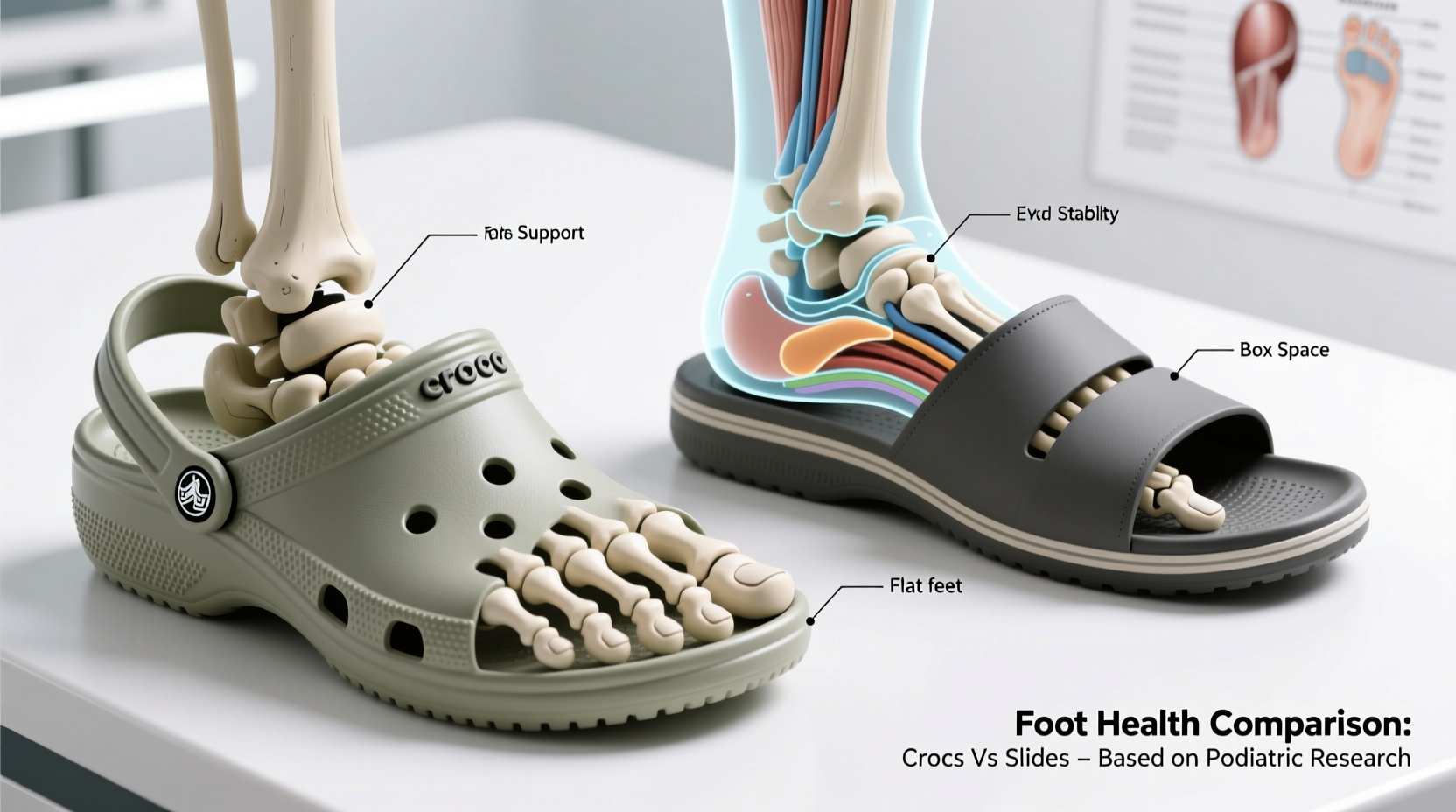
Before comparing specific shoes, it's essential to understand what constitutes good foot health. The foot contains 26 bones, 33 joints, and over 100 muscles, tendons, and ligaments. Every step we take generates forces up to three times our body weight, transmitted through this complex system. Poorly supported feet can lead to:
- Plantar fasciitis (inflammation of the tissue along the bottom of the foot)
- Achilles tendonitis
- Metatarsalgia (ball-of-foot pain)
- Overpronation (excessive inward rolling of the foot)
- Hammertoes and bunions from misalignment
Proper footwear should absorb shock, stabilize the heel, support the arch, and allow natural toe splay. Shoes that fail these criteria may feel comfortable short-term but contribute to chronic issues over time.
“Footwear doesn’t just reflect your style—it shapes your posture, gait, and joint alignment. What you wear daily impacts your entire musculoskeletal system.” — Dr. Lena Torres, Podiatrist and Gait Specialist
Crocs: Design, Support, and Medical Endorsements
Crocs are made from a proprietary closed-cell resin called Croslite™, known for its lightweight, odor-resistant, and non-marking properties. Originally designed as a boating shoe, Crocs gained traction among healthcare workers due to their slip resistance and easy sanitation.
What sets Crocs apart structurally is their molded footbed. Unlike flat soles, Crocs feature:
- A contoured heel cup that cradles the rearfoot
- Longitudinal and transverse arch support
- A roomy toe box allowing natural toe positioning
- Shock-absorbing midsole material
Many models, including the Classic Clog and Bistro collection, have earned the American Podiatric Medical Association (APMA) Seal of Acceptance. This designation means an independent panel has reviewed scientific evidence showing the product promotes foot health.
However, not all Crocs are created equal. Ventilated styles with more cutouts maintain breathability but may reduce lateral stability. Strapless designs also risk improper heel lock, leading some users to “toe-grip” while walking—an inefficient gait pattern that strains the forefoot.
Slides: Convenience Over Structure?
Slides, often referred to generically but popularized by brands like Nike, Adidas, and Havaianas, typically consist of a flat footbed with a single strap over the forefoot. Their appeal lies in effortless wear—they slip on without unfastening—and trendy aesthetics.
Yet from a podiatric standpoint, most slides fall short in key areas:
- Flat soles: Minimal to no arch support; often made from EVA foam that compresses quickly.
- Poor heel retention: The heel lifts slightly with each step, increasing instability.
- Limited adjustability: One-size-fits-all straps don’t accommodate different instep heights.
- Toe gripping: Users subconsciously clench toes to keep the shoe on, leading to fatigue and strain.
While premium versions like the OluKai Nohea Ohana or Teva Hurricane XLT2 Sandals incorporate better ergonomics, the vast majority of mass-market slides prioritize fashion over function. A 2022 study published in *The Journal of Foot and Ankle Research* found that prolonged use of unsupportive flip-style footwear led to increased strain on the posterior tibial tendon—a major stabilizer of the arch.
Head-to-Head Comparison: Crocs vs Slides
| Feature | Crocs | Typical Slides |
|---|---|---|
| Arch Support | ✅ Contoured, medium to high arch support | ❌ Mostly flat or minimally contoured |
| Heel Stability | ✅ Deep heel cup with secure fit | ⚠️ Loose; heel lifts during stride |
| Shock Absorption | ✅ Excellent due to Croslite™ material | ⚠️ Moderate; degrades faster with use |
| Toes & Forefoot Space | ✅ Roomy, encourages natural splay | ⚠️ Often narrow; strap pressure on metatarsals |
| APMA Approved Models Available? | ✅ Yes, multiple styles | ❌ Rarely, only select orthopedic brands |
| Breathability | ⚠️ Varies; ventilated models available | ✅ Generally open design allows airflow |
| Suitable for All-Day Standing? | ✅ Recommended by many healthcare pros | ❌ Not advised beyond short durations |
The data clearly favors Crocs when evaluating biomechanical support. However, slides win in versatility and portability—ideal for quick errands, beach outings, or post-swim wear where drying speed matters more than structure.
Real-World Case: Nurse vs Office Worker
Consider two individuals with very different footwear needs:
- Maria, an ER nurse: On her feet 12-hour shifts, frequently rushing between stations. She wears Crocs Bistro Clogs daily. After switching from basic slides, she reported reduced lower back pain and less foot fatigue. Her podiatrist noted improved alignment during gait analysis.
- Daniel, a software developer: Works remotely, rarely walks more than 5,000 steps a day. He uses minimalist slides at home for comfort. While he experiences no acute pain, occasional morning stiffness in his heels suggests early signs of strain. His doctor recommended adding structured footwear—even at home—for preventive care.
This contrast highlights a critical point: context determines appropriateness. Crocs are engineered for active use, while most slides serve best as transitional or recreational footwear.
Expert Recommendations for Daily Wear
Podiatrists consistently emphasize that footwear should match activity level and duration. Here’s a practical checklist based on clinical guidelines:
✅ Foot-Healthy Footwear Checklist
- Has a firm heel counter (resists squeezing)
- Includes visible arch contour matching your foot type
- Allows thumb-width space past the longest toe
- Doesn’t require toe-gripping to stay on
- Provides cushioning without excessive softness
- Fits snugly in the heel with minimal slippage
When evaluated against this standard, Crocs meet five out of six criteria across their core models. Most slides satisfy only two: toe room and ease of entry.
When Slides Might Be Acceptable
Slides aren't inherently harmful—but their safe use depends on timing and environment. They can be appropriate in limited scenarios:
- Short-distance use: Walking from car to store, moving around a hotel room.
- Recovery or rehabilitation: Post-surgery patients may need easy-on footwear, though supportive options exist beyond slides.
- Water environments: Pool decks, showers, boats—where drainage and dry time matter more than support.
Even then, experts suggest limiting continuous wear to under one hour unless the slide includes medical-grade features such as adjustable straps, deep heel cups, or custom-molded footbeds.
Frequently Asked Questions
Can wearing Crocs every day cause problems?
For most people, daily use of original Crocs is safe and beneficial due to their support and cushioning. However, individuals with high arches or rigid foot types may find the uniform footbed too rigid. In such cases, pairing Crocs with custom orthotics or choosing models with added padding (like the Crocs Literide) improves comfort. Avoid wearing strapless Crocs for walking long distances, as lack of heel security can alter gait mechanics.
Are expensive slides better for your feet?
Some premium slides—such as those from Birkenstock, OOFOS, or Chaco—incorporate anatomical shaping, adjustable straps, and energy-return foam. These do offer meaningful improvements over budget slides. However, price alone isn’t a reliable indicator. Always check for structural elements like heel counters and arch profiles rather than relying on brand reputation.
Do podiatrists really recommend Crocs?
Yes, many do—especially for specific populations. Nurses, chefs, teachers, and others who stand for extended periods often receive Crocs as professional recommendations. The APMA seal on certain models further validates their therapeutic value. That said, podiatrists caution against treating Crocs as athletic shoes; they’re optimized for casual or occupational wear, not running or high-impact activities.
Final Verdict: Which Is Better for Foot Health?
The answer isn’t nuanced: **Crocs are objectively better for foot health than most slides** when comparing standard models used in everyday life. Their built-in arch support, heel stabilization, and durable cushioning align with biomechanical principles that protect against strain and degeneration.
Slides, particularly inexpensive or fashion-focused ones, lack foundational support and encourage inefficient movement patterns. While convenient, they should be viewed as situational footwear—not daily drivers.
If you must wear slides regularly, invest in high-performance versions with medical-grade features. But for consistent, long-term foot wellness, Crocs remain the superior choice for non-athletic, all-day wear.
Take Action for Healthier Feet
Your footwear choices today shape your mobility tomorrow. Don’t assume comfort equals support. Take a close look at what’s on your feet right now—does it truly support your arches, stabilize your heel, and allow natural movement?
Start small: Replace one pair of flimsy slides with a supportive alternative. Try walking barefoot less on hard surfaces. Consult a podiatrist if you experience persistent discomfort. Small changes compound into lasting benefits.




 浙公网安备
33010002000092号
浙公网安备
33010002000092号 浙B2-20120091-4
Comments
No comments yet. Why don't you start the discussion?