
When it comes to building a versatile, functional, and stylish casual wardrobe, few pieces are as essential as the humble hoodie. But within that category, two distinct silhouettes have risen in popularity: the cropped hoodie and the oversized hoodie. Both offer unique aesthetic appeal and functional advantages—especially when used for layering. The real question isn’t just about fashion trends; it’s about how each style performs in real-world conditions. Whether you're navigating city commutes, weekend errands, or layered streetwear looks, understanding the strengths and limitations of cropped versus oversized hoodies can dramatically improve both comfort and visual cohesion.
The Layering Equation: Fit, Function, and Fabric
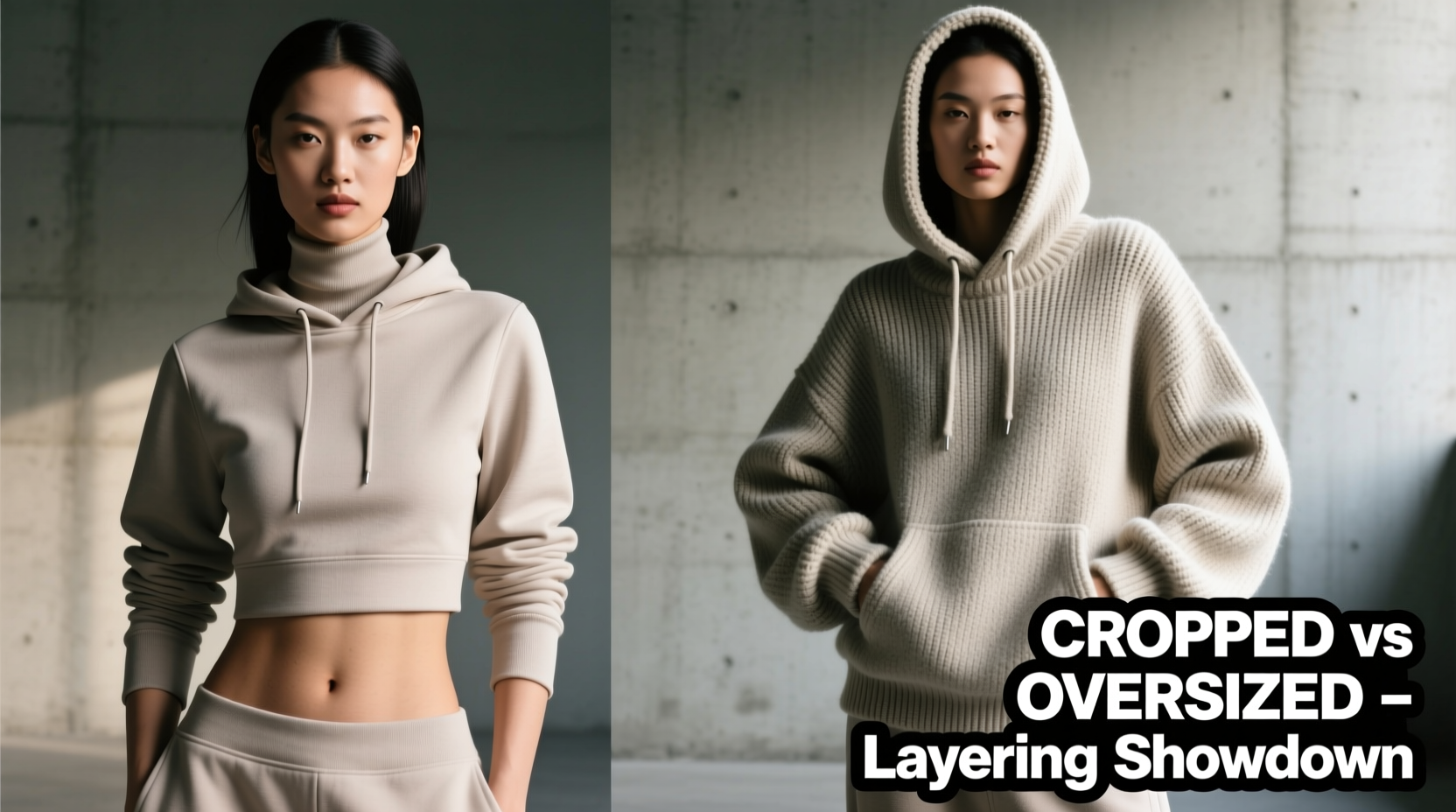
Layering isn’t just about stacking clothes—it’s about strategic construction. The goal is to balance insulation, breathability, and mobility while maintaining a clean silhouette. A poorly chosen base or mid-layer can disrupt proportions, limit movement, or create bulk where it’s not needed. This is where the choice between a cropped hoodie and an oversized one becomes critical.
A cropped hoodie typically ends above the hip, often at or just below the waistline. It’s designed to highlight the waist or sit cleanly over high-waisted bottoms. An oversized hoodie, on the other hand, extends beyond natural body lines—longer sleeves, dropped shoulders, and a boxy shape that drapes loosely over the torso.
Fabric weight plays a role too. Lighter cotton blends (around 280–320 GSM) work well under jackets, while heavier fleece-lined options (360+ GSM) provide more insulation but may restrict layering options if too bulky. The ideal layering hoodie should allow room for a base layer (like a long-sleeve tee or thermal), accommodate a mid-layer or outer shell (such as a denim jacket or coat), and still permit freedom of movement.
Pros and Cons: Cropped Hoodie for Layering
Cropped hoodies have gained traction in both women’s and gender-neutral fashion circles, particularly in athleisure and minimalist urban styles. Their appeal lies in proportion control and intentional styling.
Advantages:
- Waist Definition: When paired with high-waisted jeans, skirts, or trousers, a cropped hoodie creates a balanced, flattering silhouette.
- Compatibility with Long Outerwear: Since the hoodie doesn’t extend past the waist, longer coats or duster jackets can be worn over it without creating awkward bulk at the hips.
- Versatility in Warm Weather: Ideal for spring/fall layering when you want a light mid-layer that won’t overheat.
- Style Precision: Offers a curated, put-together look—especially effective when layering under open shirts, blazers, or vests.
Drawbacks:
- Limited Coverage: Leaves the lower back exposed, which can be uncomfortable when bending or sitting, especially in colder environments.
- Thermal Inefficiency: Not ideal as a primary insulating layer in winter due to reduced surface coverage.
- Fit Sensitivity: Requires careful coordination with bottom wear; ill-fitting combinations can look disjointed.
“Cropped silhouettes work best when the entire outfit tells a cohesive story. They’re not just shorter—they’re intentionally framed.” — Lena Park, Streetwear Stylist & Consultant
Pros and Cons: Oversized Hoodie for Layering
Oversized hoodies dominate contemporary casual aesthetics, from normcore to high-fashion reinterpretations. Their exaggerated volume allows for creative layering and enhanced comfort.
Advantages:
- Superior Insulation: More fabric means greater heat retention, making oversized hoodies excellent base or standalone mid-layers in cold weather.
- Comfort and Mobility: Loose cuts allow unrestricted movement and feel forgiving during extended wear.
- Easy Layering Potential: Can comfortably fit over thick flannel shirts, turtlenecks, or even lightweight sweaters.
- Style Flexibility: Works equally well with slim-fit pants for contrast or wide-leg trousers for a monolithic look.
Drawbacks:
- Bulk Under Coats: May create excessive volume when worn under tailored outerwear like pea coats or trench jackets.
- Proportion Challenges: Can overwhelm shorter frames or make the wearer appear shapeless if not styled deliberately.
- Heat Buildup: In mild climates, the extra fabric can lead to overheating, especially during physical activity.
Comparison Table: Key Layering Factors
| Factor | Cropped Hoodie | Oversized Hoodie |
|---|---|---|
| Length | Above hip, waist-level | Hip to thigh, sometimes longer |
| Best For | Spring/fall layering, warm climates, defined silhouettes | Winter layering, cold climates, relaxed aesthetics |
| Outerwear Compatibility | Long coats, blazers, dusters | Bomber jackets, puffers, parkas |
| Insulation Value | Low to moderate | Moderate to high |
| Style Risk | Mismatched proportions if bottom wear isn't coordinated | Can appear sloppy without structure elsewhere |
Real-World Example: Urban Commuter Layering
Consider Maya, a graphic designer living in Chicago. Her daily commute involves walking ten minutes to the train, standing on a cold platform, then riding indoors with overheated cars. She needs adaptable clothing that handles temperature swings.
In early fall, she opts for a black cropped hoodie over a fitted merino wool long-sleeve tee. She pairs it with high-waisted corduroys and a camel trench coat. The cropped length ensures the trench falls cleanly without bunching at the waist. On milder days, she removes the coat and still looks polished.
By December, she switches to an oversized charcoal hoodie—still over the same merino base—but now adds a quilted vest and a heavy wool overcoat. The extra length and volume of the hoodie trap heat effectively. She rolls the sleeves slightly to keep them out of the way and maintains a streamlined profile despite multiple layers.
This shift illustrates how purpose drives choice: cropped for precision and transition seasons, oversized for warmth and deep winter resilience.
Step-by-Step Guide: Choosing Your Layering Hoodie
Follow this decision framework to determine which hoodie style suits your layering needs:
- Assess Climate Needs: Do you need insulation or breathability? Cold climates favor oversized; temperate zones benefit from cropped versatility.
- Evaluate Your Outerwear: List your go-to jackets and coats. Are they long-line (favor cropped) or short-cut (favor oversized)?
- Check Bottom Wear Proportions: High-waisted pants/skirts pair naturally with cropped styles. Low-rise or straight fits work better with full-coverage hoodies.
- Test Mobility Requirements: If you bike, walk frequently, or drive, ensure the hoodie doesn’t ride up (cropped) or restrict arm movement (oversized).
- Define Your Style Goal: Aim for sleek minimalism? Choose cropped. Prefer cozy, editorial volume? Go oversized.
Frequently Asked Questions
Can I layer a cropped hoodie under an oversized jacket?
Absolutely. In fact, this combination often works better than pairing two oversized pieces. The cropped hoodie prevents visual clutter at the midsection, allowing the jacket’s volume to stand out without overwhelming the frame.
Is it possible to size down an oversized hoodie for layering?
Only if the cut allows it. Some oversized hoodies maintain their boxy shape even in smaller sizes. Instead of sizing down, consider “slim oversized” styles—garments designed with intentional volume but cleaner lines.
Do cropped hoodies work for men or taller individuals?
Yes, but fit is crucial. Taller individuals should seek cropped hoodies with a longer torso cut (e.g., 22–24 inches from shoulder to hem) to avoid excessive exposure. Men exploring cropped styles often pair them with structured outerwear to maintain balance.
Final Verdict: Which Style Works Better for Layering?
There is no universal winner. The effectiveness of a cropped hoodie versus an oversized one depends entirely on context: climate, body type, wardrobe composition, and personal style objectives.
For transitional seasons and curated, proportion-driven outfits, the cropped hoodie excels. It offers precision, compatibility with long outerwear, and a modern aesthetic that aligns with current fashion currents.
For cold weather, functional layering systems, and comfort-first dressing, the oversized hoodie is superior. Its ability to retain heat, accommodate thicker base layers, and provide physical ease makes it a pragmatic cornerstone of any cold-weather capsule.
The smartest approach is not to choose one over the other, but to own both—each serving a distinct role in your seasonal rotation. Think of them as tools: the cropped hoodie is your scalpel, the oversized hoodie your blanket. One refines, the other protects.
“The future of layering isn’t about choosing extremes—it’s about mastering the interplay between structure and volume.” — Darius Kim, Menswear Designer at Alton Collective
Build a Smarter Wardrobe Starting Today
Understanding the functional nuances between cropped and oversized hoodies transforms how you build outfits. It moves fashion from arbitrary trend-following to intentional design. Start by auditing your current hoodie collection. Identify gaps. Test combinations. Notice how each piece behaves under different jackets and with various base layers.
Then, invest thoughtfully. Add a cropped hoodie if you lack spring/fall flexibility. Bring in an oversized version if your winter layers feel restrictive or under-insulated. Prioritize quality fabric, durable stitching, and thoughtful tailoring—because longevity matters as much as style.




 浙公网安备
33010002000092号
浙公网安备
33010002000092号 浙B2-20120091-4
Comments
No comments yet. Why don't you start the discussion?