
When it comes to building a functional, stylish cold-weather wardrobe, few pieces are as versatile as the hoodie. But not all hoodies are created equal—especially when layering is part of the equation. The choice between a cropped hoodie and a regular (full-length) hoodie can dramatically affect comfort, mobility, thermal efficiency, and overall aesthetic. While cropped styles have surged in popularity thanks to fashion-forward streetwear and athleisure trends, traditional full-length hoodies remain staples for practicality and warmth. Understanding how each performs in layered outfits is key to making an informed decision based on your lifestyle, climate, and personal style.
The Role of Layering in Modern Wardrobes
Layering isn’t just about staying warm—it’s a strategic approach to dressing that balances insulation, breathability, and visual appeal. In fluctuating temperatures, effective layering allows wearers to adapt quickly without sacrificing comfort or style. A well-layered outfit typically includes three components: a base layer (like a T-shirt or long-sleeve), a mid-layer (such as a hoodie), and an outer shell (a jacket or coat). The mid-layer plays a pivotal role in regulating body heat while maintaining flexibility.
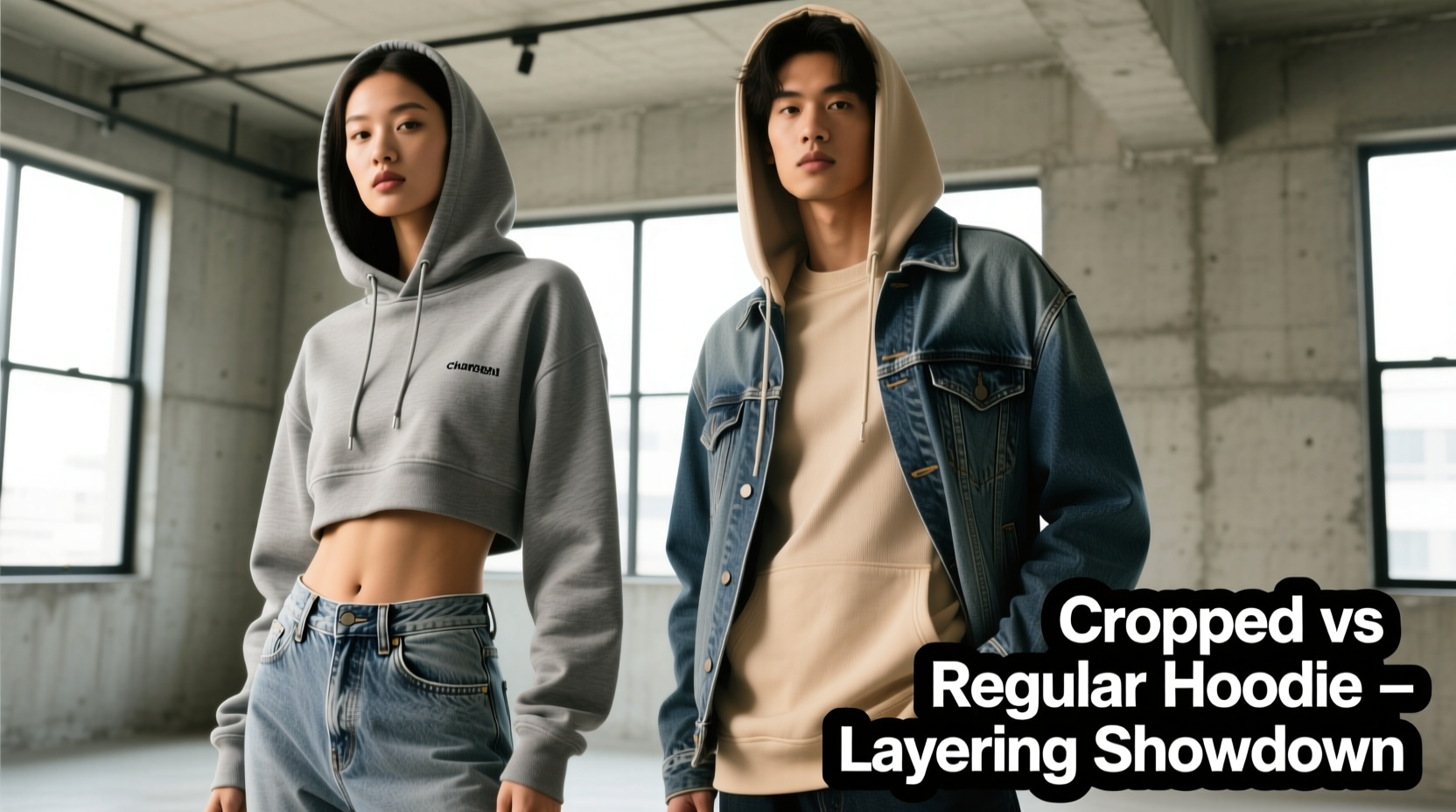
Hoodies naturally occupy the mid-layer space due to their moderate thickness and relaxed fit. However, the cut of the hoodie—specifically whether it's cropped or regular—affects how seamlessly it integrates with other garments. For instance, a cropped hoodie may expose the midriff when paired with high-waisted jeans and a long coat, creating both a style statement and a potential draft zone. Conversely, a regular hoodie offers full torso coverage, minimizing gaps and maximizing warmth.
Cropped Hoodie: Style Versatility Meets Fashion-Forward Design
Cropped hoodies typically end above the waistline, ranging from just below the bust to mid-abdomen. Originally popularized by women’s activewear and later adopted into unisex streetwear, they offer a modern silhouette that emphasizes proportion and structure. Their appeal lies in their ability to visually elongate the legs and highlight high-waisted bottoms, making them a favorite among fashion influencers and urban trendsetters.
From a layering perspective, cropped hoodies excel in controlled environments where temperature isn’t the primary concern. They work exceptionally well under denim trucker jackets, puffer gilets, or tailored blazers—garments that don’t extend far below the hips. This combination creates a balanced, intentional look without bulkiness. However, limitations arise in colder climates or during extended outdoor exposure. Because they leave the lower abdomen uncovered, any gap between the hoodie and pants becomes a channel for cold air, especially when bending or raising arms.
Fabrics used in cropped hoodies also influence their layering efficacy. Lightweight cotton blends suit transitional weather but lack sufficient insulation for true winter use. Heavier fleece-lined versions improve warmth but can create tightness when worn under snug outer layers. Fit is another critical factor: overly tight cropped hoodies restrict movement and compress underlying layers, reducing breathability and comfort.
“Cropped silhouettes redefine casual wear, but functionality must not be sacrificed for aesthetics. Balance is everything.” — Marcus Lin, Menswear Stylist & Urban Fashion Consultant
Regular Hoodie: Functional Warmth and Seamless Integration
Traditional hoodies extend to or just below the hip, providing complete torso coverage. This design has stood the test of time because it prioritizes utility without compromising comfort. Regular hoodies are engineered to sit smoothly beneath jackets, coats, and parkas, forming a continuous thermal barrier from shoulders to upper thighs.
In terms of layering mechanics, the longer hem prevents upward ride-up during movement, ensuring consistent insulation. When combined with a button-up flannel shirt underneath or a waterproof shell overhead, a regular hoodie functions as a reliable insulating core. Its length aligns naturally with most outerwear hems, eliminating exposed skin and minimizing wind infiltration.
Additionally, regular hoodies often come in a broader range of weights—from lightweight French terry to heavyweight brushed fleece—making them adaptable across seasons. Thicker models provide standalone warmth in mild winters, while thinner ones serve as excellent mid-layers even under heavy-duty winter gear. The looser fit common in standard hoodies accommodates additional clothing underneath without constriction, allowing airflow and moisture wicking when needed.
That said, regular hoodies aren't immune to styling challenges. Without careful coordination, they can appear boxy or overwhelm smaller frames. Tucking is generally impractical due to bulk, so pairing them with well-fitted bottoms helps maintain a clean silhouette. Still, for those prioritizing function over fleeting trends, the regular hoodie remains unmatched in versatility and performance.
Comparative Analysis: Cropped vs Regular Hoodie for Layering
| Feature | Cropped Hoodie | Regular Hoodie |
|---|---|---|
| Length Coverage | Ends above waist; exposes midriff | Covers waist to lower hips; full torso protection |
| Warmth Efficiency | Moderate; prone to drafts at waistline | High; consistent insulation with no gaps |
| Fit Under Outerwear | Best under short jackets or sleeveless layers | Compatible with long coats, parkas, and trench styles |
| Style Flexibility | High; ideal for fashion-forward, proportional looks | Moderate; requires thoughtful pairing to avoid bulk |
| Seasonal Use | Spring, fall, indoor winter use | All seasons, including deep winter |
| Comfort During Movement | Potential for upward shift and cold exposure | Stable fit; minimal shifting |
Real-World Application: A Day in the City
Consider Alex, a graphic designer living in Chicago. On a typical winter morning, temperatures hover around 28°F (-2°C), with wind chill dropping it further. Alex plans to bike to a coffee shop, attend a client meeting downtown, and walk home after sunset. For this scenario, layering is essential.
Alex tries two approaches:
- Day One – Cropped Hoodie: Wears a black cropped hoodie over a long-sleeve tee, paired with high-waisted cargo pants and a cropped puffer vest. While the look draws compliments for its sleek proportions, Alex feels chilled within minutes of stepping outside. The gap between the hoodie and pants allows cold air to penetrate, and the vest offers no lower back coverage. By midday, discomfort sets in despite indoor heating.
- Day Two – Regular Hoodie: Switches to a navy full-length hoodie with a similar weight. Paired with the same pants and a longer quarter-zip windbreaker, the outfit seals in warmth effectively. Even during the bike commute, there are no cold spots. Indoors, Alex unzips the outer layer comfortably without feeling overheated. The improved thermal continuity makes a noticeable difference in energy and focus throughout the day.
This example illustrates that while cropped hoodies succeed in curated, low-exposure settings, real-world conditions often demand the reliability of a regular hoodie.
Action Plan: Choosing the Right Hoodie for Your Layering Needs
Selecting between a cropped and regular hoodie shouldn’t be based solely on current trends. Instead, follow this step-by-step guide to match your choice with your environment and lifestyle:
- Assess Your Climate: If you live in a region with harsh winters or frequent wind, prioritize coverage. Opt for a regular hoodie.
- Evaluate Daily Activities: Do you spend significant time outdoors? Commute by foot or bike? Choose a full-length hoodie for uninterrupted insulation.
- Review Your Outerwear Collection: Measure the hem length of your go-to jackets. If most fall at or below the hip, a cropped hoodie will leave gaps. Match lengths accordingly.
- Determine Style Goals: Are you aiming for editorial streetwear looks or functional everyday wear? Cropped styles enhance proportion-focused ensembles; regular hoodies support minimalist, utilitarian aesthetics.
- Test the Fit: Try layering your preferred hoodie with common combinations. Raise your arms, bend forward, and simulate walking. Check for fabric pull, exposure, or restriction.
Checklist: Picking the Best Hoodie for Layering
- ☐ Determine primary use: fashion vs. function
- ☐ Confirm compatibility with existing outerwear
- ☐ Choose appropriate fabric weight (light, mid, heavy)
- ☐ Ensure sufficient sleeve length to cover wrists when arms are raised
- ☐ Verify hem alignment with waistband of pants/jeans
- ☐ Test layering combo in motion (bending, reaching, sitting)
- ☐ Consider color and texture coordination across layers
FAQ: Common Questions About Hoodie Layering
Can I wear a cropped hoodie under a long coat?
Technically yes, but it’s not ideal. The exposed midsection between the hoodie and coat hem creates a cold gap. If you prefer cropped styles, pair them with longer base layers or opt for coats that close higher on the torso.
Do regular hoodies look bulky when layered?
They can, if poorly fitted or made from overly thick material. Choose slim-fit or mid-weight regular hoodies with clean lines to minimize bulk. Avoid double-layering unless necessary, and ensure each piece fits smoothly over the last.
Are cropped hoodies only for women?
No. Cropped hoodies are increasingly available in unisex and men’s cuts, particularly in athletic and streetwear brands. Fit and proportion matter more than gender categorization.
Final Thoughts: Function First, Then Fashion
The debate between cropped and regular hoodies ultimately hinges on intent. If your priority is making a bold sartorial statement in mild conditions or styled photoshoots, the cropped hoodie delivers undeniable flair. It reshapes the classic silhouette, aligns with contemporary fashion narratives, and pairs beautifully with elevated casual wear.
However, when layering effectiveness, thermal consistency, and real-world usability are paramount, the regular hoodie proves superior. Its design honors decades of practical evolution, offering seamless integration with diverse outer layers and reliable protection against the elements. For most people navigating variable weather and active lifestyles, the full-length hoodie remains the smarter, more resilient choice.
That doesn’t mean you need to abandon style. Many modern regular hoodies feature tailored cuts, ribbed cuffs, premium fabrics, and minimalist detailing that elevate them beyond basic loungewear. The goal isn’t to reject trends, but to integrate them thoughtfully—choosing pieces that serve both form and function.




 浙公网安备
33010002000092号
浙公网安备
33010002000092号 浙B2-20120091-4
Comments
No comments yet. Why don't you start the discussion?