
Shopping for jewelry on DHgate has become increasingly popular due to its wide selection and competitive pricing. Among the most searched items are rings—particularly those marketed as “Cross Border” or “Local.” These terms often confuse buyers unfamiliar with how sellers categorize products. Understanding the difference between a cross border ring and a local ring isn’t just about semantics; it directly affects quality, durability, shipping time, and value for money. This guide breaks down both options in detail so you can make an informed decision when purchasing from DHgate.
What Are Cross Border Rings?
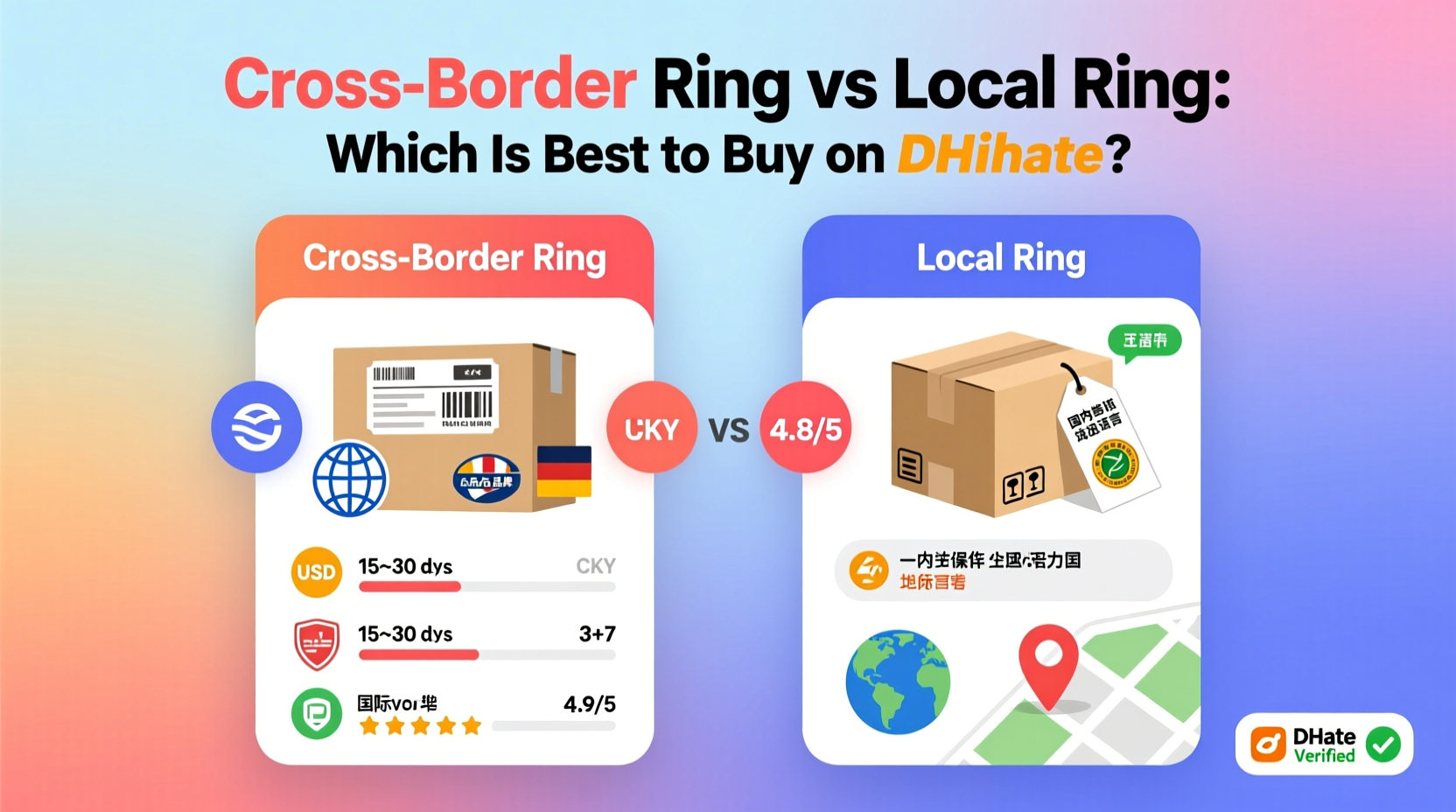
Cross border rings are typically manufactured outside China and shipped internationally through official logistics channels. Despite being listed on DHgate—a Chinese-based marketplace—these items originate from factories or distributors located in countries like Turkey, India, or South Korea. The term “cross border” refers to the international nature of their supply chain, even if they’re sold by Chinese middlemen.
These rings often undergo stricter quality control processes compared to standard domestic items. Many are made using higher-grade materials such as 925 sterling silver, genuine zirconia stones, or even gold plating that meets international standards. Because they're intended for export markets (especially North America and Europe), compliance with metal purity regulations is more likely.
What Are Local Rings?
Local rings are produced within China primarily for domestic consumption or low-cost export. They are generally cheaper to manufacture and sell, but may not adhere to the same material specifications as cross border variants. While some local rings offer excellent craftsmanship at budget prices, others use lower-quality alloys, thinner plating, or less durable stone settings.
Because these rings target cost-sensitive buyers, many prioritize appearance over longevity. A local ring might look identical to a high-end brand replica in photos, but after a few weeks of wear, signs of tarnishing, fading plating, or loose stones may appear.
“Not all affordable jewelry is created equal. The origin and intended market significantly influence long-term performance.” — Li Wen, International Jewelry Sourcing Consultant
Key Differences Between Cross Border and Local Rings
| Feature | Cross Border Ring | Local Ring |
|---|---|---|
| Origin | Manufactured outside China or specifically for export | Domestically produced in China |
| Material Quality | Higher grade metals (e.g., 925 silver, thick gold plating) | Often alloy bases with thin plating |
| Pricing | Moderate to slightly higher | Lower upfront cost |
| Shipping Time | Faster, often via ePacket or premium logistics | Slower, standard airmail |
| Durability | Better resistance to tarnish and wear | May degrade faster with regular use |
| Authenticity Markings | More likely to include hallmarks | Rarely stamped or inaccurately marked |
Real Buyer Experience: A Mini Case Study
Sophia, a buyer from Toronto, purchased two nearly identical-looking minimalist wedding band replicas—one labeled as a local ring, the other as a cross border model. Both were priced under $30 and came from different stores on DHgate.
The local ring arrived first but began showing discoloration around the edges after just three weeks of daily wear. The plating wore off near the base where her hand brushed against surfaces. In contrast, the cross border version, though it took five additional days to arrive, retained its shine and structural integrity after six months of consistent use. Upon closer inspection, she noticed the cross border ring had a faint “925” stamp inside the band, while the local one had no markings at all.
This experience highlights a common pattern: short-term savings with local rings can lead to disappointment, while investing a little more in cross border options often yields better long-term satisfaction.
How to Choose the Best Ring on DHgate: A Step-by-Step Guide
- Check the Product Title and Description: Look for keywords like “export quality,” “cross border,” “925 silver,” or “rhodium plated.” Avoid vague terms like “shiny” or “luxury look” without material details.
- Review Seller Ratings and Feedback: Focus on recent reviews that mention durability, color accuracy, and whether the item matched the description. Screenshots from real buyers are especially valuable.
- Compare Shipping Methods: Cross border items usually come with tracked express shipping. If the only option is untracked ordinary mail, proceed with caution.
- Verify Material Claims: Ask the seller directly for confirmation of metal composition. Reputable sellers will provide clear answers or even photos of stamps.
- Start with a Sample Order: Before buying multiple rings, test one piece first. Wear it for several weeks to assess quality before placing bulk orders.
Checklist: What to Confirm Before Buying Any Ring on DHgate
- ✅ Is the metal type clearly stated (e.g., 925 silver, stainless steel, copper base)?
- ✅ Does the listing mention plating thickness (e.g., 18K gold over silver)?
- ✅ Are there real customer photos showing the ring in natural light?
- ✅ Has the seller responded promptly and accurately to your questions?
- ✅ Is the return policy or warranty mentioned?
- ✅ Is the ring size compatible with your region’s measurement system?
Common Misconceptions About DHgate Rings
Many shoppers assume that because DHgate is based in China, all products are “local.” That’s not true. Just as Amazon hosts third-party sellers from around the world, DHgate allows international suppliers and cross-border trade programs. Some of the highest-rated ring vendors on the platform source from specialized workshops in Southeast Asia and the Middle East, then ship directly to global customers.
Another myth is that cross border automatically means authentic branded jewelry. It doesn’t. Most rings—even cross border ones—are still replicas or inspired designs. True designer pieces are rarely found on DHgate, and if they are, they’re likely counterfeit. Always treat purchases as fashion accessories, not investment-grade jewelry.
FAQ
Are cross border rings worth the extra cost?
Yes, for most buyers seeking lasting quality. While local rings may save $5–$10 upfront, their shorter lifespan often makes them less economical over time. Cross border rings tend to resist tarnishing and maintain finish longer, offering better value per wear.
Can I request a hallmark or certificate for my ring?
Most small-scale DHgate sellers don’t provide formal certificates. However, legitimate cross border rings should have internal engravings like “925” or “S925.” You can also use at-home testing kits to verify silver content.
Do local rings cause skin allergies?
Some do. Low-quality alloys may contain nickel or other irritants. If you have sensitive skin, opt for cross border rings made with hypoallergenic materials like surgical steel or verified sterling silver.
Final Recommendation: Which Ring Should You Buy?
If your priority is affordability and temporary use—such as for a photoshoot, gift wrapping, or occasional wear—a well-reviewed local ring can suffice. But if you want something you’ll wear regularly, trust to hold up over time, and feel confident gifting, a cross border ring is almost always the superior choice.
The slight increase in price is justified by better materials, tighter manufacturing standards, and improved post-purchase support. Plus, faster shipping and tracking give peace of mind during delivery.
“In jewelry, perceived value matters—but so does actual durability. Cross border options strike the best balance for savvy online shoppers.” — Marcus Tran, E-commerce Jewelry Analyst
Take Action Today
Next time you browse DHgate for rings, skip the cheapest option and focus on transparency, origin, and real user feedback. Whether you're treating yourself or shopping for someone special, choosing a cross border ring increases your chances of receiving a piece that looks great today and still shines months from now. Make quality your standard—not just style.




 浙公网安备
33010002000092号
浙公网安备
33010002000092号 浙B2-20120091-4
Comments
No comments yet. Why don't you start the discussion?