
When preparing for a trip—whether it’s a weekend getaway, a city tour, or an international adventure—one of the most overlooked yet critical decisions is choosing the right bag. The debate between crossbody tote bags and traditional handbags often surfaces in travel forums, fashion blogs, and airport lounges. Is one objectively superior? Or does the best choice depend on context, destination, and personal priorities?
The truth lies somewhere in the middle. While both styles offer distinct advantages, their effectiveness hinges on how, where, and why you're traveling. A bag that excels in a crowded European market may fall short during a long-haul flight. Understanding the functional differences—and aligning them with your travel habits—is key to making a smart, comfortable choice.
Comfort and Wearability Across Long Distances
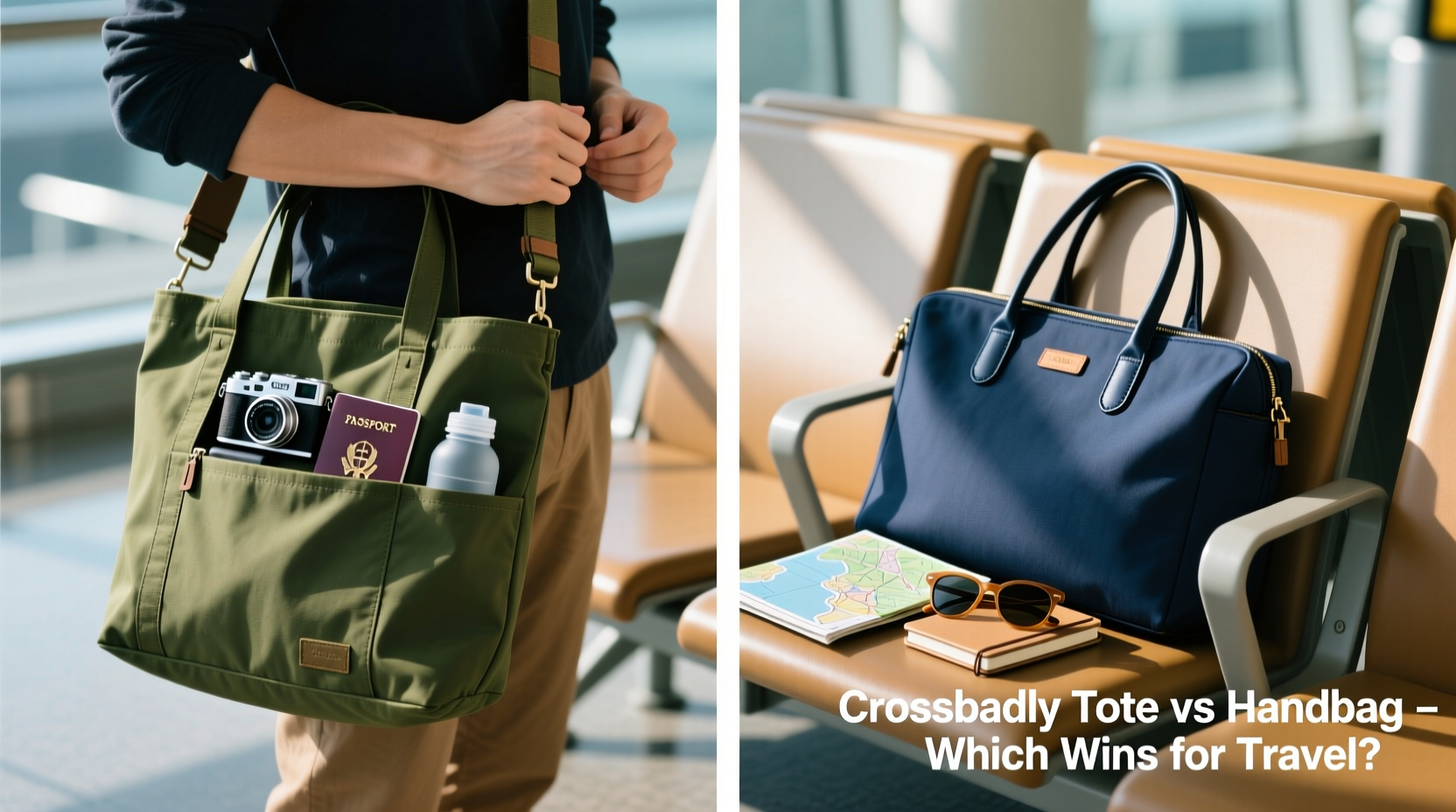
One of the first considerations when selecting a travel bag is comfort. How much time will you spend walking? Will you be standing in lines, navigating subway stations, or hiking cobblestone streets? These factors directly influence whether a crossbody tote or a standard handbag makes more sense.
Crossbody tote bags distribute weight across the shoulder and torso, reducing strain on a single arm or wrist. This balanced load helps prevent fatigue during extended use. Their adjustable straps allow wearers to position the bag at hip or chest level, keeping it secure and accessible without constant readjustment.
In contrast, traditional handbags are typically carried by hand or over one shoulder. Over time, this uneven weight distribution can lead to shoulder pain, back misalignment, and discomfort—especially if the bag is heavy or worn for hours.
Security and Theft Prevention
Travel safety isn’t just about avoiding dangerous areas—it’s also about minimizing opportunities for pickpocketing and petty theft. In crowded markets, public transit, and tourist hotspots, your bag becomes a prime target.
Crossbody tote bags offer a clear advantage here. Worn diagonally across the body, they sit snugly against the front or side, making it difficult for thieves to access zippers or slip in a hand unnoticed. Many models also feature anti-theft elements like lockable zippers, RFID-blocking pockets, and slash-resistant straps.
Handbags, especially those carried loosely over one shoulder or held in hand, leave the back and sides exposed. When distracted, travelers often set them down momentarily or swing them behind—creating perfect moments for theft.
“Over 70% of reported bag thefts in urban tourist zones involve shoulder or handheld bags left unattended or poorly positioned.” — Travel Safety Institute, 2023 Urban Risk Report
Capacity and Organization: What Fits Where?
While crossbody bags win in mobility and security, handbags generally outperform them in storage capacity. Traditional handbags—particularly structured totes—offer more interior volume, multiple compartments, and dedicated spaces for laptops, notebooks, water bottles, and cosmetics.
If you're someone who likes to carry a full day’s worth of supplies—extra layers, snacks, a guidebook, camera gear, or even a small umbrella—a roomy handbag might be non-negotiable. However, this added space comes with trade-offs: bulk, weight, and reduced agility.
Crossbody totes have evolved significantly in recent years. Modern designs include expandable sides, padded laptop sleeves (up to 13”), and smart internal organization. But they still tend to prioritize essentials: wallet, phone, passport, keys, and perhaps a compact umbrella or sunscreen.
| Feature | Crossbody Tote | Traditional Handbag |
|---|---|---|
| Weight Distribution | Even, across body | Uneven, on one shoulder/hand |
| Anti-Theft Protection | High (when worn correctly) | Low to moderate |
| Max Laptop Size | 13” (select models) | Up to 15”+ |
| Hands-Free Use | Yes | No (unless slung over shoulder) |
| Ideal For | Walking tours, city exploration, transit | Business trips, longer stays, formal settings |
Style and Versatility: From Day to Night
Fashion matters—even while traveling. Many people want a bag that transitions seamlessly from daytime sightseeing to dinner at a nice restaurant. Here, handbags often shine in terms of perceived elegance and polish.
A well-crafted leather tote or satchel can elevate a casual outfit and feel appropriate in semi-formal environments. Crossbody totes, while increasingly stylish, still lean toward the casual or utilitarian end of the spectrum—though high-end brands now offer sleek, minimalist versions suitable for upscale settings.
That said, versatility cuts both ways. A crossbody tote can go from train station to museum to café without needing adjustment. It rarely looks out of place, whereas a large handbag might seem excessive in a cozy bistro or hiking trail.
Real-World Scenario: Two Travelers, Two Choices
Consider two travelers visiting Paris for five days.
Sophie is a solo traveler focused on culture and cuisine. She plans to walk 8–10 km per day, visit museums, take the metro, and dine in local bistros. She packs light: phone, wallet, passport, lip balm, compact camera, and a foldable umbrella. Her priority is freedom, safety, and comfort. She chooses a slim crossbody tote with an RFID pocket and hidden zipper. Throughout her trip, she moves easily through crowds, keeps her belongings secure, and never feels weighed down.
James, meanwhile, is attending a business conference with evening networking events. He carries a 14” laptop, presentation materials, business cards, a change of shirt, and toiletries. He values professionalism and needs space. He opts for a structured handbag with a detachable shoulder strap. While he appreciates the polished look, he finds himself adjusting the bag frequently and avoids crowded metros due to security concerns.
Their experiences aren’t about which bag is “better”—but which was better suited to their specific needs.
Step-by-Step Guide: Choosing Your Ideal Travel Bag
Follow this decision-making process to determine the best option for your next trip:
- Assess your itinerary: Are you walking a lot? Using public transit? Attending formal events?
- List essential items: Will you need a laptop, extra clothing, or accessories?
- Evaluate security risks: Is your destination known for pickpocketing or crowded conditions?
- Test wearability: Try wearing potential bags around your neighborhood for 30+ minutes.
- Check airline compatibility: Ensure the size fits under a seat or in overhead bins if needed.
Expert Insight: What Designers and Frequent Flyers Say
Industry professionals emphasize adaptability over absolutes.
“The best travel bag isn’t the fanciest or largest—it’s the one that disappears into your routine. If you forget you’re wearing it, it’s doing its job.” — Lena Torres, Product Designer at Voyageur Luggage Co.
Torres notes that modern travelers increasingly favor hybrid designs: crossbody totes with removable straps, convertible compartments, and water-resistant fabrics. These merge the strengths of both categories, offering flexibility without compromise.
FAQ
Can I use a crossbody tote as a personal item on a plane?
Yes, most crossbody totes meet airline personal item dimensions (typically under 18 x 14 x 8 inches). Just ensure it fits under the seat in front of you.
Are handbags ever safe for solo travelers?
They can be—if worn securely over the shoulder with the flap facing inward, and never placed on the back of a chair or floor. However, crossbody styles remain safer in high-risk areas.
Do crossbody bags damage posture?
Not when properly adjusted. A well-fitted crossbody should rest at the hip, not pull across the chest. Avoid tightening the strap excessively, which can cause shoulder hunching.
Final Checklist Before You Pack
- ✅ Have I tested the bag with all my intended items?
- ✅ Does it allow me to keep my hands free when needed?
- ✅ Are valuables stored in secure, hard-to-reach pockets?
- ✅ Can I comfortably wear it for 4+ hours?
- ✅ Does it match the formality level of my destination?
Conclusion: It Depends—And That’s Okay
There is no universal winner in the crossbody tote bag vs handbag debate. Each serves different travel philosophies and practical needs. The crossbody tote excels in mobility, security, and ease—ideal for explorers, solo travelers, and those prioritizing function. The traditional handbag offers greater capacity and sophistication, suiting business trips, longer stays, or formal destinations.
The smartest approach is intentional selection. Match your bag to your trip, not trends or habit. Consider owning both: a crossbody for active days, a handbag for evenings or work-related outings. With the right mindset, your choice isn’t about compromise—it’s about optimization.




 浙公网安备
33010002000092号
浙公网安备
33010002000092号 浙B2-20120091-4
Comments
No comments yet. Why don't you start the discussion?