
Choosing between a crossbody and a shoulder bag isn’t just about what looks good in your Instagram story. It’s a decision that affects how you move through your day—whether you’re commuting, running errands, or navigating a crowded festival. While both styles dominate fashion feeds and retail shelves, the real question isn’t which is trendier, but which actually works better for your lifestyle. Practicality isn’t always obvious at first glance. Some bags promise freedom and security but deliver discomfort after an hour. Others offer effortless style but leave your belongings vulnerable. Let’s cut through the marketing noise and examine what these two popular styles truly offer.
Defining the Difference: Design and Function
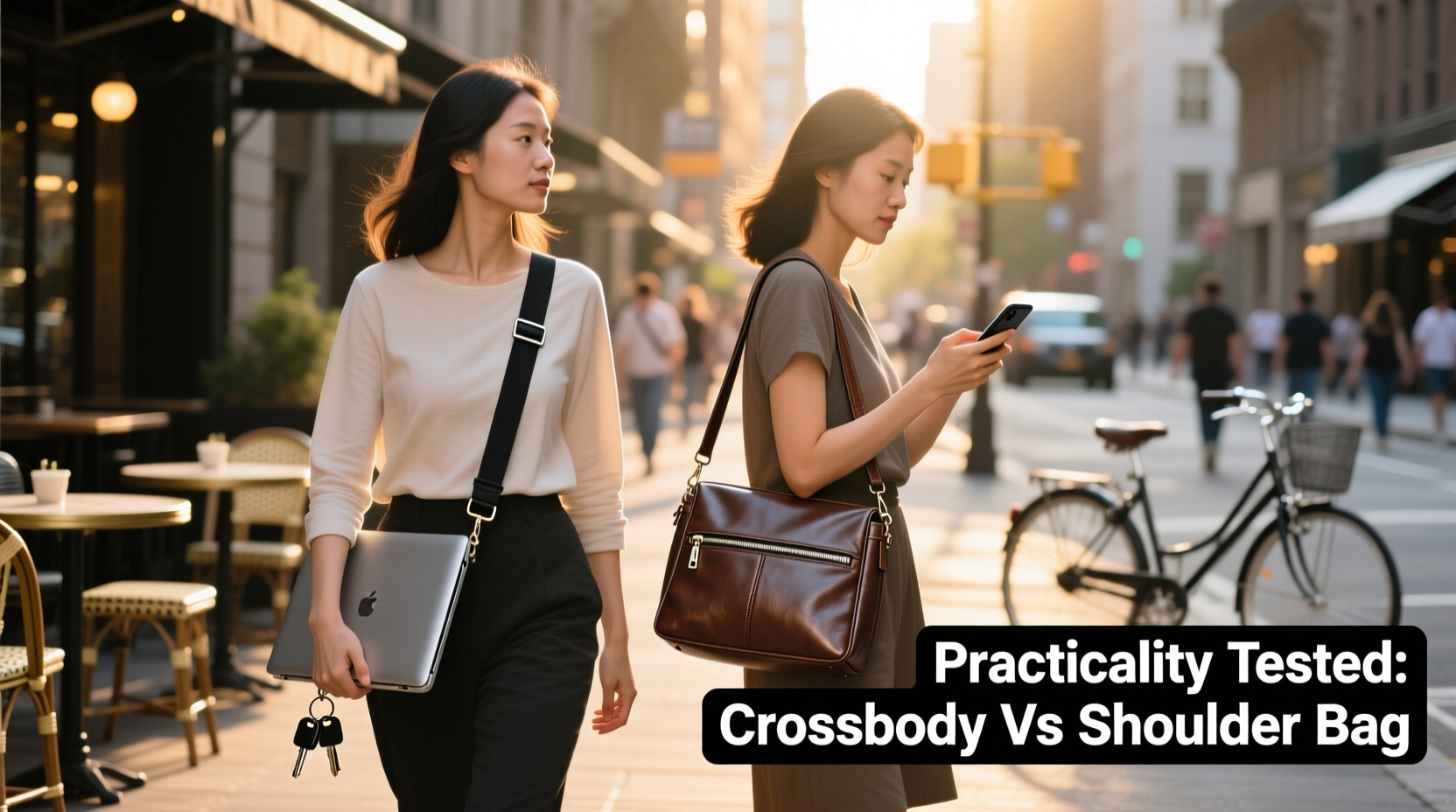
The fundamental distinction lies in how each bag is worn. A shoulder bag rests on one shoulder, typically with a longer strap meant to hang loosely at the side. Crossbody bags, by contrast, are designed to be worn diagonally across the torso, from one shoulder to the opposite hip. This seemingly small variation in wear has significant implications for weight distribution, accessibility, and safety.
Shoulder bags often have a classic, polished appearance—think structured totes or slouchy hobo styles. They're favored in professional settings or evening outings where elegance takes precedence. Crossbody bags lean toward utility and mobility, commonly seen in urban environments, travel scenarios, or casual daytime wear. Their design inherently promotes stability; the diagonal strap keeps the bag close to the body, reducing sway and making it harder for opportunistic theft.
Practicality Face-Off: Comfort, Security, and Accessibility
Comfort is highly personal but depends on physics as much as preference. Shoulder bags concentrate weight on one side of the body, which can lead to postural imbalance over time. Carrying one for hours may cause neck tension or shoulder fatigue, especially if the bag is heavy. Crossbody designs mitigate this by spreading the load across the chest and back, engaging larger muscle groups. However, poorly adjusted straps or overly tight fits can create pressure on the collarbone or restrict arm movement.
Security is where crossbody bags clearly excel. Because they sit in front of the body, they remain within sight and reach. Pickpockets find them far less accessible than shoulder bags, which dangle behind or beside you—prime targets in crowded spaces. Travel experts consistently recommend crossbody styles for this reason. As Sarah Lin, a frequent international traveler and urban mobility consultant, puts it:
“On a packed subway in Tokyo or during rush hour in Barcelona, my crossbody stays zipped and visible. My old shoulder bag? Stolen once, nearly lost three other times.” — Sarah Lin, Urban Mobility Consultant
Accessibility is another key factor. Crossbody bags place the main compartment at waist level, allowing quick access to phones, wallets, or transit cards without removing the bag. Shoulder bags often require you to shift or remove them entirely to open the closure, which becomes inconvenient when balancing coffee, keys, or a child’s hand.
Style vs. Substance: When Fashion Influences Function
It's undeniable that shoulder bags dominate formal and semi-formal aesthetics. Their clean lines and spacious silhouettes align with minimalist fashion trends and professional dress codes. Designers like Céline and The Row have elevated the shoulder tote into a symbol of understated luxury. But elegance sometimes comes at the cost of usability. Many high-end shoulder bags lack internal organization, secure closures, or adjustable straps—features that matter in daily life.
Crossbody bags, while increasingly stylish, still face perception challenges in conservative environments. Some associate them with “tourist” energy or casualness, though premium brands like Loewe and Prada have blurred that line with sleek, minimalist crossbody designs in fine leather.
The real issue isn't the bag itself, but how we prioritize function. A well-designed crossbody can be just as sophisticated as a shoulder bag—if chosen thoughtfully. The growing popularity of convertible bags (styles that switch between shoulder and crossbody via detachable or adjustable straps) suggests consumers want both: versatility without sacrificing aesthetics.
Comparison Table: Crossbody vs Shoulder Bag Features
| Feature | Crossbody Bag | Shoulder Bag |
|---|---|---|
| Weight Distribution | Evenly distributed across torso | Concentrated on one shoulder |
| Theft Resistance | High – bag stays in front and visible | Low – bag hangs behind or to the side |
| Comfort Over Time | Better for extended wear | Potential for shoulder strain |
| Access to Contents | Quick and easy, no removal needed | Often requires shifting or removing bag |
| Fashion Flexibility | Best for casual, urban, travel wear | Stronger presence in formal/professional settings |
| Capacity & Organization | Limited by size; smaller models common | Generally larger with more compartments |
Real-World Use Case: Commuting in a Dense City
Consider Maya, a graphic designer living in Chicago. She commutes 45 minutes each way via train and walking. Her old leather shoulder bag looked sharp with her workwear but became unbearable by midday. She’d constantly adjust it, worry about it slipping off, and felt self-conscious when boarding packed trains. After switching to a compact crossbody with a hidden anti-theft zipper and RFID-blocking pocket, her experience changed. She could keep her phone and card reader within reach, her posture improved, and she stopped dreading her commute. The trade-off? She now carries a foldable tote inside the crossbody for days when she needs extra space—proving that hybrid solutions often win in practice.
Actionable Checklist: Choosing the Right Bag for Your Life
Before buying, ask yourself the following:
- Evaluate your daily movements: Do you walk more than 30 minutes a day? Choose crossbody.
- Assess your environment: Are you often in crowded places? Prioritize security—go crossbody.
- Check your outfit rotation: Need something office-appropriate? A structured shoulder bag may fit better.
- Test the strap: Can it be adjusted for crossbody wear? Even a shoulder bag with a long strap gains functionality.
- Consider convertibility: Look for bags with removable straps or dual-carry options.
- Weigh your typical load: Heavy laptops or multiple notebooks? You’ll need padding and support—crossbody with wide straps recommended.
FAQ: Common Questions Answered
Can a crossbody bag be professional enough for the office?
Yes—especially if it’s made from high-quality materials like pebbled leather, has minimal branding, and features a streamlined silhouette. Pair it with tailored clothing to maintain a polished look. Many modern crossbodies are designed specifically for business-casual environments.
Are shoulder bags obsolete for everyday use?
No, but their role is shifting. They remain ideal for shorter trips, low-activity days, or when carrying bulkier items. For all-day wear, however, they’re increasingly being replaced by ergonomic alternatives unless modified with padded straps or worn across the body.
Do crossbody bags suit all body types?
Absolutely. The key is proportion. Petite individuals should opt for smaller crossbodies worn higher on the hip, while taller people can carry larger versions lower without overwhelming their frame. Adjustable straps make customization easy.
Final Thoughts: Practicality Wins Over Hype
The debate isn’t whether crossbody or shoulder bags are objectively better—it’s about matching form to function. Hype cycles elevate certain styles based on celebrity sightings or runway moments, but lasting value comes from how well a bag serves your actual routine. In terms of practicality—comfort, security, and ease of use—crossbody bags generally outperform shoulder bags for active, mobile lifestyles. That said, dismissing shoulder bags entirely ignores their enduring appeal in contexts where appearance and capacity matter most.
The smartest approach? Own both—but choose intentionally. Let your daily habits guide your primary pick, and don’t underestimate the power of a convertible design. Whether you’re sprinting to catch a train or stepping into a boardroom, the right bag shouldn’t be a burden. It should move with you, protect your essentials, and reflect your priorities—function first, fashion second.




 浙公网安备
33010002000092号
浙公网安备
33010002000092号 浙B2-20120091-4
Comments
No comments yet. Why don't you start the discussion?