
Choosing the right everyday bag isn’t just about style—it’s about function, comfort, and how well it fits your daily routine. Two popular compact options dominate casual fashion: the crossbody bag and the wristlet. Both are sleek, portable, and ideal for minimalist carry, but they serve different needs. One keeps your essentials close with hands-free convenience; the other prioritizes elegance and quick access. So, which one truly wins in real-world practicality?
The answer depends on your lifestyle, how much you carry, and where you go most often. Let’s break down the strengths and limitations of each to help you decide which bag deserves a permanent spot in your rotation.
Comfort and Wearability Throughout the Day
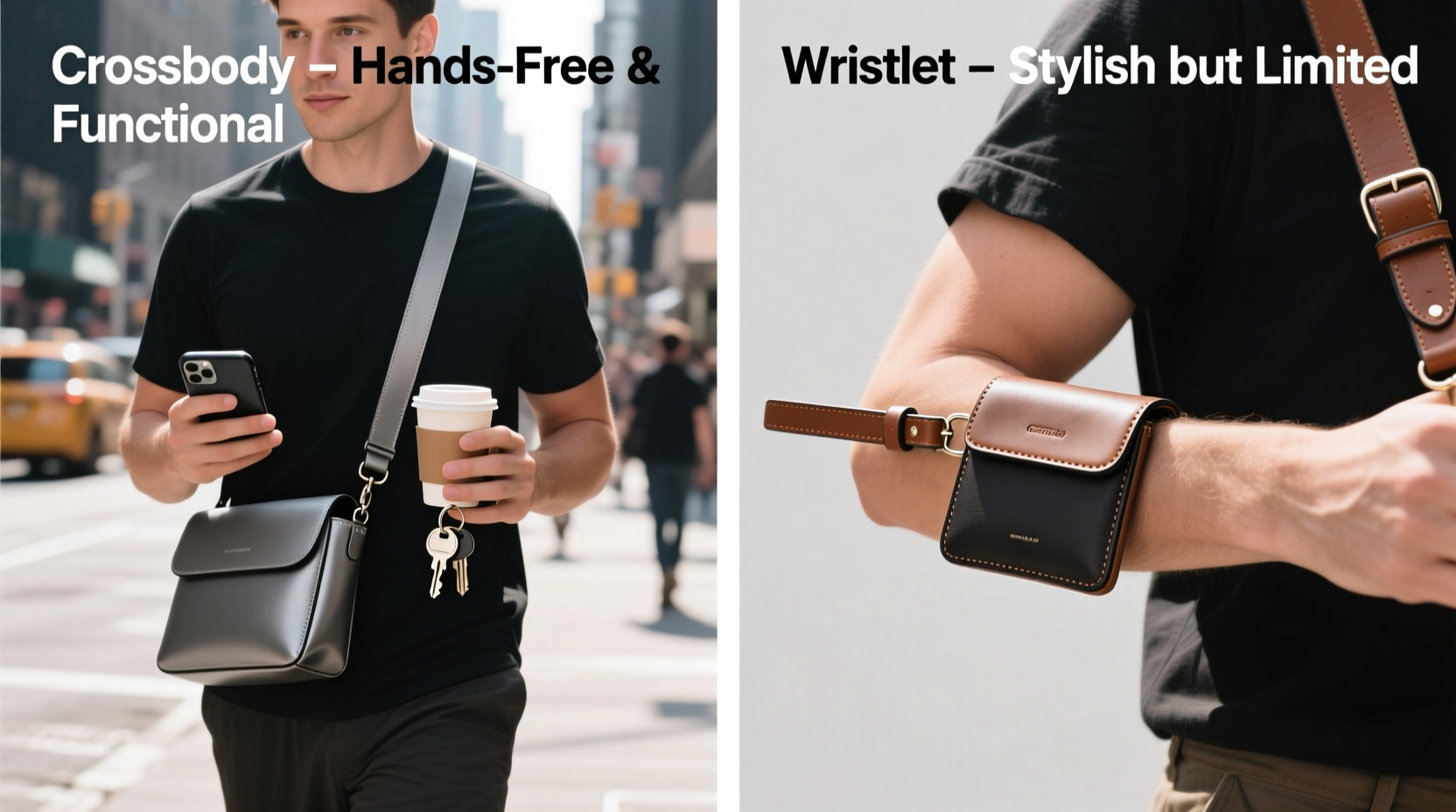
When evaluating practicality, comfort over extended wear is crucial. A bag might look great, but if it digs into your shoulder or forces awkward posture after 30 minutes, it fails the everyday test.
Crossbody bags distribute weight across the torso, using a long strap that runs diagonally from one shoulder to the opposite hip. This design reduces strain on any single point and allows for balanced carrying. Most models weigh between 0.5 to 1.2 pounds when empty, making them light enough for all-day wear—especially if made from soft nylon, canvas, or lightweight leather.
In contrast, wristlets rest entirely in the hand or drape over the wrist. While this eliminates shoulder pressure, it introduces a different kind of fatigue. Holding or constantly adjusting a wristlet can become tiring during errands, commuting, or walking tours. If you're prone to dropping things or frequently use your phone, keys, or wallet, a wristlet may require more attention than convenience allows.
Security and Theft Prevention
Safety is a non-negotiable factor in urban environments or crowded spaces. Pickpocketing and snatching remain real concerns, especially with small, accessible bags.
Crossbody bags offer superior protection. When worn across the front (rather than behind the back), the main compartment faces your body, making unauthorized access difficult without immediate detection. The long strap also makes it harder for someone to yank and run—unlike shorter straps or loose wristlets that can be easily grabbed.
Wristlets, while stylish, are inherently less secure. They hang loosely from the wrist and are easy targets in busy areas. A momentary distraction—reaching for your phone, opening a door—can lead to loss. Even with a snug fit, the lack of anchoring means they’re more likely to slip off during active movement.
“From a safety standpoint, anything that stays tethered to your core is smarter than accessories dangling from extremities.” — Marcus Tran, Urban Lifestyle Security Consultant
Capacity and Daily Essentials Fit
Practicality hinges on whether your bag can carry what you actually need—not just what looks good in a product photo.
Let’s compare typical contents:
| Item | Fits in Crossbody? | Fits in Wristlet? |
|---|---|---|
| Smartphone (standard size) | Yes | Limited (only smaller models) |
| Wallet (bi-fold or slim) | Yes | Yes (if compact) |
| Keys | Yes | Yes |
| Lip balm / mini cosmetics | Yes | Rarely |
| Hand sanitizer (travel size) | Yes | No |
| Folded umbrella (compact) | Possible (external clip) | No |
| Reusable mask | Yes | No |
Crossbody bags typically offer 5–8 liters of storage, with multiple compartments including zippered pockets and RFID-safe slots. Many include exterior slip pockets for quick-access items like transit cards. This flexibility supports a “grab-and-go” lifestyle without sacrificing organization.
Wristlets, by design, prioritize minimalism. Most max out at 2–3 liters, with a single main compartment. They’re best suited for evening outings, short commutes, or situations where you only need ID, cash, and a lipstick. Add a phone and they become overstuffed and unbalanced.
Real-Life Scenario: A Day in the City
Consider Sarah, a freelance designer living in downtown Chicago. Her typical weekday involves walking to a coffee shop, meeting a client, running midday errands, and catching public transit home. She carries her phone, wallet, keys, earbuds, hand sanitizer, notebook, and occasionally a compact camera.
Last month, she switched from her trusted crossbody to a sleek new wristlet for “aesthetic consistency” with her outfits. Within a week, she noticed recurring wrist strain, had to make multiple trips back to her apartment because she couldn’t carry essentials, and nearly lost her wristlet when it slipped off while boarding a crowded bus.
She returned to her crossbody—and immediately regained confidence and efficiency. “I didn’t realize how much I relied on having both hands free until I didn’t,” she said. “The wristlet looked chic, but it wasn’t built for my actual life.”
This case illustrates a common pitfall: choosing style over substance. When functionality lags, even the most fashionable accessory becomes a burden.
When Each Bag Shines: A Practical Guide
Neither option is universally better. Each excels in specific contexts. Here’s when to reach for which:
Choose a Crossbody Bag When You:
- Walk or commute regularly
- Carry a smartphone, wallet, and small personal items
- Need hands-free mobility (e.g., holding a child’s hand, carrying groceries)
- Travel in crowded areas or unfamiliar cities
- Prefer one-bag simplicity for day-to-night transitions
Choose a Wristlet When You:
- Attend evening events or dinners
- Want a polished, minimalist look with formal or cocktail attire
- Only need essentials (ID, cardholder, lipstick)
- Are in a controlled environment (e.g., private party, office setting)
- Use it as a clutch insert inside a larger tote
Step-by-Step: How to Choose Your Ideal Everyday Bag
- Inventory your daily essentials: Lay out everything you carry. Measure their combined volume.
- Map your routine: Note how much walking, transit, or physical activity you do.
- Evaluate security needs: Do you frequent high-density areas? Is theft a concern?
- Test wearability: Try both styles for a full day. Track comfort, access, and stress points.
- Assess durability: Check material quality, stitching, and closure mechanisms (zippers vs. magnetic snaps).
- Decide based on reality, not aesthetics: Choose the bag that supports your life—not just your Instagram feed.
Frequently Asked Questions
Can a wristlet be practical for daily use?
Only if your daily load is extremely light—such as just cards, ID, and a key. For anyone carrying a phone, hygiene items, or tech, a wristlet lacks sufficient space and ergonomic support for sustained use.
Are crossbody bags safe for travel?
Yes, especially anti-theft models with slash-resistant straps, locking zippers, and RFID-blocking pockets. Worn across the chest, they’re among the safest compact bag choices for travelers.
How do I prevent crossbody strap slippage?
Opt for wider straps (at least 1 inch) with textured or silicone-backed fabric. Adjust the length so the bag rests near your hip, not sliding toward your arm. Some brands offer strap anchors that clip to your belt loop or clothing.
Final Verdict: Which Bag Wins for Everyday Practicality?
The crossbody bag is the clear winner for true everyday practicality. It balances comfort, security, capacity, and adaptability better than any wristlet. While wristlets have their place—especially in formal or minimalist settings—they fall short for dynamic, mobile lifestyles.
Think of the wristlet as a specialized tool: elegant, situational, and limited. The crossbody is a workhorse—dependable, functional, and ready for whatever the day brings.
If you value efficiency, safety, and freedom of movement, the crossbody isn’t just a fashion choice. It’s a strategic upgrade to your daily routine.




 浙公网安备
33010002000092号
浙公网安备
33010002000092号 浙B2-20120091-4
Comments
No comments yet. Why don't you start the discussion?