
Living in a small apartment with a cat brings unique challenges—especially when it comes to managing litter box odor. Space is limited, ventilation may be minimal, and strong smells can quickly become overwhelming. Choosing the right cat litter isn’t just about convenience; it’s about maintaining a clean, comfortable home environment. Two of the most common types on the market are crystal and clay litters. But when it comes to odor control in tight quarters, which one performs better?
This article dives deep into the science, user experience, and practical considerations behind crystal and clay cat litter. We’ll compare their odor-fighting capabilities, examine how they behave in confined spaces, and help you make an informed decision based on real-world needs—not marketing claims.
How Odor Forms in Cat Litter Boxes
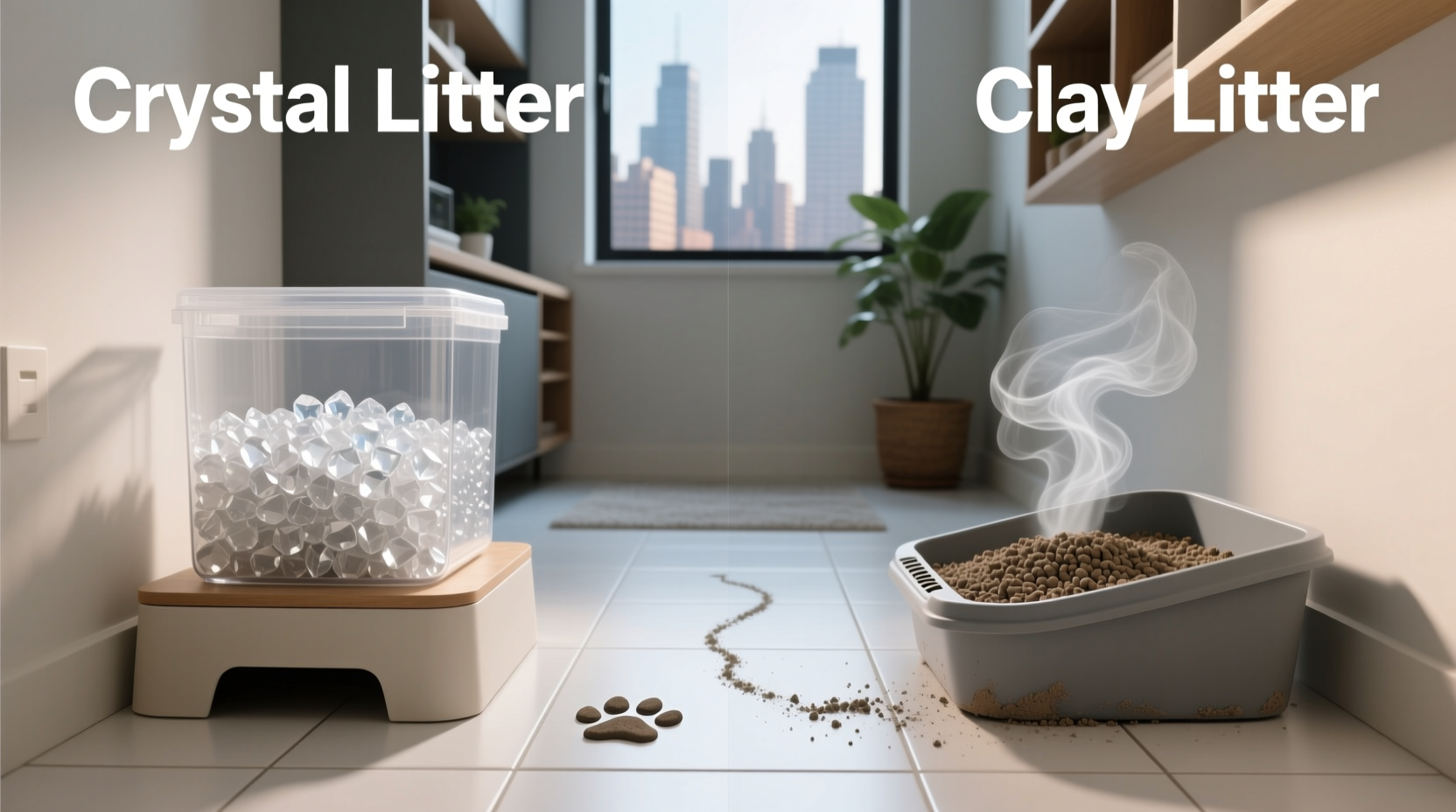
Before comparing products, it’s essential to understand what causes litter box odor. The primary culprits are ammonia (from urine breakdown) and sulfur compounds (from feces). Bacteria in the litter break down waste, releasing volatile gases that produce unpleasant smells. In a small apartment, these odors concentrate faster due to limited air circulation and proximity to living areas.
Effective odor control depends on three factors:
- Absorbency: How well the litter soaks up liquid waste.
- Neutralization: Whether the litter chemically counteracts odor molecules or simply masks them.
- Dust and Tracking: Particles kicked out of the box can spread residual smells across floors and furniture.
In compact spaces, even minor tracking or slow absorption can lead to lingering scents. That’s why not all litters perform equally—even if they claim “superior odor control.”
Crystal Cat Litter: Science-Driven Absorption
Crystal cat litter, typically made from silica gel, is engineered for high absorbency. These tiny porous beads pull moisture deep inside, trapping liquid and slowing bacterial growth. Because urine is contained within the crystals rather than sitting on the surface, ammonia release is significantly delayed.
Silica gel does not clump like traditional clay. Instead, solid waste is scooped daily, while urine-soaked crystals gradually turn yellow and are replaced every 2–4 weeks depending on usage. This long lifespan makes crystal litter appealing for low-maintenance households.
From an odor perspective, silica excels at passive control. It doesn’t rely on fragrances but on physical absorption. Independent lab tests show silica-based litters reduce airborne ammonia by up to 70% compared to non-clumping clay over a 48-hour period.
Pros of Crystal Litter in Small Spaces
- Superior moisture absorption reduces ammonia formation at the source.
- Low dust levels mean fewer airborne particles carrying odor.
- Long-lasting formula cuts down on frequent changes—ideal for busy urban dwellers.
- Nearly fragrance-free options available for sensitive noses.
Cons to Consider
- Higher upfront cost per pound.
- Some cats dislike the texture underfoot.
- Doesn’t clump, so solid waste must be removed carefully to avoid contamination.
- Yellowed crystals indicate saturation but aren’t always noticeable until smell returns.
“Silica gel’s microporous structure acts like a molecular sponge, locking in moisture and delaying microbial activity that leads to odor.” — Dr. Lena Patel, Veterinary Environmental Scientist
Clay Cat Litter: Traditional Clumping Power
Clay litter has dominated the market for decades. Most modern versions use sodium bentonite, a natural clay that swells when wet, forming tight clumps around urine. This allows precise removal of soiled portions, keeping the rest of the litter fresh longer.
Many clay litters include baking soda, activated charcoal, or perfume additives to enhance odor control. While effective initially, these masking agents often wear off after a day or two, especially in warm or humid conditions common in city apartments.
Clumping ability gives clay an edge in daily maintenance—scooping is quick and efficient. However, clay is less absorbent overall than silica. Urine remains near the surface until clumped, giving bacteria more time to generate ammonia.
In poorly ventilated rooms, this delay can result in detectable smells within hours, particularly with multiple cats or infrequent scooping.
Pros of Clay Litter for Urban Homes
- Widely available and generally cheaper upfront.
- Familiar texture preferred by most cats.
- Fast clumping simplifies cleaning routines.
- Variety of scented and unscented options to suit preferences.
Downsides in Compact Living
- Higher dust output can carry odor particles into the air and onto surfaces.
- More frequent full changes required (typically weekly), increasing long-term cost and effort.
- Fragrance additives may irritate humans or pets in enclosed spaces.
- Heavy weight makes disposal messy and inconvenient without nearby trash chutes.
Direct Comparison: Crystal vs Clay for Odor Control
| Feature | Crystal Litter | Clay Litter |
|---|---|---|
| Odor Absorption | High – traps liquid internally, slows bacterial action | Moderate – relies on surface clumping and additives |
| Lifespan | 2–4 weeks with regular scooping | 5–7 days before full replacement needed |
| Dust Level | Very low – minimal airborne particles | High to moderate – contributes to ambient odor spread |
| Cat Acceptance | Variable – some resist walking on hard beads | Generally high – soft, familiar texture |
| Cost Efficiency | Higher initial cost, lower long-term usage | Lower initial price, higher replacement frequency |
| Suitability for Small Apartments | Excellent – superior containment, low maintenance | Fair to good – manageable with strict cleaning schedule |
Real-World Example: Managing Odor in a Studio Apartment
Jamie lives in a 450-square-foot studio in downtown Seattle with her two-year-old tabby, Miso. With no separate room for the litter box, it sits in a corner near the kitchen. Initially, she used a popular scented clay litter, believing the fragrance would mask any issues. Within a day, however, a sharp ammonia smell began to permeate the space, especially after cooking or when windows were closed.
After researching alternatives, Jamie switched to a silica crystal litter and added a small box fan with a HEPA-carbon filter nearby. She also began scooping solids twice daily and stirring the crystals to redistribute dry material. The change was immediate: no noticeable odor emerged even after 10 days. After three weeks, she performed her first full change—compared to weekly changes with clay.
“I didn’t realize how much the dust from clay was contributing to the smell,” Jamie said. “Now I barely know the box is there unless I’m cleaning it.”
Step-by-Step Guide to Optimizing Litter Box Odor Control
No litter works perfectly without proper management. Follow this sequence to maximize odor control in a small apartment:
- Choose the right litter type: Prioritize low-dust, high-absorbency formulas. For minimal odor, silica crystals have the scientific advantage.
- Use an enclosed box with ventilation: Covered boxes contain sprays and smells. Models with carbon filters actively neutralize gases.
- Place the box strategically: Avoid high-traffic zones and keep away from HVAC vents that can circulate odors. Corners with airflow work best.
- Scoop daily (minimum): Remove solids every 12–24 hours. With crystal litter, stir the bed to expose dry beads.
- Replace litter on schedule: Don’t wait for strong smells. Replace clay weekly; replace crystals every 2–4 weeks or when yellowing becomes widespread.
- Clean the box monthly: Wash with mild soap and water. Avoid ammonia-based cleaners, which mimic urine scent and confuse cats.
- Add supplemental air purification: A compact air purifier with activated carbon helps capture residual particles.
FAQ: Common Questions About Litter and Odor
Can I mix crystal and clay litter to save money?
Mixing is not recommended. Crystal relies on dryness to function, while clay introduces moisture and dust that compromise its absorbency. Combining them reduces the effectiveness of both and may increase odor.
Do scented litters work better in small spaces?
Often, the opposite is true. Fragranced litters can create an overwhelming chemical smell in tight areas, especially when layered with pet odors. Unscented, naturally absorbing litters like silica are generally more effective and less irritating.
Is crystal litter safe if my cat ingests it during grooming?
Silica gel is non-toxic in small amounts, though ingestion should be minimized. Most crystals are too large to be eaten easily, but fine dust can cling to paws. Regular wiping of paws post-litter use helps reduce ingestion risk.
Checklist: Choosing the Best Litter for Your Apartment
- ☐ Assess your cat’s preference—texture matters for consistent use.
- ☐ Prioritize low-dust formulas to minimize airborne particles.
- ☐ Look for litters with proven ammonia suppression, not just fragrance.
- ☐ Consider long-term cost, not just shelf price.
- ☐ Ensure compatibility with your litter box type (covered, automatic, etc.).
- ☐ Test one bag before committing to bulk purchases.
- ☐ Pair litter choice with environmental controls (ventilation, air purifiers).
Final Recommendation: Why Crystal Wins for Small-Space Odor Control
While both crystal and clay litters have loyal followings, the evidence points clearly toward silica-based crystal litter as the superior option for odor control in small apartments. Its advanced absorption technology addresses odor at the molecular level, not through temporary masking. Combined with low dust, extended lifespan, and compatibility with air filtration systems, crystal litter offers a cleaner, quieter, and more sustainable solution for urban pet owners.
That said, success depends on more than product choice. Consistent scooping, strategic placement, and attention to your cat’s comfort are equally important. Transition slowly if switching from clay—some cats need time to adjust to the different texture.
The goal isn’t just to hide the smell—it’s to eliminate the conditions that cause it. With the right litter and routine, your apartment can remain fresh and inviting, even with a feline roommate.




 浙公网安备
33010002000092号
浙公网安备
33010002000092号 浙B2-20120091-4
Comments
No comments yet. Why don't you start the discussion?