
At a glance, a sparkling bracelet on someone’s wrist can catch the eye, evoke elegance, or suggest luxury. But how many of us can actually tell whether those shimmering stones are cubic zirconia or crystal? And more importantly—does it matter? In jewelry conversations, especially around affordable accessories, the debate between cubic zirconia (CZ) and crystal often centers on brilliance, authenticity, and perceived value. The truth is, while both materials offer impressive sparkle, their composition, cut precision, and long-term performance differ in ways that may—or may not—be visible to the untrained eye.
The Science Behind the Sparkle
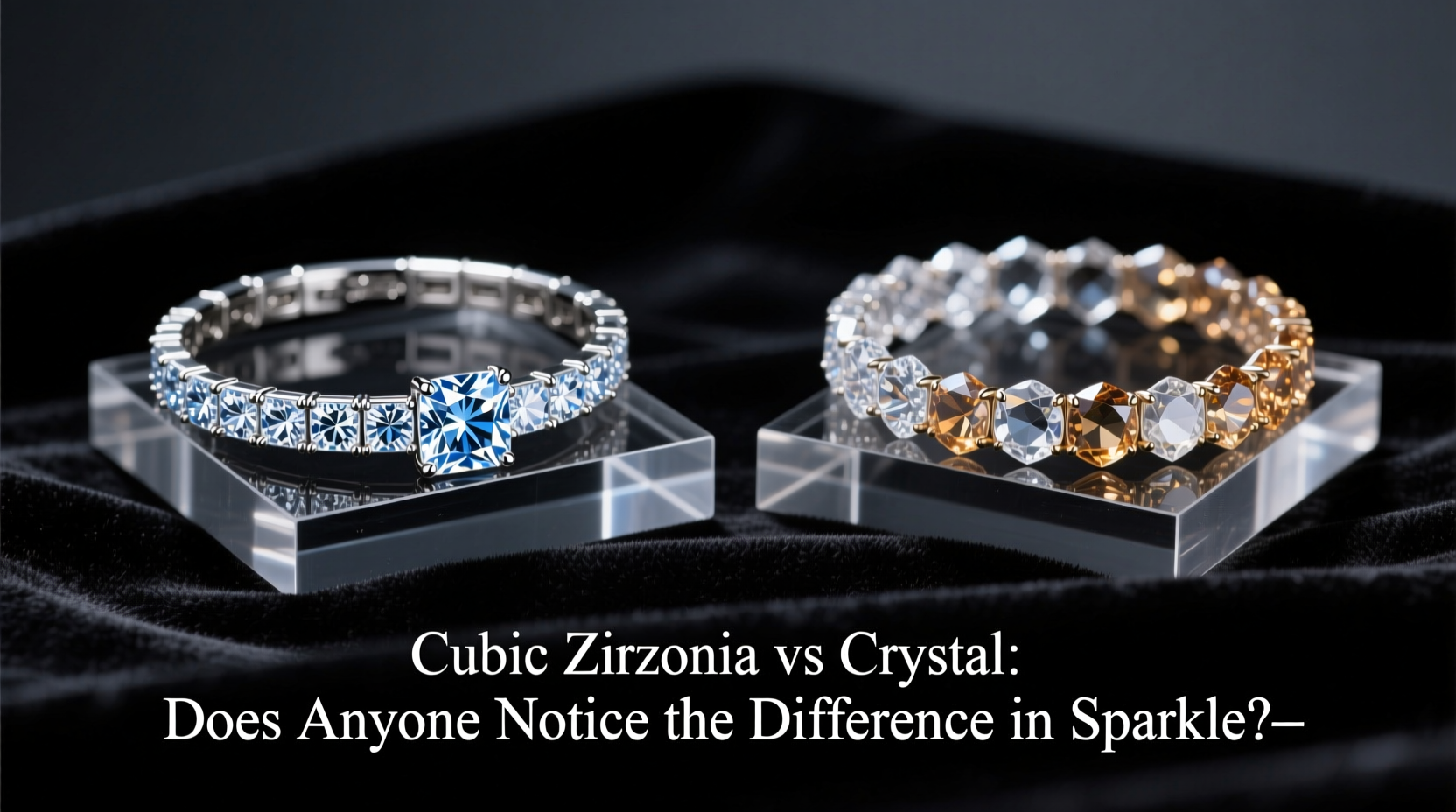
Sparkle—technically known as “brilliance” and “fire”—depends on how light interacts with a gemstone. Brilliance refers to the white light reflected back to the viewer, while fire describes the dispersion of light into rainbow-colored flashes. Both cubic zirconia and crystal aim to mimic the optical properties of diamonds, but they do so through different physical and chemical means.
Cubic zirconia is a lab-created crystalline form of zirconium dioxide. It has a high refractive index (2.15–2.18), meaning it bends light more effectively than most glass-based materials. This gives CZ exceptional brilliance and fire, often exceeding that of natural quartz crystal or standard leaded glass crystals used in fashion jewelry.
Crystal, in this context, typically refers to man-made glass infused with lead oxide (usually 24% or more for “full lead crystal”). Brands like Swarovski have perfected the formula, using precise cutting techniques and proprietary coatings to enhance reflectivity. While crystal doesn’t naturally refract light as strongly as CZ, its craftsmanship compensates by maximizing surface reflection and symmetry.
Visual Comparison: Can You Tell the Difference?
In everyday settings—a dinner party, office meeting, or casual outing—the average person is unlikely to scrutinize a bracelet closely enough to distinguish between high-quality cubic zirconia and premium crystal. What they notice instead is overall brightness, cut precision, and design appeal.
That said, under close inspection, differences emerge:
- CZ tends to show more fire—you’ll see stronger rainbow flashes, especially in direct sunlight.
- Crystal often appears brighter on the surface due to micro-faceting and anti-reflective coatings.
- CZ has higher density, giving it a slightly heavier feel, which some associate with quality.
- Crystal may look “softer” or more elegant in low light, while CZ can appear overly flashy to some tastes.
Design also plays a major role. A well-cut crystal bracelet from a reputable brand will outshine a poorly made CZ piece every time. Conversely, a finely crafted CZ solitaire-style bracelet might eclipse a cluttered, mass-produced crystal design.
“People don’t judge jewelry based on material alone—they respond to how it looks on the wearer. Confidence and style matter more than carat weight or chemical composition.” — Lena Torres, Jewelry Stylist & Retail Consultant
Material Showdown: Key Differences at a Glance
| Feature | Cubic Zirconia | Crystal (e.g., Swarovski) |
|---|---|---|
| Composition | Synthetic zirconium dioxide | Leaded glass with precision cutting |
| Hardness (Mohs Scale) | 8–8.5 | 6–7 |
| Refractive Index | 2.15–2.18 | ~1.7 |
| Durability | Resistant to scratching, may cloud over time | Softer, prone to chipping if dropped |
| Weight | Heavier (feels substantial) | Lighter (more comfortable for all-day wear) |
| Cost | Moderate to high depending on setting | Varies; branded crystal commands premium pricing |
| Long-Term Shine | May develop haze without cleaning | Coating can wear off, reducing sparkle |
Real-World Perception: A Mini Case Study
Consider Sarah, a marketing executive who wears a delicate tennis bracelet daily. She owns two nearly identical pieces: one set with high-grade cubic zirconia, the other with Swarovski crystal. At work, colleagues frequently compliment her jewelry, often saying things like, “Your bracelet is stunning—real diamonds?” When she tells them it’s not diamond, no one asks whether it’s CZ or crystal. They simply appreciate the aesthetic.
At a weekend brunch, a friend leans in and says, “I love how sparkly this looks! Is it Swarovski?” Sarah replies it’s actually CZ. The friend pauses, then smiles: “Honestly, I couldn’t tell. It looks just as brilliant.”
This scenario reflects a broader reality: unless someone is trained in gemology or deeply invested in jewelry details, they won’t differentiate between CZ and crystal based on sparkle alone. Emotional impact, fit, and occasion matter far more.
How to Choose Based on Your Lifestyle
Your choice between cubic zirconia and crystal should align with how you live, not just how you want to impress. Here’s a step-by-step guide to help you decide:
- Assess your wear frequency: If you plan to wear the bracelet daily, CZ’s higher hardness makes it more resistant to scratches from keys, desks, or phones.
- Evaluate comfort needs: Crystal is lighter, making it ideal for extended wear or sensitive wrists.
- Consider maintenance habits: CZ benefits from occasional polishing to remove surface haze; crystal requires gentle wiping to preserve coatings.
- Match to your wardrobe: CZ works well with minimalist, modern designs; crystal excels in vintage-inspired or ornate settings.
- Set a realistic budget: High-end crystal brands charge for branding and precision cuts. CZ offers similar visual impact at lower price points, especially in larger stone sizes.
FAQ: Common Questions Answered
Can people tell if my bracelet isn’t real?
Not easily. Unless examined under magnification or compared side-by-side with a diamond, most observers cannot distinguish CZ or crystal from precious gems. Social context and styling influence perception more than technical accuracy.
Which lasts longer—cubic zirconia or crystal?
Cubic zirconia generally lasts longer due to its superior hardness. However, crystal from top-tier brands maintains its luster well if handled carefully and stored properly. Avoid dropping either, as both can chip under impact.
Do these materials lose their sparkle over time?
Yes, both can dull. CZ accumulates oils and residue that create a hazy film; crystal’s special coatings degrade with exposure to lotions and chemicals. Regular cleaning with mild soap and water restores most of the original brilliance.
Final Checklist Before You Buy
- ✅ Decide on primary use: daily wear vs. special occasions
- ✅ Compare weight and comfort on the wrist
- ✅ Verify the brand reputation (especially for crystal)
- ✅ Inspect the metal setting for durability and finish
- ✅ Read return policies in case the sparkle doesn’t meet expectations
- ✅ Clean and store properly after purchase to maintain longevity
Conclusion: Sparkle With Confidence
The question isn’t whether people notice the difference between cubic zirconia and crystal bracelets—it’s whether that difference matters. In reality, most won’t know, and fewer will care. What resonates is how the piece complements your presence, fits your lifestyle, and makes you feel when you wear it.
Both materials offer dazzling beauty at accessible prices. Cubic zirconia delivers diamond-like intensity and resilience; crystal brings refined elegance and brand-crafted precision. The best choice depends not on microscopic clarity or refractive physics, but on what aligns with your taste, routine, and values.




 浙公网安备
33010002000092号
浙公网安备
33010002000092号 浙B2-20120091-4
Comments
No comments yet. Why don't you start the discussion?