
Choosing a new haircut often comes down to more than just aesthetics—maintenance plays a crucial role. Two of the most popular modern styles that enhance facial structure are curtain bangs and face framing layers. While both offer movement, softness, and dimension, they differ significantly in how much daily effort they demand. For those balancing style with practicality, understanding the upkeep of each cut is essential. This guide breaks down the real-world styling needs of curtain bangs and face framing layers, helping you decide which option fits your routine.
The Styling Reality Behind Trendy Haircuts
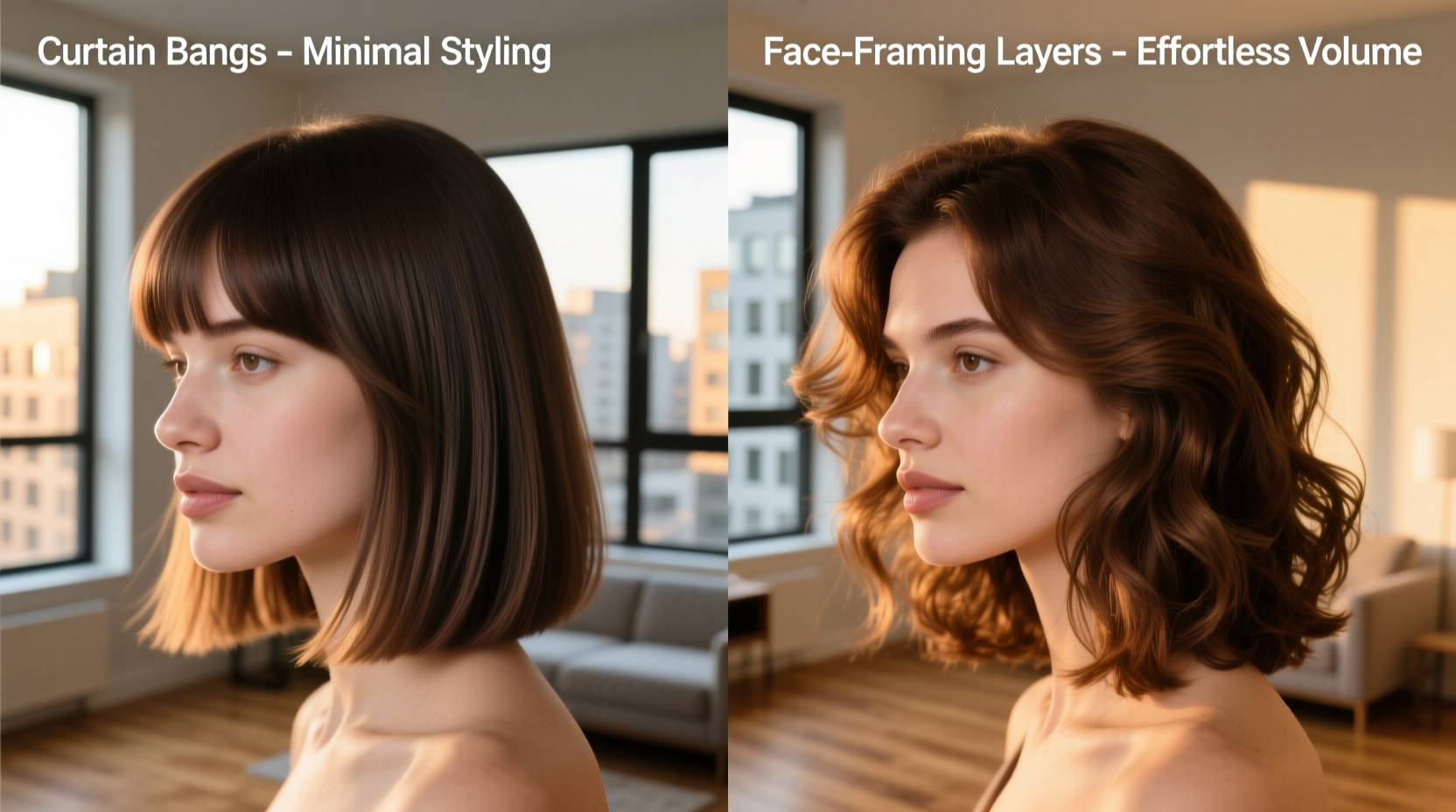
Hair trends come and go, but the ones that endure usually strike a balance between fashion and function. Curtain bangs and face framing layers have gained long-term popularity not only because they flatter a wide range of face shapes but also because they appear effortless. However, appearances can be deceiving. What looks like a tousled, wind-blown look in photos or on social media often involves deliberate styling behind the scenes.
Curtain bangs, characterized by their center-parted, feathered fringe that sweeps outward, require consistent attention to maintain their shape. Face framing layers, meanwhile, involve longer layers around the jawline and cheeks that blend seamlessly into the rest of the hair. These layers add volume and contour without the sharp lines of traditional bangs.
The key difference lies in frequency and precision. Curtain bangs need regular shaping and daily manipulation to avoid looking flat or frizzy. Face framing layers grow out more naturally and integrate well with existing lengths, making them inherently lower maintenance over time.
Understanding Curtain Bangs: Style and Demands
Curtain bangs originated in the 1970s and were revived in the 2020s thanks to celebrities like Kaia Gerber and Alexa Chung. They work best on medium to long hair and are typically cut slightly above the brow line, with longer ends blending into the sides of the hair.
Despite their \"effortless\" reputation, curtain bangs are high-maintenance in practice. Because they sit at the forehead—a prominent area—they must be styled every day to look intentional. Without proper care, they can fall flat, cling to the skin when oily, or develop an awkward middle part that emphasizes cowlicks.
Styling curtain bangs usually involves blow-drying with a round brush to create lift and gentle inward curl at the tips. Heat tools are often necessary, especially for straight or fine hair types. Even wavy or curly textures may require touch-ups to keep the fringe from puffing out unpredictably.
When Curtain Bangs Work Best
- Wavy or textured hair: Natural wave patterns help curtain bangs hold shape without excessive heat styling.
- Routine morning routines: Ideal for people who already wash and style their hair daily.
- Regular salon visits: Require trims every 4–6 weeks to prevent overgrowth and loss of shape.
For those with unpredictable schedules or minimal interest in daily styling, curtain bangs can become a burden rather than a beauty asset.
Face Framing Layers: The Low-Maintenance Contour
Face framing layers are strategically placed longer layers starting around the chin or cheekbone that gradually increase in length toward the back. Unlike blunt bangs, they don’t create a hard line across the forehead. Instead, they softly highlight the cheekbones, jawline, and eyes.
One of the biggest advantages of face framing layers is their adaptability. They grow out gracefully and don’t require frequent trims to maintain their appeal. As the layers lengthen, they simply transition into natural-looking movement rather than becoming unmanageable.
Styling is minimal. Most people find that air-drying with a bit of mousse or serum is enough to enhance the cut’s natural flow. Even on bad hair days, face framing layers rarely look messy—just lived-in. They also work well with updos, half-buns, and ponytails, where curtain bangs might escape and require constant readjustment.
“Face framing layers are my top recommendation for clients seeking a change without added maintenance. They enhance features while growing out beautifully.” — Jordan Lee, Master Stylist at Lumina Salon, Los Angeles
Versatility Across Hair Types
Face framing layers suit nearly all hair types:
- Straight hair: Adds movement and prevents a flat, one-dimensional look.
- Wavy hair: Enhances natural texture and creates soft separation around the face.
- Curly hair: Helps define curls near the face and reduces bulk at the crown.
- Fine hair: Creates the illusion of fullness without adding weight.
Because the cut integrates with the overall hairstyle, there’s no isolated section demanding special treatment—unlike curtain bangs, which act as a separate element requiring focused styling.
Direct Comparison: Maintenance Breakdown
To clearly see the differences in daily upkeep, here’s a side-by-side comparison of curtain bangs and face framing layers based on key factors.
| Maintenance Factor | Curtain Bangs | Face Framing Layers |
|---|---|---|
| Daily Styling Required? | Yes – blow-dry or heat tool needed to shape and lift | No – air-dries well; optional light styling |
| Heat Tool Dependency | High – especially for straight hair | Low – enhances but not required |
| Frequency of Trims | Every 4–6 weeks | Every 8–12 weeks |
| Growth Tolerance | Poor – loses shape quickly | Excellent – blends naturally as they grow |
| Bad Hair Day Survival | Fair – prone to flattening or frizz | Excellent – still looks intentional when tousled |
| Hair Type Flexibility | Moderate – works best with wave or body | High – suits all textures |
This table underscores a clear trend: face framing layers win in nearly every category related to ease of care. While curtain bangs offer a bold, defined look, they come at the cost of ongoing effort.
A Real-Life Example: Two Women, Two Choices
Consider Sarah and Mia, both professionals in their early 30s who wanted a fresh look last spring.
Sarah opted for curtain bangs. She loved the editorial vibe and how they softened her square jawline. At first, she enjoyed styling them with a round brush and volumizing spray each morning. But within two months, her enthusiasm waned. On busy mornings, skipping the blow-dry left her bangs limp and clinging to her forehead. By month four, she was pinning them back regularly. After five months and three salon visits, she grew them out, calling them “beautiful but exhausting.”
Mia chose face framing layers. Her stylist tapered the front sections to end just below her chin, blending them into her shoulder-length hair. She noticed immediate improvements in volume and face shape. What surprised her most was how little extra work it added. Even after workouts or travel, her hair looked good with minimal effort. Nine months later, she still loves the cut and hasn’t needed a major trim—just a light tidy-up.
Their experiences reflect a broader pattern: curtain bangs are high-reward but high-effort; face framing layers deliver subtle enhancement with lasting convenience.
Step-by-Step: How to Decide Which Cut Fits Your Lifestyle
Choosing between these two styles shouldn’t be based solely on trends or celebrity inspiration. Consider your actual routine. Follow this decision-making process:
- Assess your morning routine: Do you have 10–15 extra minutes daily for blow-drying specific sections? If not, curtain bangs may frustrate you.
- Evaluate your hair texture: Fine, straight hair will struggle to hold curtain bangs without product and heat. Wavy or thick hair handles them better.
- Review your salon schedule: Are you committed to bi-monthly trims? Curtain bangs need precision; face framing layers are more forgiving.
- Think about growth phases: Will you be okay with how the cut looks as it grows? Curtain bangs turn into awkward mid-length fringe; face framing layers simply become longer layers.
- Test with temporary options: Try clip-in curtain bangs or ask your stylist to temporarily point-cut layers around your face to preview the effect.
This structured approach helps eliminate emotional bias and focuses on sustainability—the true mark of a successful haircut.
Frequently Asked Questions
Can I combine curtain bangs with face framing layers?
Yes, many stylists pair the two for maximum impact. However, this increases maintenance. You’ll need to style both the bangs and the layered perimeter, so only choose this combo if you’re prepared for daily effort.
Do face framing layers make hair look thinner?
Not if cut correctly. Poor layering can remove too much weight and create stringiness, especially in fine hair. A skilled stylist will use subtle graduation and internal texturizing to maintain density while adding movement.
How short should face framing layers be?
Most flattering results occur when the shortest layer ends between the chin and collarbone. Going too short (above the chin) risks creating unintended bang-like effects that require more styling.
Tips for Minimizing Styling Time, Regardless of Cut
- Use a heat protectant with built-in shine enhancers to reduce the need for finishing products.
- Invest in a quality round brush and dryer for faster, more effective styling if you choose curtain bangs.
- Apply a small amount of dry shampoo at the roots of curtain bangs to extend volume between washes.
- For face framing layers, scrunch in a curl cream while damp to encourage natural definition without crunch.
- Carry a mini boar bristle brush for quick touch-ups during the day.
Conclusion: Prioritizing Practical Beauty
Beauty should enhance your life, not complicate it. While curtain bangs offer a striking, fashion-forward statement, they demand consistency, time, and resources to maintain. Face framing layers, on the other hand, provide elegance and dimension with far less daily intervention. They adapt to your lifestyle instead of dictating it.
If you value flexibility, low upkeep, and long-term wearability, face framing layers are the smarter choice. They deliver subtle yet powerful enhancements that endure through busy schedules, travel, and changing seasons. Curtain bangs remain a fantastic option—for those ready to commit to their upkeep.




 浙公网安备
33010002000092号
浙公网安备
33010002000092号 浙B2-20120091-4
Comments
No comments yet. Why don't you start the discussion?