
Choosing a new haircut often comes down to more than just aesthetics—it’s about how much time and effort you’re willing to invest in daily maintenance. Two of the most popular soft, flattering styles today are curtain bangs and face framing layers. Both offer movement, dimension, and a youthful lift around the face, but they differ significantly in upkeep, especially when managed at home.
For those who value low-maintenance routines or don’t have regular access to a stylist, understanding the practical differences between these two styles is essential. While both can enhance facial features and work across various hair types, their behavior between salon visits, styling requirements, and tolerance for grow-out vary widely.
This guide breaks down the real-world care demands of curtain bangs and face framing layers, helping you decide which cut aligns best with your lifestyle, hair texture, and styling habits—without relying on professional tools or expertise.
The Basics: What Are Curtain Bangs and Face Framing Layers?
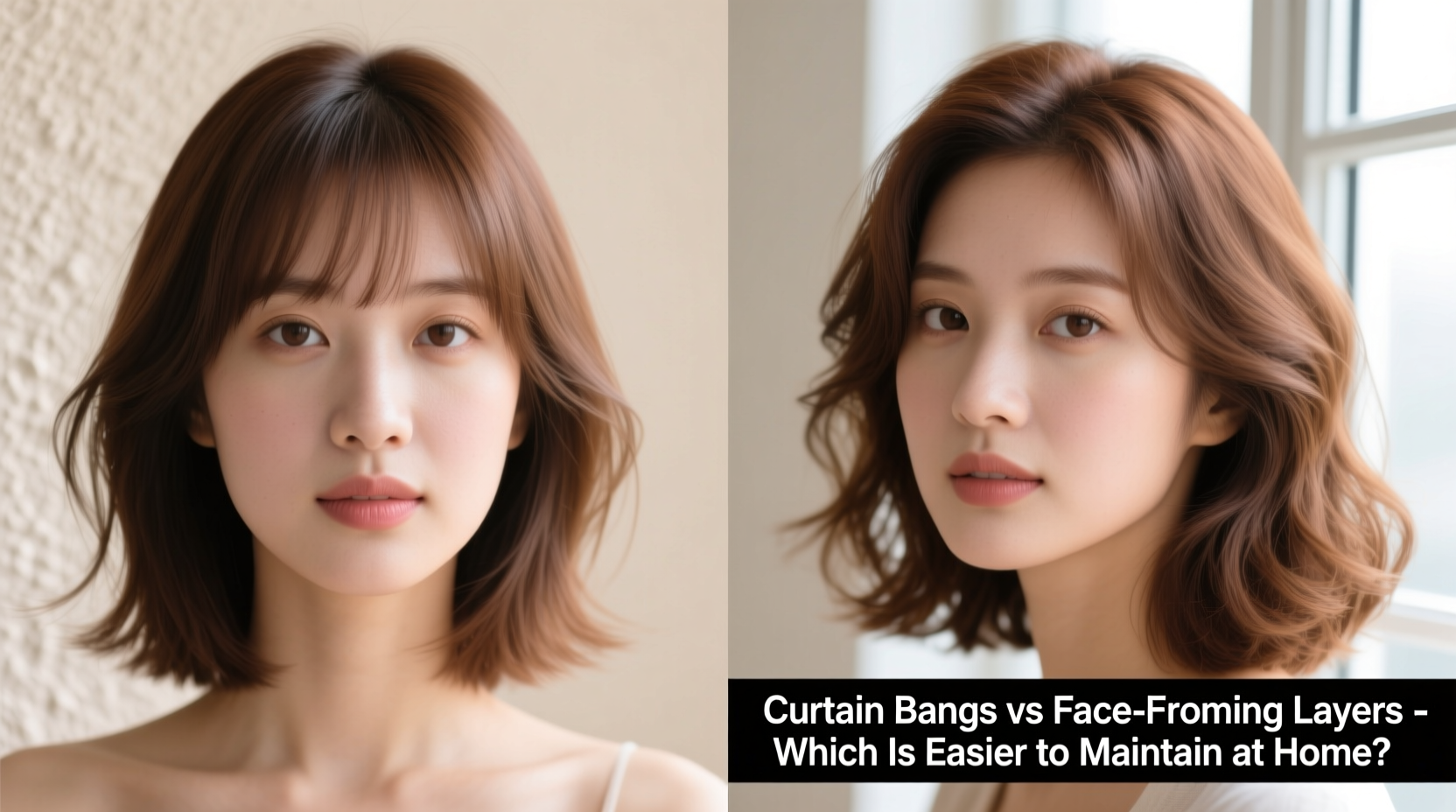
Curtain bangs are a modern take on traditional bangs. Instead of a blunt horizontal line across the forehead, curtain bangs are parted in the center and angled longer toward the sides, blending seamlessly into the rest of the hair. They typically start shorter at the center (just above or at brow level) and gradually lengthen toward the temples. This style works well for straight, wavy, and even some curly hair types, offering a soft, lived-in look.
Face framing layers, on the other hand, refer to long, strategically cut layers that begin around the chin or cheekbone and extend downward. These layers are designed to contour the jawline and cheekbones, adding volume and shape without removing too much length. Unlike curtain bangs, they don’t require a separate front section and grow out more naturally, making them ideal for those who want subtle enhancement without frequent trims.
While both styles add dimension, their maintenance needs diverge due to growth patterns, styling techniques, and the precision required to keep them looking intentional.
Daily Styling: Tools, Time, and Technique
One of the biggest factors in home maintenance is the daily routine. How long does it take to style each look? What tools are necessary? And how forgiving are they on bad hair days?
Curtain bangs demand consistent styling. Because they form a distinct shape at the front, they tend to fall flat or grow out awkwardly if not styled properly. Most wearers use a round brush and blow dryer to create volume at the roots and a gentle inward curl at the ends. On wash days, this adds 5–10 minutes to the routine. For those with thick or coarse hair, achieving the right bend may require heat protectant, mousse, or light-hold spray.
In contrast, face framing layers are largely air-dry friendly. Once cut correctly, they follow the natural flow of your hair. If you already have waves or a slight bend, these layers will accentuate movement without extra effort. Even on second- or third-day hair, a quick scrunch with texturizing spray or a light run-through with fingers is usually enough to refresh the shape.
Growth and Grow-Out: Which Style Tolerates Neglect?
How a haircut looks as it grows out is critical for those who stretch salon visits beyond six weeks. Here, face framing layers clearly win in terms of flexibility.
Curtain bangs go through an awkward phase quickly. Within 3–4 weeks, the center portion begins to hang over the eyes, losing its intended shape. Without regular trims (every 6–8 weeks), they either need to be pinned back or fully grown out—a process that can take months and involve several unflattering stages.
Face framing layers, however, grow out smoothly. The layered pieces simply blend into the rest of the hair, maintaining a natural, textured appearance. There’s no abrupt transition or need to hide growing sections. In fact, many stylists design these layers to evolve gracefully over time, ensuring the cut still looks intentional even after several months.
“Face framing layers are one of the most sustainable cuts for clients who want change without commitment. They adapt to growth, whereas curtain bangs require ongoing investment in time and salon visits.” — Dana Reyes, Master Stylist and Educator at Luxe Collective Salon
Maintenance Comparison: A Practical Breakdown
| Factor | Curtain Bangs | Face Framing Layers |
|---|---|---|
| Styling Time (Daily) | 5–10 minutes (blow-drying required) | 0–3 minutes (often air-dry ready) |
| Tools Needed | Round brush, blow dryer, heat protectant | Fingers, light product (optional) |
| Salon Visit Frequency | Every 6–8 weeks | Every 10–12 weeks |
| Awkward Growth Phase | Yes, noticeable by week 3–4 | Minimal to none |
| Hair Type Flexibility | Best for fine to medium, straight/wavy | Suits all textures, including curly |
| Home Trim Viability | Risky—easy to mis-cut center part | Possible with guidance, less precision needed |
The table highlights a clear trend: curtain bangs require more active participation from the wearer, while face framing layers integrate effortlessly into existing routines. For busy professionals, parents, or anyone prioritizing simplicity, the latter offers significant advantages.
Real-Life Example: Sarah’s Transition from Curtain Bangs to Layers
Sarah, a 34-year-old project manager, loved the soft glamour of curtain bangs she saw on social media. She got them cut in January, thrilled with the initial result. But by March, she was frustrated. Her morning routine had ballooned from 15 to nearly 30 minutes just to style her front section. On rainy days, the bangs frizzed and lost shape. By May, she was pinning them back daily.
At her next salon visit, she switched to face framing layers. “I expected to miss the bangs,” she said, “but within a week, I forgot I ever had them. My hair dries faster, looks better on tired mornings, and still frames my face beautifully.”
Her stylist trimmed the longest layer every 10 weeks, and Sarah used only a dime-sized amount of curl cream on damp hair. “It’s the first haircut I’ve had in years that actually gets better the longer I wait,” she added.
Sarah’s experience reflects a common pattern: enthusiasm for trendy cuts often meets reality when daily life intervenes. Face framing layers provided the aesthetic benefit she wanted—softness, structure, youthfulness—without the upkeep burden.
Step-by-Step Guide: Maintaining Each Style at Home
Whether you choose curtain bangs or face framing layers, proper at-home care makes a difference. Here’s how to manage each with minimal tools and expertise.
Maintaining Curtain Bangs at Home
- Wash Strategically: Wash hair upside down to boost root volume at the front. Avoid heavy conditioners on the bangs to prevent flattening.
- Blow-Dry with a Round Brush: Section off the bangs, use medium heat, and pull the brush downward, then roll it under at the ends for a soft flick.
- Cool Shot Finish: Seal the style with a blast of cool air to set the shape.
- Refresh Between Washes: Use dry shampoo at the roots and a flat iron on low heat to revive curl if needed.
- Trim Every 6 Weeks: Mark your calendar. Overgrown curtain bangs lose their shape fast.
Maintaining Face Framing Layers at Home
- Enhance Natural Texture: Apply a lightweight mousse or cream to damp hair, focusing on mid-lengths to ends.
- Diffuse or Air-Dry: Let layers dry naturally or use a diffuser on low to encourage bounce.
- Define Shape Weekly: Run a small amount of serum or paste through the front pieces to polish the frame.
- Use Texturizing Spray: On second-day hair, spritz at the roots and scrunch for volume.
- Trim Every 10–12 Weeks: Schedule less frequent visits. The cut grows out gracefully.
Which Hair Types Suit Each Style Best?
Your natural texture plays a major role in maintenance difficulty.
- Fine, Straight Hair: Curtain bangs can add volume and interest but may fall flat by midday. Face framing layers provide subtle body without weighing hair down.
- Medium, Wavy Hair: Ideal for both styles. Curtain bangs hold a soft curl well; layers enhance natural movement.
- Thick or Coarse Hair: Curtain bangs can become bulky or unruly without frequent trims. Face framing layers help reduce bulk while maintaining shape.
- Curly Hair: Curtain bangs are high-maintenance on curls—they shrink, puff, and require precise cutting to avoid triangle shapes. Face framing layers, when cut while dry and styled naturally, offer stunning definition and balance.
Stylists often recommend face framing layers for curly or coily textures because they respect the hair’s natural pattern. Curtain bangs, unless expertly cut and deeply committed to, can lead to frustration.
FAQ: Common Questions About Maintenance
Can I trim curtain bangs at home?
It’s possible, but risky. Without proper technique, you risk cutting them too short or creating an uneven center part. If attempting it, only remove a small amount (¼ inch max), use point-cutting scissors, and trim while hair is slightly damp and combed forward. However, for consistent results, leave it to a professional.
Do face framing layers work on short hair?
Yes, especially on bobs or lobs (long bobs). Layers can start at the chin and extend to shoulder length, adding softness and dimension without sacrificing overall length. This makes them versatile for shorter styles where curtain bangs might overwhelm the face.
Which style lasts longer between salon visits?
Face framing layers last significantly longer. Their purpose is to blend and evolve, whereas curtain bangs rely on precise length and shape. After 8 weeks, curtain bangs often look unkempt, while face framing layers still appear intentional and polished.
Final Verdict: Which Is Easier to Maintain at Home?
When comparing curtain bangs and face framing layers purely on ease of home maintenance, face framing layers are the clear winner.
They require less daily effort, adapt to natural hair texture, grow out gracefully, and allow for longer intervals between salon appointments. While curtain bangs offer a distinctive, editorial look, they come with a higher time and skill investment—especially for those without blow-drying experience or consistent routines.
That said, personal preference matters. If you enjoy styling your hair and love the look of soft, parted bangs, curtain bangs can be worth the effort. But if your goal is a fresh, flattering look that doesn’t demand attention every morning, face framing layers deliver beauty with far less burden.
Conclusion: Choose the Cut That Fits Your Life
The most beautiful haircut is the one you can live with—not just wear. Curtain bangs shine in photos and red-carpet moments, but face framing layers excel in real life: on rushed mornings, humid days, and everything in between.
Before committing, ask yourself: Do I enjoy styling my hair daily? Can I commit to regular trims? Does my hair type support the look long-term? Answer honestly, and let your lifestyle guide your choice.
If low maintenance, versatility, and timeless elegance top your list, face framing layers are likely your best match. They prove that sometimes, the most effortless choices make the boldest statement.




 浙公网安备
33010002000092号
浙公网安备
33010002000092号 浙B2-20120091-4
Comments
No comments yet. Why don't you start the discussion?