
High cheekbones are widely regarded as one of the most desirable facial features—offering natural definition, symmetry, and an effortlessly sculpted look. When styled intentionally, hair can elevate this feature even further. Among the most impactful choices is the type of fringe: curtain bangs or full fringe. Both have surged in popularity, but which one truly enhances high cheekbones more effectively? The answer depends on face shape, bone structure, and desired aesthetic. This guide dives deep into how each style interacts with prominent cheekbones, offering actionable advice, real-world examples, and professional insights to help you make an informed decision.
The Role of Hair in Framing Facial Structure
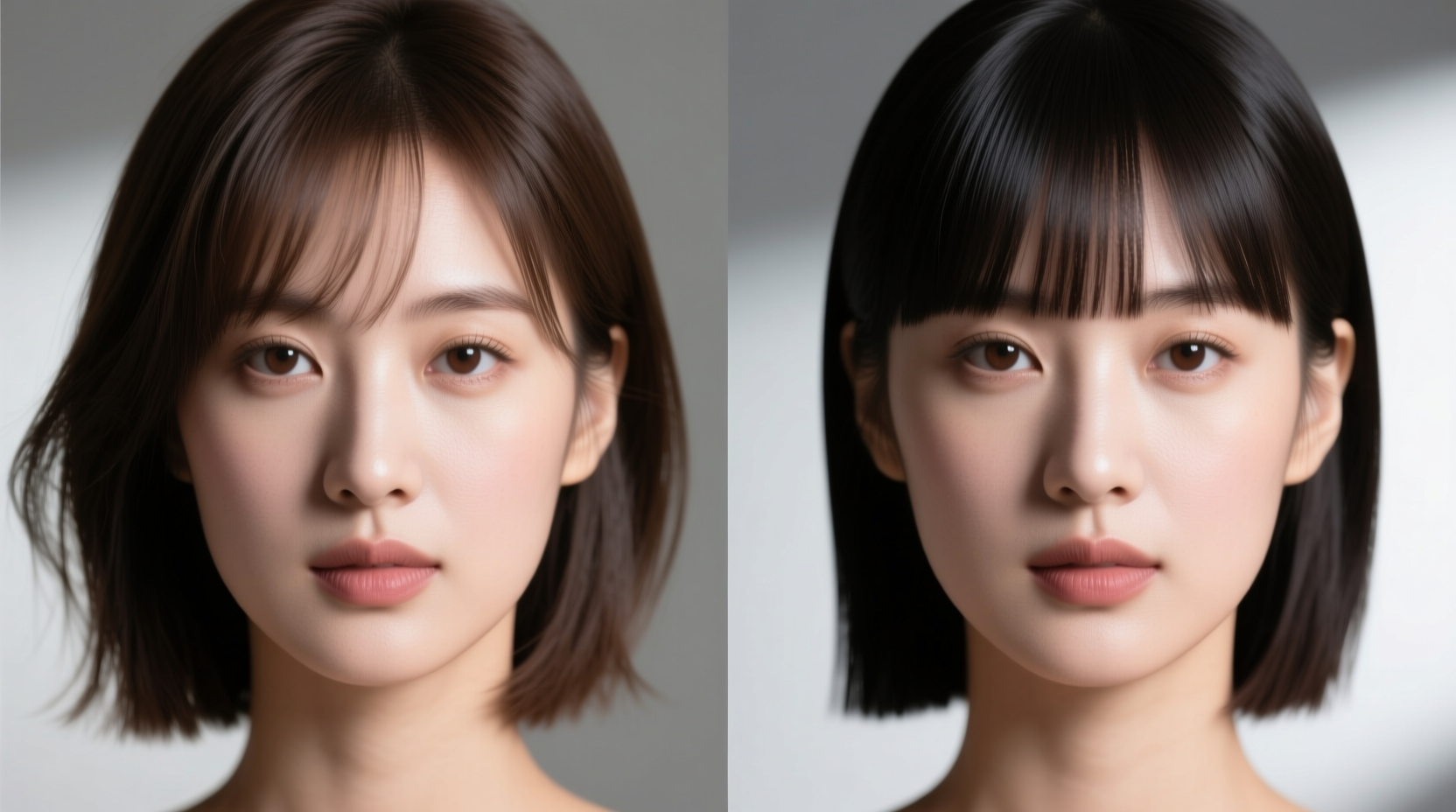
Hair isn’t just about fashion—it’s a powerful tool for balancing proportions and drawing attention to key facial features. High cheekbones benefit from styles that accentuate their prominence without overwhelming the face. A well-chosen fringe can soften the forehead, elongate the face, or add volume where needed, creating harmony between the upper and lower thirds of the face.
Cheekbone prominence varies across individuals, but when they sit higher on the face—closer to the eyes—they naturally catch light and define the midface. The goal of any fringe should be to complement, not compete with, this natural architecture. That’s where the distinction between curtain bangs and full fringe becomes critical.
Curtain Bangs: Definition and Characteristics
Curtain bangs, also known as \"shag bangs\" or \"center-parted bangs,\" are characterized by longer pieces at the sides that gradually shorten toward the center, framing the face like flowing curtains. They typically start at the temples, part in the middle, and blend seamlessly into the rest of the hair. Unlike blunt cuts, curtain bangs are soft, textured, and low-maintenance.
These bangs work exceptionally well for those seeking a romantic, effortless look. Because they don’t fully cover the forehead, they preserve some of its width while drawing focus inward toward the eyes and cheekbones. Their versatility makes them suitable for straight, wavy, or curly textures, and they adapt well to various lengths and layering techniques.
For individuals with high cheekbones, curtain bangs act as a visual funnel—guiding attention diagonally from the temples down toward the apples of the cheeks. This creates a dynamic interplay of angles that highlights bone structure without flattening it.
Why Curtain Bangs Work Well with High Cheekbones
- Diagonal Emphasis: The outward sweep of curtain bangs follows the natural slope from temple to cheekbone, enhancing angularity.
- Softened Forehead: They reduce the perceived height of the forehead without concealing it entirely, maintaining facial proportion.
- Dynamic Movement: As they shift with head motion, they create subtle shadows and highlights along the cheekbones.
- Face Lengthening Effect: Especially beneficial for square or round faces with strong cheekbones, helping elongate the visage.
“Curtain bangs are ideal for clients with defined cheekbones because they frame rather than mask. It’s like putting a spotlight on a sculpture.” — Lena Torres, Celebrity Hairstylist & Texture Specialist
Full Fringe: Bold, Blunt, and Centered
A full fringe (also called a blunt or straight-across fringe) spans the entire forehead, typically cut at or above the eyebrows. It creates a clean horizontal line that immediately draws attention to the upper face. Full fringes come in variations—thick, thin, wispy, or textured—but all share the common trait of covering more forehead area than curtain bangs.
This style delivers a bold, youthful, and often dramatic effect. It works particularly well for oval and heart-shaped faces, where it balances a wider chin or jawline. However, when applied to high cheekbones, the impact can vary significantly depending on execution.
The primary concern with full fringes on high-cheekboned faces is proportionality. A poorly placed or overly dense fringe can visually shorten the face, pushing focus upward and potentially diminishing the prominence of the cheekbones by creating too much top-weight.
When Full Fringe Enhances High Cheekbones
Despite potential pitfalls, a full fringe can complement high cheekbones under specific conditions:
- Textured or Feathered Edges: Softening the edge prevents a “blocky” look and allows light to reflect off the cheekbones beneath.
- Shorter Forehead: If the forehead is naturally short, a full fringe won’t overwhelm the face.
- Added Volume at Temples: Pairing with side volume or waves pulls attention diagonally downward, restoring balance.
- Asymmetrical Variations: Slightly angled or side-swept full fringes offer the density of a fringe with directional flow.
Comparative Analysis: Curtain Bangs vs Full Fringe
To clarify the differences in how these two styles interact with high cheekbones, here's a detailed comparison based on key factors.
| Feature | Curtain Bangs | Full Fringe |
|---|---|---|
| Forehead Coverage | Partial, tapered at sides | Complete, uniform |
| Face Shape Suitability | Oval, square, round, heart | Oval, heart, diamond |
| Effect on Cheekbones | Accentuates via diagonal framing | Can obscure if too heavy |
| Maintenance Level | Low to moderate | Moderate to high |
| Styling Flexibility | High (wear parted, swept, or pinned) | Moderate (limited movement) |
| Best For Highlighting | Eyes, cheekbones, midface | Eyes, brows, forehead |
As shown, curtain bangs offer greater flexibility and are less likely to interfere with the natural prominence of high cheekbones. Full fringes, while striking, require precision in length, thickness, and texture to avoid flattening the face’s dimensionality.
Real-World Example: Two Clients, One Feature
Consider two women with genetically similar high cheekbones but different facial proportions:
Client A: Has an oval face, medium forehead, and wavy shoulder-length hair. She opted for curtain bangs with light layering around the jaw. The result? Her cheekbones became instantly more pronounced, especially in profile lighting. The diagonal flow of the bangs created a V-shape that directed attention to her midface, giving her a model-like glow.
Client B: Also has high cheekbones but a shorter forehead and a longer jaw. She chose a thick, blunt full fringe. Initially pleased, she later reported that her face looked “flatter” and her cheekbones less defined. After consultation, her stylist softened the fringe with point-cutting techniques and added side volume. The revised version preserved the fringe’s charm while restoring facial depth.
This illustrates that even with the same defining feature, outcomes depend heavily on customization and holistic facial analysis.
Step-by-Step Guide: Choosing the Right Fringe for Your Cheekbones
Follow this sequence to determine which fringe style will best highlight your high cheekbones:
- Assess Your Face Shape: Determine if you have an oval, square, round, heart, or diamond face. Use a mirror and tape measure to map proportions.
- Evaluate Forehead Height: Measure from hairline to brow. If over 2.5 inches, curtain bangs are likely safer.
- Test Proportions with Tape: Use temporary adhesive tape to simulate both styles. Observe how each affects your cheekbone visibility.
- Consult a Stylist: Bring reference photos and discuss your goals. Ask for a trial cut with easily reversible length.
- Style and Observe: Wear the new fringe for 2–3 days under different lighting. Take photos to assess long-term appeal.
Checklist: Before You Cut
Use this checklist to ensure your fringe choice enhances—not detracts from—your high cheekbones:
- ✅ I know my face shape and its proportions.
- ✅ My forehead is not too short for a full fringe.
- ✅ I’m willing to maintain regular trims (every 4–6 weeks).
- ✅ I’ve tested the style with clips or tape.
- ✅ My hair texture supports the movement of curtain bangs (if choosing that).
- ✅ I have a trusted stylist experienced with structural cutting.
Frequently Asked Questions
Can curtain bangs work on curly hair with high cheekbones?
Absolutely. Curly curtain bangs add volume at the temples and frame the face beautifully. The natural bounce keeps them from lying flat, ensuring they enhance rather than hide cheekbones. Just avoid cutting them too short when dry—curls shrink!
Do full fringes age you if you have high cheekbones?
Not inherently, but a heavy, straight-across fringe can sometimes create a “dated” look if not modernized with texture. Opt for a slightly layered or feathered edge to keep the style fresh and youthful.
How do I prevent my fringe from looking flat and lifeless?
Use a volumizing mousse at the roots and blow-dry with a round brush. For curtain bangs, direct them outward; for full fringes, lift at the roots. Dry shampoo between washes adds grit and hold.
“The best fringe doesn’t just sit on your face—it moves with it, responding to expression and light. That’s how you know it’s working.” — Marcus Lee, Editorial Stylist, *Vogue* Contributor
Conclusion: Elevate Your Bone Structure with Intentional Style
High cheekbones deserve a hairstyle that honors their natural elegance. While both curtain bangs and full fringe can complement this feature, curtain bangs generally offer a more universally flattering, adaptable, and structurally sound option. Their ability to frame the face with soft angles makes them ideal for highlighting cheekbone prominence without sacrificing balance.
That said, personal preference and lifestyle matter. If you love the boldness of a full fringe, choose a version that’s textured, not too short, and paired with volume elsewhere to maintain facial harmony. Ultimately, the best fringe is one that feels authentic, requires manageable upkeep, and makes you feel confident every time you catch your reflection.




 浙公网安备
33010002000092号
浙公网安备
33010002000092号 浙B2-20120091-4
Comments
No comments yet. Why don't you start the discussion?