
A curved fourth toe—where the fourth toe beside the little toe bends abnormally—may seem like a minor cosmetic issue at first. But for many, it leads to discomfort, difficulty wearing shoes, or even long-term foot deformities. While some curvature is natural, significant bending can signal underlying conditions such as hammertoe, genetic predisposition, or biomechanical imbalances. Understanding the root causes, available treatments, and red flags that warrant medical attention is essential for preserving foot health and mobility.
Common Causes of a Curved Fourth Toe
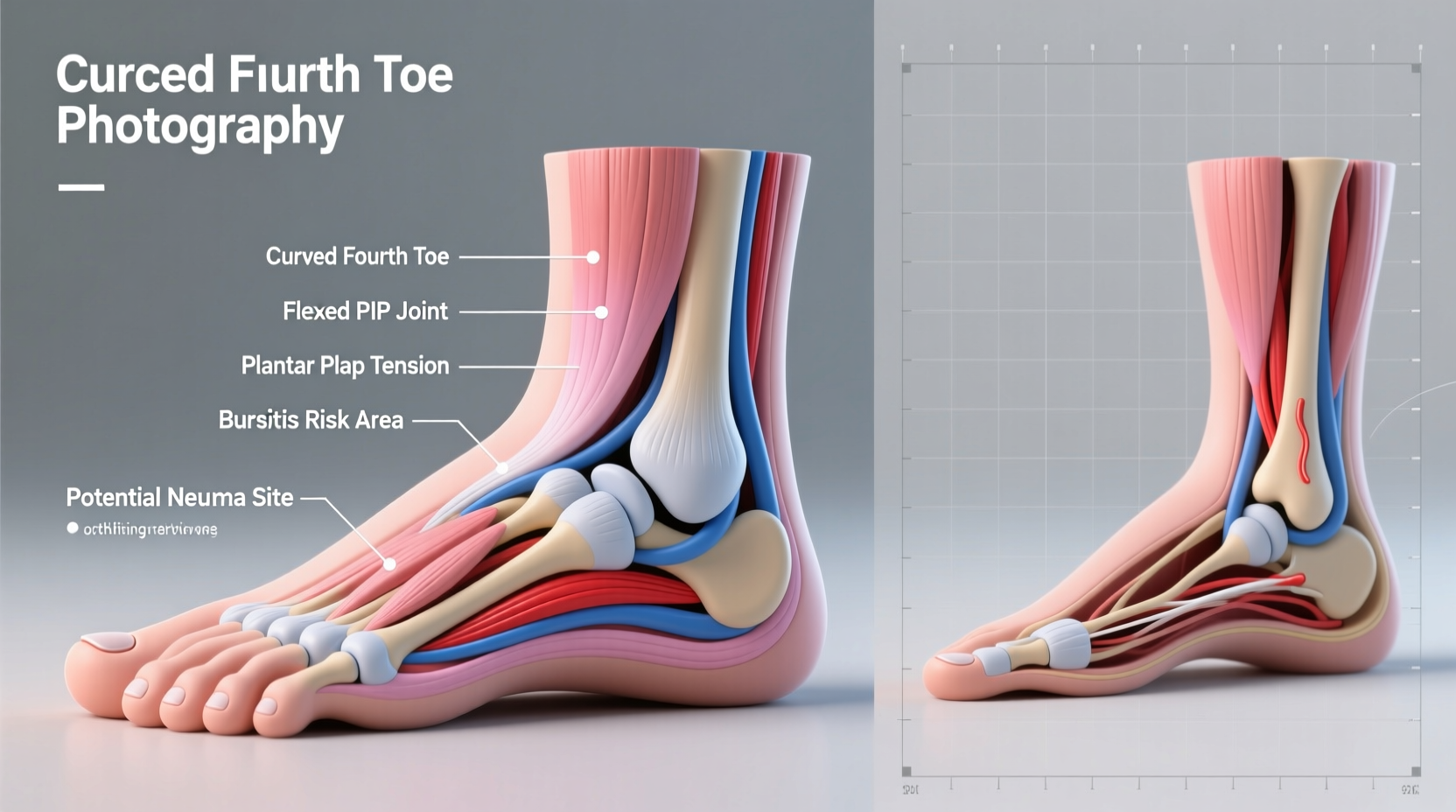
The curvature of the fourth toe typically develops due to structural or mechanical changes in the toe joints. The most frequent contributors include:
- Hammertoe formation: A common condition where the middle joint of the toe bends upward, creating a claw-like appearance. This often starts in the fourth or fifth toes due to pressure from tight footwear.
- Genetic factors: Some individuals inherit a foot structure that predisposes them to toe deformities. If family members have overlapping or bent toes, there’s a higher likelihood of developing similar issues.
- Muscle-tendon imbalance: When tendons pulling the toe upward overpower those pulling it downward (or vice versa), the toe can drift out of alignment over time.
- Footwear choices: Prolonged use of narrow, pointed, or high-heeled shoes forces toes into cramped positions, encouraging permanent contractures.
- Neuromuscular conditions: Disorders like Charcot-Marie-Tooth disease or cerebral palsy can alter muscle control in the feet, leading to progressive toe deformities.
- Trauma or injury: A past fracture or dislocation in the toe may heal improperly, resulting in a fixed curve.
When to Be Concerned: Warning Signs
Not every curved toe requires intervention. However, certain symptoms indicate that the condition is progressing and may need professional evaluation:
- Persistent pain during walking or standing
- Development of corns or calluses on the top or side of the toe
- Inability to straighten the toe manually (indicating a rigid deformity)
- Redness, swelling, or warmth around the joint—possible signs of inflammation or bursitis
- Difficulty finding comfortable footwear
- Changes in gait or limping to compensate for toe pain
“Early recognition of a rigid hammertoe can prevent unnecessary surgery. Once the joint loses flexibility, conservative measures become less effective.” — Dr. Lena Reyes, Podiatrist and Foot Biomechanics Specialist
Treatment Options Based on Severity
Management of a curved fourth toe depends on whether the deformity is flexible (can be straightened by hand) or rigid (fixed in position). Treatment ranges from lifestyle modifications to surgical correction.
Flexible Curvature: Conservative Approaches
If the toe still moves and can be passively aligned, non-invasive strategies are usually effective:
- Wider footwear: Shoes with a broad toe box allow toes to lie naturally without compression.
- Toe spacers and splints: Silicone or gel devices worn during the day or night can gently reposition the toe and relieve pressure.
- Orthotic inserts: Custom or over-the-counter insoles correct abnormal foot mechanics that contribute to toe strain.
- Stretching exercises: Daily toe stretches improve joint mobility and strengthen supporting muscles.
- Corn and callus care: Regular filing and protective pads reduce friction-related skin damage.
Rigid Deformity: Advanced Interventions
When the toe remains bent despite manual manipulation, more aggressive treatment may be necessary:
- Corticosteroid injections: Reduce inflammation in the affected joint, providing temporary pain relief.
- Physical therapy: Guided rehabilitation improves foot function and delays progression.
- Surgical correction: Procedures such as phalangeal fusion, tendon transfer, or joint resection can realign the toe permanently. Recovery typically takes 4–8 weeks, depending on the technique used.
Step-by-Step Guide to Managing a Curved Fourth Toe
Follow this practical timeline to address the issue effectively:
- Week 1–2: Assess and adjust footwear. Switch to low-heeled, wide-toe-box shoes. Eliminate high heels and pointed styles.
- Week 3–4: Begin daily care routine. Use toe spacers, perform gentle stretches (like towel curls and marble pickups), and file down thickened skin.
- Month 2: Evaluate progress. If pain persists or the toe feels stiffer, schedule a visit with a podiatrist.
- Month 3: Consider orthotics or imaging. A foot scan or X-ray can reveal joint misalignment or early arthritis.
- Month 4+: Explore advanced options. Discuss steroid injections or surgical referral if conservative methods fail.
Do’s and Don’ts: Quick Reference Table
| Do’s | Don’ts |
|---|---|
| Wear shoes with a wide toe box | Wear narrow or high-heeled shoes regularly |
| Use silicone toe protectors | Ignore persistent toe pain |
| Perform toe-strengthening exercises | Trim corns aggressively at home |
| See a podiatrist early if stiffness develops | Delay treatment until swelling or ulceration occurs |
| Keep feet dry and clean to prevent infection | Use adhesive pads that restrict circulation |
Real-Life Example: Sarah’s Experience with Hammertoe Progression
Sarah, a 42-year-old teacher, noticed her fourth toe gradually curling inward over two years. Initially, she dismissed it as a quirk of aging. She wore supportive flats but occasionally used dressy heels for school events. Over time, a hard bump formed on the top of her toe, causing pain when laced shoes rubbed against it. By the time she consulted a podiatrist, the joint had become rigid. An X-ray confirmed a fixed hammertoe with mild joint arthritis. After trying custom orthotics and splinting without improvement, she opted for minimally invasive surgery. Six weeks post-op, she resumed normal activities with significantly improved comfort and shoe fit. Her case highlights how seemingly minor changes can escalate without early attention.
FAQ: Common Questions About Curved Fourth Toes
Can a curved fourth toe correct itself without treatment?
No. Mild curvature may remain stable, but it will not reverse on its own. Without addressing contributing factors like footwear or muscle imbalance, the condition often worsens over time.
Is surgery the only option for a rigid curved toe?
While surgery is the most definitive solution for rigid deformities, some patients find relief through accommodative measures like custom shoes and padding. However, these do not correct the alignment—they only manage symptoms.
Can children develop a curved fourth toe?
Yes, though less commonly. Pediatric cases are often linked to congenital conditions or neuromuscular disorders. Early evaluation by a pediatric podiatrist is crucial to guide growth and prevent long-term complications.
Conclusion: Take Action Before Discomfort Becomes Disability
A curved fourth toe is more than a visual anomaly—it can disrupt your daily life, limit footwear choices, and lead to secondary foot problems like bunions or metatarsalgia. The key is proactive management. Address changes early with proper footwear, targeted exercises, and professional guidance. Ignoring subtle signs today could mean facing surgery tomorrow. Your feet carry you through life; give them the care they deserve.




 浙公网安备
33010002000092号
浙公网安备
33010002000092号 浙B2-20120091-4
Comments
No comments yet. Why don't you start the discussion?