
When selecting a luxury or everyday wristwatch, most buyers focus on brand, movement, and dial design. Yet one subtle but critical component often overlooked is the watch crystal—the transparent cover protecting the dial. While it may seem like a minor detail, the shape of the crystal—curved versus flat—impacts not only the visual profile of the watch but also its durability, legibility, comfort, and even historical authenticity. As watchmakers continue to innovate with materials and forms, understanding the real-world implications of curved versus flat crystals becomes essential for informed collecting and wearing.
Understanding Watch Crystals: Function and Materials
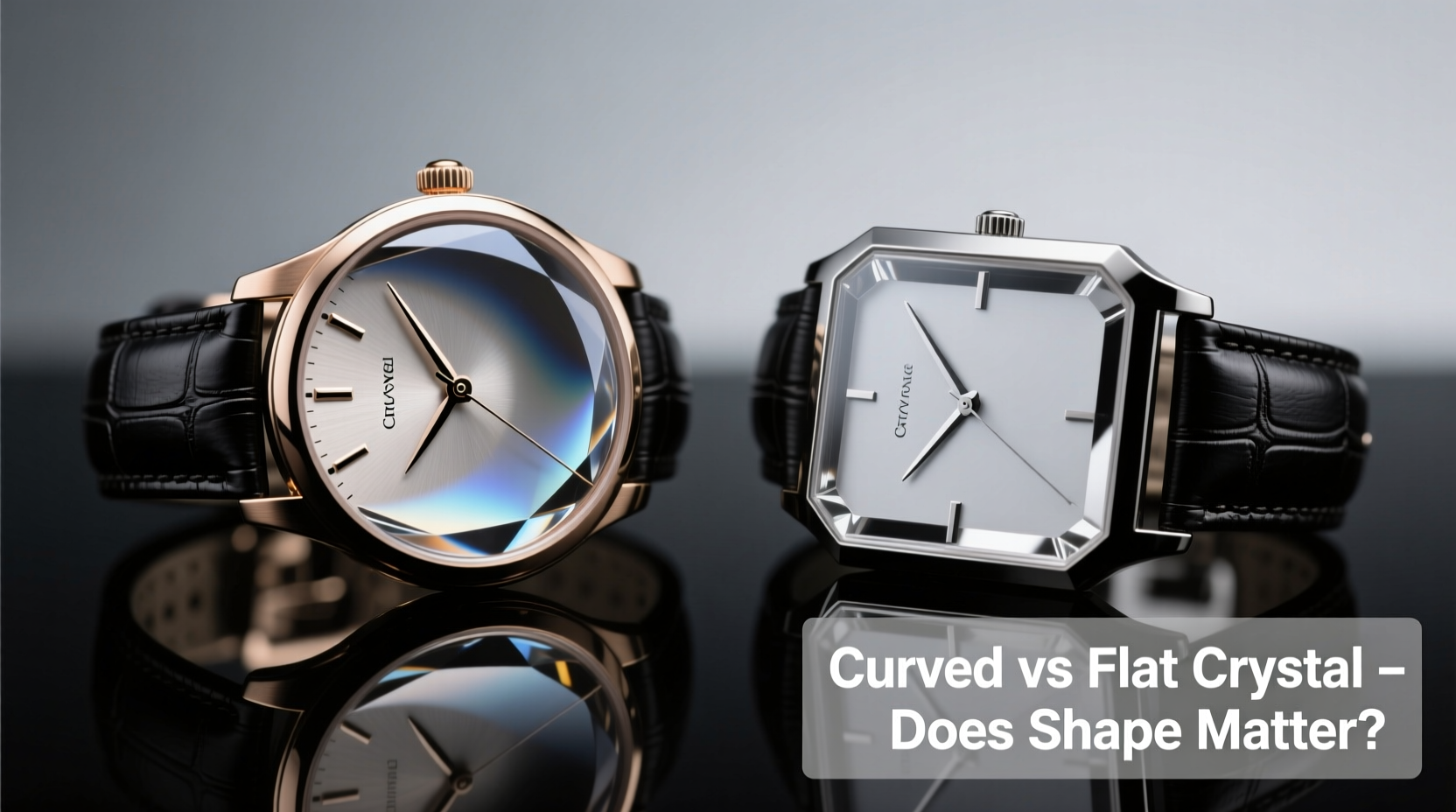
A watch crystal serves as the first line of defense against dust, moisture, and impact. Historically made from acrylic (plexiglass), modern crystals are typically crafted from either sapphire or mineral glass. Sapphire, while significantly more scratch-resistant, is more brittle and expensive. Mineral glass offers a middle ground in cost and resilience, while acrylic remains popular for vintage-style watches due to its flexibility and nostalgic appeal.
The shape—whether domed (curved) or flat—is independent of the material but interacts with it in meaningful ways. A curved sapphire crystal, for example, requires more complex machining than a flat one, increasing production costs. Meanwhile, a domed acrylic crystal can be formed using heat and molds, making it easier and cheaper to produce.
“Crystal geometry influences how light enters the dial and how the watch sits on the wrist. It’s not just about protection—it’s about experience.” — Daniel Rivas, Horological Designer at ChronoForm Studio
Aesthetic and Design Implications
The curvature of a watch crystal dramatically alters the timepiece’s silhouette. Domed crystals create a vintage-inspired profile, echoing mid-20th-century designs from brands like Rolex, Omega, and Hamilton. This gentle arch gives the watch a softer, more organic presence on the wrist, often enhancing its classic appeal.
In contrast, flat crystals lend a modern, minimalist aesthetic. They align cleanly with contemporary design trends favoring sharp lines and low profiles. Watches like the Grand Seiko models or many dive watches use flat sapphire crystals to emphasize precision and technical clarity.
Durability and Practical Performance
From a functional standpoint, both shapes have trade-offs. Curved crystals tend to deflect glare better at certain angles due to their non-reflective curvature, but they can distort the dial near the edges—especially in larger watches. Flat crystals offer consistent legibility across the entire face but are more prone to visible reflections under direct light.
Impact resistance varies too. Acrylic domed crystals absorb shocks well and are less likely to shatter, though they scratch more easily. Sapphire crystals, whether flat or curved, resist scratches but can chip or crack under sudden force. Notably, flat sapphire crystals distribute impact more evenly, whereas curved ones may concentrate stress at the peak of the dome.
| Feature | Curved Crystal | Flat Crystal |
|---|---|---|
| Glare Resistance | Better at off-angles | Pronounced reflections |
| Legibility | Slight edge distortion | Uniform across dial |
| Scratch Resistance | Depends on material | Depends on material |
| Impact Absorption | Better with acrylic | More even distribution |
| Design Era Association | Vintage/classic | Modern/minimalist |
Comfort and Wrist Presence
The shape of the crystal affects how the watch feels during wear. A highly domed crystal can elevate the profile of the watch, potentially causing it to catch on sleeves or snag during daily activities. This is particularly relevant for office workers or those who type frequently.
Conversely, flat crystals allow for a lower center of gravity and tighter fit under cuffs. However, some enthusiasts argue that a slightly domed crystal enhances the three-dimensional depth of the dial, creating a more engaging viewing experience. The curve acts like a lens, subtly magnifying the center of the dial and drawing the eye inward.
For watches worn during physical activity—such as field or dive watches—a flat crystal is often preferred for its robustness and reduced snag risk. Yet dress watches with domed crystals remain popular for formal occasions where elegance trumps practicality.
Real Example: The Rolex Datejust vs. the Sinn 104
Consider two respected timepieces: the Rolex Datejust and the Sinn 104. The Datejust features a gently domed sapphire crystal, contributing to its timeless elegance. The curve complements the cyclops lens over the date window and softens the overall appearance. In contrast, the Sinn 104 uses a flat sapphire crystal, reinforcing its no-nonsense, tool-watch identity. The flat surface allows for optimal readability and durability in harsh environments.
This contrast illustrates how crystal shape supports brand philosophy. Rolex leans into heritage and refinement; Sinn prioritizes function and clarity. Neither is objectively superior—but each choice serves a purpose.
Maintenance and Long-Term Care
Caring for curved and flat crystals differs slightly. Domed crystals, especially acrylic ones, benefit from occasional polishing with specialized compounds to remove fine scratches. Their shape means polish must be applied evenly to avoid flattening the curve. Flat crystals are easier to clean and maintain, with standard microfiber cloths effectively removing smudges and debris.
For sapphire crystals, both types require minimal maintenance beyond regular wiping. However, because curved sapphire crystals are thicker at the center, they may add slight weight to the watch over time—an often-overlooked factor in all-day comfort.
Step-by-Step Guide: Choosing Based on Your Lifestyle
- Assess your primary use: Is the watch for formal events, outdoor adventures, or daily wear?
- Evaluate wrist comfort: Try on watches with both crystal types to see which feels more natural.
- Consider lighting conditions: If you work under bright lights, test glare performance.
- Think long-term: Will you prefer a classic look that ages gracefully, or a modern aesthetic that stays current?
- Check serviceability: Domed crystals may be harder to replace if custom-shaped; verify availability with the manufacturer.
Frequently Asked Questions
Does a curved crystal make a watch look bigger?
Yes, slightly. The dome creates optical depth and can magnify the dial, especially near the center. This effect can make the watch appear larger or more prominent on the wrist.
Are flat crystals more scratch-resistant than curved ones?
No—scratch resistance depends on the material (acrylic, mineral, sapphire), not the shape. However, flat crystals may show scratches more uniformly, while curved ones can scatter light in a way that hides minor marks.
Can I replace a curved crystal with a flat one?
Technically possible in some cases, but not recommended. Doing so alters the watch’s original design, water resistance, and potentially its value—especially with collectible models. Always consult a professional watchmaker before modifying components.
Final Thoughts: Does the Shape Really Matter?
The answer is both simple and nuanced: yes, the shape matters—but not in the way most assume. It doesn’t determine superiority. Instead, it reflects intent. A curved crystal speaks to tradition, artistry, and visual warmth. A flat crystal signals precision, modernity, and functional clarity.
Ultimately, the best choice depends on personal preference, lifestyle, and the story you want your watch to tell. Whether you’re drawn to the graceful arc of a vintage-inspired dome or the crisp plane of a contemporary flat crystal, understanding the implications empowers you to make a decision aligned with both taste and practicality.




 浙公网安备
33010002000092号
浙公网安备
33010002000092号 浙B2-20120091-4
Comments
No comments yet. Why don't you start the discussion?