
When shopping for a pendant—whether it’s a necklace with sentimental meaning, a symbol of faith, or a bold fashion statement—you’re often faced with two choices: go the custom route or pick up a ready-made stock option. Custom pendants can cost two, three, even five times more than their off-the-shelf counterparts. So, is that premium justified? Or are you simply overpaying for branding and craftsmanship hype?
The truth lies somewhere in between. The real answer depends on what you value: personalization, speed, budget, durability, or emotional significance. Let’s break down the key differences, costs, and long-term implications so you can make an informed decision without feeling like you’ve been taken advantage of.
Understanding the Core Differences
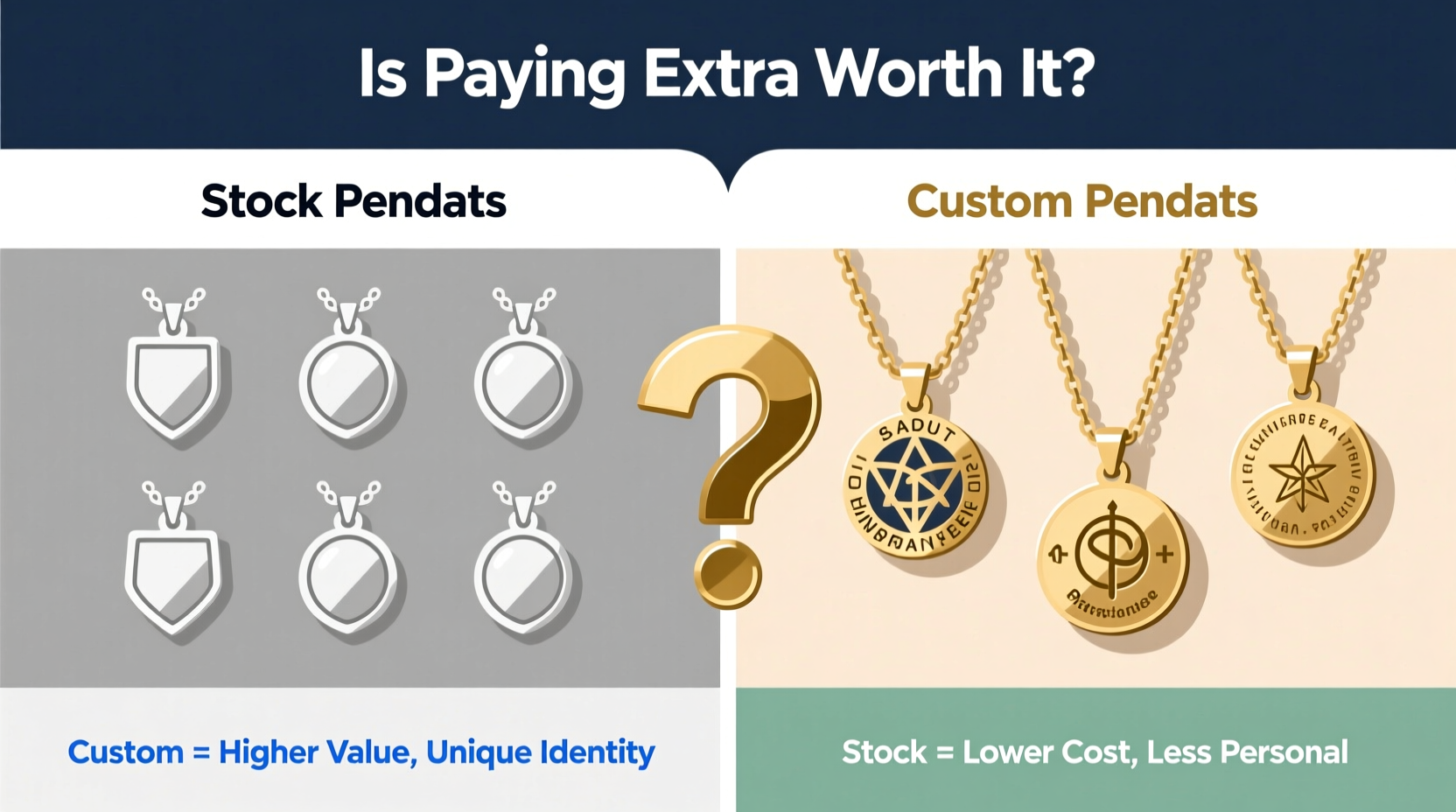
At first glance, a stock pendant and a custom one may look nearly identical. But the processes behind them are worlds apart.
- Stock pendants are mass-produced using molds or CNC machines. They’re designed for broad appeal, available immediately, and priced competitively.
- Custom pendants are made-to-order. You choose the design, materials, engraving, dimensions, and finish. Each piece is unique and crafted individually, often by hand.
This fundamental difference shapes everything from price to turnaround time. Mass production reduces per-unit cost, while customization demands labor, specialized tools, and design input—all of which add up.
Cost Breakdown: What Are You Actually Paying For?
Let’s compare a typical silver pendant scenario:
| Feature | Stock Pendant | Custom Pendant |
|---|---|---|
| Average Price (Sterling Silver) | $45–$90 | $150–$350+ |
| Design Options | Limited (pre-designed) | Unlimited (your idea) |
| Production Time | Ready to ship or 1–3 days | 2–6 weeks |
| Material Quality | Standard grade (may vary) | Often higher purity, traceable |
| Personalization | Basic engraving (if any) | Full design + text + symbols |
| Resale Value | Low (common design) | Moderate to high (unique piece) |
The markup on custom pendants isn’t just about materials. You’re paying for design consultation, artisan labor, prototype modeling (often in wax or CAD), casting, polishing, and quality checks. One jeweler might spend 10–15 hours on a single piece. That kind of attention doesn’t come cheap—but it also doesn’t automatically mean you’re being ripped off.
When Custom Is Worth Every Penny
There are clear scenarios where paying extra makes perfect sense:
- You want something deeply personal. A pendant with your child’s handwriting, a family crest, or coordinates of a meaningful location cannot be bought off the shelf. These carry emotional weight that far exceeds monetary value.
- You need a specific size, metal, or feature. Stock pendants rarely offer options like recycled gold, conflict-free gemstones, or hypoallergenic alloys. Custom work lets you control every detail.
- You’re creating heirloom jewelry. If the piece is meant to be passed down, investing in craftsmanship ensures durability and timeless design.
“Custom jewelry isn’t just about aesthetics—it’s about intention. When someone chooses every element, the piece becomes a narrative.” — Lena Torres, Master Jeweler & Designer, Atelier Noveau
Mini Case Study: The Wedding Pendant That Couldn’t Be Bought
Sarah wanted a pendant for her wedding day featuring her late mother’s initials intertwined with her fiancé’s. She searched online stores for weeks but found nothing close. Eventually, she commissioned a local jeweler to create a delicate silver locket with engraved initials and a tiny floral motif matching her bouquet.
The final cost was $280—nearly triple what she’d budgeted. But on her wedding day, the pendant wasn’t just an accessory. It was a tribute, a comfort, and a story. Five years later, she still wears it daily. “I wouldn’t trade it for anything,” she says. “It’s not just jewelry. It’s memory made tangible.”
When Stock Pendants Make More Sense
Not every occasion calls for a bespoke piece. Stock pendants shine when:
- You need something quickly (e.g., last-minute gift).
- Budget is tight, but you still want quality.
- The design is simple and widely available (like a solitaire star or cross).
- You’re testing a style before committing to a custom version.
Many stock pendants today are made with excellent craftsmanship. Advances in 3D printing and precision casting mean even mass-produced pieces can have fine details and durable finishes. Some brands even offer semi-custom options—like choosing chain length or adding short engravings—for a modest upcharge.
Expert Tip: The Hybrid Approach
You don’t always have to choose extremes. Many jewelers offer “semi-custom” services: take a stock base design and modify it slightly—change the font, add a stone, resize it. This gives you personalization at a fraction of full custom cost.
How to Avoid Being Overcharged
The custom jewelry market isn’t regulated like pharmaceuticals or finance. That means pricing varies wildly. Here’s how to protect yourself:
- Get multiple quotes. Compare at least three jewelers for the same design. Look beyond price—check reviews, portfolio, and communication quality.
- Verify material authenticity. Ensure they provide a certificate for precious metals or gemstones. Sterling silver should be stamped .925; gold should indicate karat (e.g., 14K).
- Ask about revisions. How many design changes are included? Some charge per revision, which can inflate costs unexpectedly.
- Beware of hidden fees. Casting, mold-making, and rush orders often come with extra charges. Clarify upfront.
Checklist: Smart Questions Before Ordering Custom Jewelry
- Can I see a digital rendering or wax model before casting?
- What’s included in the quoted price?
- Do you offer a satisfaction guarantee or return policy?
- How long will it take from approval to delivery?
- Is the metal ethically sourced?
- Can I provide my own design sketch or photo reference?
FAQ
Is a custom pendant more durable than a stock one?
Not necessarily. Durability depends more on material quality and wear habits than whether it’s custom. However, custom pieces often use thicker metal and better finishing because they’re made for longevity.
Can I customize a stock pendant later?
Sometimes. Many jewelers can engrave or add small elements to stock pieces. But structural changes (like resizing or reshaping) usually require remaking it, which may cost nearly as much as a new custom piece.
Do custom pendants hold their value?
They rarely appreciate like investment-grade jewelry, but well-crafted custom pieces retain sentimental and resale value among collectors or niche buyers. Unique designs often attract higher prices in secondhand luxury markets than generic stock items.
Conclusion: Making the Right Choice for You
The question isn’t whether custom pendants are “worth it” in absolute terms—it’s whether they’re worth it to you. If you value individuality, emotional connection, and lasting craftsmanship, then yes, the extra cost is justified. But if you’re looking for a stylish, affordable accessory for everyday wear, a well-chosen stock pendant can serve you beautifully.
Don’t let guilt or marketing pressure drive your decision. There’s no “right” answer—only the one that aligns with your needs, values, and budget. Whether you choose custom or stock, the best pendant is the one that feels meaningful when you put it on.




 浙公网安备
33010002000092号
浙公网安备
33010002000092号 浙B2-20120091-4
Comments
No comments yet. Why don't you start the discussion?