
For students, artists, and office professionals alike, the humble pencil case is more than just a container—it’s a daily companion. Yet a persistent debate lingers: should your pencil case prioritize function over form, or can it deliver both? Many assume that \"functional\" automatically means bland, boxy, or uninspiring—something strictly utilitarian with no room for charm. But this assumption overlooks a growing trend in stationery design: high-performance tools don’t have to be visually dull. In fact, the best designs merge practicality with personality.
The truth is, choosing between cute and functional isn't an either/or decision. With thoughtful design, materials, and organization, you can have a pencil case that’s both efficient and expressive. Let’s explore what defines functionality, how aesthetics influence usability, and how modern stationery brands are redefining what a practical tool can look like.
What Makes a Pencil Case Truly Functional?
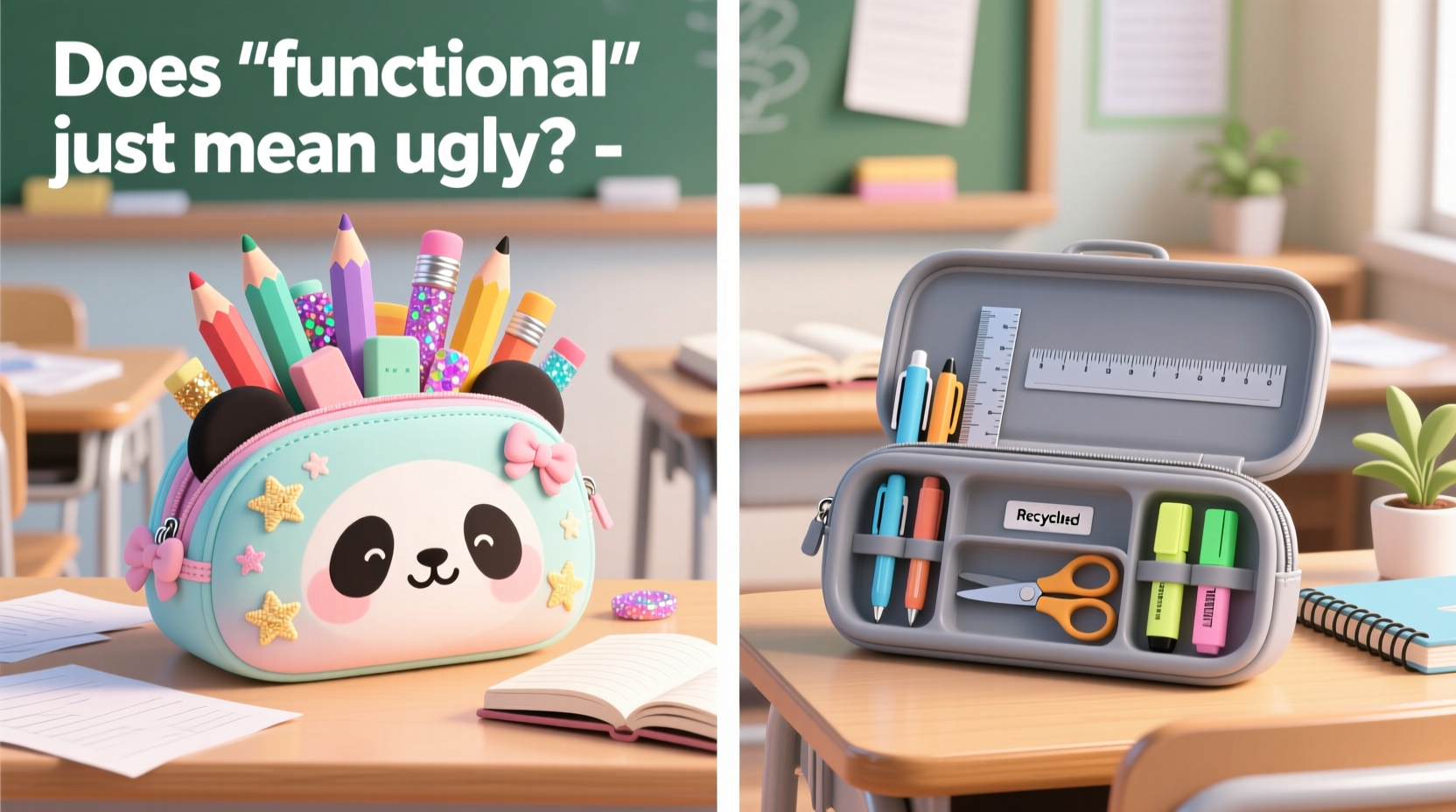
Functionality isn’t just about holding pens and pencils. A truly functional pencil case supports your workflow, protects your tools, and adapts to your lifestyle. Key features include:
- Durability: Resistant to wear, tear, and spills.
- Organization: Compartments, dividers, or loops that keep items sorted.
- Accessibility: Easy to open and close; contents are visible or quickly retrievable.
- Portability: Lightweight, compact, and easy to carry in a backpack or tote.
- Protection: Cushioning or rigid structure to prevent damage to delicate tools like fountain pens or colored pencils.
A case might be adorable with pastel prints and plush fabric, but if it lacks internal structure and everything tangles together, it fails its primary purpose. Conversely, a hard-shell case with perfect compartments but zero aesthetic appeal may sit unused because it feels impersonal or joyless.
The Psychology of Cute: Why We’re Drawn to Aesthetic Stationery
There’s real science behind our attraction to cute designs. Research in emotional design shows that aesthetically pleasing objects enhance user satisfaction and even improve performance. When you enjoy using a tool, you're more likely to use it consistently and care for it properly.
Cute pencil bags—featuring animal shapes, kawaii characters, floral patterns, or soft textures—trigger positive emotional responses. They add a touch of playfulness to routine tasks, making studying or working feel less monotonous. For students, especially younger ones, a charming case can increase motivation and engagement with learning materials.
“Design that evokes joy isn’t frivolous—it’s a form of cognitive support. When people connect emotionally with their tools, they take better care of them.” — Dr. Lena Park, Cognitive Ergonomics Researcher
But emotion shouldn’t override efficiency. The challenge lies in finding a balance where delight and dependability coexist.
Comparing Cute vs Functional: A Side-by-Side Breakdown
| Feature | Cute Pencil Bag (Soft/Fabric) | Functional Pencil Case (Hard/Structured) |
|---|---|---|
| Aesthetic Appeal | High – often features trendy prints, embroidery, or 3D elements | Low to Moderate – typically minimalist or neutral colors |
| Durability | Moderate – fabric may fray or stain over time | High – plastic, metal, or reinforced fabric resists damage |
| Organization | Limited – often one main compartment | Excellent – includes elastic loops, mesh pockets, removable trays |
| Portability | High – lightweight and flexible | Moderate – can be bulky or rigid |
| Tool Protection | Poor – soft material offers little impact resistance | High – rigid walls prevent crushing and rolling |
| User Satisfaction | High – emotionally engaging | Variable – depends on personal preference for minimalism |
This comparison reveals a trade-off, but not an inevitable compromise. The market now offers hybrid models that blend the best of both worlds—cases with structured interiors wrapped in cheerful, artistic exteriors.
Real Example: From Chaos to Clarity – Maya’s Art Supply Upgrade
Maya, a college art student, used a plush cat-shaped pencil bag she loved for its whimsy. It held all her favorite gel pens and fine liners, but after three months, the seams began to split, ink caps got lost, and her markers leaked onto her sketchbooks. Frustrated, she switched to a plain black hard-case organizer. While more durable, she found herself leaving it behind because it “felt cold” and didn’t reflect her creative identity.
Then she discovered a Japanese-designed case: transparent front panel showing colorful interior trays, pastel exterior with cloud embroidery, and a sturdy zipper. It had dedicated slots for every tool, stood upright on her desk, and still made her smile. Her productivity improved—not just because of better organization, but because she *wanted* to use it every day.
Her experience underscores a key insight: functionality and fun aren’t opposites. They’re complementary when designed with intention.
How to Choose a Pencil Case That’s Both Cute and Functional
You don’t need to sacrifice one quality for the other. Use this checklist to find a case that delivers on both fronts:
- ✅ Has at least two internal compartments or organizational features
- ✅ Made from water-resistant or wipeable material (e.g., polyester, nylon, coated canvas)
- ✅ Features a secure closure (double zipper, snap button, or magnetic flap)
- ✅ Includes a rigid base or frame to prevent flattening
- ✅ Reflects your personal style without compromising accessibility
- ✅ Fits comfortably in your bag without adding bulk
Brands like Muji, Kokuyo, and JetPens have pioneered this fusion, offering sleek yet cheerful designs. Independent creators on platforms like Etsy also craft handmade cases with custom layouts and unique fabrics, proving that individuality and efficiency can coexist.
FAQ: Your Top Questions Answered
Can a cute pencil bag be durable enough for daily use?
Yes—but check the materials and construction. Look for reinforced stitching, quality zippers, and fabrics like ripstop nylon or waxed canvas. Avoid overly decorative elements like glued-on patches or thin felt, which may not withstand frequent handling.
Are hard pencil cases always more functional?
Not necessarily. While rigid cases offer better protection, they can be less flexible in storage and harder to pack tightly. Some soft cases now include padded linings and internal stiffeners, giving them structure without sacrificing portability.
Does a stylish design affect how I use my supplies?
It can. Studies show that people are more likely to organize and maintain tools they emotionally connect with. If your case makes you happy, you’ll be more inclined to keep it tidy and replace missing caps promptly.
Conclusion: Redefining What Functional Means
The idea that functionality must come at the cost of beauty is outdated. Today’s best pencil cases prove that smart design includes both utility and emotional resonance. You don’t have to choose between a case that works well and one that brings you joy. The most effective tools are those you actually want to use—ones that support your habits while reflecting your personality.
Next time you shop for a pencil case, challenge the assumption that practical means plain. Seek out designs that marry clever organization with delightful details. Whether it’s a pastel roll-up case with labeled sections or a transparent box adorned with stickers and charms, let your stationery serve both your needs and your spirit.




 浙公网安备
33010002000092号
浙公网安备
33010002000092号 浙B2-20120091-4
Comments
No comments yet. Why don't you start the discussion?