
At first glance, a cutting board is just a slab of wood or plastic—simple, functional, and unassuming. But take a closer look at modern kitchen designs, and you’ll notice a subtle but increasingly common feature: small rubber feet attached to the underside. These tiny protrusions promise better grip, less slipping, and improved airflow. But are they actually worth the extra cost and design complexity? Or are they just a marketing gimmick for an otherwise utilitarian tool?
This isn’t just about aesthetics. The presence or absence of rubber feet impacts safety, sanitation, durability, and even how efficiently you can work in the kitchen. Whether you’re a home cook upgrading your tools or a professional chef optimizing workflow, understanding the real benefits—and drawbacks—of feet on cutting boards can influence both performance and longevity.
Stability and Safety: The Core Advantage of Rubber Feet
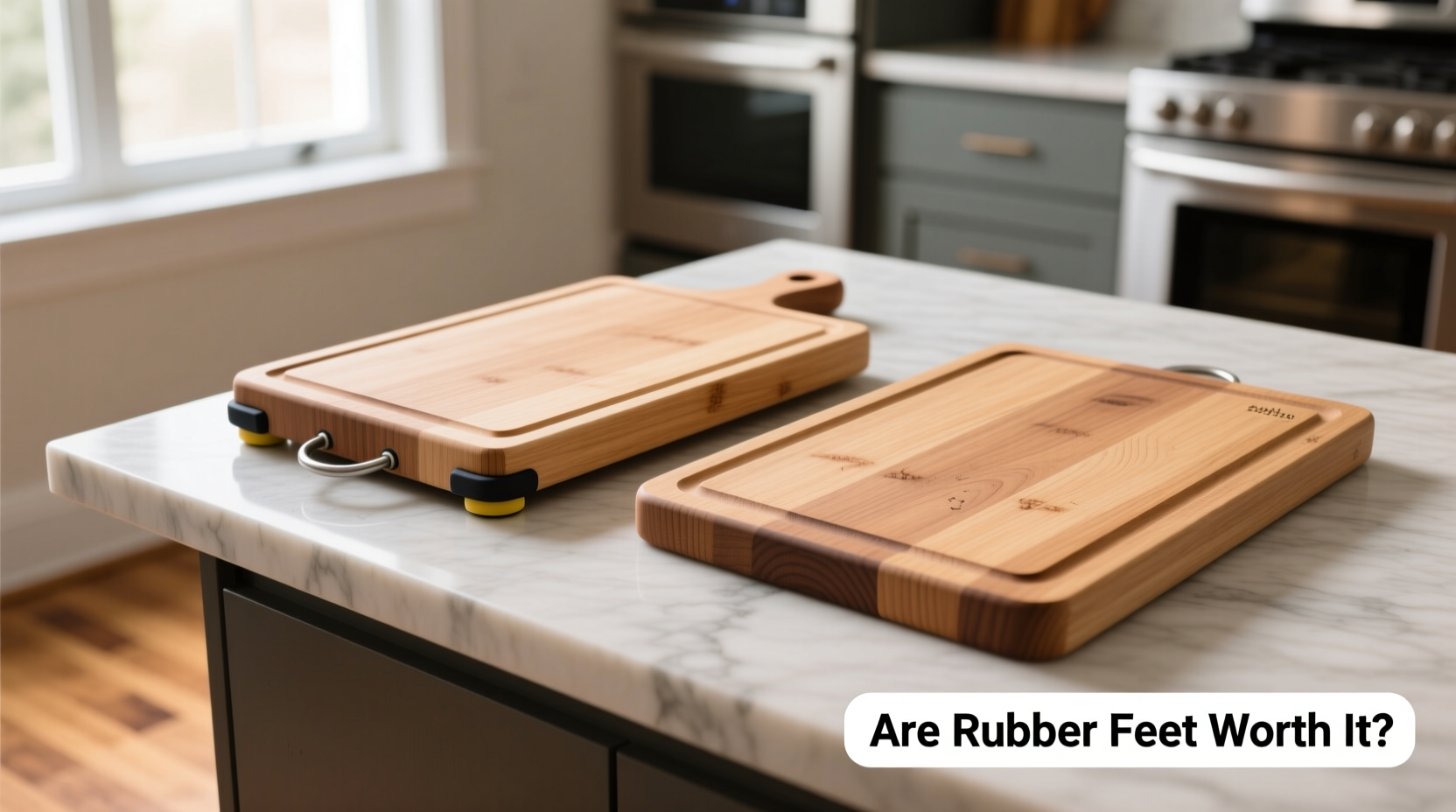
The primary reason manufacturers add rubber feet to cutting boards is to prevent slippage during use. A stable surface reduces the risk of knife slips, uneven cuts, and potential injury. Without feet, even high-quality boards made from dense materials like bamboo or maple can slide across countertops, especially when wet or under pressure.
Rubber feet create friction between the board and the counter, anchoring it firmly in place. This is particularly valuable when chopping tough ingredients like squash, meat, or root vegetables that require downward force. In kitchens with smooth surfaces—such as granite, marble, or stainless steel—the difference becomes even more pronounced.
Hygiene and Drying: Why Airflow Matters
One often-overlooked benefit of rubber feet is improved air circulation. When a cutting board lies flat against a countertop, moisture gets trapped underneath, creating a breeding ground for bacteria and mold—especially in wooden boards that absorb water.
Elevating the board slightly allows air to flow beneath it, promoting faster drying after washing. This is critical for maintaining hygiene and extending the life of natural materials. Wood expands and contracts with moisture; prolonged dampness leads to warping, cracking, and eventual failure.
Plastic and composite boards also benefit. While they don’t absorb water, pooling liquid can harbor biofilm and make sanitizing less effective. A raised profile helps eliminate stagnant zones.
“Proper drying is one of the most underestimated aspects of cutting board maintenance. Even minor elevation can drastically reduce bacterial growth.” — Dr. Lena Torres, Food Safety Researcher, Culinary Institute of America
Comparative Analysis: With Feet vs Without Feet
| Feature | Cutting Board With Feet | Cutting Board Without Feet |
|---|---|---|
| Slip Resistance | High – rubber grips prevent movement | Low to moderate – depends on material and surface |
| Drying Efficiency | Excellent – elevated base allows airflow | Poor – bottom stays damp longer |
| Cleanability | Good – but crevices around feet need attention | Excellent – flat surface is easier to wipe |
| Durability | Varies – feet may detach over time | Generally high – fewer parts to fail |
| Storage | May require vertical storage or special racks | Stackable and space-efficient |
| Price | Average $35–$70 | Average $20–$50 |
Real-World Use Case: The Home Kitchen Upgrade
Sarah, a home cook in Portland, used a large bamboo board without feet for years. She loved its size and sturdiness but grew frustrated with it sliding during prep, especially when slicing tomatoes or dicing onions. After switching to a board with integrated rubber feet, she noticed immediate improvement. “It stayed put even when I was using my heaviest chef’s knife,” she said. “But I did have to be careful cleaning under the feet—they collected bits of onion skin and moisture at first.”
Over six months, Sarah found that her new board dried faster and showed no signs of warping, unlike her previous one, which had begun to curl at the edges. However, she noted that storing it required more thought—its protruding feet made stacking difficult, so she mounted it on a wall rack.
This scenario illustrates the trade-offs: enhanced function and hygiene come with added maintenance awareness and spatial considerations.
Common Pitfalls and How to Avoid Them
While rubber feet offer clear advantages, they aren’t foolproof. Here are key issues users report and how to mitigate them:
- Detached feet: Over time, adhesive can weaken due to heat, moisture, or impact. To extend lifespan, hand-wash the board and avoid dishwashers unless manufacturer-approved.
- Hard-to-clean crevices: Debris can accumulate where the foot meets the board. Use a soft brush (like an old toothbrush) weekly to clean these areas.
- Instability on textured surfaces: On matte-finish laminate or concrete counters, feet may not grip as well. Consider a silicone mat underneath if needed.
- Limited compatibility with accessories: Some cutting board holders, juice grooves, or stand-up frames don’t accommodate feet. Check dimensions before purchasing add-ons.
Step-by-Step Guide: Maximizing Performance of a Footed Cutting Board
- Inspect upon arrival: Ensure all feet are securely attached and evenly aligned.
- Wash before first use: Clean with warm water and mild soap, then dry thoroughly—top and bottom.
- Use on a flat, clean surface: Avoid warped counters or uneven tiles that could compromise balance.
- Clean promptly after use: Scrub the entire surface, including around the base of each foot.
- Dry vertically or elevated: Place on a dish rack or towel to maximize airflow on all sides.
- Inspect monthly: Check for loose feet, cracks, or swelling in the board material.
- Replace if compromised: Don’t wait until feet fall off—early intervention prevents accidents.
FAQ: Your Questions Answered
Can I remove the rubber feet if I don’t like them?
Technically yes, but it’s not recommended. Removing them often leaves residue or damages the board surface. More importantly, you lose the anti-slip and airflow benefits. If you dislike the design, switch to a non-footed model instead.
Are footed boards dishwasher safe?
Most are not. High heat and prolonged water exposure can degrade adhesives and warp materials. Always check the manufacturer’s instructions. Hand-washing is safest for longevity.
Do wooden boards with feet last longer than those without?
Not inherently—but they tend to perform better in humid environments due to improved drying. Longevity still depends on proper care, oiling (for wood), and avoiding soaking.
Final Verdict: Are the Little Rubber Things Worth It?
The answer depends on your priorities. If you value safety, consistent performance, and long-term hygiene, then yes—rubber feet are worth the investment. They provide tangible improvements in stability and drying, two factors that directly affect both usability and food safety.
However, they aren’t perfect. They introduce potential failure points and require slightly more attentive cleaning. For minimalist kitchens or users who prefer traditional designs, a well-made, flat board used with a damp towel or non-slip mat underneath can deliver similar results at lower cost.
In professional settings, where speed and safety are paramount, footed boards are increasingly standard. In homes, the choice hinges on lifestyle. Busy cooks who prep daily will likely appreciate the security and ease. Occasional users might find them unnecessary.
“The right cutting board doesn’t just support your knife—it supports your entire cooking process. Small features can have big impacts.” — Chef Rafael Mendez, Culinary Educator
Take Action: Choose What Works for Your Kitchen
Don’t settle for a board that slides around or takes hours to dry. Whether you choose one with rubber feet or stick with a classic flat design, make sure it aligns with how you cook, clean, and store your tools. Evaluate your countertop material, cutting habits, and maintenance routine. Then pick the option that enhances—not complicates—your workflow.




 浙公网安备
33010002000092号
浙公网安备
33010002000092号 浙B2-20120091-4
Comments
No comments yet. Why don't you start the discussion?