
For decades, daily low-dose aspirin has been promoted as a simple, inexpensive way to reduce the risk of heart attacks and strokes. Many people take it routinely, often without consulting their doctor, believing it offers broad cardiovascular protection. But recent medical guidelines have shifted dramatically. While aspirin can still play a role in preventing serious events for certain individuals, its widespread use is no longer universally recommended due to potential risks that may outweigh the benefits for many.
This article explores the science behind daily aspirin therapy—its proven advantages, significant risks, and the specific groups of people who might benefit most. With input from leading health organizations and clinical research, we’ll help you understand whether this common over-the-counter medication belongs in your daily routine.
The Science Behind Aspirin and Cardiovascular Protection
Aspirin works by inhibiting platelets—small blood cells involved in clot formation. By reducing platelet activity, aspirin helps prevent clots from forming inside arteries, which can block blood flow to the heart or brain, leading to heart attacks or ischemic strokes.
In people who have already experienced a cardiovascular event—such as a heart attack or stroke—daily aspirin therapy is well-established as a secondary prevention strategy. In these cases, the benefits are clear and substantial. Studies show that regular aspirin use after such an event can reduce the risk of recurrence by up to 25%.
However, when it comes to primary prevention—using aspirin to prevent a first heart attack or stroke—the picture becomes more complex. For individuals without existing cardiovascular disease, the absolute benefit is much smaller, while the risk of bleeding complications remains significant.
“While aspirin can reduce the risk of a first cardiovascular event, the increase in major bleeding risks means it’s not appropriate for everyone.” — Dr. Susan Cheng, Preventive Cardiologist, Cedars-Sinai Medical Center
Who Might Benefit from Daily Aspirin?
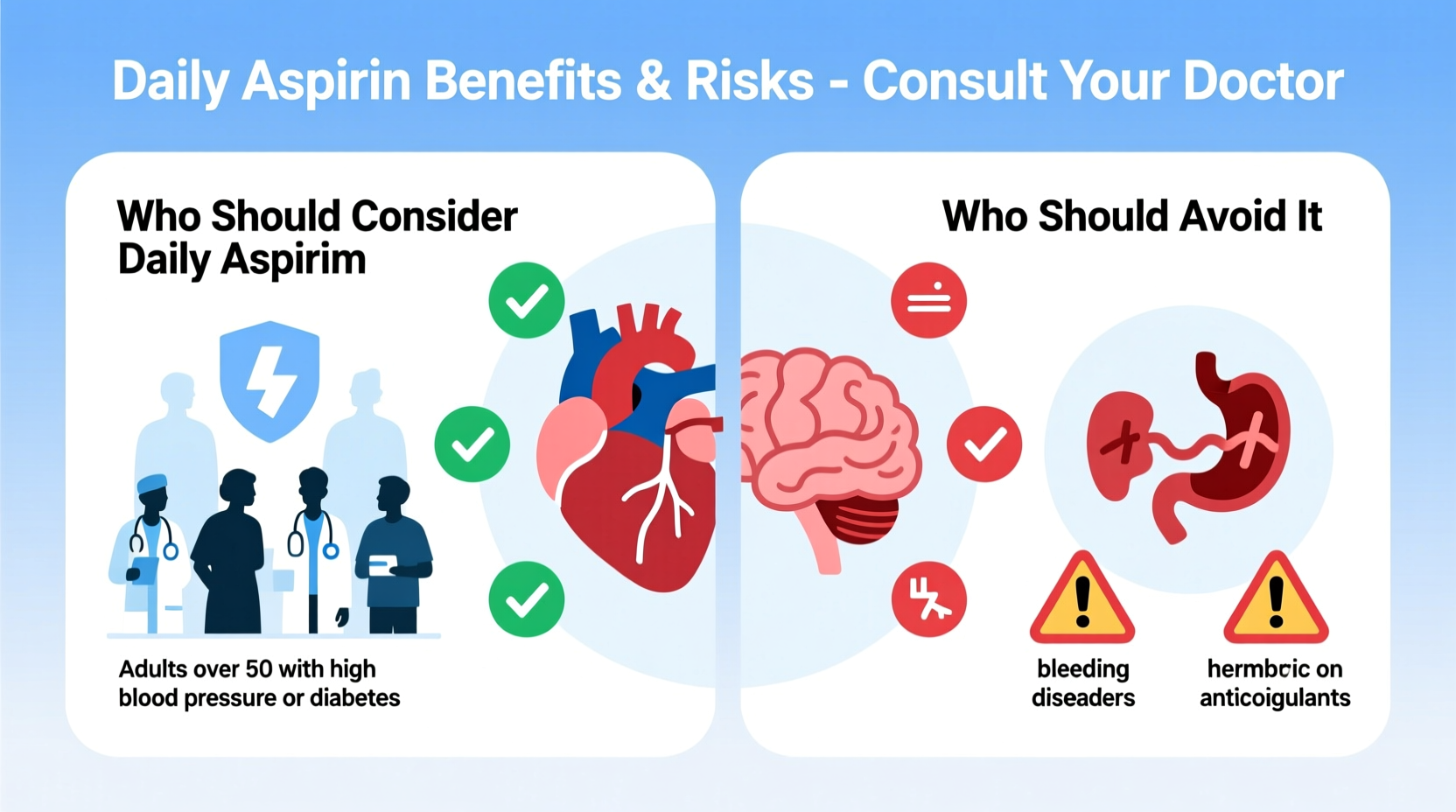
The decision to start daily aspirin should be personalized and based on individual risk factors. According to the U.S. Preventive Services Task Force (USPSTF), the following criteria help determine who may benefit:
- Ages 40–70: Adults without a history of cardiovascular disease.
- Elevated cardiovascular risk: Those with multiple risk factors such as high blood pressure, high cholesterol, diabetes, smoking, or a strong family history.
- No increased bleeding risk: Individuals who do not have a history of gastrointestinal ulcers, bleeding disorders, or other conditions that elevate bleeding risk.
For adults over 70, the USPSTF recommends against initiating daily aspirin for primary prevention, citing insufficient evidence of benefit and a higher likelihood of bleeding complications. Similarly, people under 40 are not advised to begin routine aspirin therapy due to limited data supporting its use in younger populations.
Risks and Side Effects of Daily Aspirin Use
While aspirin is widely available and often perceived as harmless, long-term use carries real dangers. The most serious risks include:
- Gastrointestinal bleeding: Aspirin irritates the stomach lining and can lead to ulcers or internal bleeding, especially in older adults or those taking other NSAIDs.
- Intracranial hemorrhage: Though rare, aspirin increases the risk of bleeding in the brain, which can be life-threatening.
- Allergic reactions: Some individuals, particularly those with asthma, may experience severe allergic responses.
- Interaction with other medications: Aspirin can interact dangerously with anticoagulants, certain antidepressants, and even some supplements like fish oil.
A large 2018 study published in The New England Journal of Medicine, known as the ASPREE trial, followed over 19,000 healthy older adults taking daily aspirin. It found no significant reduction in disability-free survival and a higher incidence of major bleeding among aspirin users compared to placebo.
Comparing Benefits and Risks: A Summary Table
| Factor | Benefit | Risk |
|---|---|---|
| Secondary Prevention (after heart attack/stroke) | Reduces recurrence by ~25% | Moderate bleeding risk, manageable with monitoring |
| Primary Prevention (no prior event) | Small absolute reduction in risk (~10%) | Significant increase in major bleeding events |
| Age > 70 | Limited or no benefit | Higher risk of GI and brain bleeding |
| Diabetes | Potential modest benefit | Increased susceptibility to bleeding |
Real-World Example: When Aspirin Helped—and When It Didn’t
Consider two patients: Maria, 62, with type 2 diabetes, high cholesterol, and a strong family history of early heart disease, and James, 74, generally healthy but concerned about aging-related risks.
Maria’s doctor assessed her 10-year cardiovascular risk at 18% using the ACC/AHA Pooled Cohort Equations. After confirming she had no history of ulcers or bleeding and was not on other blood thinners, her physician recommended low-dose aspirin (81 mg) alongside statin therapy and lifestyle changes. For Maria, the potential benefit justified the risk.
James, however, was discouraged from starting aspirin. Despite his age-related concerns, his overall risk score was moderate, and given his age over 70, the potential for gastrointestinal bleeding outweighed any marginal protection. Instead, his doctor emphasized blood pressure control, physical activity, and a heart-healthy diet.
This contrast illustrates why one-size-fits-all recommendations no longer apply. Personalized medicine is essential in aspirin decision-making.
Step-by-Step Guide: Should You Take Daily Aspirin?
If you’re considering daily aspirin, follow this evidence-based approach:
- Assess your cardiovascular risk: Work with your doctor to calculate your 10-year risk using tools like the ACC/AHA Risk Estimator.
- Review your medical history: Disclose any history of ulcers, bleeding, liver disease, or alcohol use.
- Discuss alternatives: Statins, blood pressure management, and lifestyle changes may offer better protection with fewer risks.
- Make a shared decision: If benefits appear to outweigh risks, agree on a dose (usually 81 mg) and schedule follow-ups.
- Monitor for side effects: Watch for signs of bleeding, such as dark stools, easy bruising, or prolonged nosebleeds.
Frequently Asked Questions
Can I stop taking aspirin suddenly if I’ve been on it daily?
Stopping daily aspirin abruptly can trigger a rebound effect, increasing the risk of clotting. Always consult your doctor before discontinuing, especially if you’ve had a stent, heart attack, or stroke.
Is baby aspirin the same as regular aspirin?
Yes—“baby aspirin” typically refers to an 81 mg tablet, a lower dose commonly used for heart protection. Full-strength aspirin is usually 325 mg and is not recommended for daily use without medical supervision.
Does daily aspirin prevent cancer?
Some studies suggest long-term aspirin use may reduce the risk of colorectal cancer, but this potential benefit must be weighed against bleeding risks. Cancer prevention alone is not a reason to start daily aspirin.
Action Plan Checklist
Checklist: Before Starting Daily Aspirin
- Calculate my 10-year cardiovascular risk with my doctor
- Review my full medical history, including GI issues
- Discuss alternatives like statins or lifestyle interventions
- Determine appropriate dose (typically 81 mg)
- Schedule follow-up to reassess risks and benefits annually
Conclusion: Make an Informed Decision
Daily aspirin is not a universal solution for heart health. While it remains a cornerstone of treatment for those who have already suffered a cardiovascular event, its role in prevention for healthy individuals has diminished in light of new evidence. The key is balance—weighing small potential gains against real and sometimes serious risks.
Your best defense against heart disease isn’t necessarily a pill. It’s managing blood pressure, maintaining healthy cholesterol levels, avoiding tobacco, staying active, and eating well. If aspirin is right for you, let that decision come from a conversation with your doctor—not from habit, hearsay, or fear.




 浙公网安备
33010002000092号
浙公网安备
33010002000092号 浙B2-20120091-4
Comments
No comments yet. Why don't you start the discussion?