
In an era where roads are more congested than ever and traffic incidents occur in seconds, having undeniable evidence of what happens around your vehicle is no longer a luxury—it’s a necessity. A dual-channel dash cam system that records both front and rear views offers comprehensive protection, capturing critical moments from all angles. Whether it's a minor fender bender, an aggressive driver, or a hit-and-run, video proof can make the difference between a resolved claim and a costly dispute. This article explores the compelling reasons why every driver should consider installing a front and rear dash cam—today.
Why Comprehensive Coverage Matters
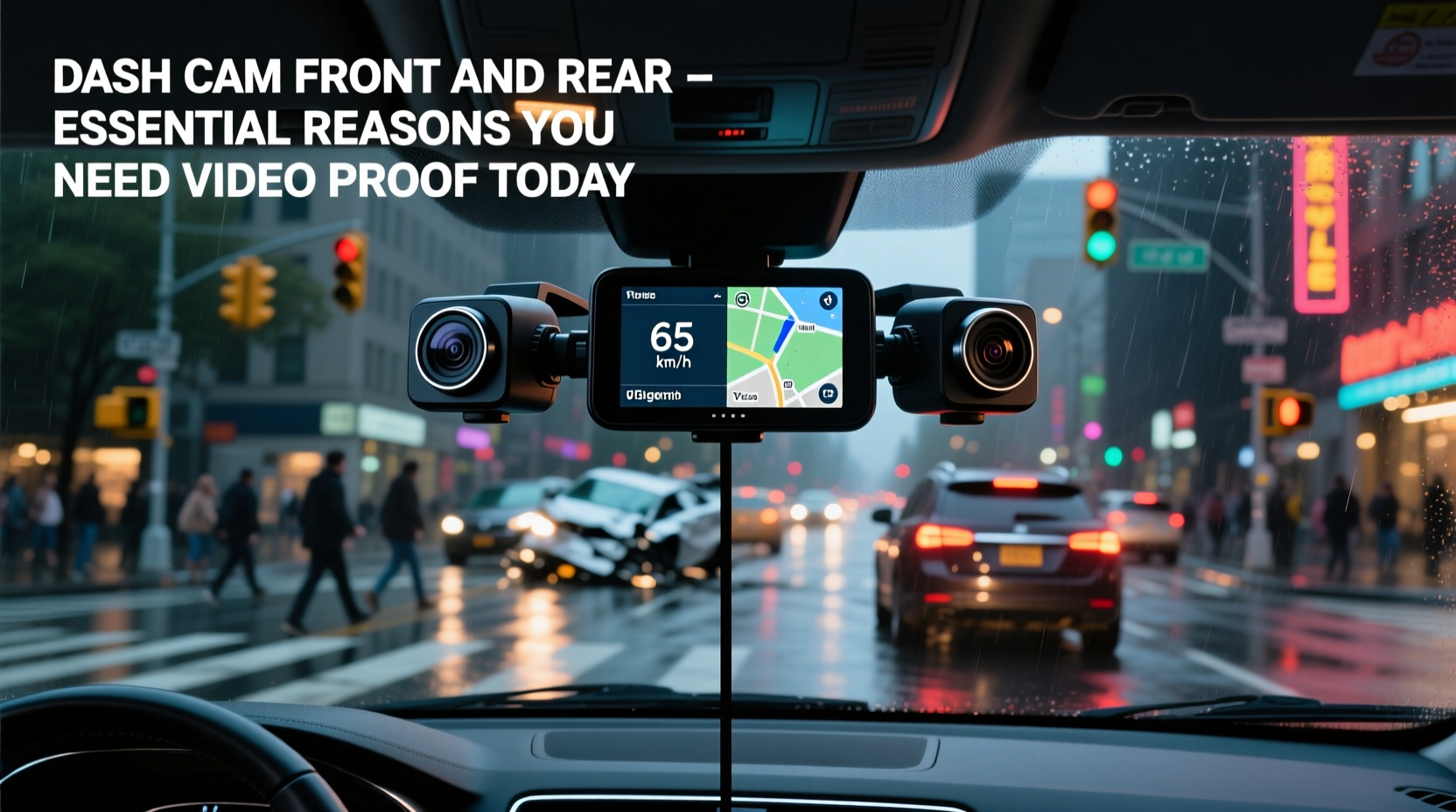
Most drivers assume that only the front of their vehicle is at risk, but rear-end collisions account for nearly 30% of all reported crashes in urban areas. Additionally, parking lot dings, reverse accidents, and hit-and-runs often originate from behind or the sides. A front-only dash cam leaves blind spots vulnerable, especially when reversing or parked.
A dual-system setup ensures 360-degree situational awareness. Front cameras capture lane changes, traffic signals, and forward-facing hazards, while rear units monitor tailgaters, sudden stops, and activity directly behind the vehicle. This full coverage creates a complete timeline of events, crucial during disputes or insurance investigations.
Legal Protection and Insurance Claims
One of the most powerful benefits of having video proof is its role in legal and insurance proceedings. When an accident occurs, memory becomes unreliable. Witnesses may not come forward, and opposing parties often provide conflicting accounts. In such cases, dash cam footage serves as an impartial witness.
Insurance companies increasingly accept dash cam videos as valid evidence. According to the Insurance Institute for Highway Safety (IIHS), claims supported by video documentation are processed up to 40% faster and with higher approval rates. More importantly, clear footage can prevent fraudulent claims against you—such as staged rear-end collisions or false accusations of dangerous driving.
“Video evidence has become the gold standard in resolving auto liability disputes. It removes ambiguity and protects honest drivers.” — Mark Reynolds, Senior Claims Adjuster at National Auto Insurance Group
Real Example: The Parking Lot Incident
Consider Sarah, a commuter in Chicago who returned to her car after work to find a deep scratch along the driver’s side. There were no witnesses, and the nearby security camera was obscured. She filed a claim, but her insurer denied it due to lack of proof. Months later, she installed a front and rear dash cam with parking mode. One evening, the system activated as another vehicle backed into her car in the same lot. The footage clearly showed the other driver’s license plate and negligent maneuver. With this evidence, Sarah successfully filed a third-party claim and received full compensation.
This scenario underscores how passive recording—even when the car is off—can protect your investment and rights.
Preventing Fraud and False Accusations
Road fraud is on the rise. Tactics like “swoop and squat,” where a vehicle suddenly pulls in front of you and brakes hard to cause a collision, are used to generate false injury or repair claims. These schemes cost insurers billions annually—and honest drivers often bear the burden.
A dash cam with front and rear recording disrupts these scams. Real-time video captures the sequence of actions, proving whether you had time to react or if the other party initiated unsafe behavior. In many documented cases, perpetrators abandon claims once they learn footage exists.
| Fraud Type | How Dash Cam Helps |
|---|---|
| Swoop and Squat | Shows sudden lane change and abrupt braking by the front vehicle |
| Drive-Off Claims | Records interaction and proves you didn’t flee the scene |
| Parking Damage Blame | Activates during impact, capturing responsible vehicle |
| False Injury Reports | Provides context on collision severity and post-accident behavior |
Peace of Mind While Driving and Parking
Beyond accidents, dash cams offer psychological reassurance. Knowing your vehicle is monitored 24/7 reduces anxiety about vandalism, theft attempts, or unreported damage. Many modern systems include motion detection and parking surveillance modes that activate when movement is sensed near the car.
For parents, rideshare drivers, or fleet managers, this feature is invaluable. Parents gain confidence knowing their teen’s driving habits are recorded. Rideshare drivers protect themselves from passenger misconduct. Fleet operators use footage to coach safe driving and verify incident reports.
Step-by-Step Guide: Setting Up Your Dual Dash Cam System
- Choose the Right Model: Look for one with at least 1080p resolution on both channels, wide-angle lenses (140°+), and night vision capability.
- Install the Front Camera: Mount it high on the windshield, near the rearview mirror, ensuring it doesn’t block your view.
- Route the Power Cable: Tuck the wire along the headliner and down the A-pillar to hide it neatly.
- Install the Rear Camera: Attach it near the license plate or rear window, depending on design. Ensure the lens is clean and unobstructed.
- Connect to Power: Use a hardwiring kit for parking mode or plug into the OBD-II port for constant power.
- Test the System: Record a short drive and check both feeds for clarity, alignment, and sync.
- Configure Settings: Enable loop recording, G-sensor, motion detection, and timestamping.
Proper installation ensures reliable performance. If unsure, consult a professional installer—many electronics retailers offer mounting services.
Key Features to Look For
Not all dash cams are created equal. To maximize protection, prioritize models with the following features:
- High Dynamic Range (HDR): Balances light and dark areas, essential for sunrise/sunset driving.
- Wi-Fi & App Integration: Allows quick access to clips via smartphone without removing the memory card.
- Cloud Storage Option: Automatically uploads footage when connected to Wi-Fi, protecting it even if the device is stolen.
- Time-Lapse Parking Mode: Records extended periods efficiently when parked, conserving storage and power.
- MicroSD Support (128GB+): Ensures ample space for days of continuous recording.
Investing in a quality system pays dividends in reliability and ease of use. Avoid budget models with poor low-light performance or unstable mounts.
Checklist: Essential Dash Cam Setup & Maintenance
- ☑ Choose a dual-channel dash cam with front and rear recording
- ☑ Verify compatibility with your vehicle’s electrical system
- ☑ Install both cameras securely, ensuring full field of view
- ☑ Format the microSD card before first use
- ☑ Enable G-sensor and loop recording
- ☑ Test parking mode functionality
- ☑ Review footage weekly to confirm proper operation
- ☑ Replace the memory card every 12–18 months to prevent corruption
- ☑ Clean lenses monthly with a microfiber cloth
- ☑ Back up important clips to a computer or cloud service
Common Misconceptions About Dash Cams
Despite growing adoption, several myths persist:
- “They’re only for commercial vehicles.” – Personal drivers benefit equally, especially with rising road aggression and insurance fraud.
- “They invade privacy.” – Most footage is automatically overwritten, and recordings are typically only retained after incidents.
- “Law enforcement will misuse the data.” – Footage is owned by the vehicle owner; sharing requires consent unless subpoenaed in a legal case.
- “They drain the battery.” – Modern systems with low-voltage cutoffs prevent excessive draw, especially when using a hardwire kit with voltage monitoring.
Educating yourself dispels fear and encourages responsible use.
FAQ
Is it legal to record audio with a dash cam?
Laws vary by state and country. In the U.S., 12 states require two-party consent for audio recording. To stay compliant, disable audio recording unless you're certain it's permitted in your jurisdiction.
Can dash cam footage be used in court?
Yes, provided the footage is authentic, unedited, and properly timestamped. Courts routinely accept dash cam videos as evidence in traffic violations, civil disputes, and criminal cases involving DUI or reckless driving.
How long does dash cam footage last?
With loop recording, most systems retain 2–4 hours of footage before overwriting. Critical clips protected by the G-sensor are saved separately and remain until manually deleted. Using a 64GB card, you can expect 8–12 hours of total storage depending on resolution.
Conclusion
The decision to install a front and rear dash cam isn’t just about technology—it’s about safeguarding your safety, finances, and reputation. In a split second, an innocent driver can be accused of negligence, face inflated insurance premiums, or lose thousands in repairs. Video proof eliminates doubt, accelerates claims, and deters dishonest behavior. With advancements making these systems affordable, discreet, and easy to use, there’s never been a better time to equip your vehicle with 360-degree protection.




 浙公网安备
33010002000092号
浙公网安备
33010002000092号 浙B2-20120091-4
Comments
No comments yet. Why don't you start the discussion?