
As vehicle safety technology evolves, dash cams have become more than just accessories—they’re tools for protection, evidence, and peace of mind. While once considered niche, they are now common in both personal and commercial vehicles. One of the most debated topics among drivers is whether a dual-channel dash cam (recording both front and rear) is essential or if a front-facing camera alone suffices. The answer isn’t universal; it depends on driving habits, environment, parking conditions, and risk tolerance.
A front dash cam captures what happens ahead—crucial for documenting collisions, aggressive drivers, or traffic violations. But what about incidents from behind? Rear-end collisions are among the most frequent types of accidents, and damage from hit-and-runs while parked often occurs at the back of the vehicle. This raises a critical question: Is relying solely on front-view footage leaving you vulnerable?
Understanding Front vs. Dual-Channel Dash Cams
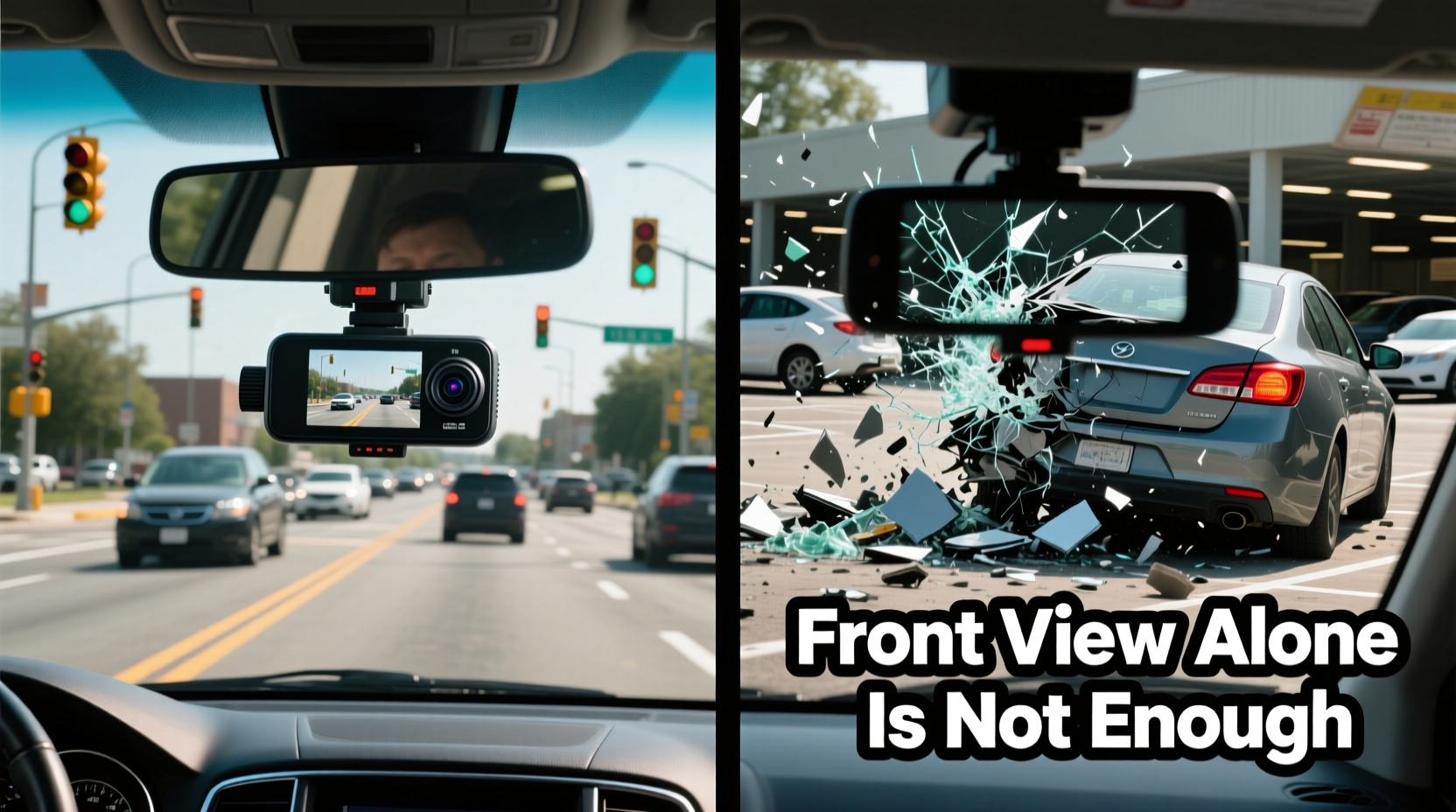
Front-only dash cams have been the standard for years. They are typically simpler to install, less expensive, and focused on capturing the road ahead. These devices continuously record forward motion, often with features like loop recording, G-sensors, and night vision. For many daily commuters who drive in low-risk areas, this may seem sufficient.
Dual-channel systems, however, include a second camera mounted at the rear of the vehicle, syncing footage with the front unit. This setup records both forward and backward perspectives simultaneously. The rear camera usually connects via a cable routed along the vehicle’s interior or uses a wireless link, depending on the model.
The core difference lies in coverage. A front-only system leaves the rear blind. If someone backs into your car in a parking lot or you're struck from behind during sudden braking, the front camera may only capture limited context—or nothing at all. In contrast, a dual-channel system provides full situational awareness, showing not just how an incident unfolded from the front, but also what occurred behind.
When Front-Only Coverage Falls Short
Consider a scenario where you come to a complete stop at a red light. A distracted driver fails to brake and collides with your rear bumper. Your front camera shows stationary traffic and your brake lights illuminating, but it cannot capture the moment of impact from behind. Insurance adjusters may question fault, especially if the other party claims you reversed into them. Without rear footage, proving innocence becomes harder.
Similarly, when parked, a front camera offers no protection. Vandals, shopping carts, or careless drivers backing out of spots can dent or scratch your rear bumper or trunk. A rear-facing camera with parking mode can record these events, providing timestamped video evidence that supports insurance claims or police reports.
Advantages of Dual-Channel Dash Cams
Installing a dash cam with both front and rear recording offers several tangible benefits beyond basic accident documentation:
- Comprehensive incident reconstruction: Simultaneous front and rear footage allows investigators to see the full chain of events, including actions of surrounding vehicles.
- Parking protection: With hardwiring and parking mode enabled, rear cameras monitor the area behind your car even when the engine is off.
- Deterrent effect: Visible rear cameras discourage reckless behavior from drivers behind you, especially in tight spaces.
- Insurance claim support: Clear video from both angles reduces disputes over liability and speeds up settlements.
- Fleet and ride-share utility: For commercial drivers, dual coverage protects against false claims from passengers or other motorists.
In urban environments with heavy traffic, narrow streets, and high pedestrian activity, having 360-degree visual accountability significantly increases confidence. It's not just about catching wrongdoing—it's about having a reliable record when memory fails or perceptions differ.
Expert Insight: Why Rear Coverage Matters
“Over 30% of auto insurance claims involve rear-end collisions, and nearly half occur in low-speed environments like intersections or parking lots. A rear-facing camera closes a critical evidentiary gap.” — Dr. Alan Torres, Automotive Safety Analyst at the National Transportation Research Group
Cost vs. Value: Is the Upgrade Worth It?
Dual-channel dash cams generally cost $50–$150 more than comparable front-only models. Installation is slightly more complex, requiring routing a cable from the rear camera to the main unit, often through trim panels and headliners. However, many modern kits come with detailed instructions and tools, making DIY installation feasible for most users.
To evaluate whether the added expense is justified, consider your typical driving conditions:
| Driving Profile | Front-Only Sufficient? | Recommended Setup |
|---|---|---|
| Urban commuter in dense traffic | No | Front + rear with parking mode |
| Suburban driver, short trips | Possibly | Front-only with G-sensor |
| Frequent parking in public lots | No | Dual-channel with motion detection |
| Ride-share or delivery driver | No | Front + rear + cabin camera (if legal) |
| Rural driver, low congestion | Yes | Front-only with GPS |
The value proposition shifts when you factor in potential costs from unfounded claims or repair bills due to unrecorded incidents. A single avoided $1,500 deductible payment could justify the investment in a dual-camera system.
Real-World Example: The Parking Lot Incident
Mark, a rideshare driver in Chicago, installed a front-only dash cam after a minor scrape at an intersection. Months later, he returned to his car in a crowded mall parking lot to find a deep scratch along the driver’s side and a damaged rear bumper. There were no witnesses, and surveillance from the mall was unavailable.
He filed a claim, but without evidence, his insurer applied the deductible and raised his premium. Frustrated, Mark upgraded to a dual-channel system with 24/7 parking mode. Six months later, the same thing happened—but this time, the rear camera captured a sedan backing out too quickly, clipping his rear corner before driving off.
He submitted the footage to his insurer, who used the license plate to identify the at-fault driver. His claim was fully covered, and his rates remained unchanged. “I didn’t think I needed the rear camera,” Mark said. “But one incident proved how blind I was without it.”
Key Features to Look for in Dual-Channel Systems
If you decide to go beyond front-only coverage, focus on specific capabilities that maximize reliability and usability:
- Resolution balance: Aim for at least 1080p on both front and rear cameras. Some models offer 1440p or 4K front with 1080p rear—this is acceptable, but avoid rear cameras below 720p.
- Low-light performance: Night vision matters for rear cameras, which often record in dimly lit parking areas. Look for Sony Starvis sensors or similar low-light optimized hardware.
- Parking mode with impact detection: Ensures the system wakes up and saves footage when vibrations or motion are detected while parked.
- Reliable power connection: Hardwiring to the fuse box enables continuous monitoring without draining the battery.
- Loop recording and ample storage: Supports seamless overwrite of old files and requires a high-endurance microSD card (64GB or higher recommended).
Installation Considerations
While front dash cams plug into the OBD-II port or cigarette lighter, rear units require more effort. Most installations involve:
- Mounting the rear camera near the license plate or inside the rear window
- Routing the cable along door seals, under trim, and across the headliner to the front
- Connecting to the primary unit and power source
For those uncomfortable with disassembling interior panels, professional installation costs between $80 and $150 but ensures clean routing and avoids electrical issues. Alternatively, some wireless rear cameras eliminate cabling but may suffer from interference or latency.
Frequently Asked Questions
Can a front dash cam capture rear incidents indirectly?
Only in very limited cases—such as using side mirrors or reflections. However, image quality is poor, angles are distorted, and crucial details like license plates are rarely legible. Relying on indirect footage is risky and generally insufficient for legal or insurance purposes.
Are rear dash cams legal everywhere?
In most countries, including the U.S. and Canada, rear dash cams are legal as long as they don’t record audio without consent (in two-party consent states) and aren’t obstructing the driver’s view. Always check local regulations, especially regarding internal cabin recording.
Do I need a rear camera if my car has a backup camera?
Factory backup cameras are not designed for continuous recording. They activate only when reversing and don’t save footage. Aftermarket dash cams with rear units provide persistent surveillance and event-triggered saving, making them functionally different and far more useful for protection.
Actionable Checklist: Choosing the Right Setup
Use this checklist to determine whether a dual-channel system is right for you:
- ☐ Do you frequently park in public or unsecured lots?
- ☐ Have you ever been involved in a rear-end collision?
- ☐ Do you drive in high-traffic urban areas?
- ☐ Are you concerned about false insurance claims?
- ☐ Do you operate a commercial vehicle (e.g., Uber, Lyft, delivery)?
- ☐ Is your car a target for vandalism or theft?
If three or more apply, a front and rear dash cam system is strongly recommended. For others, a high-quality front-only model with G-sensor and parking mode may be adequate.
Final Verdict: Necessity vs. Practicality
Front dash cams are undoubtedly valuable. They document road behavior, protect against fraudulent claims, and provide clarity after collisions. However, treating them as a complete solution overlooks a significant vulnerability: the rear of your vehicle.
For most drivers, especially those in cities, parents with teenage drivers, or anyone who parks on streets, dual-channel coverage is not an unnecessary luxury—it’s a logical extension of digital self-defense. Technology has made these systems more affordable and easier to install than ever. The incremental cost is minimal compared to the financial and emotional toll of unresolved incidents.
That said, necessity is contextual. A retiree driving occasionally in a quiet neighborhood may never encounter a rear threat. But for the growing number of people navigating unpredictable roads and parking situations, comprehensive visibility is no longer optional—it’s responsible ownership.




 浙公网安备
33010002000092号
浙公网安备
33010002000092号 浙B2-20120091-4
Comments
No comments yet. Why don't you start the discussion?