
When it comes to vehicle safety and protection, dash cams have evolved from a niche accessory to an essential tool for modern drivers. While front-only dash cams remain popular due to their simplicity and lower cost, dual-channel systems that record both front and rear views are gaining traction. But is the added complexity of installing a rear camera truly justified? For many drivers, the answer depends on driving habits, parking environments, insurance concerns, and how much risk they’re willing to accept.
This article examines the tangible differences between single and dual-lens dash cams, evaluates installation effort versus long-term value, and provides practical guidance for making an informed decision based on real-world scenarios.
Understanding Front-Only Dash Cams
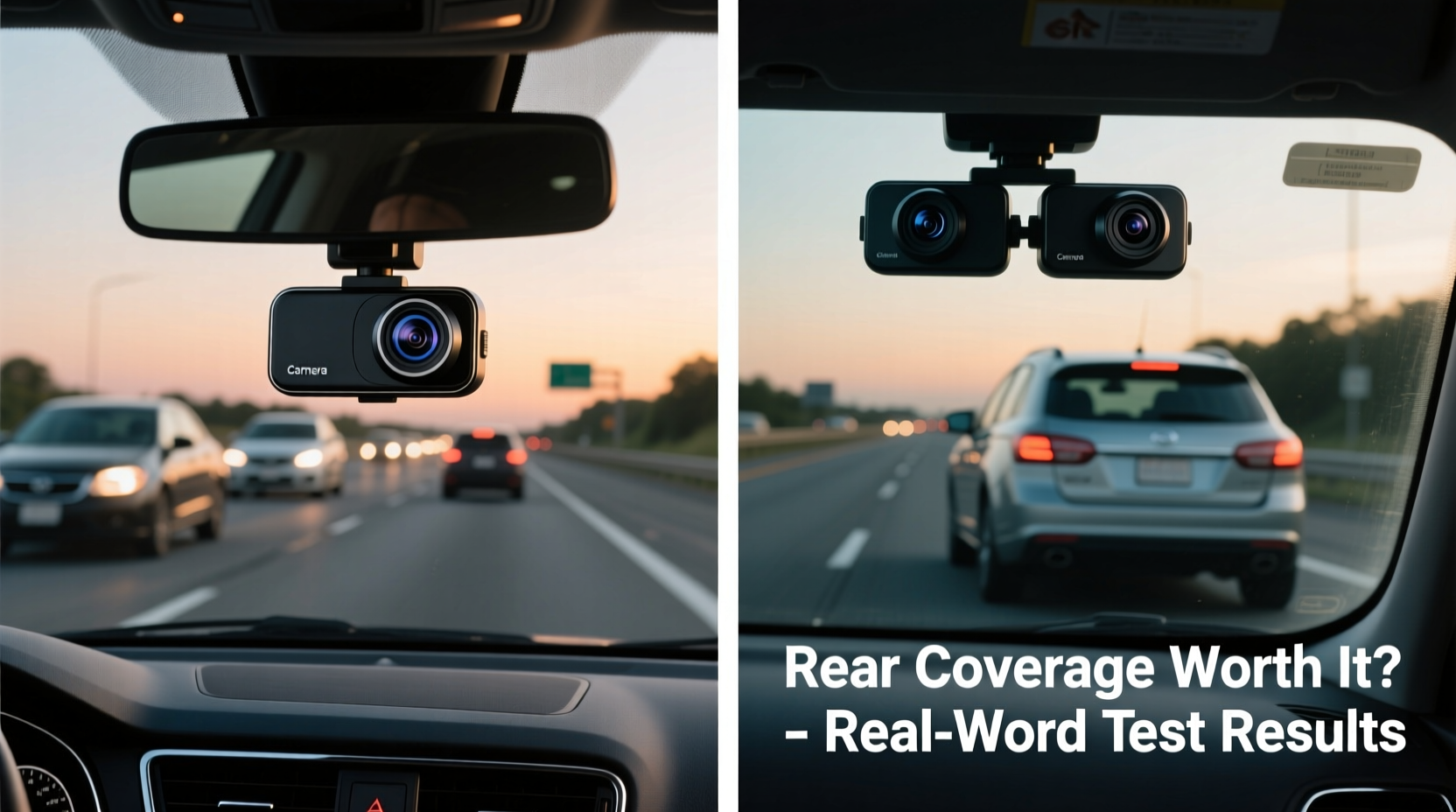
A front-only dash cam records everything directly in front of your vehicle — ideal for capturing traffic incidents, sudden braking, or collisions during active driving. These devices are typically easy to install, often requiring just a power connection via the OBD-II port or cigarette lighter socket and a mount on the windshield.
For commuters who drive frequently on highways or urban roads with minimal reverse maneuvering, front coverage may seem sufficient. After all, most accidents occur while moving forward, particularly at intersections or during sudden stops in traffic.
However, limiting surveillance to the front leaves significant blind spots. Rear-end collisions when parked, hit-and-run incidents in parking lots, or disputes over reversing responsibility aren’t captured — potentially leaving you without evidence when you need it most.
The Case for Dual-Channel (Front + Rear) Coverage
Dual-channel dash cams include two cameras: one facing forward and another mounted on the rear window or license plate area. This setup ensures 360-degree visual accountability around your vehicle, especially critical during low-speed maneuvers and static situations.
Rear coverage becomes particularly valuable in these common circumstances:
- Parking lot incidents: Minor dings, scratches, or full impacts often go unnoticed until damage is discovered hours later.
- Hit-and-run events: A rear camera can capture fleeing vehicles even if you're parked illegally or legally overnight.
- Backing-up disputes: In multi-vehicle accidents during reverse parking, determining fault can hinge entirely on video proof.
- Towing or vandalism: Surveillance extends beyond collisions to include malicious activity targeting your vehicle.
“Over 40% of insurance claims involving parked vehicles lack conclusive evidence because drivers rely solely on front-facing footage.” — Jason Lin, Auto Claims Analyst at National Vehicle Safety Institute
The inclusion of rear recording doesn't just enhance incident documentation — it also strengthens your position in insurance negotiations and legal proceedings where burden of proof rests on the policyholder.
Installation: Effort vs. Long-Term Benefit
One of the primary objections to rear camera systems is the perceived difficulty of installation. Unlike plug-and-play front cams, adding a rear unit usually involves routing a cable from the trunk or rear bumper through the car’s interior lining to the front power source or dash cam recorder.
While this process requires more time and precision, it's rarely as complex as assumed. Many modern kits are designed for DIY users, with color-coded wiring, adhesive grommets, and detailed manuals. With basic tools and about 60–90 minutes, most average-skilled owners can complete the job cleanly and safely.
Step-by-Step Installation Overview
- Gather tools: Small screwdrivers, trim removal tools, zip ties, and possibly a fish tape for tight spaces.
- Mount the rear camera: Attach securely near the license plate or high on the rear windshield using included brackets.
- Route the cable: Feed the wire along door seals, under trim panels, and through the cabin toward the front dash. Avoid sharp bends or pinching points.
- Connect to power: Link the rear camera cable to the main dash cam unit, which connects to the fuse box or OBD-II port for continuous power.
- Test alignment: Ensure both lenses capture clear fields of view before finalizing mounts and closing panels.
Some premium models offer wireless rear cameras, eliminating cable routing altogether. However, these tend to be more expensive and may suffer from signal interference or reduced resolution compared to wired counterparts.
Comparative Analysis: Front vs. Front-and-Rear Systems
| Feature | Front-Only Dash Cam | Front + Rear Dash Cam |
|---|---|---|
| Installation Time | 10–20 minutes | 60–120 minutes |
| Cost Range | $50–$120 | $120–$300+ |
| Field of View Protection | Forward-facing only | Front and rear zones covered |
| Parking Mode Effectiveness | Limited to front threats | Full perimeter monitoring |
| Fault Dispute Resolution | Strong for forward collisions | Comprehensive, including reversing incidents |
| Maintenance Complexity | Low – single device | Moderate – two lenses, longer wiring |
| Insurance Claim Support | Situational | High – broader evidentiary base |
The data shows a clear trade-off: increased upfront investment in time and money for significantly expanded protection. For fleet operators, rideshare drivers, or anyone who parks in unsecured areas regularly, the return on investment can materialize quickly after a single documented incident.
Real-World Example: When Rear Coverage Made the Difference
Consider the case of Maria T., a rideshare driver in Chicago. She parked her sedan on a residential street overnight, returning the next morning to find a deep scratch along the rear passenger side. With no witnesses and no security cameras nearby, she initially assumed the damage would go unresolved.
Thanks to her recently installed front-and-rear dash cam system — set to parking mode with hardwiring — she reviewed the previous night’s footage and discovered a delivery van had scraped her car while backing out of a driveway. The video clearly showed the van’s license plate and driver behavior.
She submitted the clip to her insurer, who fast-tracked the claim and recovered $1,200 in repair costs from the at-fault company. Without rear coverage, the incident would have been undocumented, leaving her responsible for repairs under comprehensive deductible rules.
This scenario underscores a key truth: the highest-value recordings often happen when the car isn’t moving.
Expert Insight: What Industry Professionals Recommend
Automotive safety experts increasingly advocate for dual-channel systems, especially as dash cam usage grows among everyday consumers.
“Drivers underestimate how often liability arises from rear incidents. A single piece of rear footage can prevent months of dispute and thousands in out-of-pocket expenses.” — Dr. Lena Patel, Transportation Safety Researcher at Midwest Mobility Lab
Additionally, law enforcement agencies in cities like Seattle and Austin have partnered with local insurers to promote dual-lens installations in high-theft neighborhoods. Their joint studies show a 27% reduction in fraudulent insurance claims in areas where rear-facing dash cam adoption exceeds 35%.
FAQ: Common Questions About Rear Dash Cam Value
Do I really need rear coverage if I park in a garage?
If your vehicle is stored indoors and secured nightly, the risk of rear incidents drops significantly. However, consider whether you ever park elsewhere — during errands, vacations, or emergencies. Full coverage offers peace of mind regardless of location.
Can a rear dash cam drain my battery?
Any dash cam in parking mode draws power, but modern systems use low-voltage cutoffs to prevent excessive discharge. Hardwiring through a fused circuit with a dedicated power management system ensures safe operation without risking a dead battery.
Are there alternatives to permanent rear camera installation?
Yes. Some magnetic or suction-based rear cameras connect wirelessly and can be moved between vehicles. While convenient, they’re less reliable for daily use and vulnerable to theft or misalignment.
Checklist: Should You Upgrade to Front-and-Rear Recording?
Use this checklist to evaluate whether dual-channel coverage aligns with your needs:
- ✅ Do you frequently park on public streets or in crowded lots?
- ✅ Have you experienced a parking-related incident before?
- ✅ Do you drive a high-value or easily targeted vehicle?
- ✅ Are you enrolled in a usage-based insurance program that rewards video evidence?
- ✅ Can you dedicate 1–2 hours to proper installation, or budget for professional help?
- ✅ Is your current front-only cam insufficient during reversing or parking disputes?
If three or more apply, upgrading is likely a smart move.
Final Verdict: Is the Install Time Worth It?
The short answer is yes — for most drivers, rear coverage is worth the additional installation effort. While front-only dash cams serve a vital role in documenting forward travel, they leave a critical vulnerability unaddressed: what happens behind your car.
Time invested in setting up a dual-channel system pays dividends in evidentiary strength, insurance outcomes, and personal confidence. The slight increase in complexity is outweighed by the breadth of protection, particularly in today’s unpredictable urban environments.
Moreover, as dash cam technology becomes more integrated — with features like GPS tagging, cloud storage, and AI-powered event detection — future-proofing your setup now ensures compatibility with emerging safety ecosystems.
Conclusion
Choosing between front-only and front-and-rear dash cams ultimately comes down to how thoroughly you want to protect your vehicle and driving record. Simplicity has its appeal, but comprehensive coverage offers irreplaceable advantages when incidents occur outside the front windshield.
Whether you're a daily commuter, rideshare driver, parent transporting children, or owner of a prized automobile, investing in rear coverage enhances accountability, reduces stress, and supports fair resolutions — all from footage captured silently in the background.




 浙公网安备
33010002000092号
浙公网安备
33010002000092号 浙B2-20120091-4
Comments
No comments yet. Why don't you start the discussion?